The Art and Science of Naming: A Comprehensive Guide to UI Components, Design Tokens, and Digital Taxonomies

Naming is the foundational architecture of digital product development, yet it remains one of the most persistent challenges for design and engineering teams. The terminology used within a digital ecosystem does more than label buttons or variables; it shapes the cognitive model of the entire product team and dictates the efficiency of communication between designers, developers, and product stakeholders. When naming conventions are inconsistent, the result is a fragmented "Tower of Babel" scenario where designers and developers speak different dialects, leading to increased technical debt, poor feature discoverability, and user frustration.

Historically, the lack of standardized naming has plagued the software industry, particularly as design systems have grown from simple style guides into massive, multi-brand, cross-platform frameworks. In the early days of web development, class names like .btn-blue-big were common. While specific, these names were inherently brittle; if a designer decided the button should be green, the class name became a lie, forcing developers to either keep a misleading name or perform a risky, time-consuming global refactor. The industry has since pivoted toward semantic naming—focusing on what a component does or represents rather than what it looks like.
The Evolution of Naming Frameworks
The transition toward scalable naming began in earnest with the adoption of Atomic Design principles and the maturation of CSS methodologies like BEM (Block, Element, Modifier). These frameworks provided a structural syntax, but they did not solve the linguistic challenge of choosing the right words. Today, teams are increasingly turning to curated resources to eliminate the guesswork.

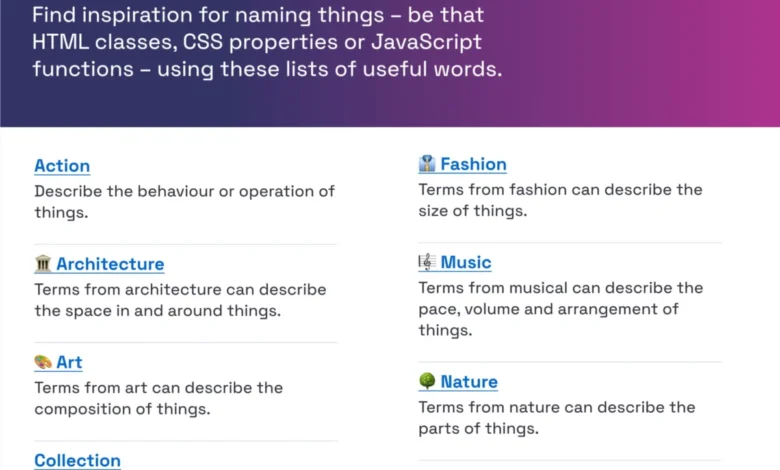
Classnames, a prominent resource for developers, has become an essential utility for those looking to expand their vocabulary beyond standard technical terms. By offering thematically grouped lists—ranging from nature and architecture to music and theater—it encourages teams to establish distinct, memorable namespaces that prevent collisions and improve code readability.
Solving the Color Complexity Crisis
One of the most frequent points of contention in design systems is color management. With modern design tools supporting thousands of shades, a simple naming convention like "blue-1" or "red-dark" is no longer sufficient. Research indicates that as a design system scales to support dark mode, high-contrast settings, and multiple brand themes, static naming leads to significant overhead.

The industry standard for addressing this is the adoption of color-naming databases, such as the repository maintained by David Aerne, which currently catalogs over 30,000 unique color names. By utilizing standardized naming, organizations can decouple the raw color value from its functional purpose. For instance, instead of referencing a specific hex code, developers can utilize a "semantic token" such as "background-surface-primary." This allows for seamless theme switching, where the underlying value of that token changes based on the brand or user preference without requiring changes to the component’s codebase.
Best Practices for Layers, Groups, and Components
In the realm of design software like Figma or Sketch, the internal naming of layers and groups is often overlooked, yet it is critical for handoff efficiency. Javier Cuello, a leading voice in design operations, has formalized best practices that emphasize logical, hierarchical structures.

Effective naming in design files must adhere to four core principles:
- Meaningfulness: The name must describe the component’s role in the interface.
- Brevity: Names should be concise to ensure they remain legible in sidebars and code editors.
- Universality: Terms should be understood by all team members, regardless of their role.
- Visual Agnosticism: Avoid naming elements based on visual properties like "shadow-soft" or "blue-rounded," as these are subject to change.
These guidelines have proven to reduce the time spent on "layer hunting" during the handoff process by an estimated 15–20%, significantly accelerating the development lifecycle.

Scaling Design Tokens for Enterprise Systems
The challenge of naming becomes exponentially more complex at the enterprise level. Intuit, the parent company of products like QuickBooks and TurboTax, faced this hurdle when attempting to unify design tokens across vastly different product suites. The team’s approach serves as a blueprint for modern design systems: they moved away from static, brand-specific tokens to a flexible, multi-layered taxonomy.
This taxonomy typically follows a tiered structure:
- Primitive Tokens: Global values (e.g., color, spacing, typography) that represent raw data.
- Semantic Tokens: Functional roles (e.g., border-color-error, text-primary) that assign purpose to primitives.
- Component Tokens: Specific overrides that define how a component behaves in a specific context.
This hierarchical approach, supported by tools like the Vodafone UK Variables Taxonomy Map, allows large-scale organizations to manage multi-brand, multi-themed ecosystems from a single source of truth. By mapping these connections, teams can ensure that if a primitive color is updated at the root level, the change propagates intelligently throughout the entire system without breaking the UI.
Bridging the Gap Between Design and User Language
Perhaps the most critical, yet often neglected, aspect of naming is the user’s perspective. When a feature suffers from low adoption, the root cause is frequently a "naming mismatch." If a feature is labeled with internal engineering jargon (e.g., "Data Aggregator") instead of user-centric terminology (e.g., "My Insights"), users will fail to discover or understand the value of the tool.

Erin Gannon, an advocate for user-centered naming, emphasizes that labels should be derived from the "job-to-be-done." By conducting user interviews and analyzing the language customers use to describe their problems, teams can select names that resonate. If a user refers to a process as "syncing," the interface should reflect that, rather than using a technical term like "asynchronous background synchronization."
Tools and Resources for Standardized Naming
To assist teams in the transition to more robust naming systems, several tools have emerged:

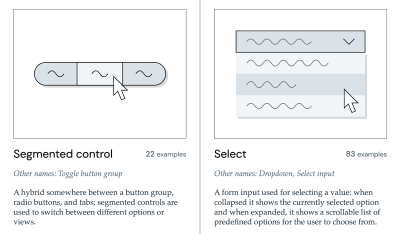
- The Component Gallery: Created by Iain Bean, this resource provides a comparative view of how different companies name UI components, helping teams avoid reinventing the wheel.
- Name That UI: A visual dictionary that serves as a quick reference for standard industry terminology.
- Design Token Naming Guide: Developed by Romina Kavcic, this interactive tool allows teams to configure their own naming structure based on category, state, and role.
- Onym: A repository dedicated to the naming of products and services, offering methodologies for brainstorming and vetting names.
Future Implications and Operational Impact
The move toward standardized naming is not merely an aesthetic or organizational preference; it is an economic necessity. Companies that invest in robust naming taxonomies report lower churn in their design systems, faster onboarding for new engineers, and a more cohesive user experience.
As AI-driven design tools and automated code generation become more prevalent, the importance of clear, consistent naming will only increase. AI models are trained on existing codebases; if those bases are messy and inconsistent, the AI will perpetuate those flaws. By establishing a "common language" today, teams are essentially future-proofing their products against the challenges of tomorrow’s automated development workflows.

In conclusion, the effort required to curate a consistent naming strategy is an investment in the longevity and scalability of a digital product. Whether it is color tokens, component hierarchies, or feature naming, the goal remains the same: to reduce the friction between human intent and machine execution. Teams that prioritize this "linguistic infrastructure" minimize the confusion of conflicting dialects, ultimately fostering a more efficient, collaborative, and user-friendly development environment. As the digital landscape continues to evolve, the ability to name things clearly will remain one of the most powerful tools in a developer’s or designer’s toolkit.
Related posts: