Nexterity is revolutionizing industrial infrastructure maintenance through automated bolting technology

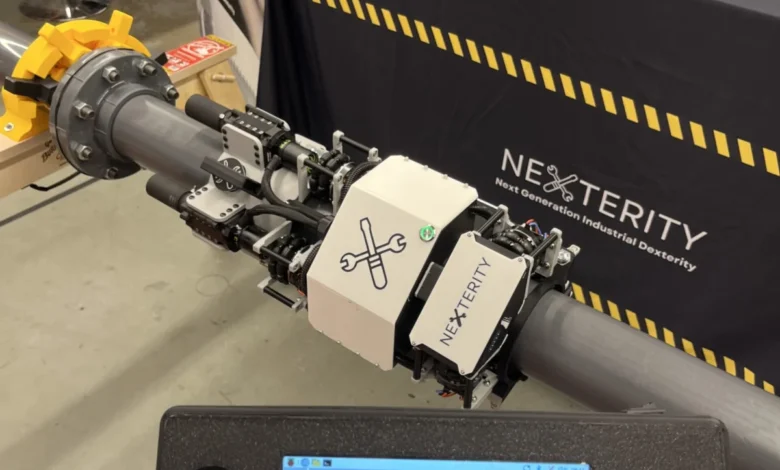
For most of the general public, the intricate web of pipes that facilitates the global movement of oil, gas, water, and chemical products remains entirely invisible. However, for Lindsey Elliott, a former engineer and planner at ExxonMobil, these arteries of modern civilization are the focal point of a significant technological oversight. At the center of this massive, multi-billion-dollar infrastructure network lies a deceptively simple component: the bolted flange joint. While essential, these connections are the site of repetitive, physically taxing, and often dangerous labor. Seeking to modernize this critical sector, Elliott founded Nexterity, a startup currently garnering attention at the TechCrunch Disrupt Startup Battlefield 200 for its innovative approach to industrial maintenance through robotics.
The Physicality of the Pipeline
The traditional process of connecting sections of industrial piping is a grueling endeavor. Pipefitters are often tasked with manual labor that requires immense physical stamina, particularly during the maintenance cycles of large-scale petrochemical or energy facilities. These workers are frequently expected to endure 12-hour shifts for months at a time, performing the repetitive motion of tightening and loosening heavy-duty bolts.
The human cost of this labor is substantial. Beyond the pervasive issue of physical fatigue, the industry faces a chronic labor shortage that complicates project timelines and compromises safety standards. According to industry reports, North American pipefitting productivity has remained notoriously low for years, hampered by the limitations of human endurance and the inherent difficulty of working with high-pressure, high-temperature bolted joints. Elliott’s solution—a remote-controlled, battery-operated robot—aims to shift the paradigm from "torque to dork," replacing brute physical force with precision automation.
The Genesis of an Engineering Solution
The development of the Nexterity robot did not occur in a vacuum. It was the result of years of meticulous observation and active engagement with industry experts. Elliott spent significant time attending specialized gatherings, most notably the annual Bolting Symposium. Now in its 13th year, the symposium serves as a nexus for what attendees playfully refer to as "torque dorks"—a community of engineers and technicians obsessed with the mechanics of fasteners.
It was at these forums, alongside consultations with the Pressure Vessels & Piping Division of the American Society of Mechanical Engineers, that Elliott identified a distinct pattern. Through her research, she learned that 80% of industrial piping falls within the range of two to eight inches in diameter—referred to in technical parlance as NPS2 to NPS8. This high degree of standardization, previously viewed as just another job requirement, revealed itself as a prime candidate for scalable automation.
By focusing on this specific, high-frequency diameter range, Nexterity developed a modular robot that attaches to the pipe in two distinct pieces. Once secured, the device uses battery power to glide across the flange, simultaneously tightening or loosening four bolts at a time. The system is designed for portability, with each unit fitting into a standard Pelican case, allowing a single technician to transport and deploy the tool with minimal effort.
Market Dynamics and Industrial Scope
While the initial application of Nexterity’s technology is rooted in the energy and oil sectors, the potential market reach is vast. The infrastructure required for water and wastewater treatment, food and beverage production, mining, nuclear power, and green manufacturing facilities all rely on the same fundamental bolted flange configurations.
The economic implications for these industries are significant. The global industrial maintenance market is valued in the tens of billions of dollars, yet it has historically lagged in digital and robotic transformation compared to sectors like automotive or aerospace manufacturing. By introducing a rental-based business model, Nexterity positions itself not merely as a hardware manufacturer, but as an infrastructure-as-a-service provider. This flexibility allows facility managers to deploy the technology during scheduled turnarounds or emergency repairs without the prohibitive capital expenditure of purchasing heavy, permanent industrial machinery.
Safety and Productivity Impacts
The integration of robotics into pipefitting carries profound safety implications. Injuries in the field, ranging from musculoskeletal disorders caused by repetitive motion to acute accidents resulting from slips and falls, are common in traditional maintenance settings. By removing the worker from the immediate vicinity of the bolt-tightening process—or at least reducing their exposure to the most labor-intensive aspects—Nexterity aims to lower the rate of occupational hazards.
Furthermore, the impact on productivity is quantifiable. Automation offers a level of consistency that manual labor cannot replicate. Robots do not suffer from fatigue, nor do they lose focus during long, grueling shifts. In an industry where "uptime" is the primary driver of profitability, the ability to perform maintenance faster and with greater accuracy directly translates to reduced downtime for power plants, refineries, and chemical facilities.
The Path Forward: Startup Battlefield and Beyond
Participation in the Startup Battlefield at TechCrunch Disrupt marks a pivotal milestone for Nexterity. As one of 200 selected startups, the company is now in a position to leverage the visibility of the event to attract strategic partnerships and investment. For the industrial sector, which is currently grappling with an aging workforce and a retiring generation of skilled tradespeople, the timing of such an innovation is critical.
Experts in the field suggest that the future of blue-collar labor will not be defined by the elimination of human workers, but by the augmentation of their capabilities through advanced tools. In this vision, the role of the pipefitter shifts from a manual laborer to a technician or "operator" of automated systems. This evolution may also serve to make the trade more attractive to a younger generation of workers who are increasingly comfortable with robotics and remote-controlled interfaces.
Industry Implications and Analysis
From a macroeconomic perspective, the adoption of robotic bolting technology could stabilize maintenance costs across several critical infrastructure sectors. As inflation and labor shortages continue to drive up the cost of industrial projects, companies are under increasing pressure to find efficiencies. Nexterity’s model addresses these pressures directly by increasing the speed of maintenance cycles while simultaneously decreasing the physical burden on the workforce.
However, the transition will not be without challenges. Integrating robotic hardware into legacy industrial environments requires rigorous testing, adherence to stringent safety certifications, and buy-in from established labor unions and maintenance contractors. The success of the Nexterity platform will ultimately depend on its reliability in harsh, non-controlled environments—conditions that are significantly more demanding than those found in a standard factory setting.
Nevertheless, the trajectory of industrial technology suggests that the "torque dork" approach is gaining momentum. By viewing the mundane, repetitive aspects of industrial infrastructure through the lens of engineering efficiency, innovators like Elliott are highlighting a path toward a more productive and safer future. As Nexterity moves from the conceptual phase to field deployment, the industrial sector will be watching closely to see if this robotic solution can truly scale to meet the demands of global infrastructure. For now, the focus remains on proving that the most complex infrastructure problems can often be solved by addressing the smallest components with the most precise technology.