Alphabet Silences Artificial Intelligence Skeptics as Cloud Revenue Surges and Net Profits Reach Record Heights

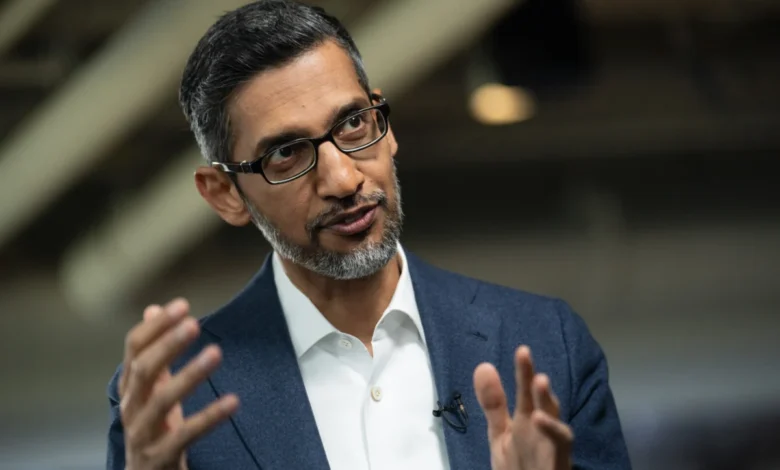
Alphabet Inc. has delivered a resounding response to months of investor anxiety regarding the viability of its massive investments in artificial intelligence, reporting a quarterly performance that exceeded even the most optimistic Wall Street projections. For much of the past year, market analysts and institutional shareholders have voiced public concerns that the billions of dollars funneled into data centers, proprietary chips, and AI research might represent a speculative bubble rather than a sustainable growth engine. However, the company’s latest earnings report suggests that these investments are beginning to yield tangible, high-velocity returns, particularly within the enterprise sector.
The centerpiece of this financial triumph is Google’s cloud business, which has undergone a radical transformation from a distant third-place competitor in the cloud infrastructure market to a dominant force driven by generative AI adoption. Alphabet reported that Google Cloud revenue skyrocketed to $24.8 billion this quarter, representing a staggering 82% increase compared to the same period last year. This growth rate not only eclipses the previous quarter’s 63% year-over-year jump but also significantly outperforms the $22.46 billion consensus estimate held by analysts. The surge indicates that the corporate world is not merely experimenting with AI but is actively integrating Google’s AI-optimized infrastructure into its core operations.
The Cloud Revolution and Enterprise AI Adoption
The primary catalyst for this unprecedented growth in cloud revenue is the rapid adoption of enterprise AI solutions and infrastructure. As businesses across various sectors—ranging from finance and healthcare to retail and logistics—seek to automate complex workflows and derive deeper insights from their data, they are increasingly turning to Google Cloud’s Vertex AI platform and its specialized hardware offerings.
Alphabet’s management highlighted that the cloud gains were not limited to current revenue but were also reflected in a massive "backlog" of contracted work. This figure, often referred to as Remaining Performance Obligations (RPO), has climbed to $514 billion. This backlog represents future revenue that has been secured through long-term contracts but has not yet been recognized on the balance sheet. A backlog of half a trillion dollars provides a significant cushion for the company, suggesting that the current momentum is not a temporary spike but the beginning of a multi-year cycle of enterprise digital transformation.
Furthermore, the integration of Google’s custom-designed Tensor Processing Units (TPUs) has allowed the company to offer cost-effective AI training and inference capabilities that compete directly with traditional GPU-based systems. By controlling both the hardware and the software stack, Google has positioned itself as a vertical powerhouse in the AI economy, attracting high-value enterprise clients who require high-performance computing at scale.
Record-Breaking Profitability and Revenue Streams
While the cloud business captured the headlines, Alphabet’s overall financial health showed remarkable strength across all divisions. The company’s net profit for the quarter reached a historic $112.1 billion. To put this into perspective, the company reported $28.1 billion in profit during the same quarter last year. This nearly fourfold increase in profitability suggests that Google has successfully navigated a period of intense restructuring and efficiency drives while simultaneously scaling its highest-margin business segments.
Total revenue for the conglomerate grew by 24% year-over-year, reaching $119.8 billion. This growth was bolstered by the continued dominance of Google Services, which includes Search, YouTube, and the Google Play Store. Revenue for this segment jumped 15% to $94.5 billion, proving that the core advertising business remains resilient despite the emergence of AI-powered search competitors.
The "Google Search & Other" category continues to benefit from the integration of AI Overviews, which provide summarized answers to complex queries. Despite initial concerns that AI-generated summaries might cannibalize traditional ad clicks, the data suggests that these features are actually increasing user engagement and providing new avenues for premium ad placements.
The Gemini Ecosystem: Scaling to One Billion Users
On the consumer side, Google’s AI chatbot and assistant, Gemini, is rapidly approaching a major milestone in user adoption. The company revealed that the Gemini app currently boasts 950 million monthly active users (MAUs). This represents a significant acceleration from the 750 million MAUs reported in the fourth quarter of 2025.
The growth of Gemini is a critical component of Alphabet’s strategy to maintain its gateway status on mobile and desktop platforms. By embedding Gemini across the Android ecosystem and integrating it into Workspace tools like Gmail and Docs, Google is creating an interconnected AI environment that becomes more valuable as more users participate. CEO Sundar Pichai noted during the earnings call that the company’s AI investments are "redefining what’s possible" across every part of the business, emphasizing that the momentum is "across the board," from consumer applications to deep-tech infrastructure.
Addressing the Capital Expenditure Dilemma
Despite the stellar financial results, the sheer volume of Alphabet’s spending remains a point of contention among some market observers. The company’s capital expenditures (CapEx)—the funds dedicated to building the physical backbone of the AI era—are estimated to fall between $180 billion and $190 billion for the full year. This capital is being deployed to construct massive data centers globally, purchase high-end semiconductors, and expand the fiber-optic networks necessary to support low-latency AI services.
During the earnings call, several analysts pressed Pichai on the timeline for these investments to reach full maturity. The concern is that if the AI "hype" cools, Alphabet could be left with expensive, underutilized infrastructure. Pichai, however, remained steadfast in his defense of the spending.
"I think our compute capacity investments in ’27… we are seeing strong demand indicators, including long-term deals," Pichai explained. He argued that the current market dynamics are actually "healthier" than they were a year ago, as the industry moves from theoretical potential to practical application. Pichai’s mention of 2027 suggests that Alphabet is playing a long game, positioning itself for a future where AI compute is as fundamental a utility as electricity or the internet itself.
Historical Context and the Road Ahead
To understand the significance of this quarter, one must look at Alphabet’s trajectory over the past three years. This report marks the company’s 12th consecutive quarter of double-digit revenue growth. In 2023 and early 2024, the narrative surrounding Google was one of a "tech giant in retreat," purportedly caught off guard by the sudden rise of OpenAI’s ChatGPT. Critics argued that Google’s "innovator’s dilemma" prevented it from disrupting its own search monopoly.
The latest figures tell a different story. Alphabet has managed to pivot its massive organizational structure toward an "AI-first" model with surprising speed. The transition from the "Bard" era to the "Gemini" era was not just a rebranding exercise but a fundamental overhaul of the company’s underlying models and go-to-market strategies.
Implications for the Tech Industry
Alphabet’s success has broader implications for the global technology sector:
- Validation of the AI CAPEX Model: Alphabet’s ability to turn massive spending into an 82% growth rate in Cloud provides a blueprint for other hyperscalers like Microsoft and Amazon. It suggests that the "AI bubble" may have more substance than skeptics believe.
- The Shift to Enterprise AI: While consumer chatbots get the most media attention, the real financial engine of the AI revolution is currently in the enterprise sector. Companies are willing to pay a premium for secure, scalable, and integrated AI tools.
- Hardware Sovereignty: Alphabet’s reliance on its own TPUs reduces its dependency on third-party chipmakers and improves its margins. This "vertical integration" is likely to be emulated by other tech giants seeking to insulate themselves from supply chain volatility.
Conclusion: A New Era of Dominance
As Alphabet looks toward the end of the fiscal year, the company appears to have successfully navigated the "trough of disillusionment" that often follows a major technological breakthrough. By delivering record profits alongside explosive growth in its most strategically important division, the company has provided a compelling case for its continued leadership in the age of artificial intelligence.
While the $190 billion annual spend will continue to be scrutinized, the $514 billion backlog and the near-billion user base for Gemini suggest that Alphabet is not just spending money—it is building an insurmountable moat. For investors, the message from Mountain View is clear: the AI investment cycle is not a burden to be endured, but a platform for the next decade of growth. The "very public worries" of the past appear to have been replaced by a quiet, data-driven confidence in a future where Google remains the central nervous system of the digital world.
Related posts: