Unlocking Frictionless Publishing: How Docsify-This Bridges Markdown and Modern Web Ecosystems

The modern landscape of digital publishing has long been dominated by a dichotomy between complex, heavyweight Content Management Systems (CMS) and lightweight, developer-centric static site generators. While tools like WordPress, Drupal, and enterprise Learning Management Systems (LMS) offer robust feature sets, they often introduce steep learning curves, demanding database management, intricate build processes, or cumbersome administrative interfaces just to publish a simple document. Conversely, lightweight markup languages like Markdown have gained immense popularity among developers, technical writers, and educators for their simplicity, portability, and human-readable syntax. However, deploying Markdown directly to the web typically requires setting up hosting environments, configuring domain names, and running continuous integration pipelines.
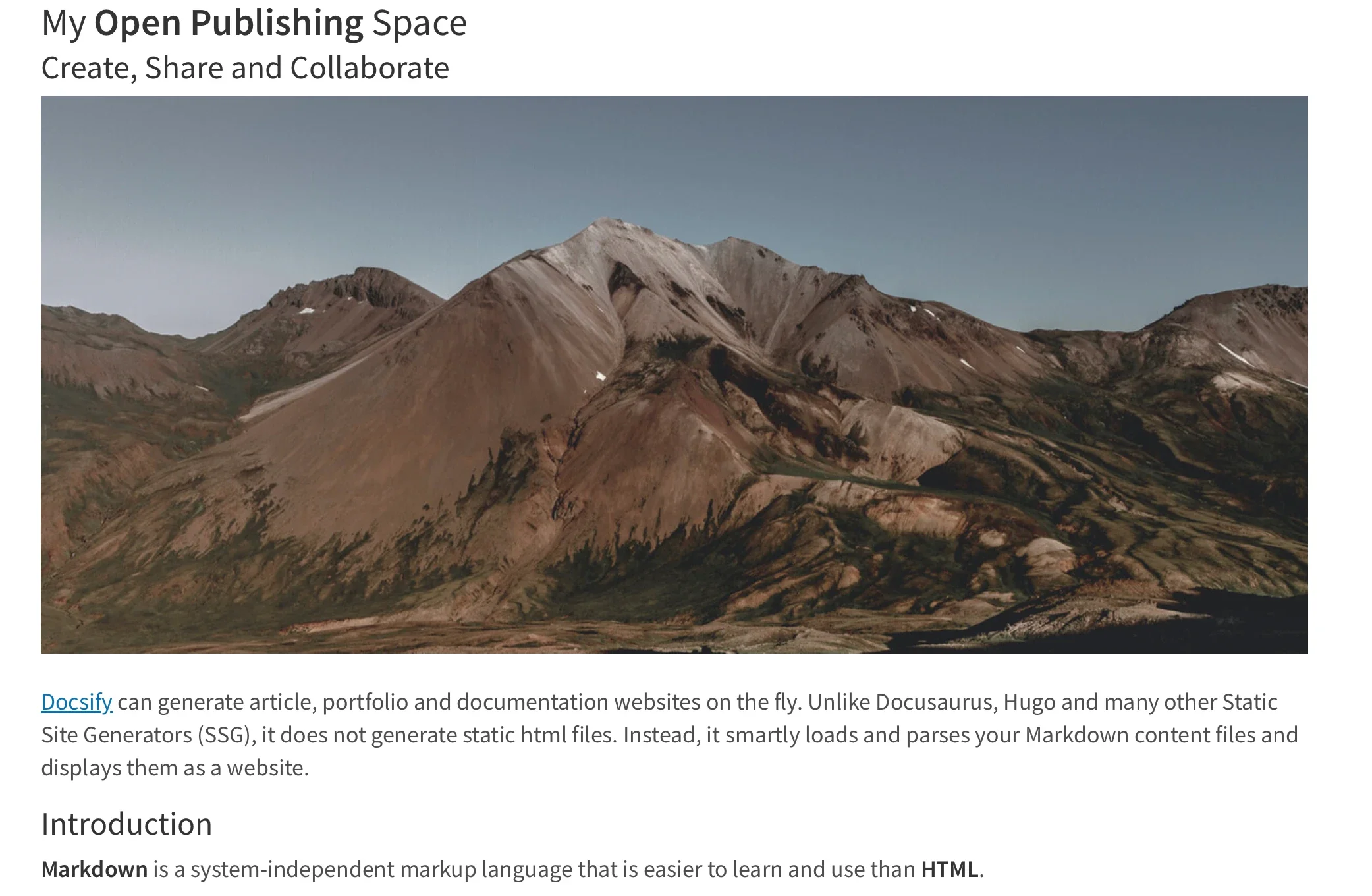
Enter Docsify-This, an open-source project built upon the foundation of Docsify.js, which aims to eliminate these technical barriers entirely. By transforming standard Markdown files stored in public repositories into responsive, standalone web pages on the fly, Docsify-This offers a zero-configuration publishing paradigm. This innovative approach allows creators to bypass traditional website setup procedures, enabling seamless integration of constraint-free Markdown and HTML content across a multitude of digital platforms, including corporate intranets, public-facing websites, and educational portals.

Understanding the Mechanics of Docsify-This
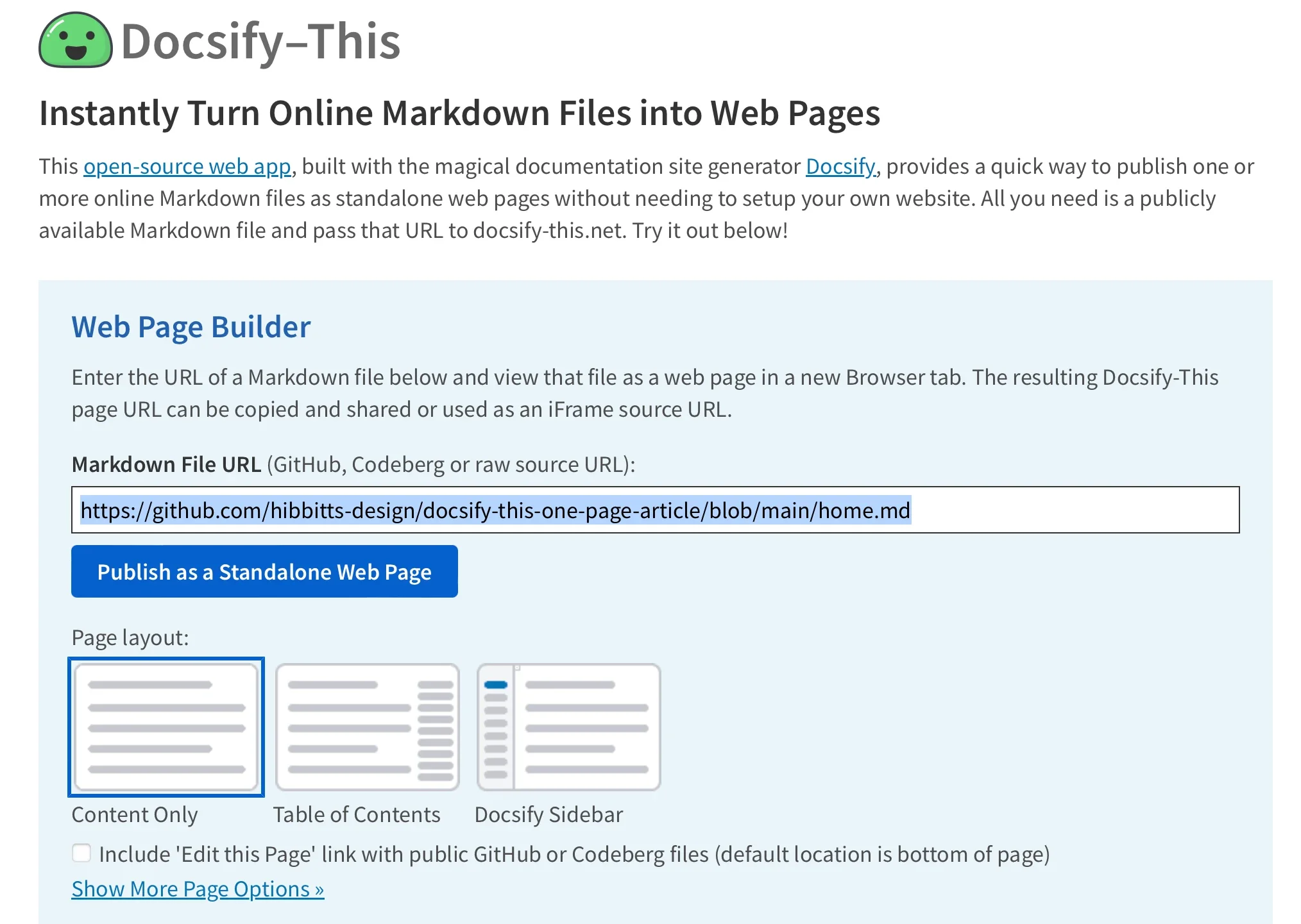
At its core, Docsify-This functions as a dynamic rendering engine. Users begin by authoring content in Markdown and storing the raw files in a publicly accessible Git repository, with platforms like GitHub and Codeberg natively supported. By utilizing the Docsify-This Web Page Builder interface—or by constructing specialized URL parameters—creators input the base path of their repository alongside the specific filename they wish to display. The service then processes the document, rendering it as a fully styled, responsive standalone web page complete with a unique, shareable URL.
This architecture decouples content creation from content presentation. Writers can update their Markdown source files within their preferred version control workflows or text editors—such as Visual Studio Code, Pulsar Edit, or Git-Cola—while the rendered output updates automatically wherever it is deployed. Furthermore, for repositories hosted on GitHub or Codeberg, Docsify-This can automatically generate an "Edit this Page" link, fostering a collaborative authoring environment akin to a wiki without requiring complex database-backed authorization systems. Because Docsify-This is fully open-source, organizations and individuals can also deploy their own instances on custom domains, mitigating risks associated with platform lock-in and ensuring long-term data sovereignty.
Granular Control Over Page Appearance and Design
One of the historical challenges of embedding raw text or Markdown into third-party systems is the visual inconsistency that often arises. Different platforms enforce distinct typography, color schemes, and layout constraints, frequently resulting in jarring visual experiences for end-users. Docsify-This addresses this challenge by granting administrators and content creators granular control over the visual presentation of rendered pages through standard CSS attributes passed directly via URL parameters.
Creators can seamlessly adjust properties such as font-family, font-size, link-color, and line-height to match the native aesthetic of any destination platform. Beyond global typography and layout tweaks, Docsify-This supports specialized Markdown CSS classes. For instance, authors can transform standard text links into styled interactive elements, such as buttons, simply by appending specific class declarations to their Markdown syntax. Additionally, advanced users are not limited to pre-packaged styles; they can embed custom CSS style blocks directly within their Markdown documents to define unique UI components, such as custom-styled call-to-action buttons, alert boxes, or tailored typography rules, ensuring brand consistency across diverse digital touchpoints.
Advanced Integration: iFrames and LMS Deployment
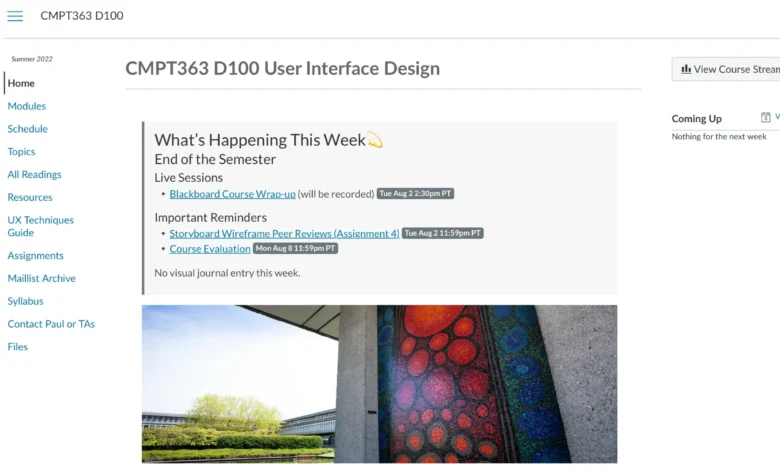
While sharing standalone URLs provides immediate utility, the true power of Docsify-This manifests when embedding rendered content into existing digital ecosystems. Educational institutions and corporate training departments frequently rely on Learning Management Systems such as Moodle, Canvas, or Blackboard. These platforms are traditionally rigid, making it difficult to update course materials quickly without navigating multi-tiered administrative menus.
Docsify-This solves this integration bottleneck by supporting robust iFrame embedding and external URL redirection. Because rendered Docsify-This pages can be styled to match the surrounding container, educators and administrators can embed entire course modules, reading lists, or resource pages directly into an LMS dashboard. For example, using Canvas’s built-in Redirect Tool or embedding an optimized iFrame tag, an instructor can pull live, version-controlled Markdown content directly into a student portal. When the instructor updates the source Markdown file in their GitHub repository, the changes propagate instantly to the LMS without requiring manual file uploads, format conversions, or system re-indexing. This workflow drastically reduces administrative overhead and ensures that learners always access the most up-to-date course materials.

The Broader Implications for Open Source and Collaborative Publishing
The release and adoption of tools like Docsify-This reflect a broader industry trend toward decentralization, minimalism, and interoperability in content management. For decades, publishing on the web required mastering specialized software stacks. The rise of Markdown democratized writing, but distribution remained fragmented. By bridging the gap between Git-based version control and universal web embedding, Docsify-This empowers non-technical and technical users alike to leverage professional-grade publishing workflows.
From an institutional perspective, adopting Markdown-first publishing workflows aligns closely with the principles of open educational resources (OER) and open-source documentation. Content stored in Git repositories is inherently transparent, auditable, and forkable. Other educators or developers can easily adapt, translate, or improve existing materials, contributing back upstream through standard pull requests. Furthermore, because Docsify-This is distributed under open-source licensing terms, it prevents vendor lock-in, allowing IT departments to audit the code, self-host instances on local infrastructure, and guarantee data privacy compliance—a critical requirement for modern educational institutions and enterprise environments.

As digital workspaces become increasingly modular, the demand for lightweight middleware that connects disparate platforms will only intensify. Docsify-This exemplifies how creative engineering can leverage existing open-source building blocks—such as Docsify.js and standard Git infrastructure—to solve persistent workflow friction. By lowering the barrier to entry for responsive web publishing and multi-platform embedding, Docsify-This and similar utilities are reshaping how organizations think about content distribution, proving that powerful publishing capabilities do not require complex, heavyweight software stacks.