AWS Elastic Beanstalk Unveils Fully Managed Cluster Mode Powered by Amazon EKS to Streamline Enterprise Application Management

Fifteen years after its initial market debut in 2011, Amazon Web Services (AWS) has radically overhauled its foundational application management service, AWS Elastic Beanstalk. Designed originally to abstract the complexities of provisioning servers, load balancers, and scaling groups for developers working in Java, .NET, Python, Node.js, PHP, Ruby, and Go, Elastic Beanstalk has evolved from a simple deployment utility into a robust operational engine. The latest milestone in this evolutionary journey is the official launch of a fully managed "Cluster Mode," a feature engineered to leverage Amazon Elastic Kubernetes Service (Amazon EKS) to handle modern, multi-application portfolios at scale.
This major release addresses the changing architectural demands of enterprise software engineering. While traditional monolithic applications could easily be isolated on individual EC2-backed environments, contemporary cloud architectures typically feature sprawling portfolios of microservices. Managing these microservices individually often introduces administrative overhead, resource fragmentation, and increased infrastructure costs. With the new Cluster Mode, AWS aims to eliminate these operational friction points, offering organizations a unified platform where multiple applications can share a centrally managed Kubernetes foundation without sacrificing security, isolation, or performance.
A Decade and a Half of Evolution: The Road to Cluster Mode
To fully understand the significance of Elastic Beanstalk Cluster Mode, industry analysts look back at the trajectory of AWS deployment paradigms. When Elastic Beanstalk first appeared in 2011, cloud computing was dominated by virtual machine instances. Developers sought a platform-as-a-service (PaaS) experience that allowed them to push source code or pre-packaged binaries while AWS managed the underlying operating system patching, capacity provisioning, and load balancing.
Over the subsequent fifteen years, the software development lifecycle underwent a seismic shift toward containerization and orchestration frameworks, spearheaded by Docker and Kubernetes. While Amazon EKS became the gold standard for container orchestration, configuring and maintaining production-grade Kubernetes clusters often required specialized DevOps expertise and continuous oversight. Recognizing this barrier, AWS systematically rebuilt Elastic Beanstalk’s operational backbone over the past several years.
This modernization wave included the introduction of AI-powered environment analysis in early 2026 to automatically diagnose health anomalies and suggest remediation steps, native GitHub Action integrations for seamless CI/CD pipeline deployment using minimal YAML configurations, and foundational upgrades incorporating OpenTelemetry-based observability. Furthermore, AWS integrated automated traffic-splitting deployments with built-in rollback capabilities, event-driven autoscaling mechanisms, dynamic secrets management through AWS Secrets Manager, and HTTPS configuration by default via AWS Certificate Manager. The unveiling of Cluster Mode represents the culmination of these architectural advancements, merging the simplicity of Elastic Beanstalk with the raw power and flexibility of Amazon EKS.

Core Architecture and Mechanics of Cluster Mode
The newly released Cluster Mode is specifically tailored for engineering teams that manage large portfolios of distinct applications or microservices. Rather than operating each service in an isolated virtual private server environment, teams can now provision a shared infrastructure layer underpinned by Amazon EKS, governed by a unified operational baseline.
As enterprise portfolios grow from a handful of services to dozens or hundreds, resource utilization often becomes inefficient under traditional isolated models. Cluster Mode optimizes cost structures by allowing multiple applications to share underlying compute clusters, driving down per-application expenditure as scale increases. Despite this resource sharing, applications maintain strict operational independence and security guardrails.
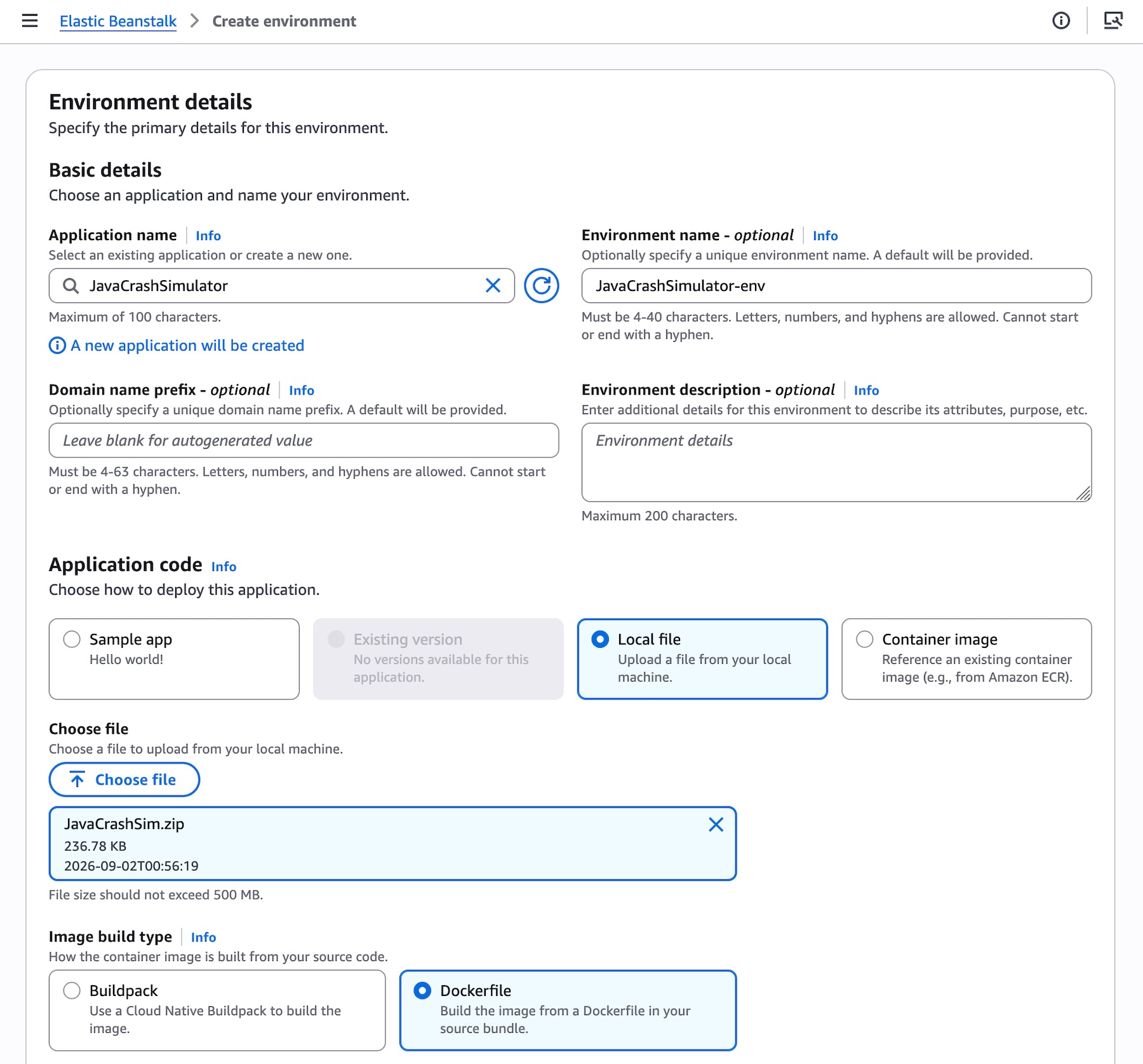
Deploying workloads via Cluster Mode retains the developer-friendly abstraction layers that Elastic Beanstalk is known for. Users can initiate deployments using raw source code, Dockerfiles, or fully baked container images stored in registries such as Amazon Elastic Container Registry (Amazon EKS or Amazon ECR).
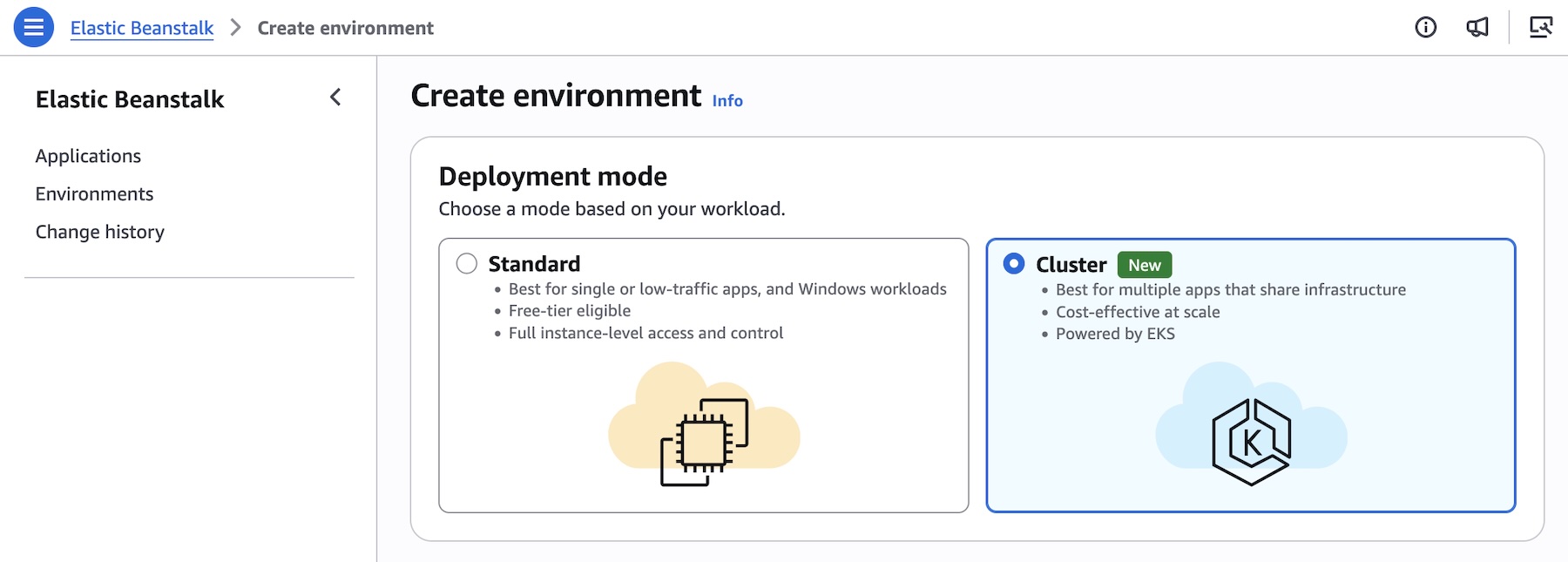
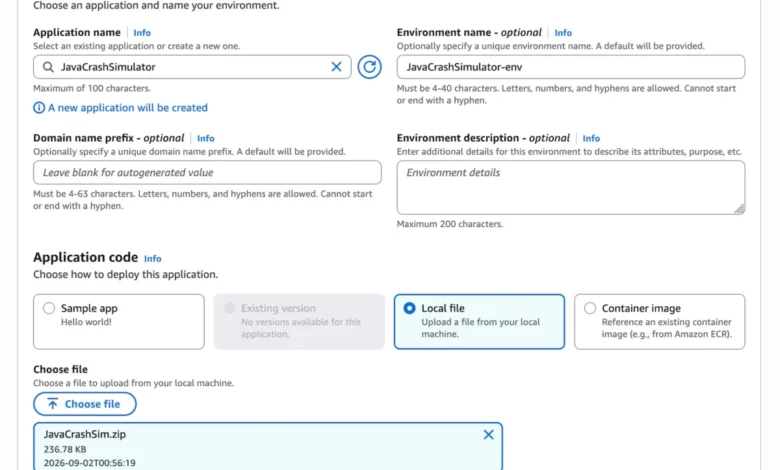
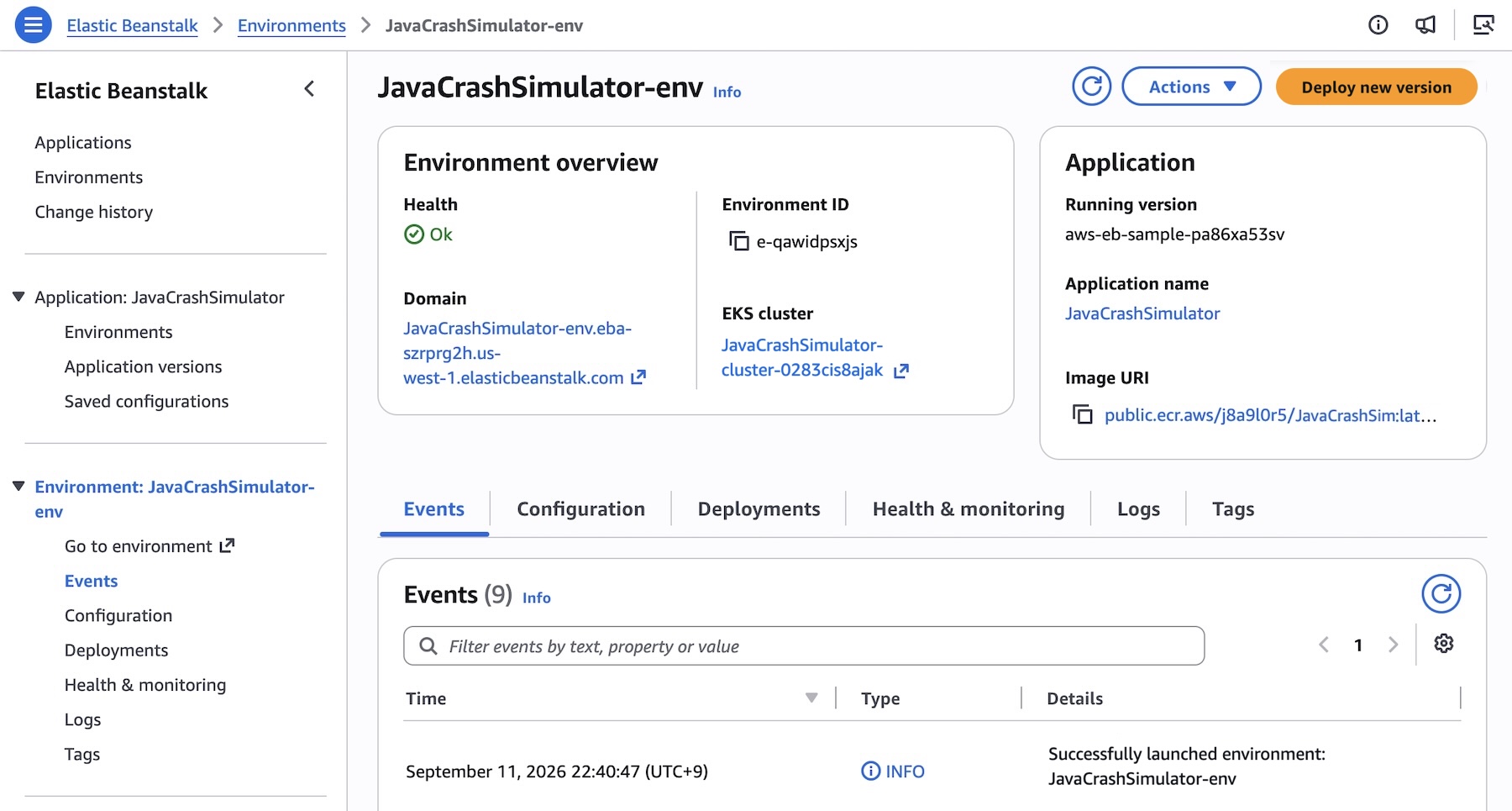
Transitioning an environment to Cluster Mode can be executed via the AWS Management Console, the AWS Command Line Interface (CLI), the dedicated EB CLI, or programmatic AWS SDKs. During environment creation via the console, administrators simply select "Cluster" as the deployment type. When using infrastructure-as-code or CLI workflows, developers configure environment options via JSON manifests specifying resource constraints such as minimum and maximum replica counts, CPU allocations, memory limits, and service ports. For instance, multi-service microservice architectures—such as a decoupled e-commerce application comprising frontend, cart, payment, and shipping services—can define public-facing Application Load Balancers (ALBs) exclusively for ingress points like the frontend, while internal microservices communicate securely within the private cluster network.
Coexistence with Standard Mode and Migration Pathways
A critical design consideration for enterprise adoption is business continuity. AWS has confirmed that the traditional Elastic Beanstalk Standard Mode, powered by Amazon Elastic Compute Cloud (EC2), remains fully supported and operational. Standard Mode and the new Cluster Mode can run concurrently within the exact same Elastic Beanstalk application structure.
This side-by-side compatibility enables engineering teams to execute migrations incrementally at their own pace rather than executing risky, all-at-once platform transitions. Built-in validation checks analyze existing configurations and confirm compatibility before any infrastructure modifications are applied, ensuring that legacy workloads are never forcibly migrated. AWS maintains that Standard Mode remains the optimal choice for specific deployment topologies, including legacy monolithic applications requiring direct OS-level access, stateful workloads unsuited for container ephemeral storage, or environments bound by strict regulatory constraints that predate containerization strategies.
Financial Models, Regional Availability, and Ecosystem Integration
AWS has structured the pricing model of Elastic Beanstalk Cluster Mode to ensure transparency. There is no additional software surcharge or management fee levied directly by Elastic Beanstalk for utilizing Cluster Mode. Instead, customers pay strictly for the underlying AWS primitives consumed by their workloads.
These incurred costs comprise the standard Amazon EKS control plane fee, EKS Auto Mode compute resources (which carry an approximate 12% pricing premium on underlying EC2 instance costs), Amazon ECR storage and data transfer, and Amazon CloudWatch monitoring logs. AWS explicitly noted that Elastic Beanstalk Cluster Mode is not eligible for the AWS Free Tier.
At launch, Cluster Mode is generally available across all AWS Regions where Elastic Beanstalk is supported. To assist developers and systems architects with adoption, AWS has integrated support for the feature into the AWS MCP Server and associated agent toolkits, allowing engineering teams to query APIs, search comprehensive documentation, verify regional availability, and troubleshoot deployment logs directly through their preferred AI-assisted development environments.
Implications for Enterprise Cloud Strategy
Industry analysts view the introduction of Elastic Beanstalk Cluster Mode as a strategic bridge reconciling the competing demands of developer velocity and infrastructure standardization. In many modern enterprises, developers often experience friction when forced to choose between the high-level abstraction of traditional PaaS solutions—which can sometimes obscure underlying infrastructure configurations—and the granular, steep learning curve of direct Kubernetes management via raw manifest files or Helm charts.
By encapsulating Amazon EKS within the familiar operational framework of Elastic Beanstalk, AWS has effectively reduced the operational barrier to container orchestration. Organizations can standardize their infrastructure estates on Kubernetes without requiring every development team to become experts in cluster management, RBAC configuration, and ingress controllers.
Furthermore, the integration of advanced observability, AI-driven diagnostics, and automated traffic management reflects a broader industry trend toward autonomous operations. As cloud environments scale in complexity, the ability of services to self-diagnose and remediate common health issues directly impacts system reliability and engineering productivity. For enterprises managing sprawling portfolios of microservices, Elastic Beanstalk Cluster Mode offers a compelling path forward: a fully managed lifecycle management paradigm where developers focus exclusively on application logic while AWS assumes total operational responsibility for the underlying stack.