AWS CloudFormation Enhances Infrastructure as Code Reliability with Universal Pre-Deployment Validation


The rapid evolution of cloud-native development has necessitated a paradigm shift in how organizations provision and manage infrastructure. AWS CloudFormation, the flagship infrastructure-as-code (IaC) service from Amazon Web Services, has officially announced a major expansion of its pre-deployment validation capabilities. This update transitions validation from an optional, change-set-specific feature to a mandatory, default component of all CreateStack and UpdateStack operations. By intercepting common configuration errors before provisioning begins, AWS is effectively neutralizing the "fail-slow" nature of traditional infrastructure deployment cycles, where developers often waited minutes for a stack to partially deploy before encountering a rollback due to a trivial syntax error.
The Evolution of Cloud Infrastructure Validation
For years, the standard workflow for IaC deployment involved a "deploy and observe" cycle. If a template contained a malformed property or a resource naming conflict, the CloudFormation engine would begin the provisioning process, only to halt and trigger a rollback once the underlying AWS service API rejected the request. This process not only consumed valuable time but also occasionally left infrastructure in a "dirty" state, requiring manual cleanup.
In late 2024 and early 2025, AWS introduced the initial phase of pre-deployment validation, which allowed users to catch syntax errors and resource conflicts during the Change Set creation process. While effective, this required developers to actively opt into a multi-step workflow. The latest announcement marks the integration of these checks into the foundational API layer. By running these validations automatically during every CreateStack and UpdateStack operation, AWS has effectively created a "shift-left" safety net that operates without any additional configuration overhead for the end user.
Detailed Analysis of New Validation Checks
The scope of these automated checks has been significantly broadened to cover three critical operational failure points:
- Service Quotas Limit Exceeded: Infrastructure scaling is frequently hindered by account-level limits. The new validation engine now cross-references incoming templates against existing Service Quotas. If a deployment—such as adding a new VPC or auto-scaling group—would breach a predefined limit, the system alerts the user before the API call is even attempted.
- AWS Config Recorder Conflicts: Misconfigurations involving the AWS Config Recorder can lead to compliance gaps. The system now detects potential conflicts where a stack update might inadvertently stop or interfere with the Config Recorder, preventing accidental lapses in governance.
- ECR Repository Delete Readiness: A common pain point in containerized environments is the failure to delete an Elastic Container Registry (ECR) repository because it contains images. The validation logic now checks for "delete readiness," informing users of potential lifecycle errors before they commit to an update that would fail halfway through.
Chronology and Operational Mechanics
The transition to this proactive validation model follows a deliberate engineering trajectory. Historically, CloudFormation was designed for eventual consistency. However, as the complexity of enterprise architectures grew, the overhead of rollback cycles became a drag on developer productivity.
- Phase 1 (The Foundational Period): CloudFormation focused on static template parsing (YAML/JSON schema validation).
- Phase 2 (The Change Set Era): The introduction of
CreateChangeSetallowed for a "dry run" of infrastructure changes, though it remained an elective step. - Phase 3 (The Current Shift-Left Standard): Automated validation is now embedded directly into the core
CreateStackandUpdateStackAPI calls.
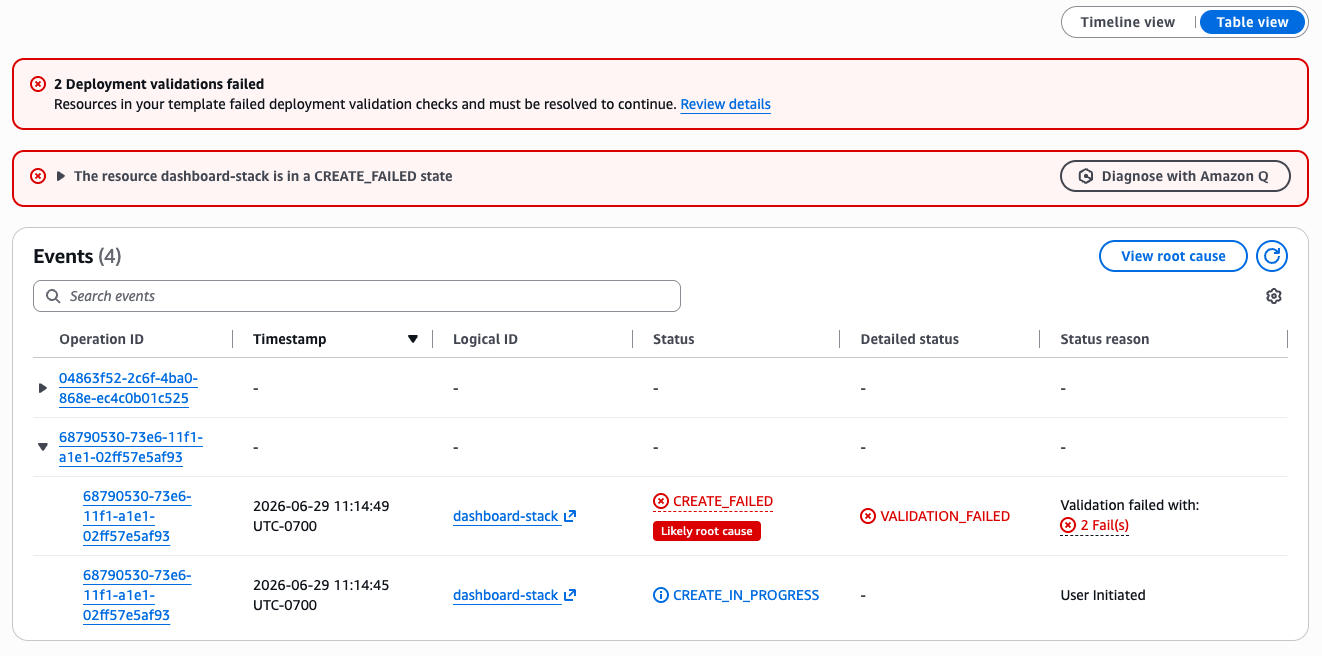
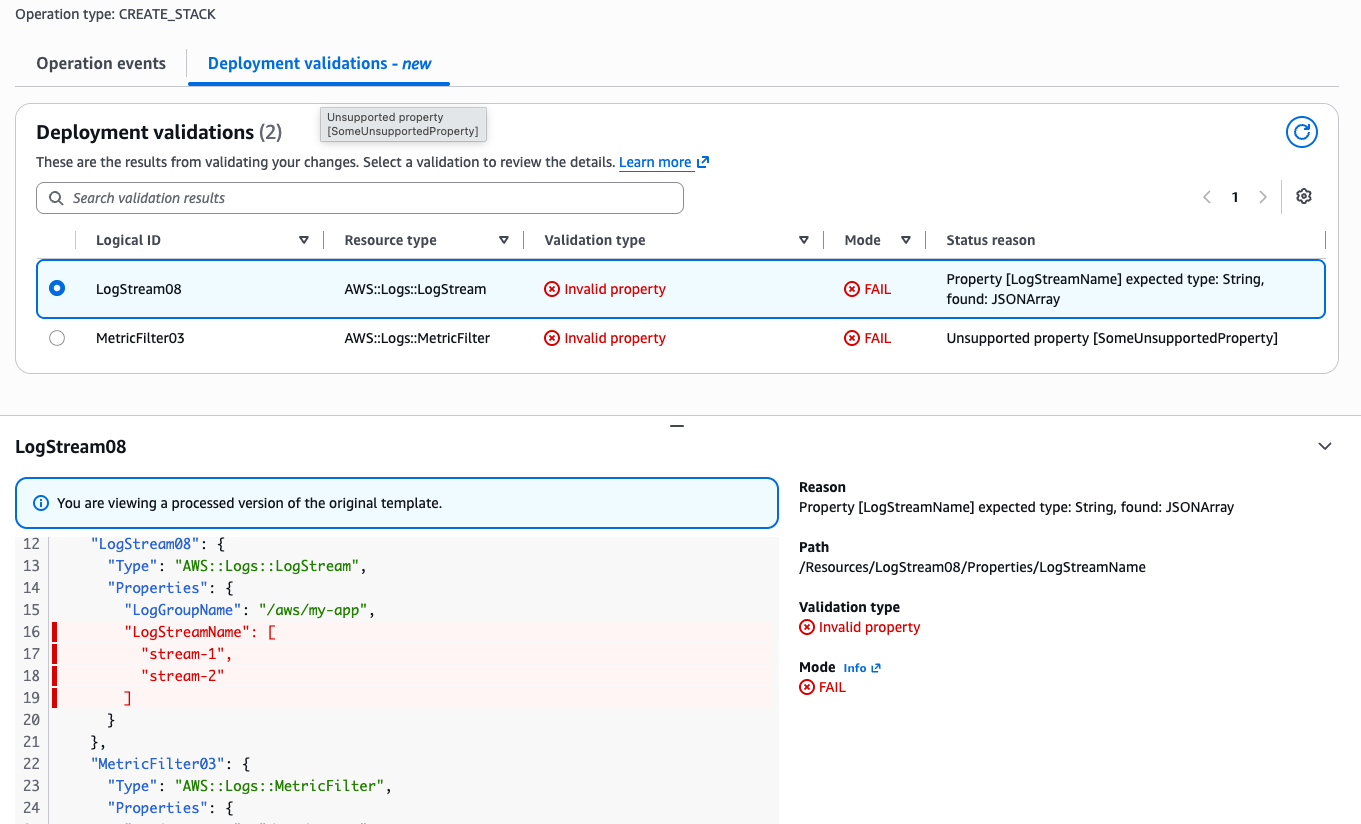
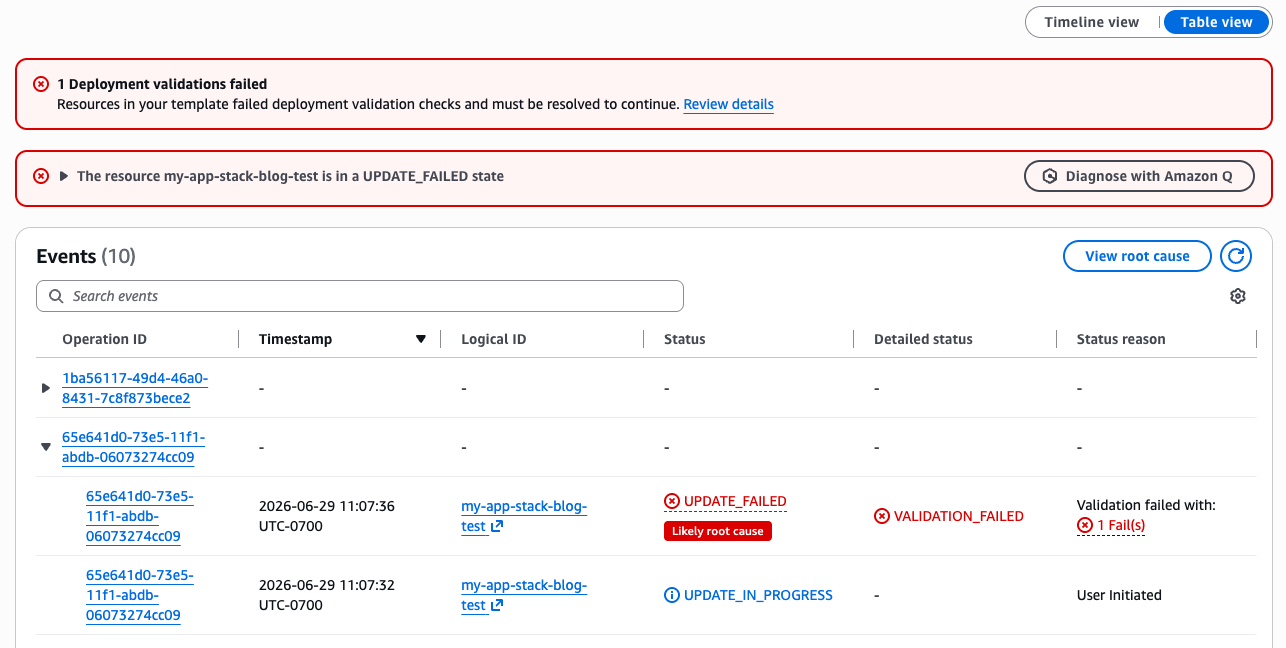
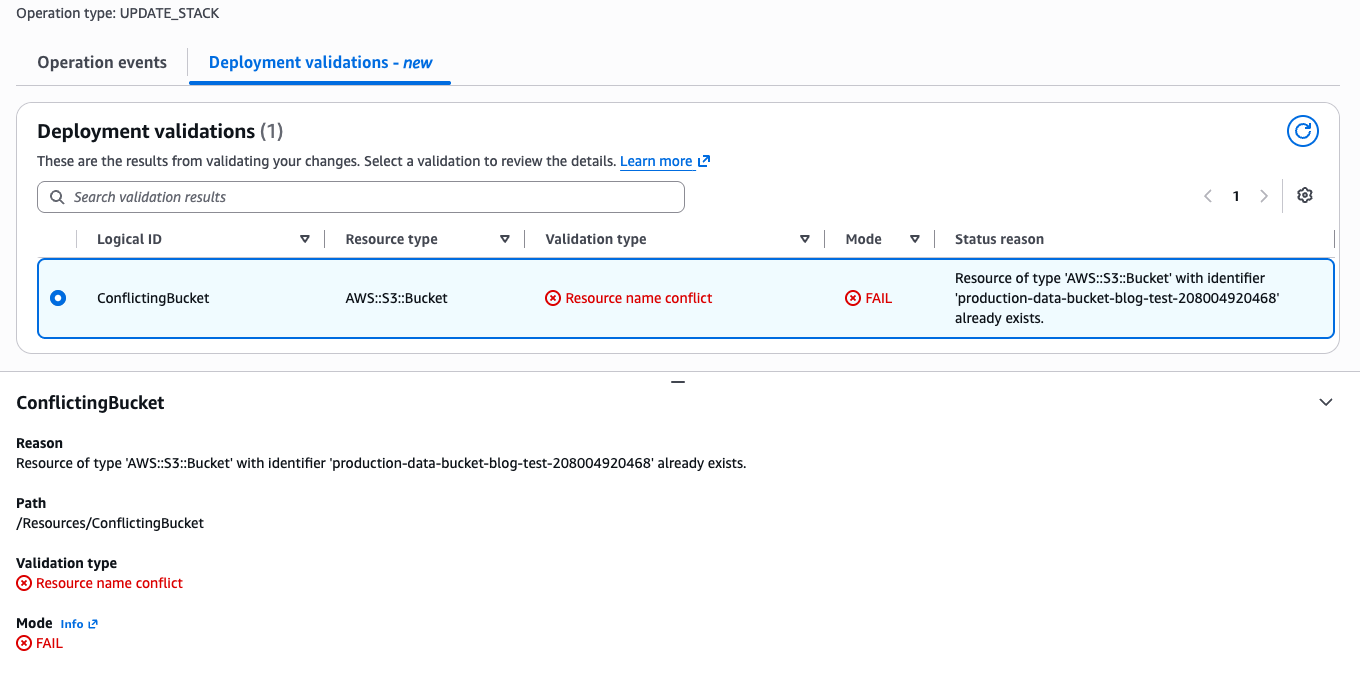
When a user initiates a stack operation, the system enters a "Validation Mode." If an error is detected, the process terminates immediately. This is categorized into two modes: "Fail," which halts the process entirely to protect the state of the account, and "Warn," which allows the operation to proceed while logging a notification for the administrator. This dual-mode approach provides the necessary flexibility for DevOps teams that may have legacy workflows or non-standard configurations.
Impact on the Developer Experience and CDK Integration
A significant highlight of this update is the introduction of the cdk validate command. For teams utilizing the AWS Cloud Development Kit (CDK), the abstraction of infrastructure into programming languages like TypeScript or Python often obscured the underlying CloudFormation resource mappings. By leveraging the new backend validation engine, cdk validate synthesizes the code, initiates a remote check, and—crucially—maps the resulting error back to the specific line of source code.
This creates a high-fidelity feedback loop. Instead of receiving a cryptic CloudFormation event ID, a developer receives a terminal output pointing to the exact file and line number within their IDE, drastically reducing the "mean time to repair" (MTTR) for infrastructure issues.
Broader Implications for AI and Autonomous Agents
The integration of these validations is not merely for human developers; it is a critical requirement for the rise of AI-driven infrastructure management. As organizations increasingly deploy AI agents to manage their cloud environments, the ability for those agents to "self-correct" becomes paramount.
If an AI agent attempts to provision a stack that violates a Service Quota, it previously might have resulted in a loop of failed attempts and unnecessary costs. With the new structured validation feedback, the agent can parse the error, interpret the ValidationStatusReason, and programmatically adjust the template parameters to conform to the account’s limits. This creates a closed-loop system where infrastructure can be maintained with minimal human intervention, effectively turning multi-minute debugging sessions into near-instantaneous automated corrections.
Security and Governance Considerations
While the primary goal of this update is developer velocity, there is an inherent security and governance benefit. By preventing resource conflicts and ensuring that infrastructure adheres to quotas and configurations, AWS is reducing the likelihood of "zombie" resources or partially deployed architectures that could introduce security vulnerabilities.
However, AWS has maintained the DisableValidation parameter. This acknowledges that in highly specialized or "edge case" scenarios, a developer might need to bypass these checks to force a deployment. While this option remains available, the industry standard is moving toward a strict reliance on these automated guardrails to ensure production stability.
Expert Reaction and Industry Outlook
Industry observers and DevOps practitioners have largely lauded the move as a long-overdue maturation of the CloudFormation service. By aligning the service’s behavior with the expectations of modern CI/CD pipelines, AWS is directly addressing the "infrastructure bottleneck."
"The shift toward pre-deployment validation at the API level is a massive win for reliability," noted an anonymous lead systems architect at a Fortune 500 firm. "In a large-scale enterprise environment, a failed stack update can trigger a cascade of alerts and potentially impact dependent services. Catching these errors in seconds, rather than after a five-minute deployment attempt, is the difference between a minor blip and a significant operational incident."
Looking Forward
As of this announcement, the features are available in all AWS Regions where CloudFormation is supported. No opt-in or complex configuration migration is required. Users simply need to ensure that their IAM policies are updated to support the new validation checks, particularly those involving Service Quotas and ECR.
This development underscores the ongoing trend of "intelligent infrastructure," where the cloud platform itself becomes an active participant in ensuring the success of the code it hosts. As AWS continues to integrate AI and automated governance into the core of its services, the role of the infrastructure engineer is evolving from "provisioner" to "policy architect," setting the parameters within which these automated systems operate. The future of cloud deployment lies in this intersection of speed, safety, and machine-readable intelligence.
Related posts: