The evolution of artificial intelligence has transitioned from the manual tuning of neural network weights to the precise orchestration of natural language instructions. As Large Language Models (LLMs) become central to enterprise workflows, developers are increasingly tasked with "prompt engineering"—the art of crafting the optimal input to elicit a desired output. A new methodology has emerged that applies the rigorous standards of traditional machine learning to this process: treating prompt templates as tunable hyperparameters. By integrating LLMs into the scikit-learn ecosystem, data scientists can now utilize grid search algorithms to systematically evaluate and select the most effective prompts for specific classification tasks.
The Shift Toward Systematic Prompt Engineering
In traditional machine learning, hyperparameter optimization—such as adjusting learning rates, tree depths, or regularization constants—is a foundational practice. Data scientists use techniques like GridSearchCV to automate the search for configurations that maximize model performance. Historically, prompt engineering has lacked this scientific rigor, often relying on anecdotal evidence, intuition, or manual "trial and error" to find phrasing that works.
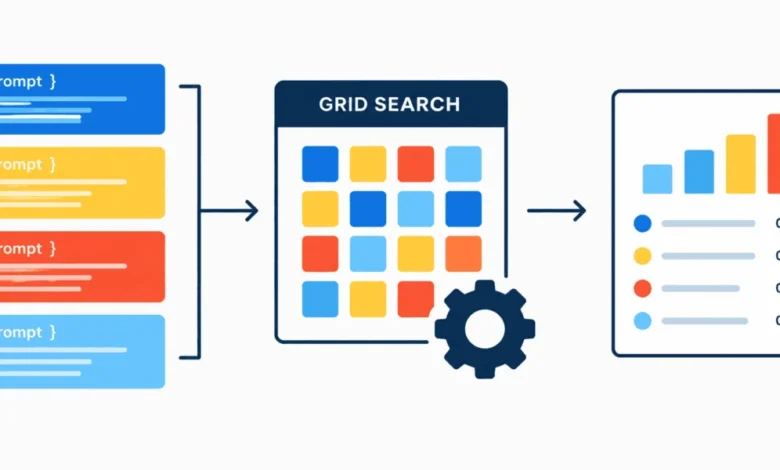
The integration of LLMs into standard data science pipelines, however, changes this dynamic. By wrapping a language model in a class that adheres to scikit-learn’s estimator interface, practitioners can treat the prompt itself as a variable. This allows the model to treat different linguistic structures as competing configurations, evaluating each against a ground-truth dataset to determine which instruction yields the highest accuracy, precision, or recall. This systematic approach effectively bridges the gap between probabilistic generative AI and deterministic predictive modeling.
Technical Implementation and Integration
The technical architecture required for this approach centers on the scikit-learn BaseEstimator and ClassifierMixin classes. By creating a custom wrapper, developers can encapsulate a model—such as the efficient Qwen2.5-0.5B-Instruct—within a framework that accepts a prompt_template parameter.
When the fit method is called, the system does not perform traditional weight updates. Instead, the predict method leverages the pre-trained knowledge of the model to infer categories based on the prompt template provided. Through the use of GridSearchCV, the system iterates through a predefined dictionary of candidate templates. For each fold in the cross-validation process, the model is tested against distinct prompts, such as "Classify as positive or negative: text" versus "Analyze this review. Output ‘positive’ or ‘negative’: text."
The model’s output is then parsed and compared against labeled ground-truth data. The template that consistently aligns the model’s generated text with the correct class label is identified as the optimal hyperparameter. This process ensures that the chosen prompt is not just "good enough" based on human perception, but quantitatively validated for a specific distribution of data.
Chronology of Prompt Optimization Techniques
The maturation of prompt engineering has followed a rapid timeline over the past three years:
- 2022: The emergence of "Chain-of-Thought" prompting demonstrated that providing a model with a logical structure significantly improved reasoning capabilities.
- 2023: The rise of Few-Shot Prompting highlighted the importance of providing examples within the prompt, leading to an industry-wide focus on "context management."
- 2024: The industry began shifting toward automated evaluation frameworks, such as RAGAS and G-Eval, which use LLMs to score other LLMs.
- 2025-Present: The current trend focuses on integrating these evaluation metrics directly into traditional machine learning pipelines, allowing for the automated selection of prompts based on performance benchmarks.
Supporting Data and Performance Metrics
Preliminary studies indicate that the sensitivity of LLMs to prompt variation is non-trivial. In zero-shot classification tasks, changing a single verb or adding a request for specific formatting can result in performance fluctuations ranging from 5% to 20% in accuracy. By utilizing grid search, developers can capture these nuances that might otherwise be missed.
For instance, in a four-sample test set consisting of polarized reviews, a simplistic prompt might yield 50% accuracy due to the model’s tendency to drift into generic chat responses. However, by testing variations that force the model into a constrained output format—such as explicitly commanding the model to "Output ‘positive’ or ‘negative’"—the accuracy can rise to 75% or higher. This delta represents the difference between a functional application and one that requires constant human oversight.
Implications for Enterprise AI Deployment
The transition to systematic prompt optimization carries significant implications for the scalability of AI solutions. First, it reduces the "human-in-the-loop" burden. Instead of an engineer manually testing fifty variations of a prompt, a computer performs the search overnight, identifying the best configuration based on empirical results.
Second, this method addresses the issue of model drift. As language models are updated by their providers, a prompt that performed well today may become less effective tomorrow. By maintaining a suite of prompt templates as hyperparameters, organizations can quickly re-run their grid search to identify which configuration performs best under the latest model version, thereby future-proofing their applications.
Finally, this approach democratizes high-performance AI. By utilizing the established scikit-learn interface, developers who are already proficient in traditional data science tools can incorporate LLMs into their workflows without needing to learn entirely new, complex MLOps frameworks. The barrier to entry for building robust, prompt-optimized text classifiers is lowered, allowing for more precise applications in fields ranging from customer sentiment analysis to automated document triage.
Challenges and Best Practices
While the automated grid search for prompts is a powerful tool, it is not a panacea. Several constraints must be acknowledged to ensure the validity of the results:
- Dataset Representativeness: The quality of the prompt selection is entirely dependent on the quality and size of the validation dataset. A grid search performed on a "toy" dataset of four items provides a proof of concept but lacks the statistical power for production environments. A robust validation set should contain hundreds or thousands of diverse examples to prevent overfitting to a specific subset of data.
- Computational Overhead: Running an LLM through multiple folds of cross-validation is resource-intensive. If the model is large or the dataset is expansive, the time required for a grid search can become prohibitive. Practitioners are advised to use smaller, high-performance models for the search phase, or utilize quantization to reduce latency.
- Prompt Sensitivity: Even with grid search, there is a limit to what a prompt can achieve. If the underlying model lacks the capability to differentiate between the classes in question, no amount of prompt engineering will resolve the issue. In such cases, the focus must shift from prompt tuning to fine-tuning the model or implementing a Retrieval-Augmented Generation (RAG) architecture.
Conclusion
The evolution of prompt engineering from a craft to an empirical science is a critical milestone in the adoption of generative AI. By treating prompt templates as hyperparameters, developers can bring the precision of grid search to the unpredictable nature of natural language. This methodology not only yields better performance but also provides a transparent, repeatable process for optimizing AI behavior. As the ecosystem continues to integrate LLMs with traditional statistical modeling tools, the divide between "AI development" and "software engineering" will continue to shrink, leading to more reliable, efficient, and scalable artificial intelligence systems. Through systematic testing and objective evaluation, we move closer to a future where AI interaction is not just conversational, but consistently high-performing.