Grounding Salesforce Agentforce With Neo4j: A Zero-Code, Multi-Agent Architecture for Enterprise Data

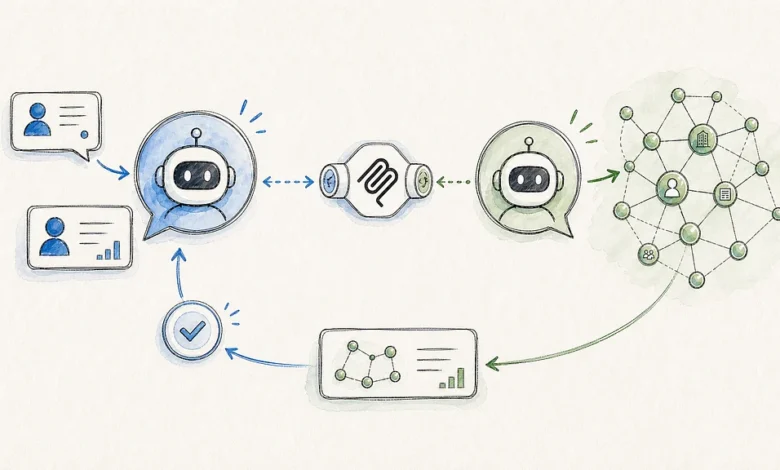
The integration of enterprise artificial intelligence platforms has reached a critical juncture where operational efficiency depends heavily on architectural design choices rather than raw model capability. In recent developments bridging customer relationship management and graph database technologies, Neo4j and Salesforce have advanced their collaborative capabilities by introducing a zero-code configuration model for grounding Salesforce Agentforce responses within a Neo4j knowledge graph. This technical evolution marks a significant departure from traditional low-level integration patterns, moving the industry toward a domain-specific, multi-agent paradigm that cleanly separates data retrieval logic from enterprise workflow management.
Architectural Evolution: From Low-Level Retrieval to Domain-Level Intent
Historically, connecting large language model (LLM) agents to enterprise data repositories required developers to bridge disparate systems using custom Apex actions, External Services, or the Model Context Protocol (MCP). While these methods provided immense flexibility, they often violated the classic software engineering principle of keeping data and compute together. Exposing low-level data retrieval tools meant that general-purpose agents bore the responsibility of understanding complex data models, constructing syntactically valid database queries—such as Cypher for graph databases—applying dynamic domain rules, and interpreting raw records.
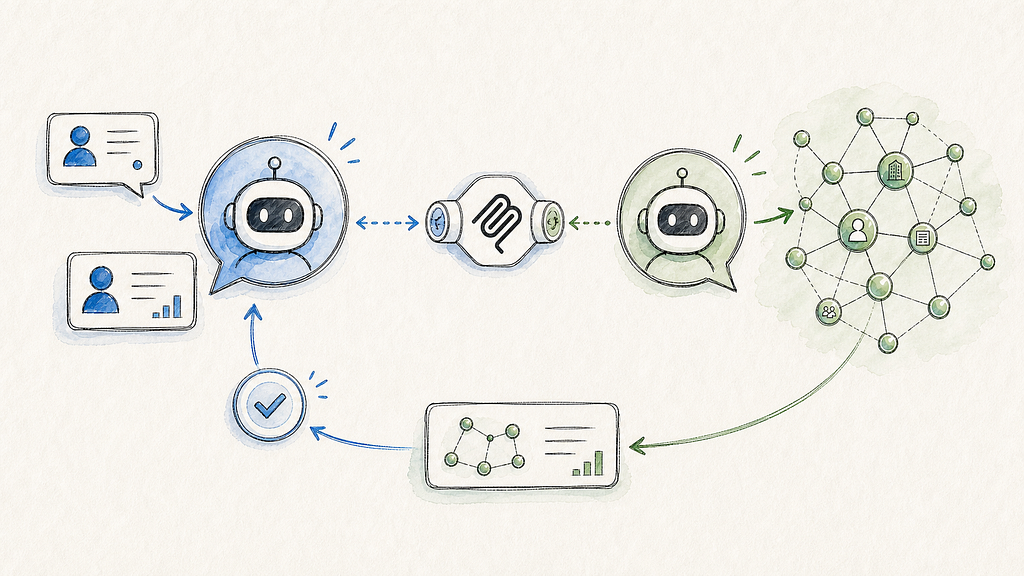
This approach placed an undue cognitive and computational burden on the calling agent. Recognizing this friction, the general availability of Neo4j Aura Agent shifts the paradigm. Instead of sending query plans to a generic agent, the architecture moves the question directly to the data. When Agentforce transmits a natural-language query over MCP, it no longer requires an understanding of data nuances, relationship types, or database schemas. The Aura Agent intercepts the request, translates it into structured Cypher Template parameters, executes deterministic graph operations, and returns an evidence-backed recommendation.
Chronology of the Integration Journey
The path toward a zero-code configuration model spans several iterative phases of enterprise AI deployment:
- Phase One – Custom Code Implementations: Early deployments relied heavily on bespoke Apex triggers and custom-coded API connectors to fetch Neo4j graph data into Salesforce. These systems demanded continuous maintenance and high engineering overhead whenever graph schemas evolved.
- Phase Two – External Services and MCP Adoption: The introduction of standardized protocols like the Model Context Protocol allowed agents to interact with external tools dynamically. However, this required general-purpose agents to assemble complex queries on the fly, increasing the likelihood of syntax errors and misinterpretations of domain logic.
- Phase Three – General Availability of Aura Agent: Neo4j launched Aura Agent into general availability, enabling managed graph intelligence. This milestone allowed systems to encapsulate graph logic directly within the database infrastructure.
- Phase Four – Zero-Code Configuration: The latest iteration eliminates custom coding entirely. Administrators can now configure multi-agent communication purely through settings, establishing secure, declarative links between Salesforce Agentforce and Neo4j Aura.
Two Agents, Two Distinct Roles
To understand the practical implications of this architecture, consider a standard commercial scenario utilizing the well-known Northwind sample dataset, which maps customer purchase orders, product categories, and supplier networks.
An internal customer service representative operating inside Salesforce encounters a routine stock depletion issue. The representative submits a natural-language prompt to the Salesforce agent: "Thomas Hardy from Around the Horn says their usual product is unavailable. Review their purchasing history, identify suitable in-stock options in the same category, and give me a grounded recommendation."
Under the multi-agent framework, this request is deliberately partitioned between two distinct entities, each maintaining a specialized jurisdiction:
- Salesforce Agentforce: This agent owns the employee conversation, intent routing, Salesforce permission structures, and CRM actions. If the workflow subsequently requires creating a support case, logging activity, or securing management sign-off via an approval step, that execution remains entirely within the Salesforce ecosystem.
- Neo4j Aura Agent: This agent owns the connected retail domain. It resolves customer identities, applies business validation rules, traverses historical purchasing graphs, and formulates a ranked recommendation backed by verifiable data evidence.
MCP functions strictly as a high-level contract between these systems. The communication is reduced to a concise natural-language query protocol, establishing a clean division of labor where graph-specific computation remains with the graph, and workflow-specific computation remains with the workflow.
Technical Differentiation: Aura Agent Versus Salesforce Prompt Templates
As enterprise architects evaluate multi-platform integrations, questions frequently arise regarding the functional overlap between platform-native features. A common comparison views the Neo4j Aura Agent as a mere counterpart to a Salesforce prompt template. Industry experts emphasize that the distinction is fundamentally operational.
A prompt template packages static or semi-dynamic generation instructions designed to guide an LLM’s output style and formatting. Conversely, an autonomous agent maintains an active reasoning and planning loop. It dynamically selects retrieval tools, evaluates operational results, and iteratively refines its responses. The Aura Agent encompasses prompt instructions while adding a complete execution layer: it selects graph-retrieval mechanisms, queries a targeted database instance, and exposes its capabilities via secured endpoints.
In enterprise deployments, the Aura Agent functions analogously to a specialized subagent equipped with dedicated actions and instructions, hosted natively on the Neo4j infrastructure. Meanwhile, the underlying Cypher Template acts as the graph equivalent of a deterministic custom action implemented via Salesforce Flow or Apex. The critical distinction lies in data locality: maintaining Cypher logic within Aura ensures that graph retrieval tests and optimization rules reside directly within the database layer, avoiding the need to wrap every query in platform-specific wrapper code.
Security, Authentication, and Governance
Enterprise adoption of generative AI invariably introduces strict security and compliance requirements, particularly regarding data exposure and user access controls. The integration between Salesforce Agentforce and Neo4j Aura Agent addresses these concerns through robust machine-to-machine (M2M) authorization protocols.
Rather than passing individual user credentials—which could complicate auditing and introduce security vulnerabilities—the Salesforce-to-Aura connection utilizes secure M2M authorization modes. This architectural decision ensures that:
- Individual user identities are not exposed to external MCP servers.
- External agents cannot trigger destructive write operations, as Aura Agent endpoints are restricted exclusively to read operations.
- Governance is strictly enforced at the platform boundary, satisfying corporate compliance mandates without sacrificing operational agility.
Broader Industry Implications and Analysis
The implementation of zero-code, multi-agent frameworks over standardized protocols like MCP signals a mature phase in enterprise software development. By treating Neo4j Aura Agent as a deep module—characterized by a minimalist interface backed by substantial internal domain complexity—organizations achieve true architectural locality.
If an enterprise alters its graph schema, adjusts product ranking algorithms, modifies privacy constraints, or optimizes Cypher execution paths, those changes remain entirely localized to the Neo4j environment. Salesforce Agentforce continues to send identical business inquiries, completely insulated from underlying database transformations.
This decoupling reduces technical debt, accelerates deployment timelines, and lowers the barrier to entry for organizations seeking to ground AI agents in complex enterprise data structures. As businesses increasingly demand reliable, hallucination-free AI interactions, the shift toward domain-local computation via graph intelligence platforms establishes a scalable blueprint for future enterprise architectures.