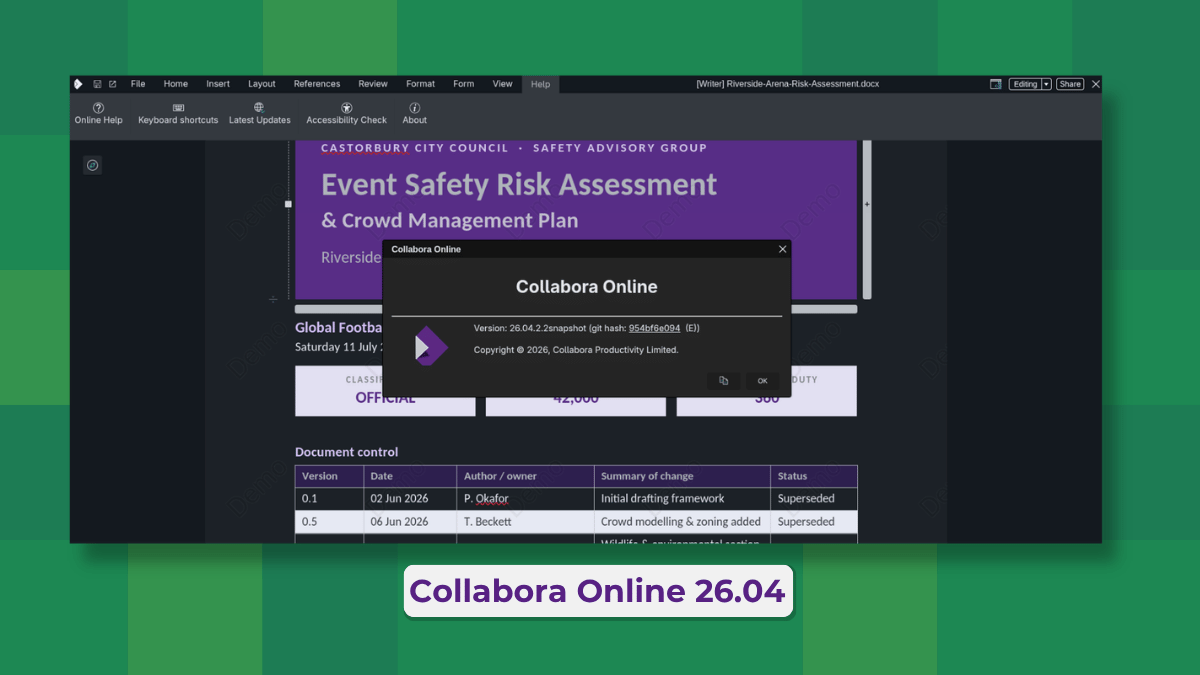
Collabora Online 26.04 Marks Ten Years of Open Source Enterprise Productivity with Major AI Integration and Enhanced Collaboration Tools

Collabora Productivity, the leading architect behind the enterprise-grade version of LibreOffice for the cloud, has officially released Collabora Online 26.04. This release represents a significant milestone, coinciding with the tenth anniversary of the company’s efforts to provide a viable, open-source alternative to proprietary giants such as Microsoft 365 and Google Workspace. By focusing on data sovereignty, privacy, and deep document interoperability, Collabora has established itself as a cornerstone of the digital sovereignty movement, particularly within European government and enterprise sectors.
The version 26.04 release arrives following a rigorous testing phase through the Collabora Online Development Edition (CODE) 26.04, which was introduced to the community in June. This enterprise-ready version brings a suite of new features, most notably a deeply integrated Artificial Intelligence (AI) assistance framework that spans the entire productivity suite, alongside significant architectural improvements to spreadsheet collaboration and document versioning.
A Decade of Open Source Advocacy and Infrastructure Control
Since its inception, Collabora Productivity has championed the idea that organizations should not be forced to sacrifice control over their infrastructure or document privacy to achieve modern collaboration. Over the past decade, the organization has evolved from a consulting firm specializing in open-source office suites to a primary maintainer of the LibreOffice codebase and a developer of high-performance online editing tools.
The release of Collabora Online 26.04 reflects a decade of engineering refinement. Unlike its competitors, which operate primarily as Software-as-a-Service (SaaS) models on proprietary clouds, Collabora Online is designed for self-hosting. This allows organizations to deploy the suite on their own servers or within a trusted local data center, ensuring that sensitive documents never leave the organization’s perimeter. This model has proven particularly attractive to the public sector, healthcare providers, and legal firms who are bound by strict data residency and GDPR requirements.
Strategic AI Integration: Privacy and Customization
The centerpiece of the 26.04 update is the introduction of AI assistance across Writer, Calc, and Impress. However, following Collabora’s core philosophy, the AI implementation differs significantly from the "black box" approaches seen in mainstream office suites.
The AI features in Collabora Online 26.04 are strictly opt-in and vendor-neutral. Organizations are not tethered to a specific AI provider. Instead, administrators can choose to connect the suite to a commercial API of their choice or, for maximum security, deploy a self-hosted Large Language Model (LLM) on their own infrastructure. This "Bring Your Own AI" approach ensures that document data is not used to train external models without explicit consent and technical control.
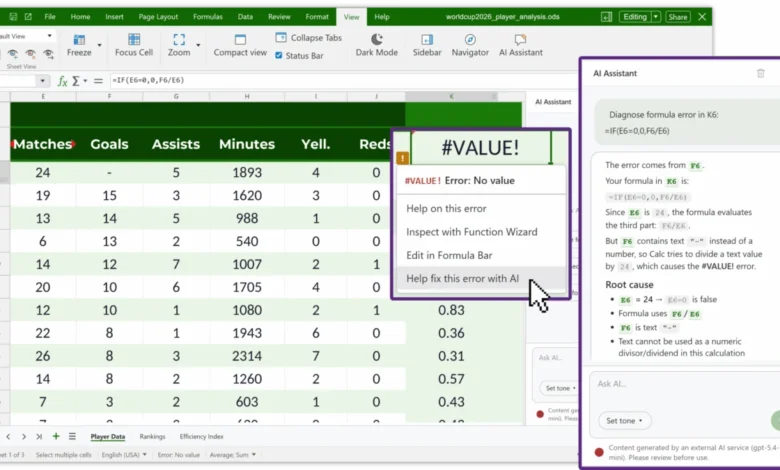
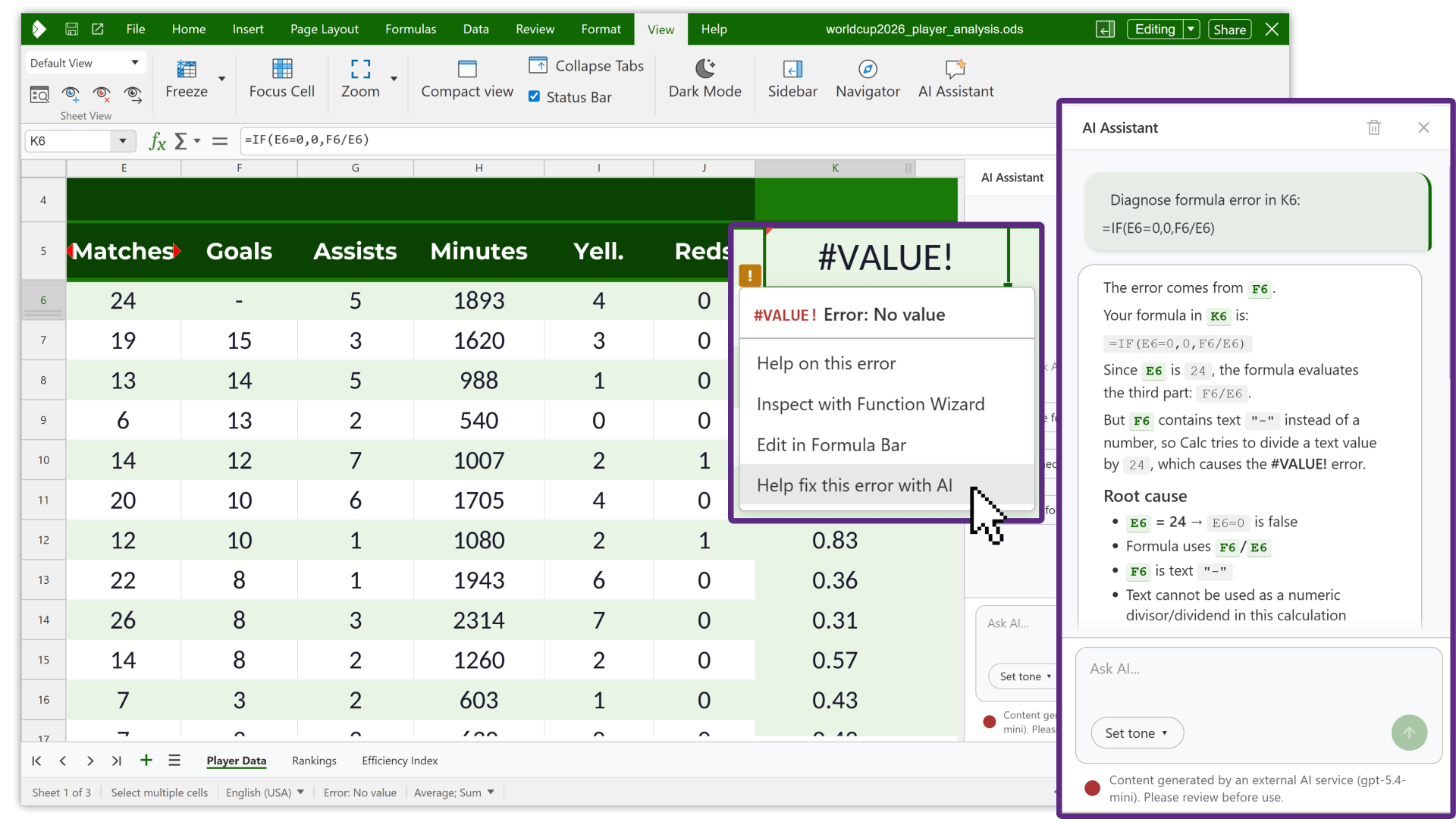
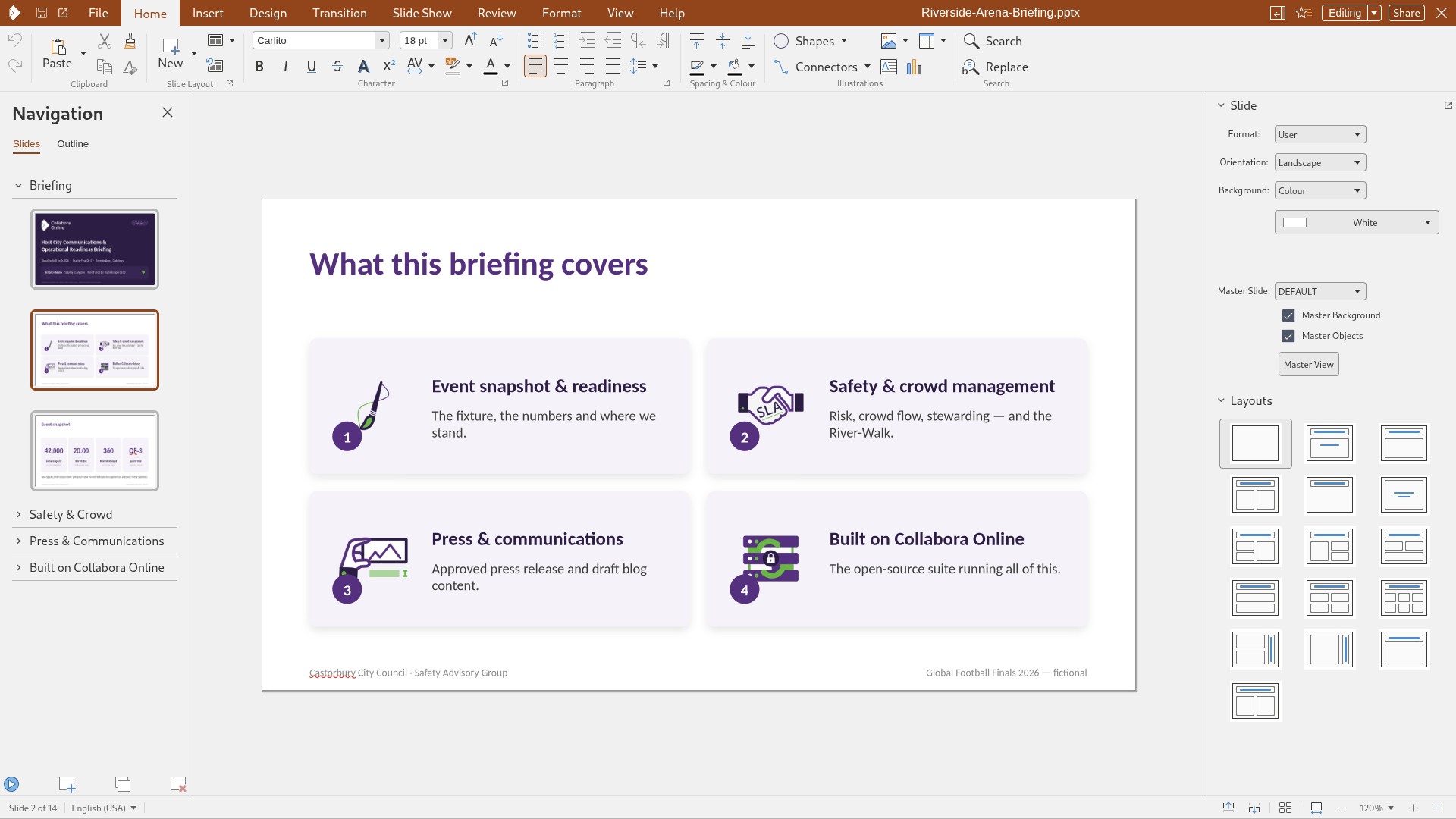
In the word processor, Writer, the AI assistant aids in drafting content, summarizing long reports, and rewriting passages for different tones or lengths. In the spreadsheet application, Calc, the AI assists users in diagnosing complex formula errors and interpreting large datasets. Meanwhile, in Impress, the AI helps condense lengthy source documents into concise, slide-ready bullet points, streamlining the presentation creation process.

Enhancing Collaborative Workflows in Calc and Impress
Beyond AI, the update introduces several features designed to solve long-standing friction points in collaborative document editing. One of the most significant additions to Calc is the implementation of per-user sheet views.
In traditional collaborative spreadsheets, if one user applies a filter or sorts a column, the view changes for everyone currently viewing the document. This often leads to confusion in large teams. The new per-user sheet view allows an individual to filter, sort, and rearrange data independently. This means one analyst can focus on specific data subsets while another team member views the entire dataset simultaneously, without interference. Furthermore, Calc has received upgrades to its pivot table functionality, now supporting calculated values, and the inclusion of a wider array of modern functions to maintain compatibility with the latest Excel standards.
For Impress, the presentation tool, the update introduces "Follow-Me Slideshows." This feature is designed for remote or hybrid meetings where a presenter needs the audience to stay synchronized with their progress. While the audience’s view automatically tracks the presenter’s active slide, individuals retain the ability to pause the sync and scroll back to previous slides to review information at their own pace before rejoining the live presentation.
Advanced Document Auditing and Accessibility in Writer
Writer has received a substantial overhaul to its document comparison engine. This tool is critical for legal and administrative workflows where tracking changes between different versions of a contract or report is paramount. The updated engine allows users to compare the current draft against an earlier version stored on the server or a file uploaded from a local drive.
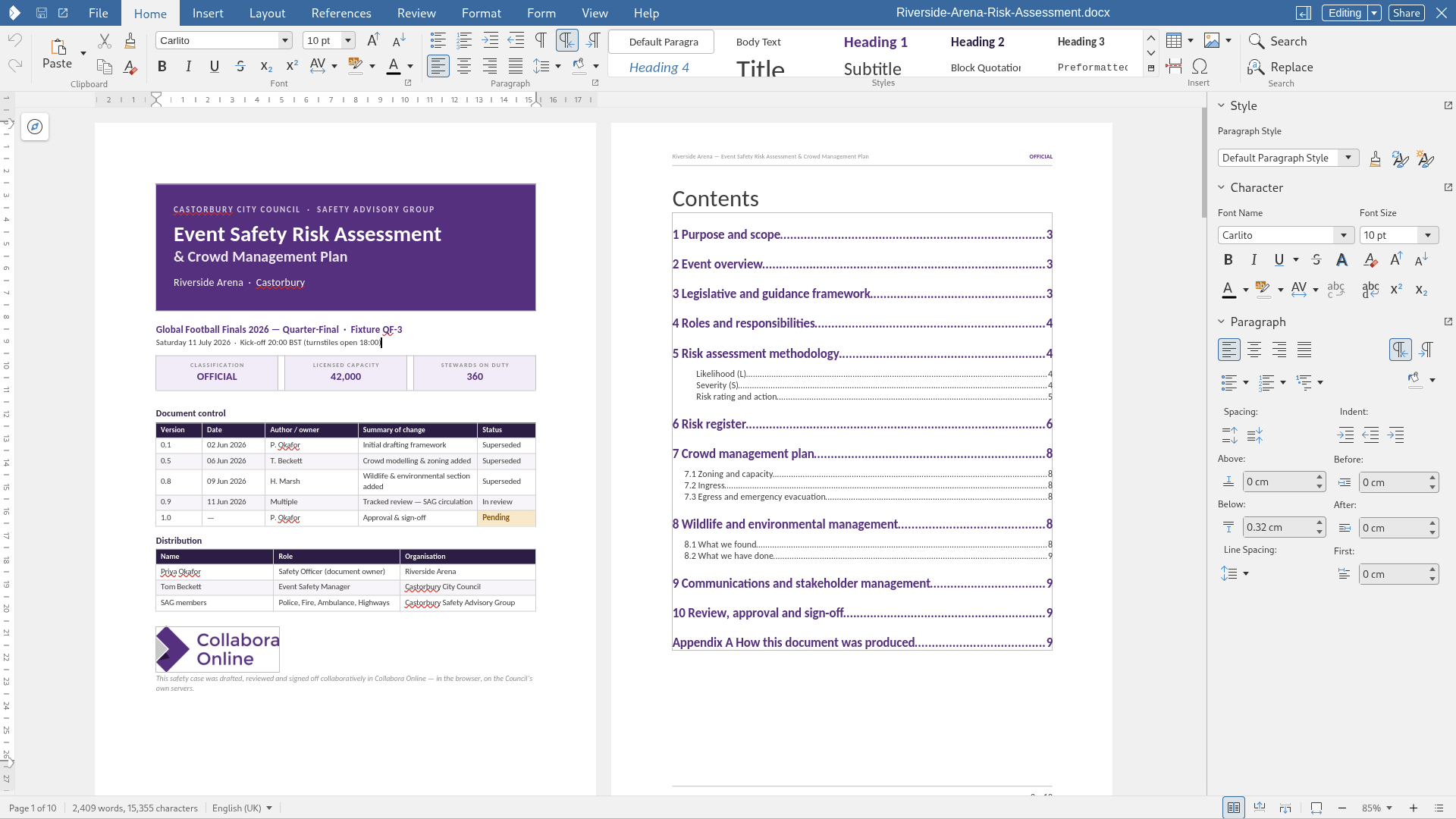
The comparison tool highlights every change, providing metadata on who made the edit and when it occurred. Users can choose between a side-by-side view for visual clarity or a tracked-changes panel for a more traditional review process.
In addition to these functional updates, Collabora Online 26.04 has achieved BITV 2.0 (Barrierefreie-Informationstechnik-Verordnung) accreditation. This is a German standard for web accessibility, ensuring that the software is usable by individuals with disabilities. Meeting these stringent requirements is a prerequisite for many government contracts within the European Union, further solidifying Collabora’s position in the public sector market.
Chronology of Development and the CODE Ecosystem
The release cycle of Collabora Online follows a distinct path designed to balance innovation with enterprise stability. The timeline for version 26.04 highlights this process:
- Early 2024: Development of core AI integration modules and the new document comparison engine begins within the LibreOffice core.
- June 2024: The release of CODE 26.04. This "Collabora Online Development Edition" is the community-facing version used for stress-testing and gathering feedback from early adopters and home users.
- Late June – Early July 2024: Community feedback leads to bug fixes and performance optimizations, particularly concerning the AI API connectors and the new spreadsheet viewing modes.
- July 2024: The official launch of Collabora Online 26.04. This version includes a Service Level Agreement (SLA), signed security updates, and long-term support (LTS) guarantees for enterprise customers.
Official Commentary: Balancing Innovation and Control
Michael Meeks, CEO of Collabora Productivity and a long-time leader in the open-source community, emphasized that the 26.04 release is about empowering the user rather than the vendor.
"Collabora Online 26.04’s highly customizable and tightly controlled AI assistance enables users to safely accelerate their document-related tasks," Meeks stated during the launch. "Likewise, the new editing and review features, improved accessibility, and greater document interoperability will smooth the everyday experience for all users, making it more intuitive and flexible."
Meeks’ comments highlight a growing trend in the software industry: the move toward "Sovereign Clouds." As organizations become increasingly wary of vendor lock-in and the potential for data harvesting by large tech conglomerates, the demand for tools that offer a high-end user experience without the associated privacy risks has surged.
Market Context and Broader Implications
The release of Collabora Online 26.04 comes at a time when the productivity software market is undergoing a fundamental shift. For years, Microsoft and Google held a near-duopoly on cloud-based document editing. However, the rise of open-source platforms like Nextcloud and ownCloud, which often integrate Collabora Online as their default office suite, has provided a decentralized alternative.
According to industry data, the demand for digital sovereignty is no longer a niche concern. National governments, particularly in Germany, France, and the Netherlands, have actively transitioned away from proprietary software to avoid dependency on non-European providers. By providing a 10-year track record of stability and a feature set that now includes AI and advanced collaboration, Collabora is positioned as a primary beneficiary of this shift.
The technical implications are also noteworthy. By proving that high-performance, real-time collaborative editing can be achieved through a self-hosted, open-source model, Collabora challenges the notion that the "cloud" must mean "someone else’s computer." The inclusion of AI features that respect user privacy sets a precedent for how the next generation of productivity tools might be built—prioritizing the security of the user’s data over the convenience of the provider’s ecosystem.
As Collabora Online 26.04 begins its rollout to global enterprises, the focus will likely shift to how these organizations utilize the new AI framework. The success of this release will be measured not just by its adoption rates, but by its ability to maintain the high standards of interoperability and security that have defined the suite’s first decade.
Related posts: