Unlocking Intelligent Android Experiences: Google’s Jetpacker App Showcases the Future of Personalized, Agentic AI on Mobile

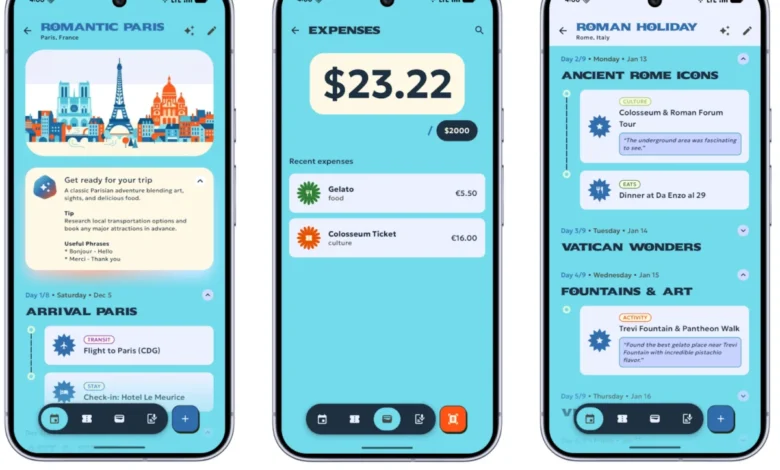
Google’s Android Developer Relations team has unveiled Jetpacker, a comprehensive technical showcase app designed to demystify the integration of Generative AI (GenAI) into mobile applications. This initiative, detailed in a series of forthcoming technical blog posts, aims to guide developers through the complex landscape of AI models, API choices, and architectural decisions required to build personalized, intelligent, and agentic experiences on Android. The Jetpacker app, initially developed as a technical demonstration for Google I/O, exemplifies these advanced capabilities, offering a glimpse into a future where mobile apps are not just tools but proactive, intelligent assistants.
At its core, Jetpacker serves as a robust travel planning and exploration platform. It meticulously organizes trip itineraries, details individual events within those trips, and presents all information through an expressive Material Design UI, adhering to Android development best practices. The app’s underlying architecture, built using Antigravity, allows for a seamless user experience, managing complex data structures related to travel plans. Notably, the entire Jetpacker codebase is open-source, providing developers with direct access to implementation details and fostering community learning and contribution.
The series of blog posts will systematically dissect Jetpacker’s features, offering detailed implementation guidance, practical code snippets, and architectural insights. This approach aims to empower Android developers to replicate and innovate upon these intelligent functionalities within their own applications. The journey begins with a foundational mobile app and progressively transforms it into a sophisticated AI-driven experience.

On-Device Intelligence: Privacy and Efficiency at the Forefront
A significant aspect of Jetpacker’s AI integration lies in its utilization of on-device inference. This approach offers several compelling advantages, chief among them being the elimination of additional cloud inference costs. By processing AI models directly on the user’s device, developers can bypass the recurring expenses associated with cloud-based AI services. Furthermore, on-device processing ensures uninterrupted functionality, as it does not rely on an active internet connection. This is particularly crucial for travel applications where connectivity can be inconsistent.
Perhaps the most significant benefit of on-device AI is the enhanced privacy it affords users. All data processing occurs locally, meaning sensitive personal information is never transmitted to the cloud. This addresses growing user concerns about data security and privacy, fostering trust and confidence in the application. Jetpacker demonstrates this principle through several key features:
- Trip Itinerary Summarization: Leveraging on-device GenAI models, Jetpacker can condense lengthy trip itineraries into concise summaries, providing users with a quick overview of their travel plans without requiring an internet connection. This feature is particularly useful for users who want to access essential trip details quickly.
- Expense Management: The app incorporates on-device AI for parsing and categorizing expenses. Users can scan receipts, and the AI can automatically extract relevant information such as merchant, date, and amount, streamlining financial tracking during a trip.
- Voice Notes Processing: Jetpacker enables users to record voice notes related to their travels. On-device AI can then transcribe these notes, allowing for easier searching and organization of spoken memories or important details.
The adoption of on-device inference in these critical areas highlights Google’s commitment to privacy-first AI development. It also reflects the increasing power and efficiency of mobile hardware, enabling complex AI tasks to be performed locally.
Cloud and Hybrid Inference: Expanding Capabilities with World Knowledge
While on-device AI offers significant advantages, certain use cases necessitate the power and scope of cloud-based AI models. These scenarios often involve AI models with broader world knowledge, larger context windows for understanding complex queries, and advanced capabilities for handling intricate tasks. Jetpacker strategically employs cloud and hybrid inference to address these requirements, demonstrating a balanced approach to AI integration.

The blog post series delves into how developers can leverage cloud models for tasks that demand extensive information retrieval or sophisticated reasoning. This can include features that interact with real-time global data or require a deep understanding of nuanced contexts.
The concept of hybrid inference is particularly noteworthy. This approach allows applications to dynamically choose between on-device and cloud models at runtime. This flexibility offers a powerful optimization strategy: utilizing on-device inference when feasible to reduce costs and enhance privacy, while seamlessly switching to cloud-based models when their advanced capabilities are required. This ensures that the app can support a wide range of Android devices, from high-end models capable of sophisticated local processing to older devices that may benefit more from cloud offloading.
Jetpacker showcases cloud and hybrid inference through several sophisticated features:
- Museum Assistant with Web Grounding: This feature allows users to point their device at an exhibit, and the AI can provide detailed information by accessing and grounding its responses in real-time web data. This requires access to a vast knowledge base and the ability to synthesize information from external sources.
- Hybrid Restaurant Review Drafting: For generating restaurant reviews, Jetpacker utilizes a hybrid approach. It might use on-device models for initial text generation or sentiment analysis, and then leverage cloud-based models to incorporate broader contextual information, such as recent reviews or local dining trends, to produce more comprehensive and engaging content.
- Hotel Support Chat with Custom-Routed Live Translation: This feature demonstrates the power of cloud AI for real-time communication. Users can interact with a hotel support chatbot, and the system can seamlessly translate conversations in real-time using custom-routed cloud AI models. This ensures that language barriers are minimized, enhancing the user’s travel experience.
The strategic implementation of cloud and hybrid inference in Jetpacker underscores the evolving landscape of mobile AI, where a combination of local and remote processing can unlock unprecedented levels of functionality and user engagement.

System Integration: Seamlessly Connecting Apps with the Android Ecosystem
Beyond the direct AI features within the app, Jetpacker also explores the crucial aspect of system integration. This involves enabling the app’s core capabilities to interact directly with the Android operating system itself. By leveraging the AppFunctions API, Jetpacker demonstrates how intelligent functionalities can be exposed to the broader Android ecosystem, allowing for more profound and contextual interactions.
This integration allows Android’s system-level intelligence to understand and leverage the app’s features. For instance, system-level AI could proactively suggest actions within Jetpacker based on user context, calendar events, or location data, creating a more cohesive and intuitive user experience. While not a visible feature within the Jetpacker app itself, this system integration is a foundational element for building truly intelligent and interconnected mobile experiences. The implications are far-reaching, potentially leading to more proactive and personalized assistance from the operating system itself.
In-App Agentic Workflows: The Dawn of Autonomous AI Agents
Looking ahead, Jetpacker previews the integration of in-app agentic workflows, a concept that introduces a higher degree of autonomy to AI models. Agentic AI moves beyond single inference calls to enable models to work towards specific goals through an orchestration loop. This loop allows the AI to reason, utilize tools, and adapt its approach dynamically.
The blog posts will detail how these intelligent agents can be deployed either in the cloud, directly on-device, or through a hybrid setup, depending on the specific requirements of the task. This adaptability is key to building sophisticated AI-powered applications that can handle complex, multi-step processes.

Jetpacker showcases this capability through a booking assistant. This feature automates end-to-end booking workflows directly within the application, streamlining the process of making reservations. Built using A2UI and ADK, and running in the cloud, the Android app acts as a user-friendly front-end to a multi-agentic system. The booking assistant can interact with various tools and services, reason about user preferences, and execute booking actions with a higher degree of autonomy. This represents a significant step towards creating mobile applications that can proactively manage tasks and assist users in more sophisticated ways. The introduction of agentic workflows signifies a shift from reactive AI assistants to proactive, goal-oriented intelligent entities within our mobile devices.
A Comprehensive Learning Journey for Developers
The Jetpacker initiative is more than just a technical demonstration; it’s a structured educational resource for Android developers. The accompanying blog post series is designed to be a progressive guide, with each part focusing on a distinct aspect of building intelligent Android applications:
- Part 1 (This Post): An introduction to the Jetpacker app and a high-level overview of its intelligent features.
- Part 2: On-device Intelligence: A deep dive into ML Kit’s GenAI APIs and Gemini Nano for building privacy-first features like itinerary summarization, receipt parsing, and local audio processing.
- Part 3: Hybrid and Cloud Reasoning: An exploration of how to use Firebase AI Logic to ground Large Language Model (LLM) answers in real-world data, such as Google Maps and web context.
- Part 4: System Integration: Details on integrating with the Android intelligence system using the AppFunctions API.
- Part 5 (Coming Soon): In-app Agentic Workflows: A look at extending the app with an end-to-end booking assistant powered by A2UI and ADK.
This multi-part series promises to equip developers with the knowledge and practical tools necessary to navigate the complexities of AI integration, fostering a new generation of intelligent and personalized Android applications. Google’s commitment to open-sourcing Jetpacker and providing such detailed technical guidance underscores its dedication to advancing the capabilities of the Android platform and empowering its developer community. The implications for users are significant, promising more intuitive, helpful, and contextually aware mobile experiences in the near future. Developers interested in staying at the forefront of Android development are encouraged to follow the Android Developers channels on YouTube and LinkedIn for further updates and resources.