Unlocking Effortless Markdown Publishing: A Comprehensive Overview of Docsify-This and Modern Content Management Strategies

The landscape of digital publishing has long been divided between complex content management systems (CMS) that require extensive database setups and minimalist static site generators that demand a steep learning curve in build processes. For technical writers, educators, and developers who prefer the simplicity of Markdown, publishing online content often involved configuring hosting environments, managing dependencies, and executing routine build scripts. However, the introduction of open-source initiatives like Docsify-This has fundamentally shifted this paradigm. Built on top of the popular Docsify.js framework, Docsify-This allows creators to instantly transform raw, publicly hosted Markdown files into responsive, fully styled standalone web pages without requiring any traditional website setup, server configuration, or compilation pipelines.
This development arrives at a time when the demand for decentralized, lightweight content creation tools is at an all-time high. Across industries—ranging from enterprise software documentation to academic course delivery in learning management systems (LMS) such as Moodle and Canvas—professionals are increasingly seeking platform-agnostic ways to distribute information. By decoupling content creation from platform-specific restrictions, tools like Docsify-This offer a promising solution to vendor lock-in, enabling seamless integration across disparate digital ecosystems.
Understanding the Core Architecture and Functionality

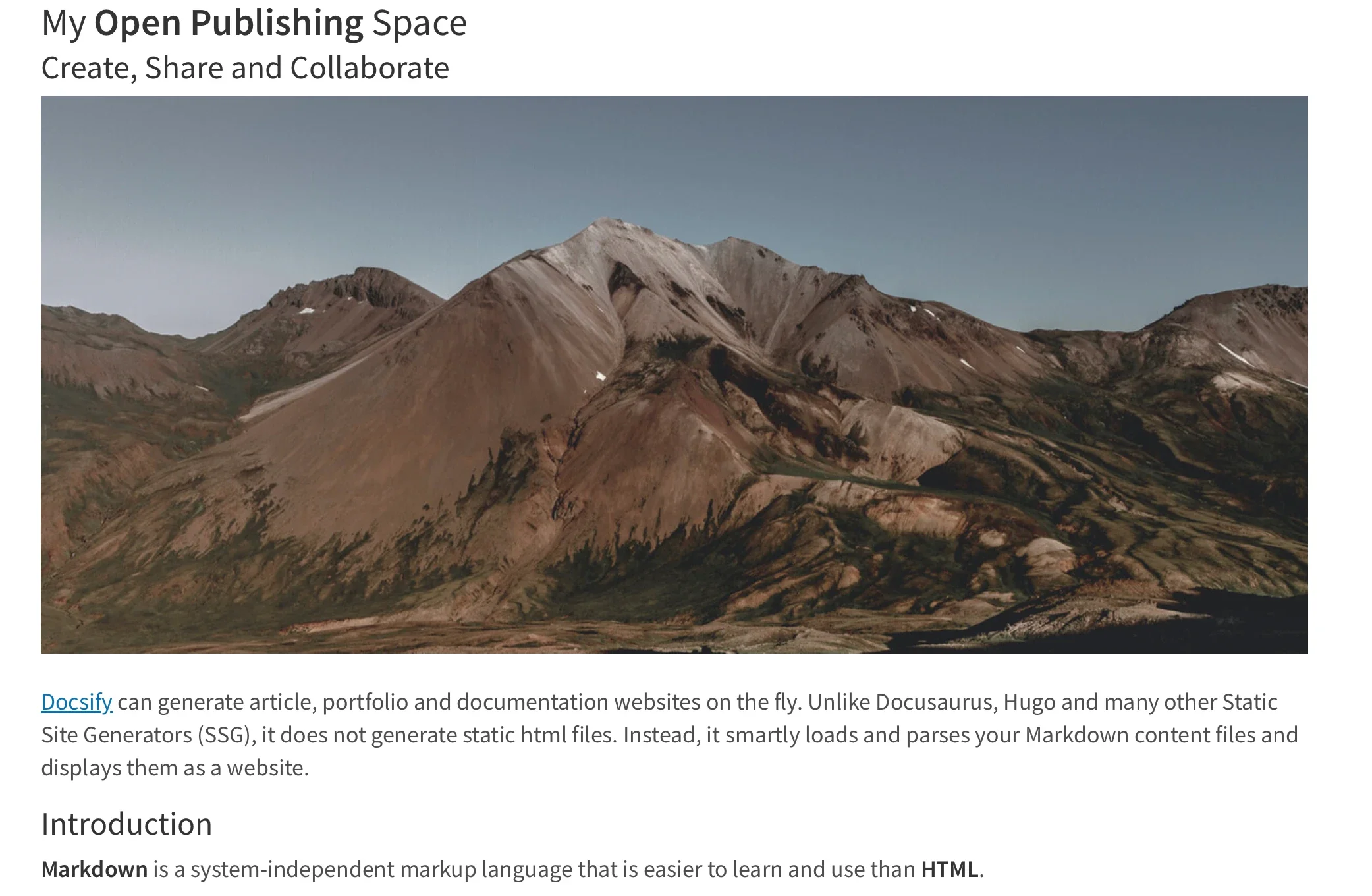
At its technical foundation, Docsify-This operates as a dynamic rendering layer that interprets Markdown files sourced from public code repositories—most notably GitHub and Codeberg—and presents them in a clean, accessible web interface. Unlike traditional static site generators that require users to run local build commands (such as Hugo, Jekyll, or Gatsby) and upload the resulting HTML artifacts to a web server, Docsify-This processes the content on the fly using URL-based parameters and base paths.
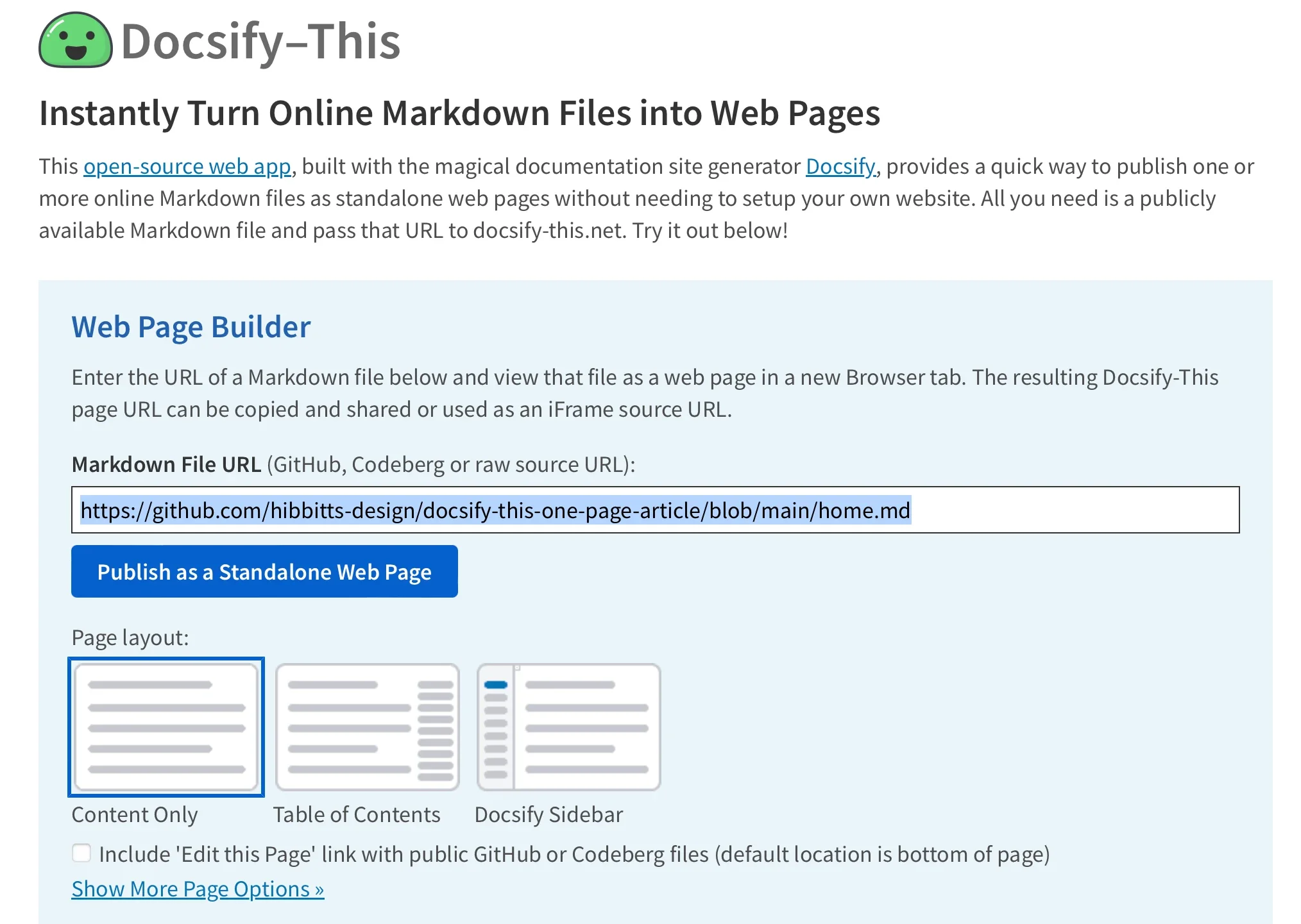
The operational workflow begins within the Docsify-This Web Page Builder interface. A user simply navigates to the public service or a self-hosted instance, inputs the URL of a public Markdown repository, and instantly receives a live, shareable web link. Behind the scenes, the application leverages Docsify.js to parse the Markdown syntax, applying responsive typography and layout structures automatically. Furthermore, because the architecture relies on standard Git repositories, version control is inherently integrated. Authors can leverage established Git workflows—utilizing tools such as GitHub Desktop, Git-Cola, SparkleShare, or integrated text editors like VSCode and Pulsar Edit—to draft, review, and publish updates collaboratively.
Chronology and Evolution of Lightweight Publishing Tools
The trajectory of web publishing has evolved through several distinct phases over the past three decades. In the early days of the web, content creation was synonymous with manual HTML coding, requiring specialized software or text editors. The late 1990s and 2000s saw the dominance of database-driven Content Management Systems like WordPress, Drupal, and Joomla, which democratized publishing but introduced vulnerabilities, database overhead, and maintenance burdens.
By the mid-2010s, the developer community experienced a significant counter-movement favoring static site generators (SSGs). These tools prioritized speed and security by compiling Markdown files into pre-rendered HTML pages. While SSGs eliminated database overhead, they still required local build environments, Node.js runtimes, and continuous integration/continuous deployment (CI/CD) pipelines to publish changes—barriers that remained too high for non-technical domain experts.
Docsify.js emerged as a modern alternative by rendering documentation sites directly in the browser via JavaScript, eliminating the pre-build step entirely for single-page or multi-page documentation sites. Docsify-This takes this concept one step further by removing the need to host the JavaScript application itself. By providing a centralized or self-hosted rendering engine accessible via parameterized URLs, creators can target any Markdown file on the internet and display it as an independent web page, marking a major milestone in browser-based document rendering.
Customization and Advanced Visual Styling
One of the historical limitations of Markdown has been its rigid formatting constraints, which often necessitated falling back to raw HTML when specific design elements were required. Docsify-This addresses this challenge by providing robust customization options that bridge the gap between minimalist syntax and professional web design.
Administrators and content creators can modify the visual appearance of rendered pages dynamically through URL parameters. Standard CSS attributes such as font-family, font-size, link-color, and line-height can be appended directly to the sharing link, allowing authors to tailor the reading experience to match corporate branding or institutional guidelines without altering the underlying source document.
Beyond global styling parameters, Docsify-This supports a specialized set of Markdown CSS classes. For instance, authors can transform standard text links into interactive buttons by appending specific class declarations directly into the Markdown syntax, such as ':class=button'. For advanced use cases, creators are not limited to pre-defined styles; they can embed custom CSS style blocks directly within their Markdown files. This capability enables the injection of bespoke design components—ranging from custom callout boxes and tailored navigation elements to complex grid layouts—all while maintaining the clean, portable nature of the source document.
Integration with Learning Management Systems and Enterprise Platforms
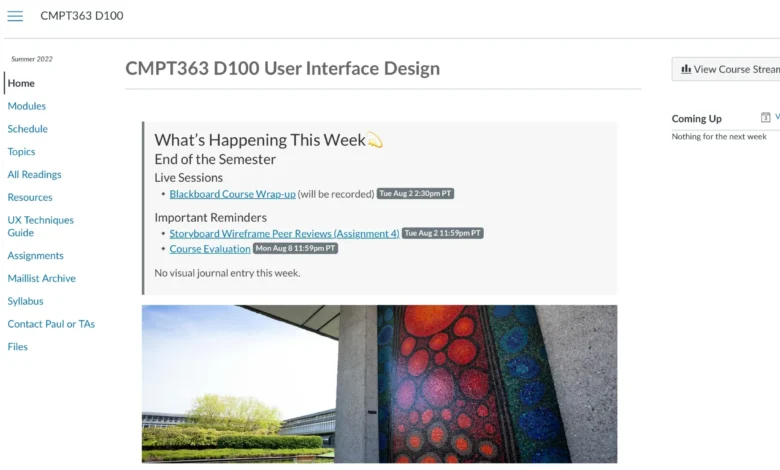
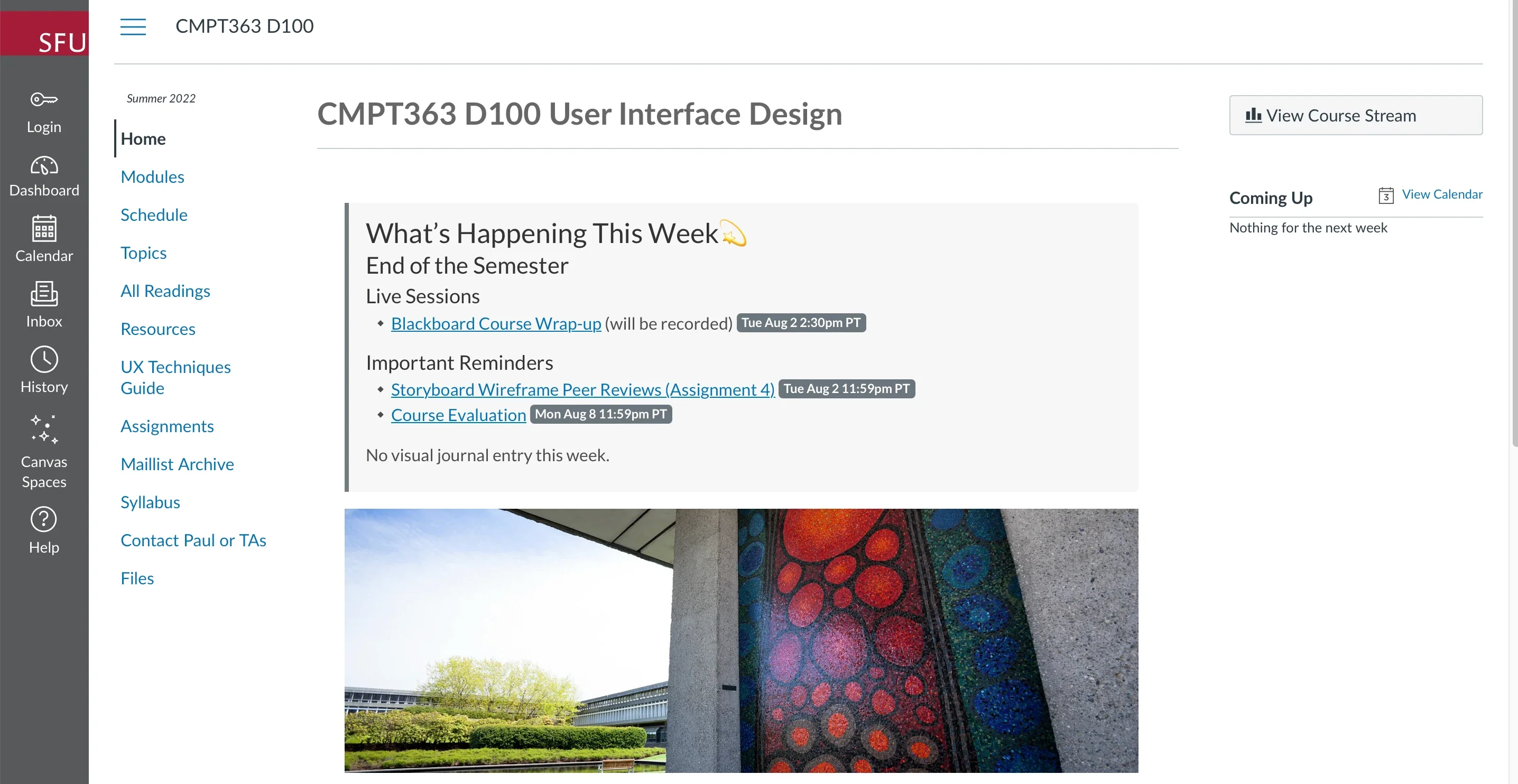
The true utility of a publishing tool is often measured by its interoperability with existing digital infrastructure. In educational technology and corporate training environments, content creators are frequently constrained by the rigid interfaces of Learning Management Systems (LMS) like Canvas and Moodle. These platforms often lack intuitive WYSIWYG editors or make collaborative document updating cumbersome.

Docsify-This solves this integration challenge through two primary embedding mechanisms: iFrames and external URL redirection. By wrapping a Docsify-This rendered URL inside an HTML iFrame, educators and instructional designers can embed live, dynamically updating Markdown content directly into an LMS course page. Because Docsify-This accepts parameters to hide default credits, adjust font sizes, and match container dimensions, the embedded content blends seamlessly into the host platform, creating a cohesive user experience.
Furthermore, platforms utilizing external tool integrations—such as the Canvas LMS Redirect Tool—can map a navigation menu item directly to an external Docsify-This URL. When an instructor updates a syllabus or resource list in their GitHub or Codeberg repository, the changes are reflected instantaneously within the LMS course menu, eliminating the traditional cycle of downloading, converting, and re-uploading document files (such as PDFs or Word documents).
Open-Source Philosophy and Decentralization
In an era dominated by proprietary software-as-a-service (SaaS) platforms that frequently subject users to sudden price hikes, feature deprecations, and platform lock-in, the architecture of Docsify-This is deliberately aligned with open-source principles. Distributed under open-source licensing models and built on top of transparent, community-driven technologies, the software can be freely deployed on private infrastructure or custom domains.

This self-hosting capability provides organizations with absolute sovereignty over their publishing pipelines. Educational institutions, government agencies, and enterprises with strict data governance policies can deploy local instances of Docsify-This behind internal firewalls, ensuring that internal documentation or sensitive training materials never traverse unauthorized third-party servers while still benefiting from the flexibility of remote Markdown repositories.
Industry Implications and Future Outlook
The rise of tools like Docsify-This signals a broader cultural shift in digital documentation and content management. As organizations prioritize operational agility, collaborative authoring, and platform independence, traditional monolithic CMS architectures are increasingly being supplemented—or in some cases replaced—by composable, decoupled workflows.
By leveraging Git for version control and Markdown for authoring, teams can apply robust software development best practices—such as pull requests, peer reviews, and change logs—to non-code documentation, policy manuals, and educational curricula. The ability to instantly publish and embed these files across disparate platforms democratizes professional-grade web publishing, lowering technical barriers for educators, researchers, and technical writers alike.
As web standards continue to evolve and browser-based rendering engines become more sophisticated, tools that eliminate redundant build processes will likely play a foundational role in the future of web content dissemination. For organizations looking to streamline their publishing workflows without sacrificing design flexibility or platform independence, Docsify-This offers a compelling, robust, and future-proof framework.