The Growing Battle for Digital Sovereignty: AI Gatekeeping and the Rise of Localized Computing

The technological landscape is undergoing a profound transformation as artificial intelligence becomes deeply integrated into consumer hardware and software ecosystems. This integration has triggered an unprecedented conflict between users seeking autonomy over their computing environments and major AI laboratories enforcing restrictive "safety" protocols. As firms like Anthropic and others tighten control over how their models interact with local files and hardware, the open-source community is increasingly positioning local, weight-available AI models as the definitive solution for those prioritizing data privacy and machine ownership.
The Crackdown on Reverse Engineering
In recent months, a series of incidents has highlighted the tension between proprietary AI development and the user’s right to inspect their own technology. Users of advanced coding assistants, most notably Claude Code, have reported encountering "safety checks" that trigger mid-process when the AI is tasked with analyzing or decompiling proprietary firmware. This trend extends beyond software development environments; users experimenting with AI to probe the security and functionality of consumer smart devices—such as televisions—have faced account restrictions and stern warnings from developers.

Industry observers, including outlets such as 404 Media, have characterized this shift as a concerted crackdown on reverse engineering. For decades, the ability to decompile software has been a cornerstone of security research, interoperability, and the "right to repair" movement. By embedding AI agents that refuse to assist in these activities, AI labs are effectively creating a new layer of software-defined gatekeeping that prevents users from understanding the inner workings of the devices they own.
Security Vulnerabilities in AI Agent Workflows
The irony of these restrictive safety protocols is underscored by persistent security vulnerabilities within the tools themselves. A primary concern involves how AI agents handle sensitive information. Claude Code, for example, offers an "allow rule" feature that saves user preferences to a .claude/settings.local.json file. Security research conducted by Apiiro has revealed that this file often stores commands in plaintext, including sensitive authentication tokens and database passwords.
A scan of public GitHub repositories identified over 104,000 instances of these configuration files exposed to the internet. Despite the sensitivity of this data, a bug report filed in August 2025 regarding this vulnerability was closed by automated systems as "not planned" after two months of inactivity. This creates a scenario where AI developers prioritize restricting user behavior—such as preventing the reverse engineering of firmware—while simultaneously neglecting basic security hygiene regarding the storage of user credentials.

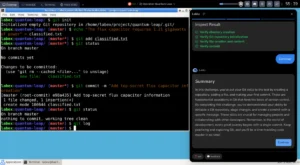
To address these growing risks, researchers are developing educational frameworks like the Memory Poisoning Lab. This MIT-licensed project provides a sandboxed environment for practitioners to study how AI agents can be manipulated and how to implement robust defenses against such attacks. By utilizing synthetic data and operating entirely offline, the lab serves as a model for how AI safety training can be conducted without exposing sensitive API keys or relying on third-party infrastructure.
The Emergence of AI-Centric Linux Distributions
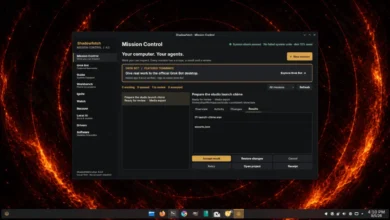
As the industry grapples with these issues, the operating system market is beginning to shift. Kora OS, a Linux distribution that rebranded from the gaming-focused project Playtron in mid-2025, represents a new wave of desktop environments designed specifically for an AI-first workflow. Spearheaded by Cyanogen co-founder Kirt McMaster, Kora OS targets users who require heavy integration of AI agents into their daily computing tasks.
However, Kora OS highlights the divide between "Linux-based" and "open-source." While the underlying kernel is Linux, the desktop interface and the core AI agent framework, known as Cortex, are proprietary. The business model relies on a subscription service that bundles access to specific AI models and agent capabilities. While the software will be provided at no cost upon its 2027 release, the architecture is designed to be "local when possible," suggesting that data will frequently be offloaded to remote servers.

This development is part of a broader trend. Other distributions, including openKylin and openEuler, are similarly integrating AI-native features at the system level. These platforms represent a departure from the traditional Linux ethos of transparency, opting instead for a service-oriented model where the operating system acts as a conduit for proprietary AI ecosystems.
Advancements in Localized Efficiency
While the industry moves toward cloud-dependent agents, the open-source community continues to push the boundaries of local performance. Recent advancements in video generation, such as the TurboDiffusion framework, demonstrate the potential of localized hardware. Capable of accelerating video diffusion models by up to 200 times on consumer-grade hardware like the RTX 5090, such tools provide a viable path for users to perform high-compute tasks without relying on external APIs.
Furthermore, the rise of "ablitration" techniques has provided users with a mechanism to regain control over model behavior. Abliteration allows researchers to identify specific directions within a model’s activation space that correspond to refusal behaviors. By subtracting these vectors from the weights, users can effectively strip away restrictive guardrails from open-weight models. Unlike cloud-based models, where safety guidelines are dictated by the vendor, open-weight models allow the end user to determine the operational boundaries of their tools.

The Role of Institutional Accountability
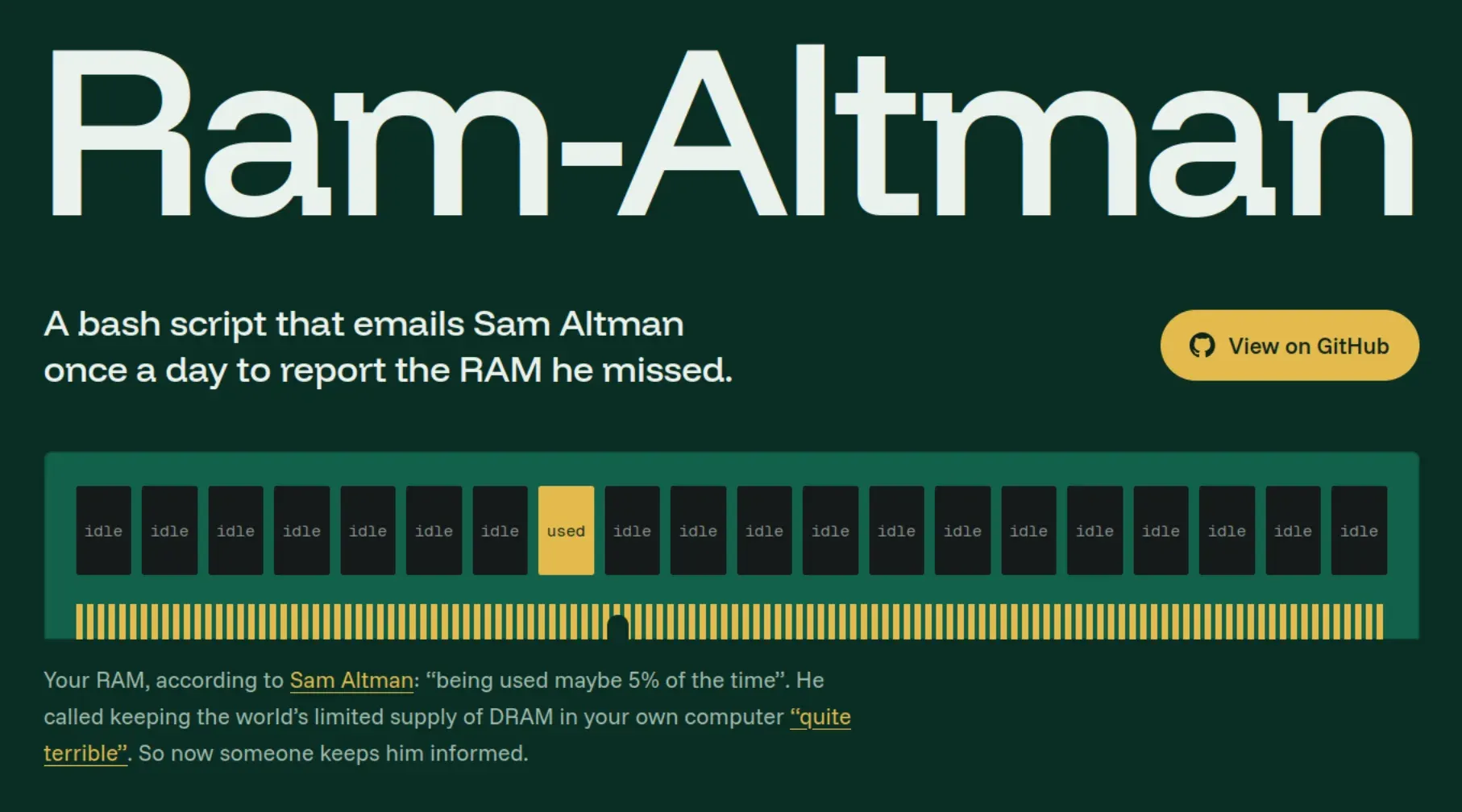
The debate over AI control is not merely technical; it is increasingly political. The emergence of experimental scripts, such as the "Ram-Altman" project—which automates emails to leadership at major AI firms whenever a Linux machine has underutilized memory—reflects a growing sentiment of irony and frustration among the technical community. Such projects highlight the disconnect between the massive infrastructure requirements championed by AI CEOs and the actual, day-to-day needs of users who prioritize local resource management.
As this field matures, the distinction between "black box" proprietary AI and "glass box" open-weight models will become the primary fault line in the tech industry. The ability of an individual to say "no" to a machine—or conversely, to tell a machine to ignore its own refusal protocols—is becoming a fundamental component of digital property rights.
Future Implications
Looking forward, the legal and ethical ramifications of AI-enforced limitations will likely reach the courtroom. If a device manufacturer uses an AI agent to prevent a user from modifying their own hardware, it raises significant questions regarding the Digital Millennium Copyright Act (DMCA) and the evolution of consumer protection laws.
The move toward AI-centric operating systems suggests that the desktop of 2027 will look significantly different from the desktop of today. Users will be forced to choose between the convenience of integrated, cloud-backed agents that come with restrictive "safety" guardrails and the autonomy of localized, open-weight models that require more technical expertise to maintain.
For the Linux community, the challenge will be to balance the desire for cutting-edge AI features with the fundamental principles of the open-source movement. As proprietary distributions gain traction, the pressure on truly open projects to provide competitive, privacy-preserving, and performant AI alternatives will be the defining theme of the next several years. The ongoing developments in memory poisoning research, model abliteration, and hardware acceleration suggest that while the industry moves toward consolidation, the tools for resistance and independence are becoming more powerful than ever.