AWS Announces Public Preview of Well-Architected Agent to Automate Cloud Infrastructure Optimization and Best Practice Compliance

Amazon Web Services (AWS) has officially launched the public preview of the AWS Well-Architected Agent, an advanced artificial intelligence-powered service designed to autonomously evaluate cloud environments and deliver targeted, contextual recommendations for improving application cost efficiency, security postures, system performance, and operational resilience. The new tool marks a significant shift away from traditional, manual cloud auditing processes and generic compliance checklists toward intelligent, context-aware infrastructure optimization that aligns directly with specific organizational goals.
Operating much like a seasoned cloud architecture consultant, the AWS Well-Architected Agent evaluates active environments by automatically correlating granular utilization metrics, underlying resource configurations, and complex application topologies. By measuring these infrastructure parameters against established Well-Architected best practices spanning more than 65 distinct AWS services, the service is engineered to generate precision recommendations tailored to an enterprise’s declared business objectives. Furthermore, the agent surfaces crucial cross-pillar trade-offs, enabling engineering and DevOps teams to make balanced, well-informed decisions when remediating architectural findings.
Background Context and the Evolution of Cloud Governance
Since the introduction of the AWS Well-Architected Framework in 2017, organizations have relied on structured guidelines and the AWS Well-Architected Tool to review their cloud workloads manually. While these frameworks have successfully helped millions of builders design and operate secure, high-performing, resilient, and efficient infrastructures, manual reviews often require substantial time investments from senior engineers and architects. Periodic audits can quickly become outdated in fast-paced DevOps environments where infrastructure changes daily through continuous integration and continuous deployment (CI/CD) pipelines.
The introduction of the AWS Well-Architected Agent addresses these operational bottlenecks by embedding continuous, AI-driven analysis directly into the cloud management lifecycle. By leveraging modern machine learning capabilities to digest massive amounts of telemetry and configuration data, AWS aims to democratize expert-level cloud architecture reviews, making proactive optimization accessible to teams of all sizes without requiring constant manual oversight or specialized consulting engagements.

Core Capabilities and Architectural Features
The AWS Well-Architected Agent introduces several key features that distinguish it from legacy automated scanning tools. At its core, the service functions through three primary mechanism categories: profile-based scoping, pre-deployment Infrastructure as Code (IaC) reviews, and automated remediation pathways.
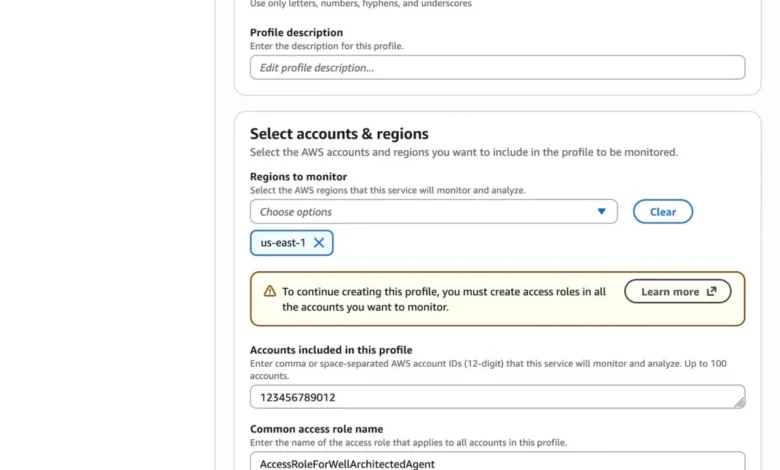
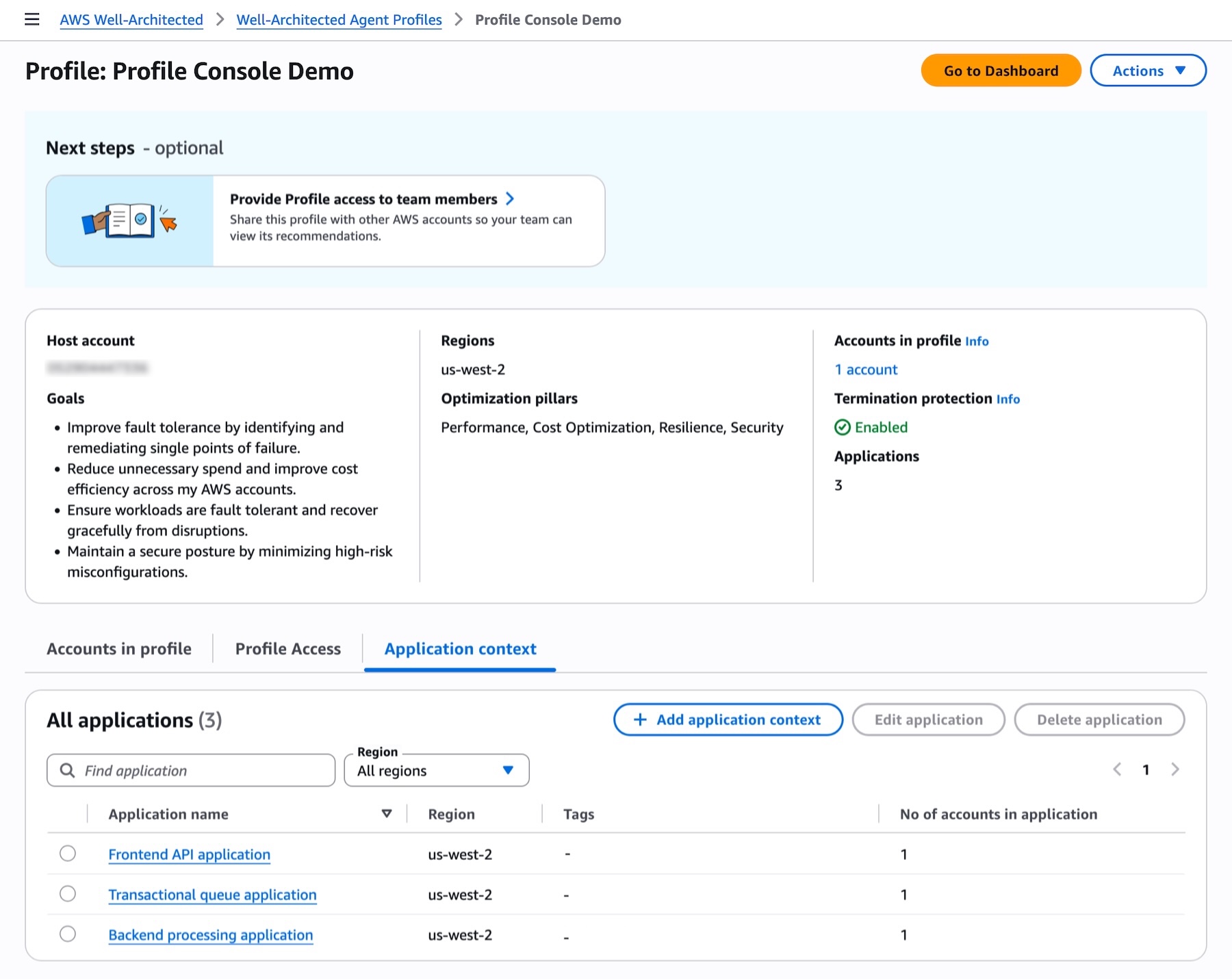
To begin utilizing the service, administrators establish an agent profile within the AWS Well-Architected console. This profile defines the specific operational parameters, target AWS accounts, regions, and optimization pillars that require monitoring. Businesses can tailor the agent’s focus according to their immediate strategic needs—whether prioritizing strict cost reduction during economic tightening, maximizing application uptime and resilience for mission-critical workloads, or hardening security postures to meet stringent regulatory standards.
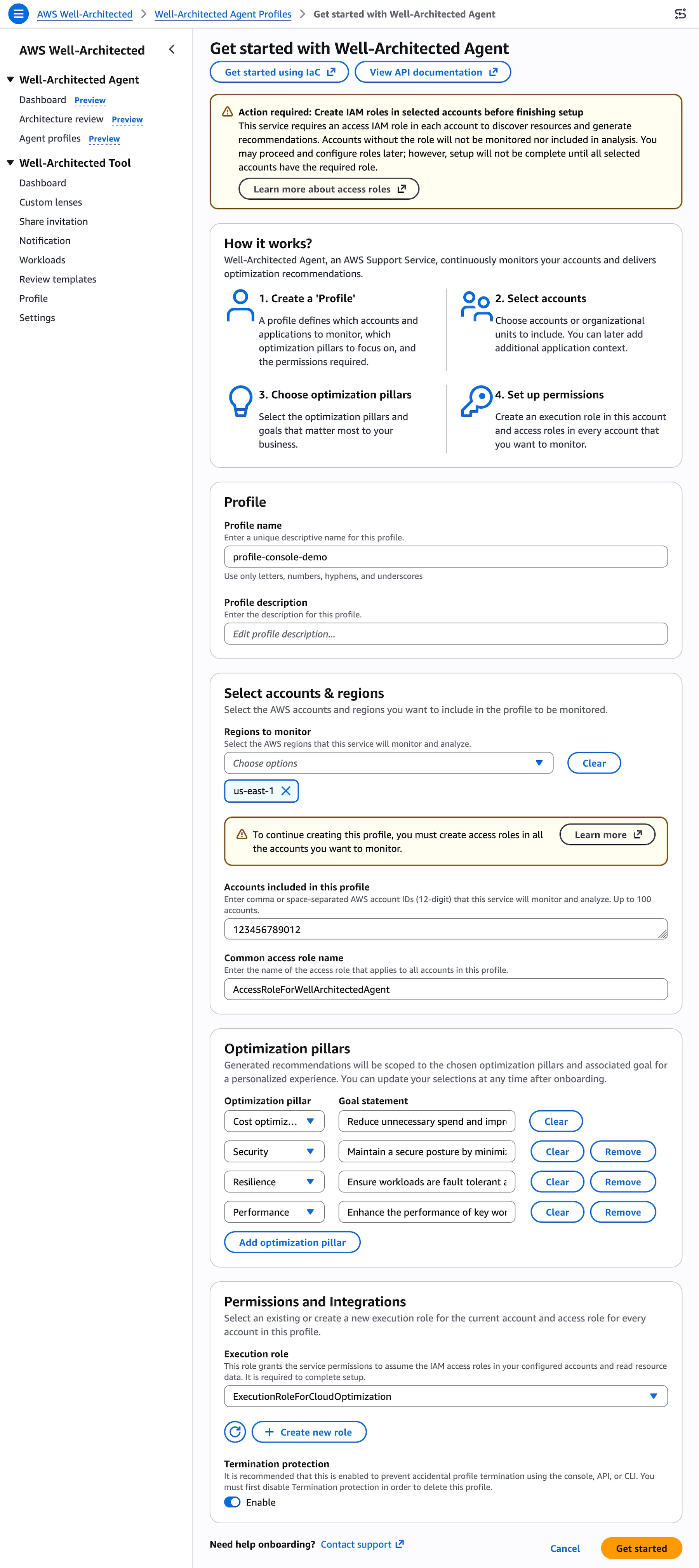
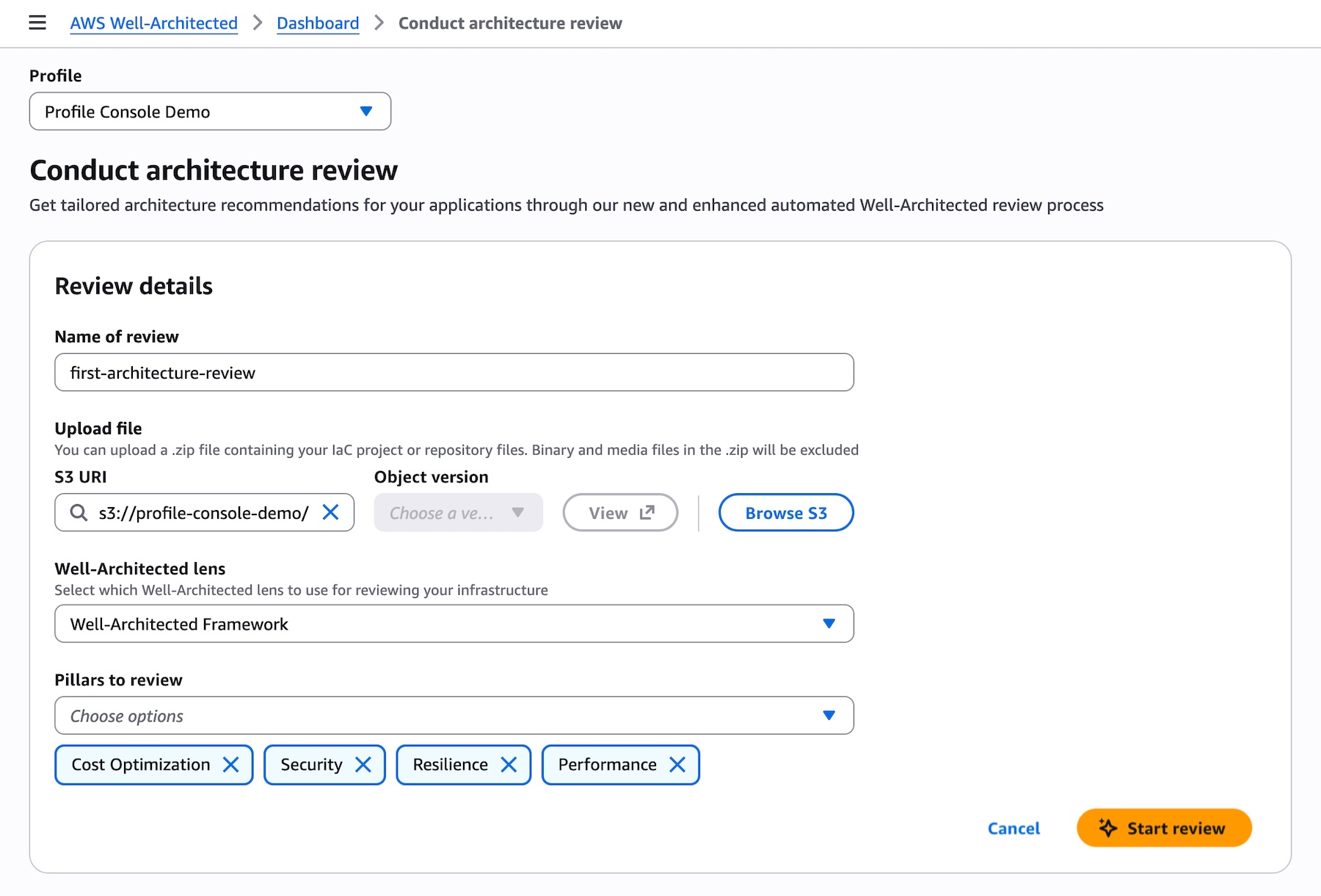
Once configured with the necessary customer-managed Identity and Access Management (IAM) roles to read resource configurations and utilization metrics, the agent establishes baseline analyses within 24 hours. Beyond monitoring live production environments, the platform extends its utility to pre-deployment workloads. Developers can upload Infrastructure as Code projects packaged in Terraform, AWS CloudFormation, or the AWS Cloud Development Kit (CDK) as a .zip file. The agent then analyzes these pre-deployment configurations against chosen Well-Architected lenses, catching potential architectural flaws and inefficiencies before code is ever merged or deployed to production.
To ensure recommendations remain deeply relevant, users can define specific application contexts by associating resources, AWS regions, individual services, and custom resource tags. This contextual enrichment ensures that generic infrastructure alerts are filtered out in favor of insights that directly reflect the unique operational boundaries of each business application.
Prioritized Recommendations and Automated Remediation
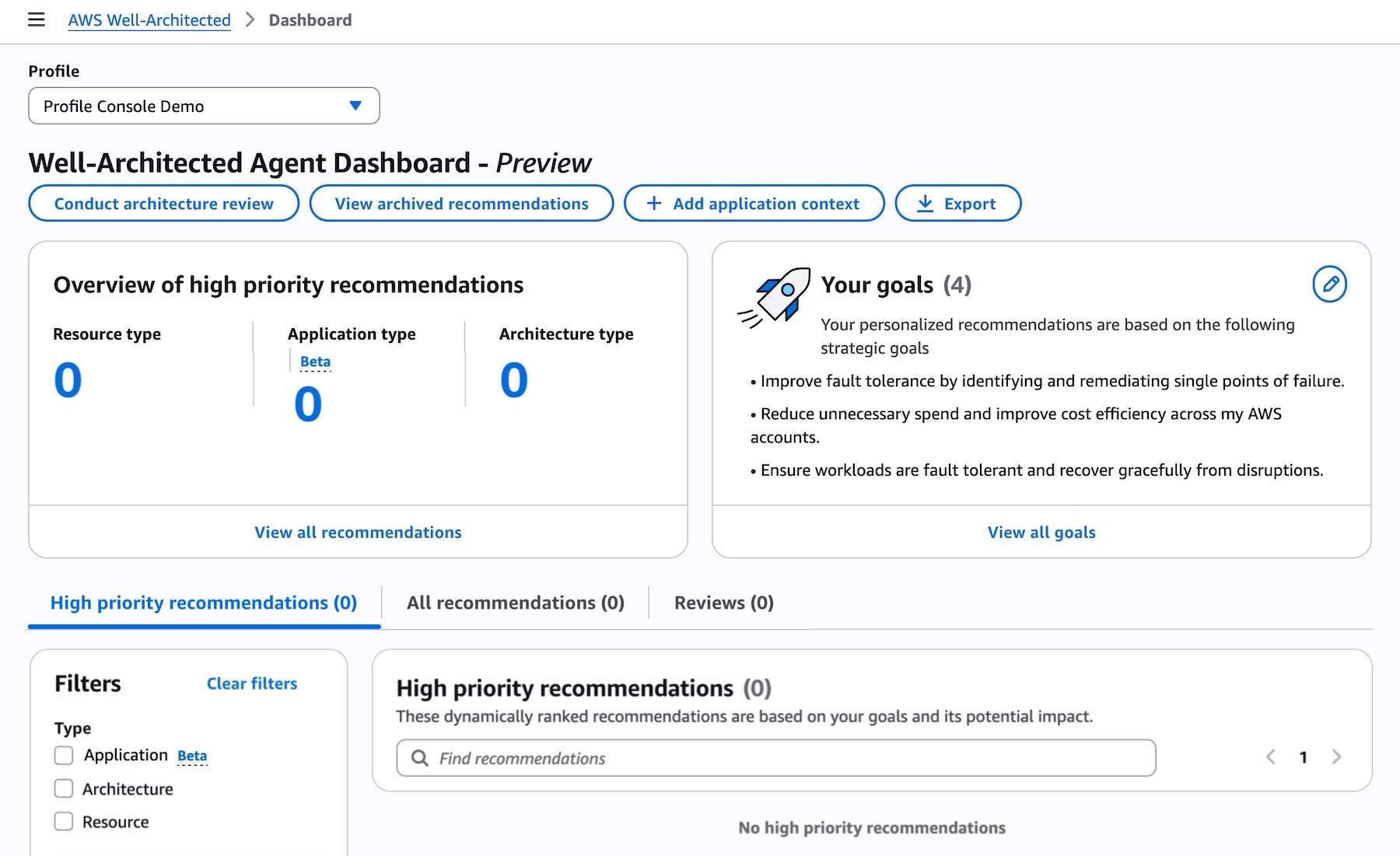
One of the most notable aspects of the AWS Well-Architected Agent is its transition from passive reporting to active, automation-ready remediation. When the agent identifies an optimization opportunity, it compiles a comprehensive finding package that includes detailed explanations of the underlying rationale, projected business impacts, potential cross-pillar trade-offs, and concrete resolution steps.
Instead of forcing engineers to manually interpret advisory documents and write custom fixes, the agent provides actionable resolution types. Users can initiate remediation directly through the AWS Management Console, execute provided AWS Command Line Interface (CLI) commands, or integrate updated Infrastructure as Code templates directly into their version control systems. For example, when evaluating CDK projects, the agent generates precise code modifications that developers can copy and paste directly into their source code repositories.
Moreover, the service supports programmatic interaction via the AWS Model Context Protocol (MCP) Server and associated plugins. This integration allows development and operations teams to embed Well-Architected recommendations, search documentation, and query agent findings directly within their preferred AI-assisted coding environments and developer workflows.
Availability and Regional Rollout
The public preview of the AWS Well-Architected Agent is immediately available in select AWS Regions, including US East (N. Virginia), US East (Ohio), and US West (Oregon). However, organizations can onboard and analyze workloads hosted across any commercial AWS Region. The service is delivered as an extension of AWS Support and is accessible to customers maintaining an active AWS Support plan.
While the new agent introduces automated, AI-driven evaluations, AWS has confirmed that the existing AWS Well-Architected Tool will remain fully operational. Organizations can continue to conduct manual reviews using user-defined lenses to measure workloads against custom internal best practices alongside the new autonomous agent.
Industry Implications and Future Outlook
The launch of the AWS Well-Architected Agent highlights a broader, industry-wide transition toward autonomous cloud management and AI-assisted DevOps. As cloud infrastructures scale in complexity—spanning multi-region deployments, serverless architectures, and containerized microservices—human oversight alone is increasingly insufficient to maintain optimal efficiency, security, and cost control.
By transforming static architectural guidelines into dynamic, context-aware recommendations equipped with automated code fixes, AWS is positioning AI not merely as a conversational assistant, but as an active participant in infrastructure governance. For enterprise IT leaders, this shift promises to reduce cloud waste, mitigate security vulnerabilities proactively, and free up valuable engineering hours previously spent conducting routine architectural reviews. As the public preview progresses, enterprise adoption rates and user feedback will likely shape how deeply autonomous agents integrate into the core operational standards of cloud computing.
Related posts: