How the Fedora Design Team Successfully Hosted a Virtual Conference Using Purely Open Source Tools

When the Fedora Design Team began organizing the inaugural Creative Freedom Summit in late 2022, the planning committee faced a philosophical and logistical question common to many open source communities: should an event dedicated to open source culture rely on proprietary infrastructure, or could a fully open source technical stack handle the pressures of a live international conference?
Historically, large virtual and hybrid gatherings within the Fedora ecosystem—such as Flock, the annual users and contributors conference—have utilized commercial platforms like Hopin. While proprietary tools offer polished features, integrated sponsor booths, and streamlined moderation out of the box, relying on closed-source software to host events celebrating open-source innovation creates a distinct ideological friction. For the Creative Freedom Summit, held from January 17 through January 19, 2023, organizers chose a different path. By leaning entirely on a decentralized, community-driven technical stack, the Fedora Design Team demonstrated that open-source software is not only viable for running virtual conferences at scale, but can deliver robust, cost-effective, and highly integrated results.
Origins and Background of the Creative Freedom Summit
The conceptual framework for the Creative Freedom Summit emerged organically from the review process for Flock 2022. Marie Nordin, a key organizer within the Fedora Design Team, reviewed talk submissions for the August 2022 event and noticed an overwhelming influx of proposals focused on design and creativity within the open-source sphere. Far more submissions arrived than the standard conference schedule could possibly accommodate. Recognizing a thriving, underserved niche of creatives who rely daily on open-source toolsets to produce their work, Nordin proposed carving out a dedicated, standalone event.
By the autumn of 2022, the Fedora Design Team formally adopted the concept and initiated planning for a mid-January virtual gathering. Because the event was brand new and operated with zero financial budget, organizers opted for a curated, invitation-only speaker list. Leveraging existing professional networks and the surplus of compelling submissions from Flock 2022, organizers secured commitments from nearly every invited speaker. This streamlined the initial rollout, though it meant setting aside a formal open Call for Papers (CFP) management process for the inaugural year—a workflow the team intends to address for future iterations.
Evaluating the Open Source Stack Versus Proprietary Alternatives
In the wake of COVID-19 pandemic lockdowns, virtual conferences became a permanent fixture of community management. For years, the Fedora project utilized Hopin for Flock. Although Hopin is proprietary, it was selected because of its reliability, professional aesthetic, and compatibility with open-source participants. Access to Fedora’s pre-existing Hopin environment remained an option for the Creative Freedom Summit.

However, weighing the decision involved careful cost-benefit analysis. The organizing committee had no monetary budget, but they possessed valuable assets: dedicated volunteer hours, access to the Fedora Matrix server infrastructure, a hosted WordPress environment for the web presence, and direct technical experience running weekly video calls via PeerTube. Furthermore, the team envisioned a low-key, single-track, informal conference format that could absorb minor technical glitches in exchange for ideological alignment. Ultimately, the team embraced the challenge of deploying an entirely open-source stack.
Deploying the Open-Source Conference Architecture
The technical architecture of the Creative Freedom Summit was split into live execution components and post-event archiving tools, relying heavily on decentralization and federation.
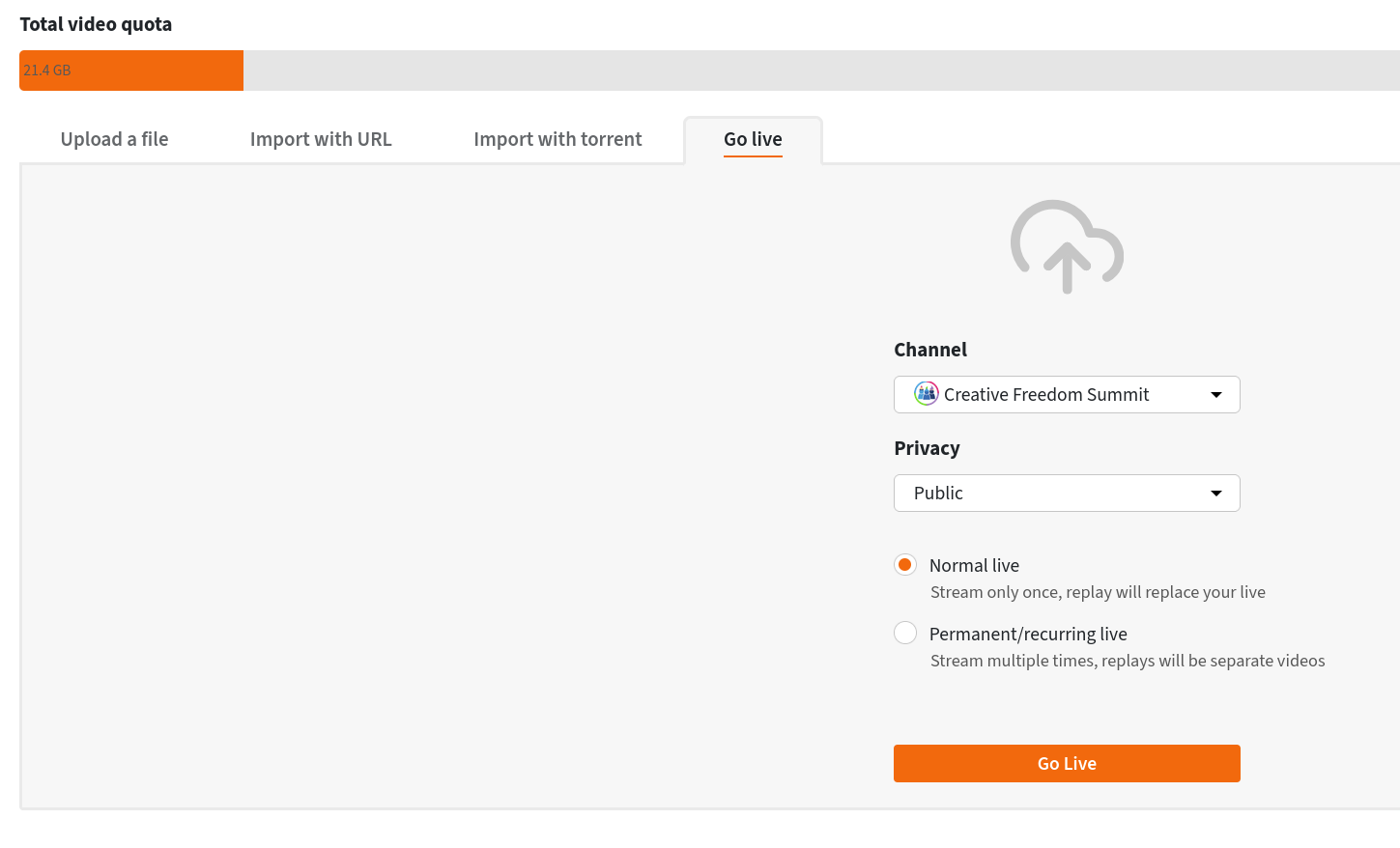
Livestreaming and Instant Replays via PeerTube
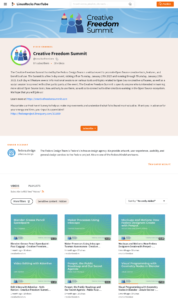
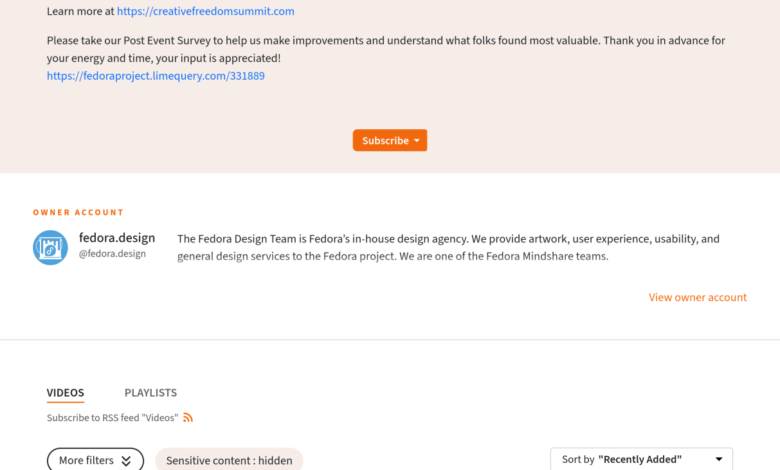
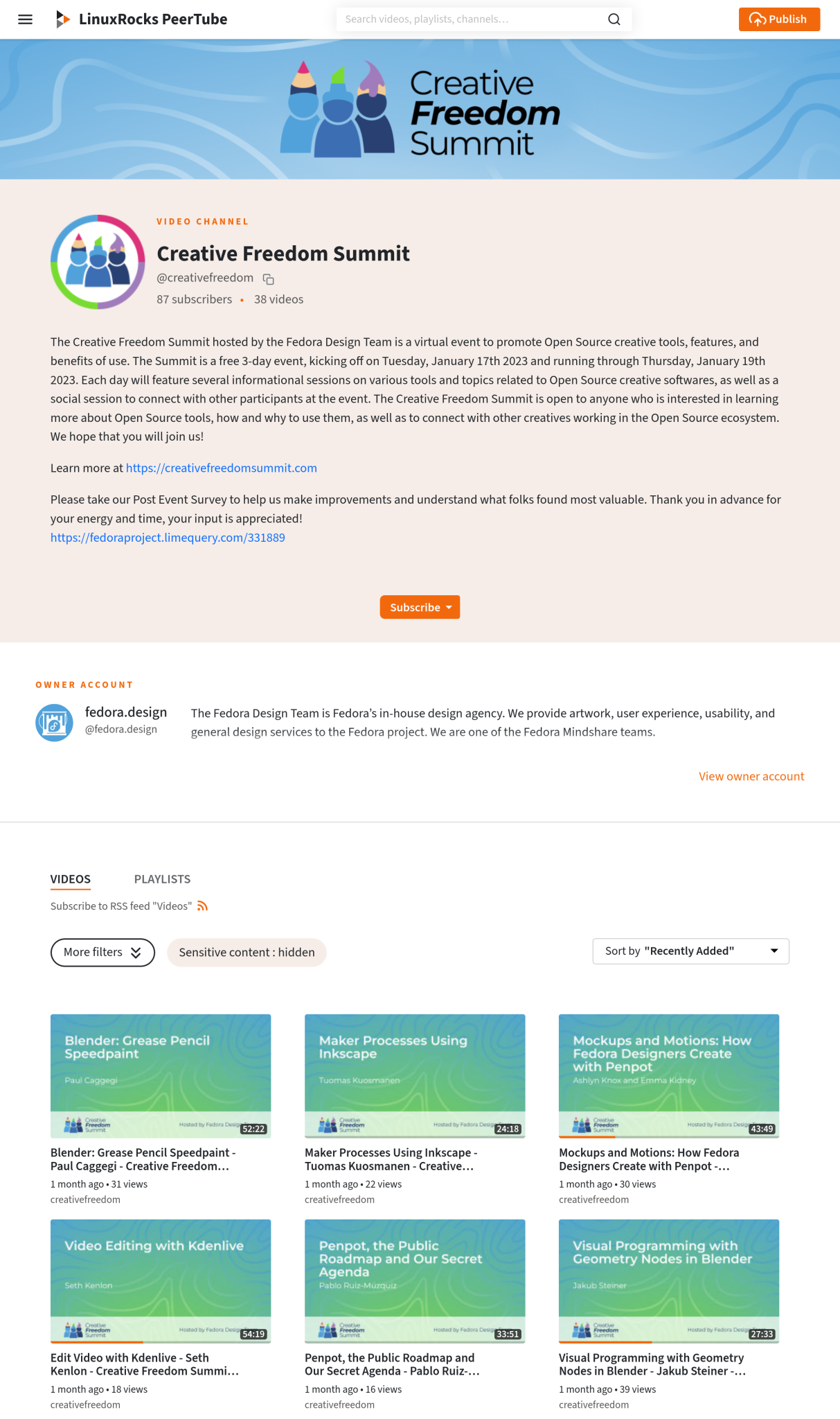
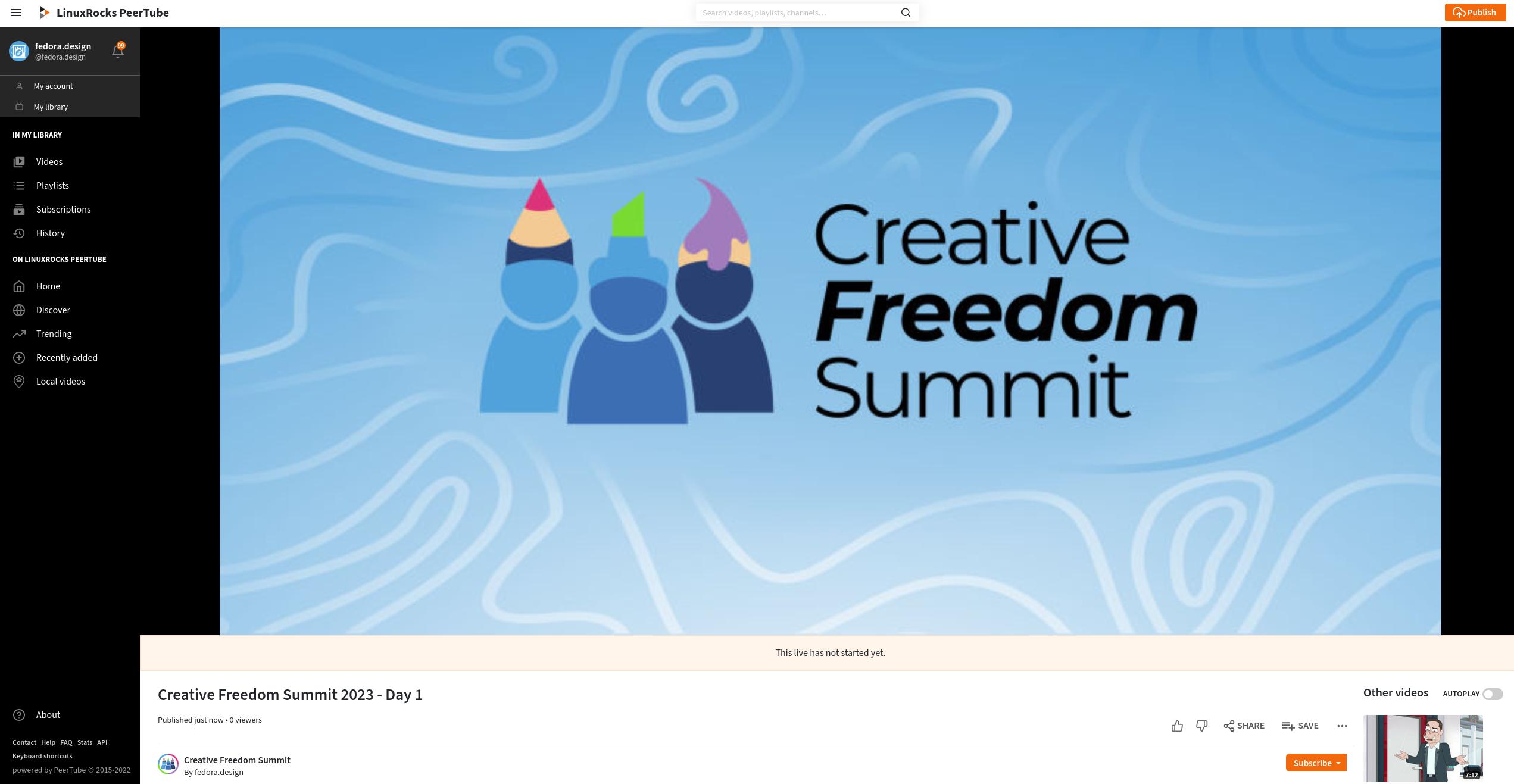
For public broadcasting, the team utilized a PeerTube instance generously provided by LinuxRocks.online. PeerTube is a free, open-source, decentralized video platform integrated into the Fediverse.
One of PeerTube’s most significant advantages over traditional streaming infrastructure was its automated post-event functionality. Immediately upon the conclusion of a livestream, PeerTube automatically generated and published a clean replay recording directly to the event channel without manual intervention, file uploads, or administrative coordination. Attendees praised this feature in real-time chatrooms, noting that missed sessions could be reviewed within minutes of a presentation ending.
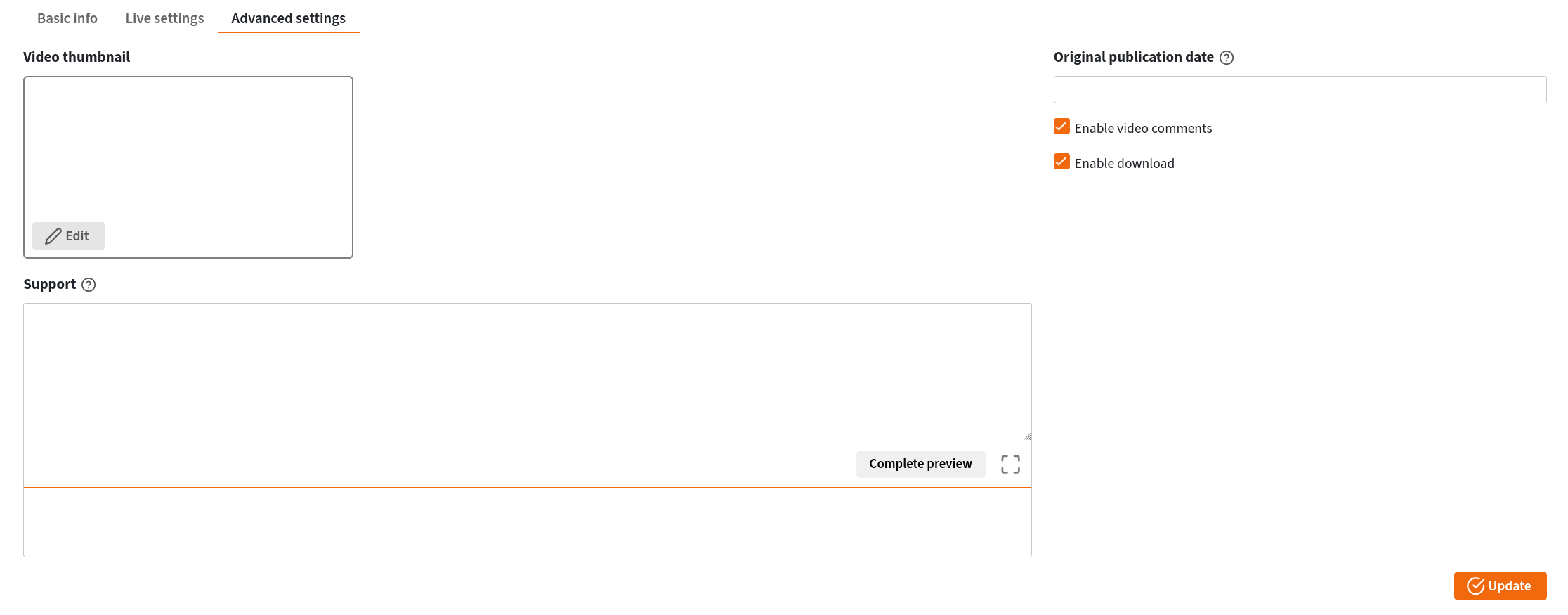
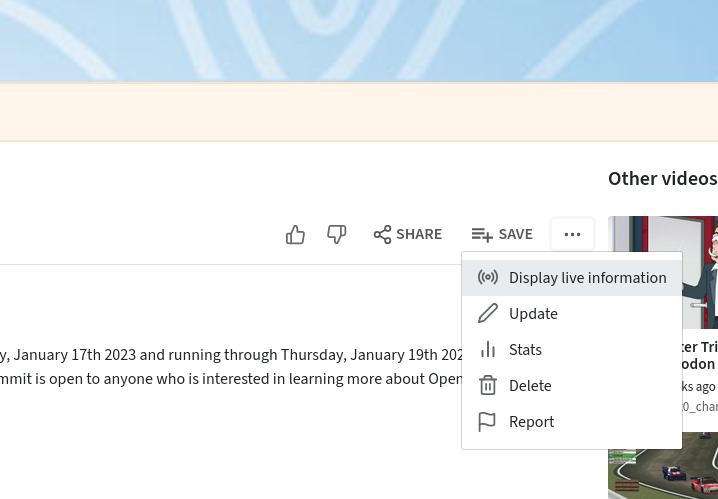
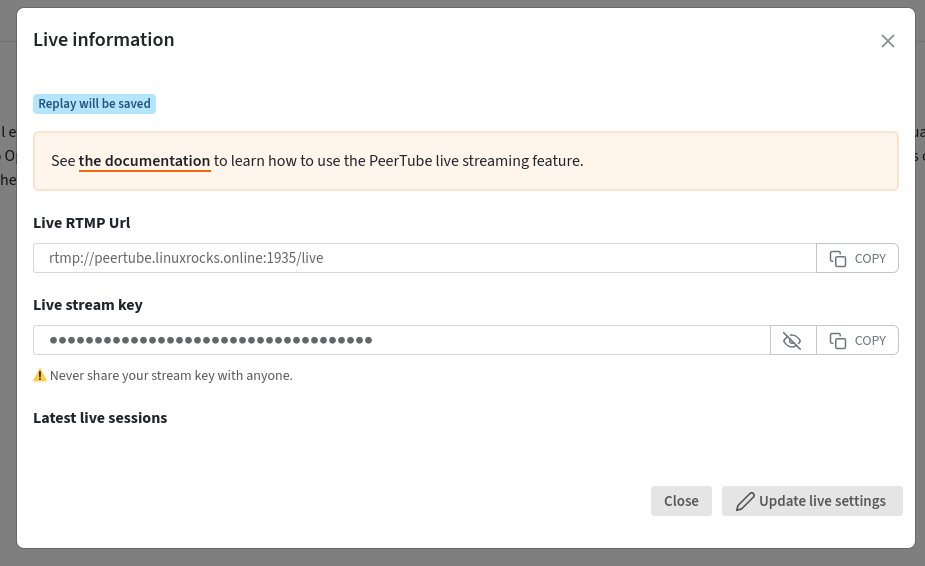
To streamline operations, organizers configured a reusable RTMP livestreaming URL and authorization key within PeerTube. Instead of generating unique credentials for every talk across three days—which would have created an insurmountable administrative burden for rotating volunteer hosts—the team shared a single, master streaming credential within a secure internal document. Any authorized host on duty could initiate a stream instantly.
Live Stage Management via Jitsi Meet
For the virtual stage where speakers presented and interacted, organizers deployed the open-source Jitsi Meet platform via meet.jit.si. The meeting room URL was restricted to speakers and moderators.
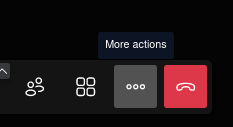
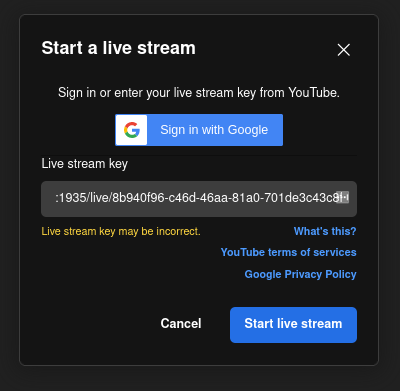
To manage transitions smoothly, organizers enabled a digital waiting room (lobby) feature. This allowed incoming speakers to enter a few minutes prior to their scheduled time without disrupting the ongoing presentation. Volunteer hosts admitted speakers seamlessly between sessions. Because Jitsi features native RTMP livestreaming capabilities, hosts connected the Jitsi virtual stage directly to the LinuxRocks PeerTube channel with minimal latency. Presenters shared their screens freely to run slides and software demonstrations.
Backstage Coordination and Communication via Element
Communication behind the scenes was handled through Matrix, utilizing Fedora’s Element server. Organizers established an invite-only "Backstage" chat room approximately a week before the event, inviting all speakers to participate. This channel proved invaluable for sound checks, verifying slide visibility, coordinating schedule adjustments, and swiftly rescheduling a presentation when an emergency arose.
Initially, organizers created a separate room for hosts, but operational experience showed that maintaining more than two chat spaces created unnecessary friction. Collapsing coordination into the backstage channel streamlined communications significantly.
Centralized Audience Experience and Q&A
Matrix and Element served as the primary hub for attendees, leveraging a native widget system that allowed websites and interactive documents to be embedded directly into chat rooms.
Organizers embedded the PeerTube livestream in the upper-left quadrant of the Element interface. Alongside the video feed, they embedded a HackMD.io document containing daily schedules, the code of conduct, announcements, and dedicated Q&A sections for each talk. Attendees submitted questions in the HackMD document, which moderators then read aloud to speakers during the live Q&A segments. Conversations, networking, and community feedback unfolded dynamically in the main chat feed directly beneath the embedded tools.
Post-Event Operations, Analysis, and Community Impact
The conclusion of the conference marked the beginning of an intensive post-production phase driven entirely by community volunteers.
To evaluate the success of the summit, organizers deployed an open-source survey via LimeSurvey within two weeks of the event, distributing links through the Element chat and PeerTube channels. Feedback from the survey informed subsequent organizing meetings, which were documented transparently in shared HackMD files.
Addressing Accessibility and Subtitling
Participant feedback highlighted a strong demand for live captioning to improve accessibility. While the initial stack lacked real-time automated transcription, open-source alternatives exist for future iterations. Tools like Live Captions for Linux or OBS-based broadcasting integrations could enable conference hosts to stream live captions directly into Jitsi feeds.
For the archival video library, volunteers utilized Kdenlive—an open-source video editor equipped with built-in speech-to-text subtitling capabilities. Volunteers generated automated subtitles, cleaned up transcription errors, added professional title cards, and incorporated intro and outro music. A GitLab epic structured the video editing workflow, utilizing custom labels to track the status of each recorded session.
Collaborative Editing Challenges
Because raw PeerTube recordings occasionally captured multiple talks in a single file or required cropping, volunteers downloaded raw files, edited them locally, and uploaded completed versions to a private repository account. Although PeerTube currently lacks multi-account permission controls for a single channel—requiring controlled credential sharing—the compromise allowed dozens of global volunteers to successfully curate a polished archive of open-source creative knowledge.
Broader Implications for Open-Source Events
The success of the inaugural Creative Freedom Summit offers a practical blueprint for open-source projects, independent communities, and grassroots organizations seeking to host virtual events without relying on commercial gatekeepers. By combining decentralized tools like PeerTube, Jitsi, Matrix, and WordPress, the Fedora Design Team proved that technical sovereignty is achievable without sacrificing professional presentation or audience engagement. As preparations unfold for future summits, the community continues to refine its open-source stack, demonstrating that the principles of transparency, collaboration, and freedom can successfully govern not just software development, but the events that celebrate it.
Related posts: