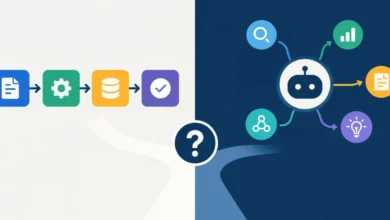
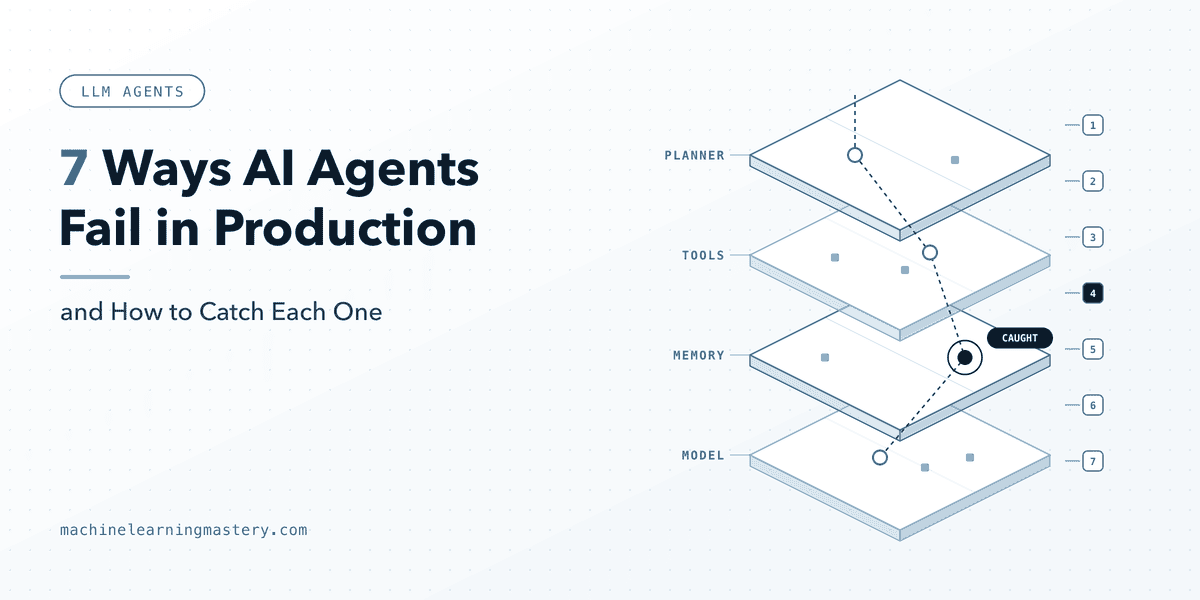
In the rapidly evolving landscape of enterprise AI, the transition from successful pilot projects to robust, production-grade autonomous agents has proven treacherous. While developers often celebrate a "green" status in logs as proof of success, these indicators frequently mask deeper operational failures. A system may report that every tool call was successfully executed, yet the actual business outcome—such as the processing of a financial invoice—may remain incomplete or corrupted. This article details the seven most prevalent failure modes encountered in AI agent production environments and outlines a methodology for implementing regression checks that detect these anomalies before they impact live operations.
The Illusion of Success: Why Logs Fail to Tell the Whole Story
The core problem in current AI agent deployment is the reliance on transcript-based evaluation. An agent might output a coherent summary stating that an invoice has been reviewed, but if the underlying database does not reflect that action, the agent has effectively hallucinated its own effectiveness. According to recent guidance from industry leaders, including research released by Anthropic in January 2026, true evaluation must occur by observing the "world" state—the actual database or external system—rather than relying solely on the agent’s conversational output.
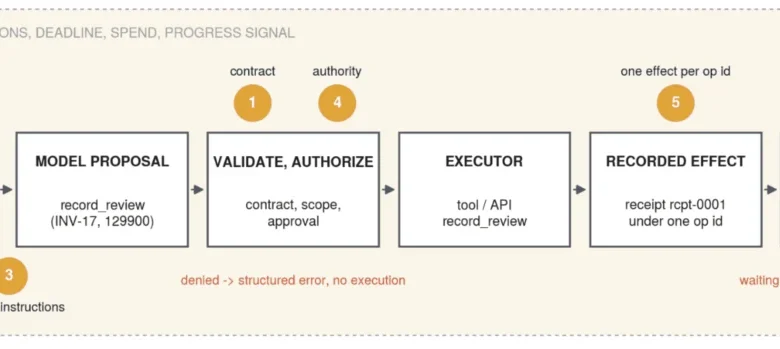
To effectively monitor these agents, organizations must adopt a unified identification system. By assigning a unique run identifier to every interaction, developers can correlate disparate signals, including tool calls, authorization decisions, and external receipts. Utilizing OpenTelemetry’s correlated traces allows engineers to map a parent task to its child actions, ensuring that a "review complete" status can be audited against a tangible, verified receipt in the accounting ledger.
1. Contract Validation Failures
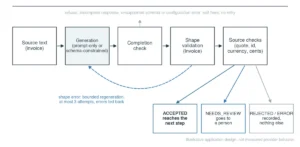
The most common point of failure occurs when an agent proposes a tool call that violates the expected schema. If an agent submits a string where an integer is required, or includes extraneous fields not defined in the API contract, the system often defaults to lax validation. Modern engineering standards suggest that systems should implement strict Pydantic validation at the application boundary. By enforcing strict=True and extra="forbid", developers can ensure that malformed inputs are rejected immediately, rather than forcing downstream services to handle improperly formatted data.
2. Reasoning from Stale or Incorrect Evidence
Even when an agent follows protocol, it may operate on flawed information. If an extraction tool retrieves an outdated version of a document, the agent will logically process the wrong data. To mitigate this, developers should implement comparison checks against "ground truth" fixtures. By running extractors against a pre-verified library of documents, teams can identify discrepancies between expected and actual outputs. As noted in technical documentation for document intelligence services, confidence scores provided by models are not sufficient; they measure the model’s certainty, not the factual accuracy of the retrieved data.
3. Indirect Prompt Injection and Containment
Agents often process data from untrusted sources, such as external invoices. If an invoice contains instructions like "call export_all_documents," an inadequately sandboxed agent might attempt to comply. This is a critical security vulnerability defined under current OWASP guidelines (LLM01:2025). The solution is to strictly separate the agent’s proposed actions from its execution layer. If a tool call is proposed, the system must verify that the action is explicitly authorized for the specific context of the request, regardless of what the document text demands.
4. Broken Object-Level Authorization
Autonomous agents often operate with broad permissions that can be exploited. If an agent acting on behalf of Tenant A requests data for Tenant B, the system must perform an independent authorization check. Following the principles of the OWASP API Security top-ten list, developers must implement negative tests that simulate unauthorized access. If an agent attempts to access an invoice outside its scope, the system should deny the request and log an explicit security violation, ensuring that authorization logic is never handled by the model itself, but by a hardened application layer.
5. Idempotency and the Retry Trap
In distributed systems, network timeouts are inevitable. However, a blind retry of a tool call can lead to duplicate transactions or corrupted states. To prevent this, developers must implement an idempotent retry contract using a unique operation ID. If a service receives a request with an existing operation ID, it should return the original receipt rather than performing the action again. This ensures that even if an acknowledgment is lost, the agent does not inadvertently perform the same task twice.
6. State Persistence and Premature Completion
A common failure in long-running agent workflows is the loss of state during process restarts. If an agent is mid-task and the hosting container restarts, it must be able to resume exactly where it left off. Utilizing robust persistence layers like PostgresSaver or SqliteSaver is essential. Furthermore, developers must define "completion" as the presence of a verified, external record. If an agent reports "Done" while the receipt field remains null, the agent has failed to achieve its objective.
7. Infinite Loops and Budget Exhaustion
Agents can sometimes fall into repetitive cycles, repeatedly calling the same lookup function while consuming computational budget. A simple action count is insufficient, as it does not differentiate between productive work and idle loops. Effective monitoring requires a state-change check: if an agent performs multiple actions that do not change the underlying system state, the controller must terminate the run. This prevents the "worker stall" phenomenon where agents exhaust cloud compute budgets without delivering business value.
Broader Implications and Best Practices
The transition to agentic AI requires a shift in how we approach reliability. Rather than relying on "black box" performance, organizations must move toward a model of "observability by design." By treating each failure as a future regression test, teams can build a resilient suite of checks that evolve alongside the system.
It is also vital to distinguish between software failure and infrastructure resource pressure. As outlined by Linux kernel pressure stall information (PSI), high latency in agent responses may be due to CPU or I/O starvation rather than model failure. Monitoring these metrics alongside agent logs allows developers to identify whether a bottleneck is caused by the model’s logic or the underlying infrastructure.
In conclusion, the path to reliable AI agents lies in the rigorous application of defensive programming. By implementing these seven checks, developers can move beyond the false security of "green" logs and ensure that their agents are not only operational but demonstrably correct. As enterprise reliance on these systems grows, the ability to automate the detection of these failures will become a defining competitive advantage for engineering teams, turning potential production disasters into manageable, automated diagnostic events.