UX Insiders Launches New Community to Address the Unique Challenges of In-House User Experience Professionals

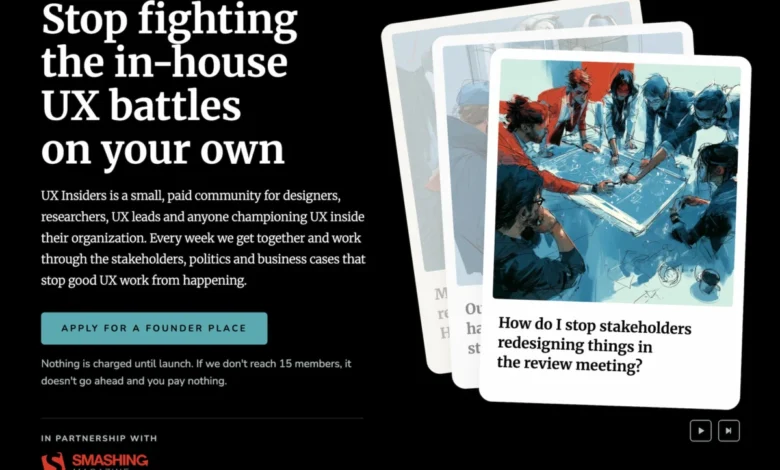
The landscape of professional digital design is undergoing a significant transformation, as the traditional boundaries between product development, organizational politics, and rapid technological advancement continue to blur. To address the specific, often isolated challenges faced by in-house User Experience (UX) practitioners, industry veteran Paul Boag has announced the launch of UX Insiders, a specialized community platform scheduled to debut in January 2027. This initiative, developed in partnership with Smashing Magazine, seeks to provide a structured environment for professionals to share actionable strategies, business cases, and research methodologies.
The Evolution of the In-House UX Role
For years, the discourse within the design community has focused heavily on aesthetic execution, accessibility standards, and the technical implementation of interfaces. However, practitioners working within organizations frequently report that the primary obstacles to their success are not technical, but systemic. According to industry surveys, the most pervasive challenges for in-house designers include navigating bureaucratic resistance, managing conflicting stakeholder expectations, and advocating for user-centric research in environments prioritized by aggressive product roadmaps.
The rise of generative AI has further complicated this role. Senior management, often lacking a technical background, frequently assumes that AI tools can perform high-level user research and design synthesis in a fraction of the traditional time. This shift has created a paradoxical environment where designers are expected to produce more work with fewer resources while simultaneously managing the fallout from automated, often inaccurate, design decisions.
Chronology and Launch Strategy
The development of the UX Insiders project has been a calculated process designed to ensure sustainability and relevance. Paul Boag, a longtime contributor to the design industry and an advisory board member for Smashing Magazine, has outlined a clear timeline for the platform’s introduction:

- Early Development Phase: Analysis of pain points among in-house teams, identifying a critical lack of external peer-support networks.
- November 2024: Formal announcement of the partnership with Smashing Magazine and the opening of the application process for founding members.
- December 11, 2026: Deadline for the "Founding Member" threshold. The project requires a minimum of 15 confirmed sign-ups to proceed to the official launch phase.
- January 5, 2027: Official launch of the community, at which point the subscription billing cycle commences for members.
By establishing a "threshold-based" launch, the organizers ensure that the community begins with a critical mass of active participants, preventing the "empty room" phenomenon that frequently plagues early-stage networking platforms.
Supporting Data and Community Dynamics
The need for such a platform is supported by the changing nature of the workforce. As remote and hybrid work models become the standard, the traditional "watercooler" knowledge transfer—where junior designers learn from senior colleagues—has largely evaporated.
In a recent assessment of workplace design culture, it was noted that nearly 60% of in-house UX professionals report being the "sole advocate" for user research within their department. This isolation often leads to a phenomenon known as "design fatigue," where practitioners struggle to justify the value of their work to non-technical stakeholders.
The UX Insiders model draws on the success of the Agency Academy, a sister community launched by Boag in July 2024. Data from that project suggests that structured weekly calls and asynchronous communication via Slack significantly increase retention rates and professional efficacy. By facilitating peer-to-peer mentorship, the platform allows members to troubleshoot specific organizational hurdles—such as how to present a business case to a skeptical C-suite—using templates and research plans that have been empirically validated by peers.
The "In-House Only" Mandate
One of the most distinctive features of the UX Insiders community is its strict eligibility criteria. The platform is explicitly closed to freelancers and agency employees. This restriction is intended to foster a "safe harbor" environment where members can speak candidly about their internal organizational dynamics, intellectual property, and specific workplace frustrations without the fear of compromising their professional reputations or being targeted for unsolicited service pitches.
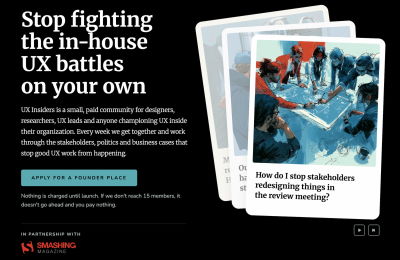
The vetting process requires a brief application, ensuring that the community remains focused on the distinct operational realities of those embedded within larger organizations. By filtering for a specific demographic, the platform aims to maintain a high signal-to-noise ratio, ensuring that the discussions remain relevant to the daily lifecycle of an in-house project.
Economic and Professional Implications
The introduction of a paid, gated community for UX professionals reflects a broader trend in the digital economy: the shift away from broad, algorithm-driven social media platforms toward smaller, high-intent private networks.
From an economic perspective, the platform offers an alternative professional development route. Many organizations possess unused annual training budgets that are often difficult to allocate toward informal, ad-hoc learning. By structuring UX Insiders as a formal membership, it becomes easier for employees to expense the cost to their employers, effectively treating the subscription as a continuous, job-integrated training resource.
For the participants, the return on investment is measured in "time-to-resolution." By having access to a shared library of battle-tested templates and the ability to ask a community for advice on navigating a specific stakeholder impasse, members can theoretically reduce the time spent on administrative and political maneuvering.
A Comparative Look: UX Insiders vs. Agency Academy
While UX Insiders focuses on the nuances of organizational navigation, the Agency Academy remains the primary hub for those operating on the external side of the client-designer relationship.
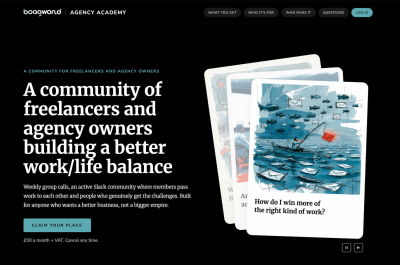
| Feature | UX Insiders | Agency Academy |
|---|---|---|
| Primary Audience | In-house UX Designers/Researchers | Freelancers & Agency Owners |
| Core Focus | Organizational politics & internal strategy | Business growth & client management |
| Key Benefit | Peer-validated internal templates | Collaborative work-sharing & leads |
| Launch Status | Founding phase (Launches Jan 2027) | Established (Active since July 2024) |
The existence of both platforms underscores a shift in how the industry views career progression. It is no longer enough to be technically proficient in design software; professionals must also be adept at the "soft" architecture of business—negotiation, persuasion, and organizational strategy.
Future Outlook and Industry Impact
As the demand for digital products continues to outpace the supply of senior design leadership, the importance of peer-support networks will likely increase. The success of the UX Insiders initiative will serve as a bellwether for whether independent, curator-led communities can effectively supplement traditional educational and corporate training programs.
If the community successfully achieves its growth milestones by December 2026, it will provide a template for other specialized interest groups to follow. By centering the conversation on the "unspoken" aspects of the job—the stakeholder meetings, the stalled projects, and the AI-integration debates—UX Insiders aims to move the needle on professional satisfaction and efficacy.
For current practitioners, the opportunity to participate in the founding cohort represents a chance to shape the culture of the community from its inception. As the industry moves into 2027, the ability to navigate the human element of design will likely distinguish the most successful practitioners from those who continue to face these challenges in isolation. Interested parties are encouraged to review the application requirements and the specific guidelines for founder-level pricing, which remain locked for the initial cohort of participants.