Streamlining Digital Media Management: How Modern Developers Are Overcoming File Processing Bottlenecks

In the contemporary digital landscape, managing user-generated content and third-party media assets remains one of the most persistent operational hurdles for software engineers and web developers. Applications today must ingest, process, and deliver files of virtually limitless varieties, sizes, and formats. Traditionally, engineering teams were forced to build and maintain custom infrastructure to handle these complex file lifecycles—a time-consuming endeavor that often diverged from core product development. To address this persistent bottleneck, third-party media utility services have emerged, offering comprehensive solutions for uploading, transforming, and delivering digital assets at scale. Among these platforms, Filestack has established itself as an industry standard, providing robust developer tools designed to optimize the media pipeline from source to consumer.
The Evolution of Media Management in Web Development
The requirement for sophisticated file handling dates back to the early days of web applications, when simple avatar uploads and document attachments were standard. Over the past decade, however, the proliferation of high-resolution smartphones, diverse cloud storage providers, and media-heavy social platforms has exponentially increased the complexity of digital intake. Developers are no longer merely storing files; they are expected to instantly convert massive raw videos, apply real-time image filters, normalize varied document formats, and deliver these assets globally with minimal latency.
Historically, building a resilient upload architecture meant configuring AWS S3 buckets, writing custom server-side validation scripts, implementing asynchronous job queues for image and video compression, and setting up Content Delivery Networks (CDNs). This fragmented approach frequently led to security vulnerabilities, performance bottlenecks, and significant maintenance overhead. Cloud-based media utilities were developed to abstract this operational complexity, allowing development teams to integrate production-ready file pickers and transformation engines via lightweight software development kits (SDKs) and application programming interfaces (APIs).
The Onboarding and Integration Journey
Adopting a centralized media management platform typically begins with a streamlined evaluation process. Industry-standard utility services commonly offer tiered subscription models, often featuring a 21-day trial period that grants developers full access to proprietary code libraries and infrastructure. For engineering teams evaluating these platforms, comprehensive documentation serves as a critical resource, providing concrete code samples, authentication guides, and detailed usage parameters across multiple programming languages.
Upon creating an account and generating a secure API key, developers gain immediate access to client-side libraries. The initial setup requires minimal boilerplate code. For instance, implementing a functional frontend file picker using JavaScript requires only a few lines of initialization:
const client = filestack.init("YOUR_API_KEY");
const picker = client.picker();
picker.open();
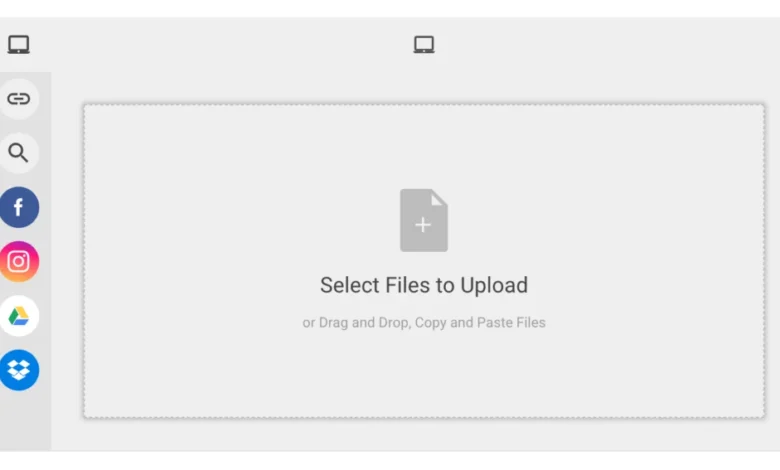
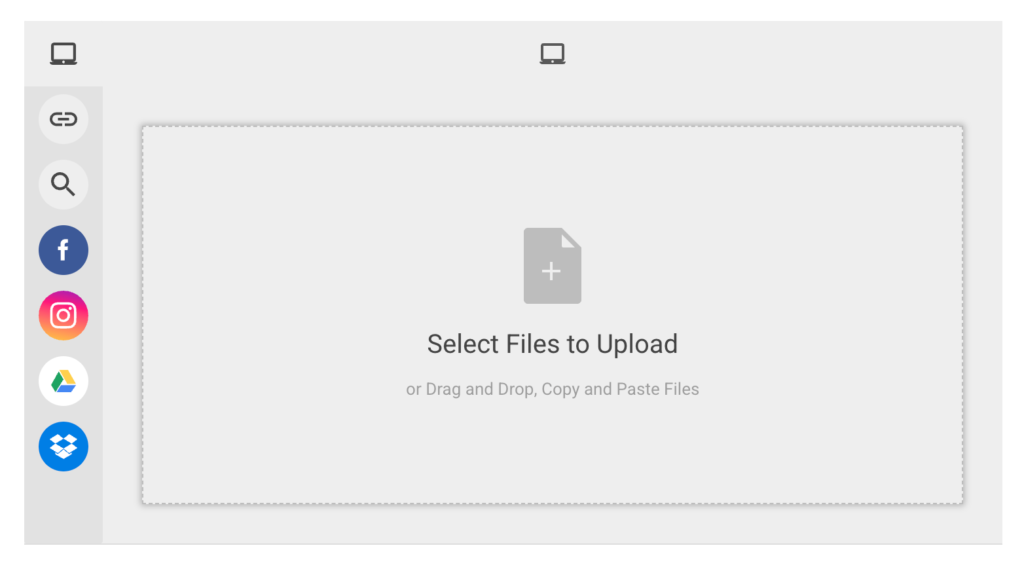
This straightforward implementation yields a responsive, feature-rich graphical user interface capable of handling multi-file selections, drag-and-drop interactions, and direct cloud integrations. Modern media pickers routinely connect with more than twenty popular third-party services—including Google Drive, Dropbox, GitHub, Facebook, and Instagram—thereby sparing developers the tedious task of building individual OAuth integrations for each external provider.
Backend Flexibility and Cross-Platform Support
While frontend UI components are crucial for user-facing applications, robust backend integration remains essential for automated data pipelines and server-side ingestion. Enterprise-grade media platforms provide multi-language SDKs that extend file management capabilities beyond the browser.
Using a Python backend library, for example, engineers can programmatically ingest, route, and tag assets directly into cloud storage buckets with precise parameter configurations:
from filestack import Client
client = Client("YOUR_API_KEY")
store_params =
‘location’: ‘s3’,
‘path’: ‘folder/subfolder/’,
‘upload_tags’:
"project":"media_intake"
filelink = client.upload(filepath=’path/to/filename.jpg’, store_params=store_params)
This dual-layer capability—supporting both client-side interactivity and server-side automation—ensures that applications can ingest data from diverse sources, whether initiated by an end-user clicking a browser upload button or triggered by an automated cron job syncing external databases.
Real-Time Transformations and Dynamic Asset Manipulation
Once files are successfully uploaded, the secondary challenge arises: transforming raw assets into formats optimized for specific device viewports, design guidelines, and performance standards. Users upload files in unpredictable dimensions, color profiles, and resolutions. Requiring users to pre-format their files creates a poor user experience, necessitating robust server-side or on-the-fly transformation engines.
Modern media transformation pipelines allow developers to alter images, videos, and documents dynamically using simple URL manipulation parameters or asynchronous workflows. For example, resizing an image to a specific pixel width can be accomplished by appending a transformation string directly to the Content Delivery Network URL:
https://cdn.filestackcontent.com/resize=width:300/pdn7PhZdT02GoYZCVYeF
Furthermore, these transformation engines support chained operations, enabling developers to combine multiple visual modifications—such as applying color filters, adjusting rotation angles, and rendering stylized photographic borders—within a single URL request:
https://cdn.filestackcontent.com/resize=width:300/sepia=tone:80/polaroid/pdn7PhZdT02GoYZCVYeF
Beyond basic image manipulation, advanced transformation suites handle complex video transcoding, optical character recognition (OCR), document conversion (such as transforming PDFs into viewable image formats), and automated virus scanning. Developers can also deploy user-facing transformation interfaces, empowering end-users to crop, rotate, and edit their own media prior to final submission.
The Critical Role of Content Delivery Networks in Performance Optimization
The final phase of the media lifecycle—delivery—is arguably the most critical for business metrics, directly influencing user retention, bounce rates, and search engine optimization rankings. Studies consistently demonstrate that web page latency directly correlates with user abandonment; even a one-second delay in page load times can precipitate significant drops in conversion rates.
To mitigate latency, media utility platforms leverage globally distributed Content Delivery Networks (CDNs). When a transformed or stored asset is requested for the first time, the CDN caches the generated file at edge locations strategically positioned around the globe. Subsequent requests for the same unique URL are served instantly from the nearest cache, bypassing origin servers and significantly reducing Time to First Byte (TTFB).
Standard caching policies typically retain unique asset versions for a defined duration—frequently 30 days—after which the cache is refreshed upon the next incoming request. This balance between caching efficiency and content freshness ensures that applications can deliver high-resolution media instantly while maintaining the flexibility to update assets when necessary.
Broader Industry Implications and Future Outlook
The reliance on specialized media utilities reflects a broader paradigm shift in software engineering: the move away from monolithic, self-hosted infrastructure toward composable, API-driven micro-services. By outsourcing non-core functionalities like file storage management, video transcoding, and global content delivery to dedicated third-party providers, organizations can reallocate engineering capital toward core product differentiation and business logic.
As web and mobile applications continue to evolve—incorporating increasingly data-intensive formats such as 4K video, augmented reality assets, and high-fidelity 3D models—the demand for scalable, automated media pipelines will only intensify. Platforms that seamlessly integrate ingestion, real-time transformation, and global delivery will remain indispensable tools for engineering teams striving to build fast, reliable, and user-centric digital experiences.