Retrô Lottery 98 Brings Nostalgic Windows 98 Aesthetics to BNB Smart Chain with Fully Autonomous Smart Contracts

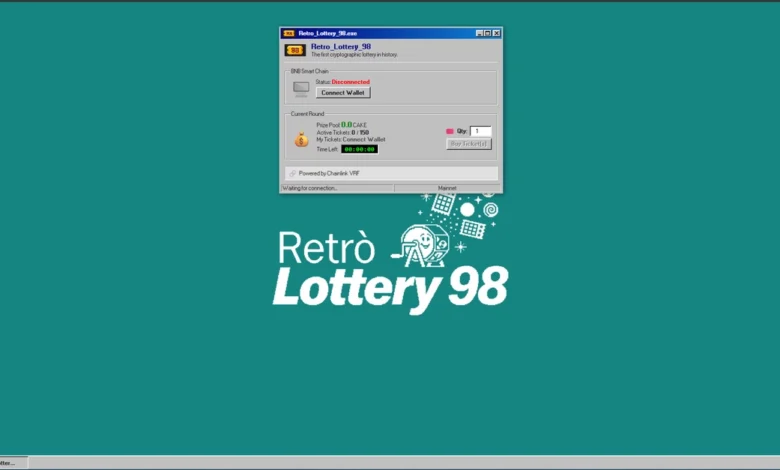
The decentralized finance and Web3 application landscape has long been dominated by a homogenous design paradigm: heavy, neon-accented dark-mode landing pages, deeply nested modal windows, and bloated JavaScript bundles that test the patience of users on standard broadband connections. In a deliberate pivot away from contemporary UX conventions, independent developers have introduced Retrô Lottery 98, a decentralized application that merges a lightweight, static Windows 98 desktop environment with a fully autonomous, non-custodial lottery smart contract deployed on the BNB Smart Chain (BSC) Mainnet.
Operating entirely without user accounts, centralized backend databases, off-chain random number generators (RNG), or manual administrative triggers for prize draws, the protocol represents a unique intersection of retro computing nostalgia and cutting-edge Web3 engineering. By stripping away traditional web bloat and anchoring the application logic to decentralized infrastructure, the project aims to demonstrate how historical user interfaces can be successfully revitalized to serve secure, trustless financial protocols.
Reimagining Web3 UX Through a Retro Lens
The visual and functional architecture of Retrô Lottery 98 breaks away from the standard single-page scrolling layout popularized by modern decentralized finance (DeFi) platforms. Instead, the interface emulates the iconic graphical user interface (GUI) of the late 1990s operating system. Upon loading the static frontend, users are greeted with a functional virtual desktop where core features—such as ticket purchasing, pool statistics, and transaction histories—open inside independent, draggable windows.
This design choice is not merely aesthetic; it serves a functional purpose. By building the frontend as a fast, static client-side application, the developers have eliminated the need for heavy framework dependencies that often slow down modern Web3 applications. The lightweight nature of the interface ensures rapid load times and reduces potential attack vectors associated with complex frontend node dependencies. Users interact with the blockchain directly through their preferred Web3 wallets, mirroring the seamless utility of legacy desktop applications while maintaining the robust security guarantees of the underlying blockchain network.
Decentralized Architecture and Trustless Operations
At the core of Retrô Lottery 98 is a specialized smart contract deployed on the BNB Smart Chain Mainnet, utilizing CAKE tokens as the native currency for ticket purchases at a fixed rate of 1 CAKE per ticket. The primary engineering objective behind the contract’s architecture was the complete removal of operator trust throughout the entire lifecycle of a lottery round. In traditional digital lotteries, centralized administrators often retain control over critical functions, including when a draw is initiated, how randomness is generated, and how funds are distributed.
To eliminate these centralization risks, the developers implemented a multi-layered trustless architecture relying on decentralized oracle networks and automated execution protocols. This ensures that once a lottery round is initialized, the entire process—from ticket sales to winner selection and prize distribution—proceeds mathematically and autonomously without requiring human intervention or administrative oversight.
Provably Fair Randomness via Chainlink VRF v2.5
One of the most persistent vulnerabilities in blockchain-based gaming and lottery applications is the reliance on insecure methods for generating random numbers. Historically, some smart contracts have utilized block timestamps, block hashes, or miner-influenced variables to determine winners. These methods are inherently vulnerable to manipulation, as sophisticated actors or miners can predict or influence these values to guarantee a win. Alternatively, centralized off-chain servers can generate randomness, but this approach forces users to blindly trust the protocol operators.
To achieve provable fairness, Retrô Lottery 98 integrates Chainlink VRF v2.5 (Verifiable Random Function), funded via native BNB. Chainlink VRF combines cryptographic proofs with block data to ensure that the random numbers supplied to the smart contract are tamper-proof and mathematically unpredictable. Before delivering the random value to the lottery contract, the cryptographic proof must be verified on-chain. This guarantees that neither the contract deployer nor any external entity can manipulate the winner selection process, satisfying the strict transparency standards required for trustless decentralized applications.
Zero-Touch Execution Through Chainlink Automation
Manual intervention in smart contract execution introduces two primary vulnerabilities: human delay and selective execution. If an administrator is required to manually trigger a draw or disburse prizes, technical downtime, negligence, or malicious intent can stall the protocol and freeze user funds.
To mitigate these risks, Retrô Lottery 98 utilizes Chainlink Automation to achieve zero-touch execution. Once predetermined round conditions are met—such as a specific time expiration or a targeted ticket sales threshold—Chainlink’s decentralized network of nodes automatically detects the state change and executes the necessary functions on-chain. This automated pipeline seamlessly handles round closures, triggers the Chainlink VRF request, processes prize settlements, and initiates refunds without requiring manual input from the development team or platform operators.
Pool Economics and Anti-Lock Refund Logic
Designing a sustainable decentralized lottery requires careful consideration of economic incentives and edge-case failure modes. In the event of low participation or unforeseen network disruptions, decentralized lotteries can occasionally experience locked funds, where user assets remain indefinitely trapped within a smart contract due to unfulfilled winning conditions.
To prevent such scenarios, Retrô Lottery 98 incorporates robust anti-lock refund logic within its smart contract architecture. If a lottery round fails to meet its minimum operational requirements within a specified timeframe, the automation layer triggers a refund mechanism, allowing participants to securely reclaim their CAKE tokens without incurring unfair penalties or relying on administrative approval. This transparent economic design ensures that user capital remains protected under all network conditions, reinforcing the protocol’s non-custodial ethos.
Verification and Public Auditing
Transparency is a fundamental tenet of decentralized finance, and the developers of Retrô Lottery 98 have made all protocol components publicly verifiable. The smart contract source code, deployment transactions, and operational history are fully accessible for public inspection on BscScan, the leading blockchain explorer for the BNB Smart Chain.
By opening the codebase to peer review, the project invites independent developers, security researchers, and community members to audit the gas efficiency, execution logic, and integration parameters of Chainlink VRF v2.5 and Chainlink Automation. Publicly accessible smart contracts allow users to independently verify the integrity of the lottery odds, ensuring that the platform operates precisely as advertised without hidden backdoors or privileged administrative functions.
Broader Industry Implications and Technical Reception
The launch of Retrô Lottery 98 arrives at a time when the Web3 developer community is actively seeking innovative ways to improve user experience while adhering to the core principles of decentralization, transparency, and trust minimization. While the retro Windows 98 aesthetic serves as a playful homage to early computing history, the underlying technical stack highlights significant advancements in automated, oracle-driven smart contract architecture.
Industry analysts note that projects successfully minimizing operator trust while maintaining engaging, responsive interfaces could pave the way for a new wave of decentralized applications. By leveraging scalable networks like BNB Smart Chain alongside enterprise-grade infrastructure such as Chainlink’s oracle and automation services, developers can build sophisticated financial and gaming protocols that operate autonomously at scale.
As Retrô Lottery 98 continues to invite technical feedback from the broader developer community regarding its user experience, gas optimization strategies, and oracle configurations, it stands as a case study in blending nostalgic design with rigorous, trustless blockchain engineering. Observers and participants interested in inspecting the codebase or reviewing live performance metrics can access the verified contracts directly on BscScan or interact with the application via its static desktop interface on the BNB Smart Chain Mainnet.
Related posts: