Rethinking Web Performance: When Blocking the Main Thread Becomes the Optimal Strategy

The long-standing tenet in modern web development dictates a strict avoidance of blocking the browser’s main thread when executing JavaScript tasks. This principle, deeply ingrained in performance guides and architectural recommendations, stems from the main thread’s fundamental role as a single-threaded entity responsible for rendering, handling user input, and executing all JavaScript. However, a recent use case involving a screenshot extension, Fastary, has prompted a critical re-evaluation of this "sacred rule," demonstrating that in specific scenarios, intentionally processing tasks on the main thread can yield superior performance and user experience, particularly when the overhead of inter-context communication outweighs the task’s computational cost.
The Main Thread: A Shared and Sacred Resource
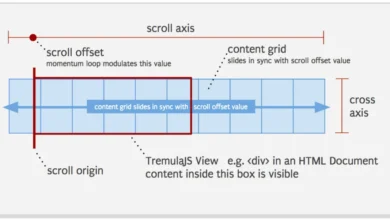
For years, the mandate to "never block the main thread" has been a cornerstone of web performance optimization. This directive is rooted in the browser’s architecture, where the main thread is a singular conduit for a multitude of critical operations. It is responsible for parsing HTML, constructing the DOM, computing CSS styles, laying out the page, painting pixels to the screen, and responding to user interactions. Simultaneously, it executes all application JavaScript. Because it is single-threaded, it can only perform one task at a time. If a JavaScript task runs for too long, it monopolizes this vital resource, preventing the browser from updating the UI, processing user input, or rendering new frames. This leads to perceived sluggishness, jank, and a frustrating user experience, directly impacting crucial Core Web Vitals like First Contentful Paint (FCP), Largest Contentful Paint (LCP), and Interaction to Next Paint (INP). Google’s performance guidelines famously classify tasks exceeding 50 milliseconds as "long tasks," which are primary contributors to poor responsiveness and high INP scores.
To circumvent these issues, developers are routinely advised to offload computationally intensive or long-running operations to background workers, such as Web Workers or Service Workers. This architectural pattern isolates heavy computations from the UI, theoretically preserving main thread responsiveness. The underlying assumption is that distributing work across different threads will always result in a more fluid and performant application. This philosophy has shaped countless application designs, advocating for a clear separation between UI management and complex data processing.
The Unforeseen Costs of Isolation: Inter-Context Communication
While the principle of isolating tasks is sound for many applications, it overlooks a critical factor: the cost of communication between these isolated browser contexts. A browser environment is not monolithic; various components like the main thread, web workers, service workers, and extension background scripts operate in distinct, isolated memory spaces. This "shared-nothing" architecture, while crucial for security and stability, necessitates explicit messaging for data exchange, typically through APIs like postMessage().
When postMessage() is invoked, the browser employs the Structured Clone Algorithm (SCA) to facilitate data transfer. SCA is a sophisticated deep-copy operation, meticulously traversing the entire data structure, cloning each value, serializing it into a transportable format, transmitting these bytes to the target context, and then painstakingly reconstructing the original object on the receiving end. While highly efficient for small data payloads—often imperceptible for simple configuration objects like theme: "dark"—its synchronous and blocking O(n) nature means its cost scales linearly with the size of the data. For instance, sending an 8MB image payload to a background worker for processing would require the main thread to halt its operations to execute this serialization and copying process. This overhead, encompassing serialization, transit, background processing, and deserialization, can collectively introduce significant latency. The irony here is profound: the act of moving work to avoid freezing the UI can itself cause a temporary freeze, or at least a noticeable delay, if the data transfer cost is substantial.
Transferable Objects: A Partial Solution with Specific Limitations
Recognizing the performance bottleneck of SCA for large data sets, browser vendors introduced "Transferable objects" (e.g., ArrayBuffer, ImageBitmap, MessagePort). Unlike SCA, which copies data, transferable objects allow the browser to switch ownership of the data from one context to another. The sending context instantly loses access to the data, and the receiving context gains full control. This "hand-off" mechanism is remarkably fast; benchmarks by Chrome Developers illustrate that transferring a 32MB ArrayBuffer can take less than 7 milliseconds, a dramatic improvement over the approximately 300 milliseconds required for cloning via SCA—a 43x speed increase.
Despite their impressive performance, transferable objects come with significant limitations that preclude their universal application. Firstly, they support only a restricted set of data types, primarily low-level binary data structures. Complex JavaScript objects, DOM elements, or functions cannot be directly transferred. Secondly, once transferred, the original context loses access to the data, meaning it must be re-sent if the original context requires it again, adding complexity to data management. Thirdly, the receiving context must be capable of processing the transferred raw data, often requiring additional parsing or conversion logic. These constraints rendered transferable objects unsuitable for many common scenarios, including the processing of Base64 image strings, which are a prevalent output format for browser APIs like captureVisibleTab().
Case Study: Fastary Screenshot Extension – A Challenge to Dogma
The developer of Fastary, a Chrome extension featuring screenshot capabilities, encountered a practical dilemma that exposed the limitations of blindly adhering to the "never block the main thread" rule. The initial architectural approach for Fastary followed recommended best practices: leveraging Chrome’s Offscreen Document API for background DOM operations, particularly for canvas manipulation required for image processing (e.g., cropping, stitching, watermarking).
The envisioned workflow was:
- User initiates screenshot action from the active tab.
- Background script captures the visible tab (
chrome.tabs.captureVisibleTab()). - The resulting Base64 image URL is sent to an
Offscreen Document. - The
Offscreen Documentperforms image processing (e.g., cropping on a canvas). - The processed image data is sent back to the background script.
- The background script sends the final image to the content script for display or further action.
However, testing revealed a consistent and unacceptable latency of 2 to 3 seconds for what should have been an "instant" screenshot task. The culprit was identified as the massive synchronous communication overhead. A standard 1080p screenshot generates a Base64 URL string of approximately 1MB. On modern Retina displays (common on MacBooks and 4K monitors), the devicePixelRatio (DPR) can be 2 or 3, effectively doubling or tripling the pixel dimensions and thus the data payload. Given that extension messaging relies on JSON serialization, this meant potentially dealing with several megabytes of data being serialized twice (once to the Offscreen Document, once back) for a relatively fast image processing operation (cropping itself might take only tens of milliseconds). The actual image processing within the Offscreen Document was swift, but the cumulative transfer cost overshadowed any benefits of offloading.
Adding to the complexity was the "Retina High-DPI Problem." When a user selected a crop region, the content script obtained coordinates in CSS pixels using getBoundingClientRect(). However, the natively captured screenshot used physical hardware pixels. For accurate cropping, the CSS pixel coordinates needed to be scaled by the devicePixelRatio (DPR) of the active tab. Since Offscreen Documents lack a physical display, their default DPR is 1. This would necessitate explicitly capturing the active tab’s DPR, serializing it, sending it with the image payload, and manually performing the scaling math within the Offscreen Document—adding another layer of complexity and potential for error.
Re-evaluating the Architecture: Main Thread Processing
Faced with these persistent issues, the developer decided to challenge the conventional wisdom and re-architect the Fastary extension. The Offscreen Document was removed from the image processing pipeline. Instead, the image processing logic was injected directly into the active tab as a content script.
The revised workflow became:
- User initiates screenshot action from the active tab.
- Background script captures the visible tab (
chrome.tabs.captureVisibleTab()). - The Base64 image URL and crop data are sent directly to the active tab’s content script.
- The content script, running on the main thread of the active tab, performs the image processing (e.g., cropping on a canvas).
- The processed image is then available within the same context, eliminating further cross-context transfers for processing.
This architectural shift drastically simplified the communication flow, reducing it to a single cross-context transfer (from background to content script) for the initial data URL. Crucially, it eliminated the multiple JSON serialization/deserialization round trips that were plaguing the previous design. The Retina DPI issue also resolved itself naturally, as the content script running within the active tab inherently had access to the correct devicePixelRatio of the monitor, allowing for accurate scaling of crop coordinates without manual intervention or additional data transfer.
The Amended Rule: "Never Block the Main Thread for Too Long"
The success of this revised approach in Fastary led to a nuanced understanding of the "never block the main thread" rule. Rather than an absolute prohibition, the more pragmatic interpretation became: "never block the main thread for too long." For user-invoked actions that demand immediate feedback and involve fast processing, a brief main thread block (e.g., under 100-200ms) can be perfectly justifiable if the alternative (offloading with significant transfer overhead) introduces greater latency. The user’s expectation of immediacy for an action like taking a screenshot often outweighs the imperceptible stutter of a very short main thread block, especially when the overall perceived speed is significantly improved. This suggests a crucial corollary: do not isolate processes if the data transfer cost is greater than the processing cost.

A Framework for Decision-Making: CPU-Bound vs. Data-Bound Tasks
To guide developers in making informed architectural decisions, a mental model differentiating between "compute-heavy" and "data-heavy" tasks proves invaluable:
-
Compute-Heavy Tasks (CPU-Bound): These tasks incur primary costs in raw computation, not data size. Examples include image compression algorithms, complex audio profiling, video encoding, or physics simulations. For these, the actual processing time dwarfs the transfer cost. Offloading these to background workers is almost always the correct strategy, as it frees the main thread for UI responsiveness while intensive calculations occur asynchronously.
-
Data-Heavy Tasks (Data-Bound): Conversely, these tasks are expensive primarily due to the sheer volume of data involved, while the processing itself is computationally inexpensive. Image cropping, filtering a large array, or shallow copying large objects fall into this category. Here, the "processing time" is almost insignificant compared to the cost of serializing, transferring, and deserializing megabytes of data across contexts. In such cases, offloading can lead to "negative-sum efficiency," where the combined serialization, transit, and deserialization costs exceed the benefit of background processing.
This framework suggests that developers should consider the Total Time = Serialization Cost + Transit + Background Processing Time + Deserialization Cost. If the "background processing time" is the dominant factor, isolation is beneficial. However, if the sum of "serialization cost," "transit," and "deserialization cost" exceeds the background processing time, then performing the task directly on the main thread, provided it’s brief, offers a better user experience.
The Importance of Measurement and Profiling
Ultimately, making these architectural choices should not be based on dogma or intuition alone, but on empirical data. Developers are strongly encouraged to utilize browser performance tools to measure and profile the actual costs. APIs like performance.mark() and performance.measure() are indispensable for accurately quantifying transfer costs (around postMessage calls) versus actual processing times. Such profiling can reveal hidden bottlenecks and validate architectural decisions, ensuring that performance optimizations genuinely improve the user experience rather than inadvertently introducing new sources of latency.
Broader Implications for Web Development
The Fastary case study underscores a broader truth in software engineering: no rule is absolute, and context is paramount. While the principle of preserving main thread responsiveness remains fundamental, a dogmatic adherence without considering the nuances of data transfer overhead can lead to suboptimal performance. This insight encourages web developers to adopt a more critical, data-driven approach to performance optimization, moving beyond blanket rules to analyze the specific characteristics of their tasks and data flows. As web applications become increasingly complex and handle larger datasets, understanding the trade-offs between main thread processing and inter-context communication will be crucial for delivering truly seamless and high-performing user experiences. The amended rule—"never block the main thread for too long"—serves as a practical reminder that effective web performance lies in intelligent design, informed by measurement and a deep understanding of browser mechanics.