The accumulation of digital detritus is a defining challenge of the modern internet age. As users navigate an ecosystem defined by rapid sign-ups, aggressive marketing, and the proliferation of newsletter subscriptions, the personal inbox has transformed from a vital communication tool into a cluttered repository of unwanted solicitations. This digital footprint—the trail of data left by every account creation and newsletter opt-in—poses not only a productivity hurdle but a significant security risk. Paperweight, a newly emerged open-source application, aims to address this systemic issue by providing a local-first, privacy-conscious utility designed to audit, manage, and sanitize personal email accounts.
The Problem of Digital Accumulation
The sheer volume of digital data generated by an average user is substantial. Market research indicates that the average professional receives over 100 emails per day, a significant portion of which consists of automated marketing or administrative alerts from services long forgotten. This "inbox noise" obfuscates critical correspondence, leading to increased cognitive load and the potential for missing time-sensitive information.
Beyond mere annoyance, the practice of linking an primary email address to hundreds of third-party services creates a sprawling, vulnerable attack surface. When a third-party service suffers a data breach, the credentials and personal information associated with the user’s email address are often exposed on the dark web, potentially leading to identity theft or credential stuffing attacks. The General Data Protection Regulation (GDPR) and similar legislative frameworks, such as the California Consumer Privacy Act (CCPA), were designed to grant individuals the "right to be forgotten," yet the technical process of invoking these rights remains fragmented and cumbersome for the average user.
Emergence of Paperweight and Local-First Architecture
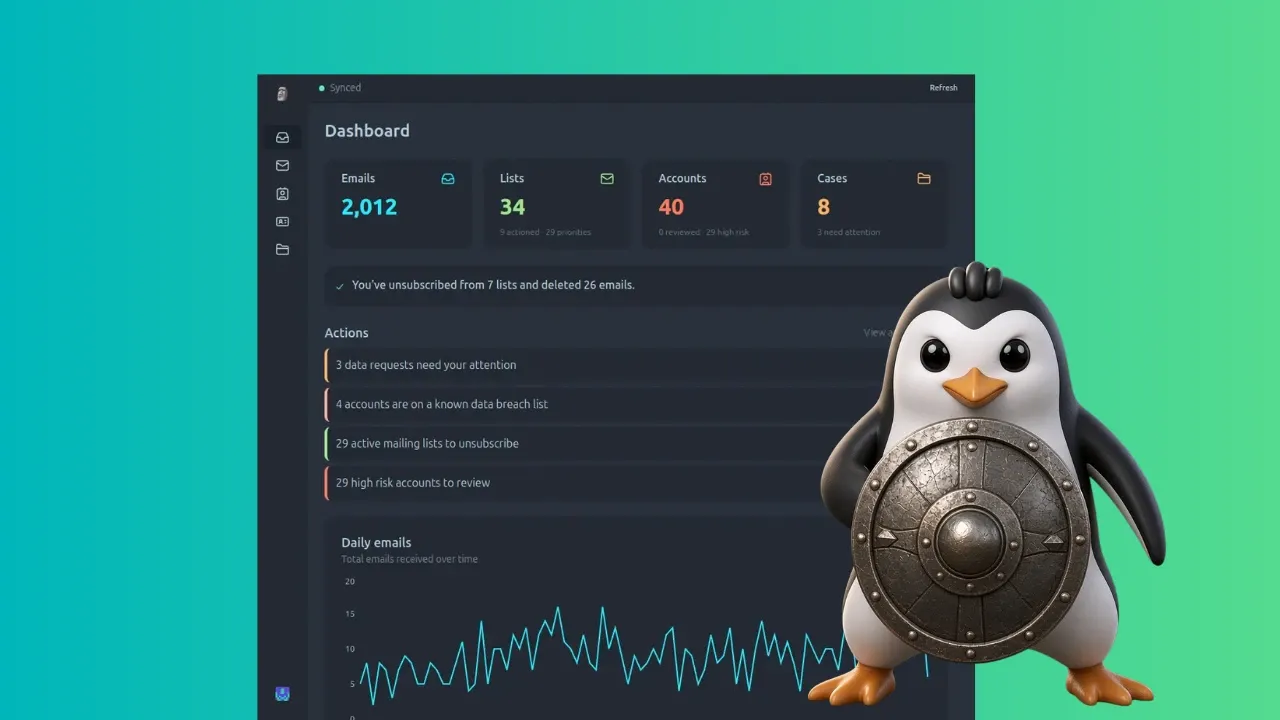
Paperweight positions itself as a centralized dashboard for managing this complexity. Unlike third-party "data broker" services that require users to grant access to their personal data for processing on external, cloud-hosted servers, Paperweight utilizes a local-first architecture. By processing all email data directly on the user’s machine, the application ensures that personal communication logs are never transmitted to or stored on the developer’s infrastructure.
The project’s source code is publicly available under the MIT license on GitHub, allowing for independent verification of its security claims. This transparency is a strategic response to the growing consumer distrust regarding "privacy-focused" tools that inadvertently create new data silos. By keeping the processing local, Paperweight mitigates the risks associated with third-party data handling, appealing to a segment of the user base that prioritizes data sovereignty.

Core Functionality and Workflow
The application operates by connecting to a user’s email provider, conducting an audit of the inbox, and presenting the findings through a structured, user-friendly interface. The functionality can be divided into three primary domains:
1. Subscription and Mailing List Management
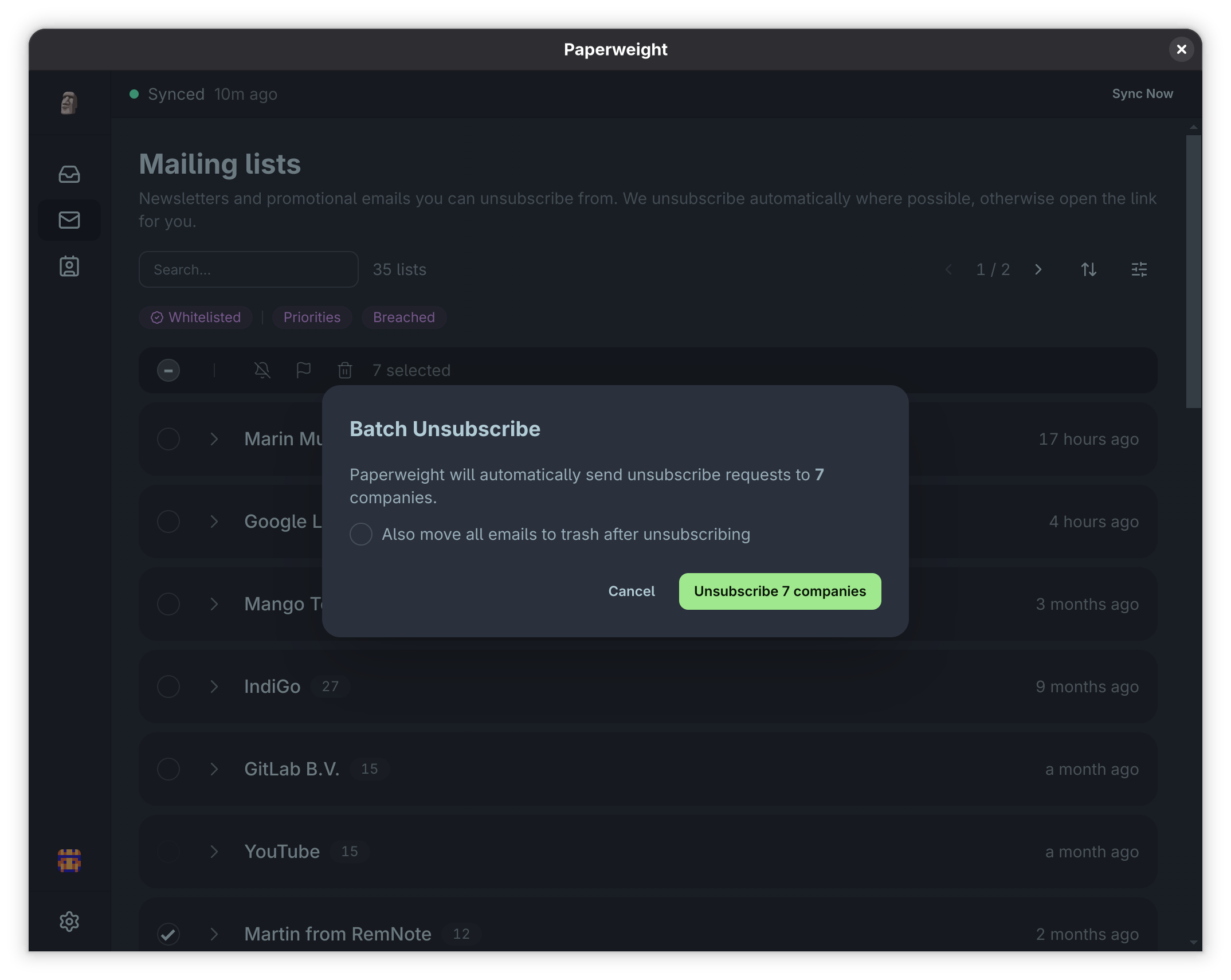
The tool aggregates all identified mailing lists in a centralized view, displaying the frequency of correspondence and the date of the most recent interaction. This allows users to identify "zombie" subscriptions—services they no longer utilize but from which they continue to receive promotional material. The software facilitates a batch-unsubscription process, automating the browser-heavy tasks typically required to opt out of marketing emails. While some services, particularly those integrated into major ecosystems like Google’s YouTube, may restrict automated unsubscription, Paperweight streamlines the process for the majority of standard mailing lists.
2. Account Inventory and Audit
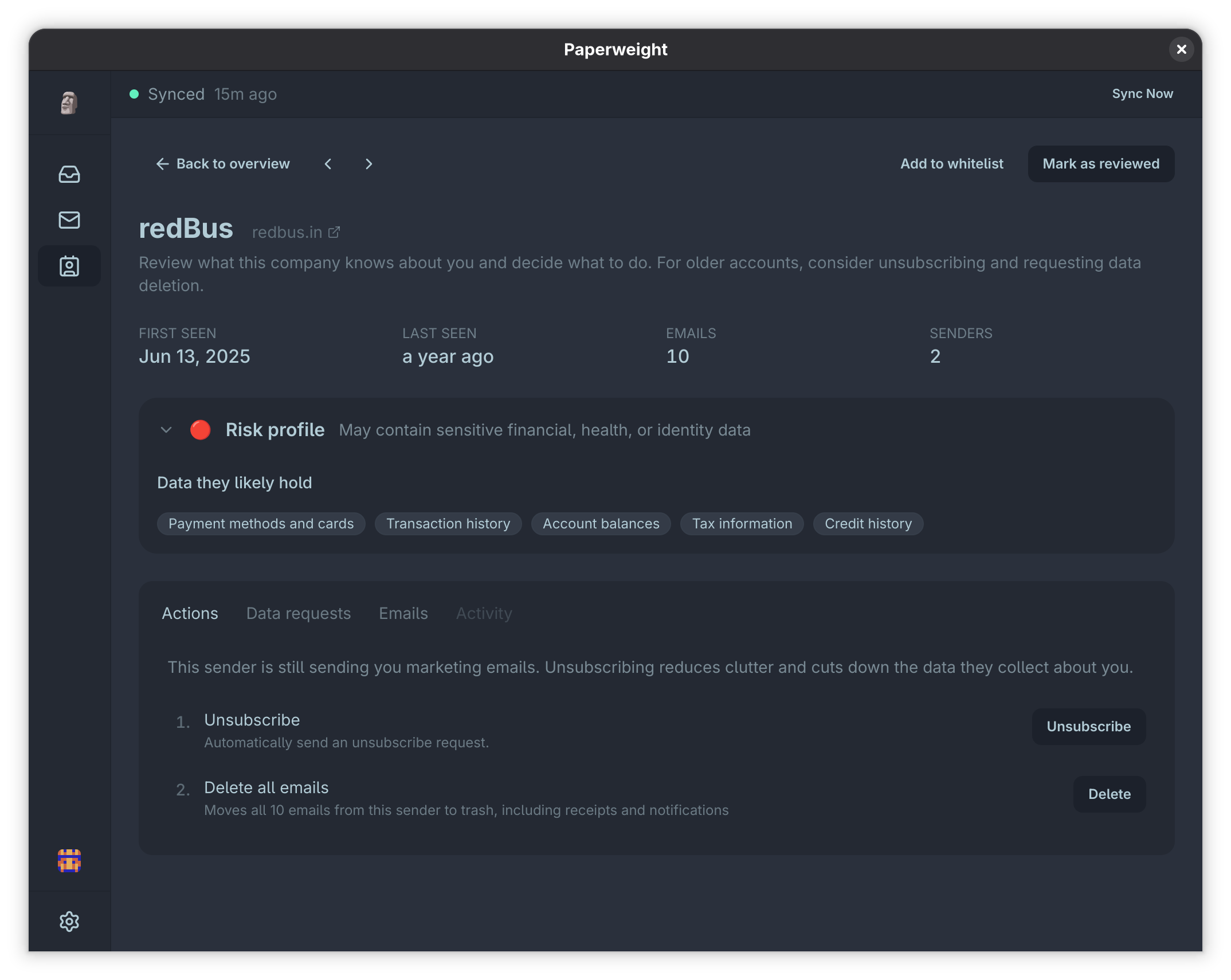
Perhaps the most critical feature is the Account Inventory, which maps the various services linked to a specific email address. This includes applications that utilize OAuth protocols, such as "Login with Google." The software categorizes these services based on the level of data access granted, such as access to financial, health, or identity-related information. This visibility is vital for users to perform a "digital spring cleaning," identifying platforms that hold sensitive data and facilitating the deletion of accounts that are no longer in use.
3. Breach Detection and GDPR Compliance
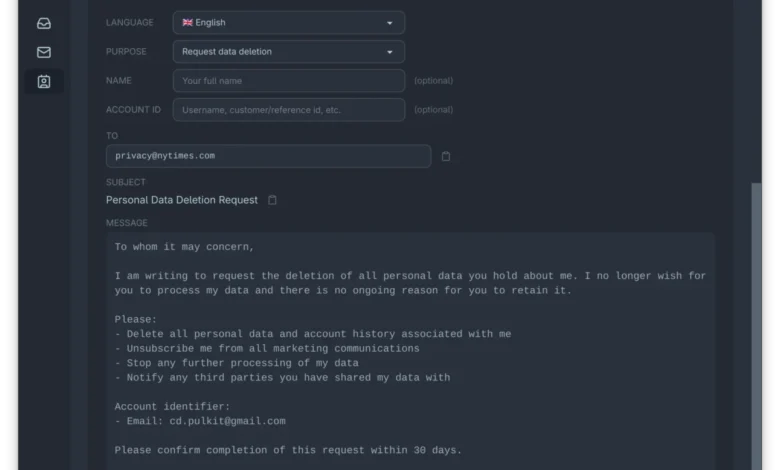
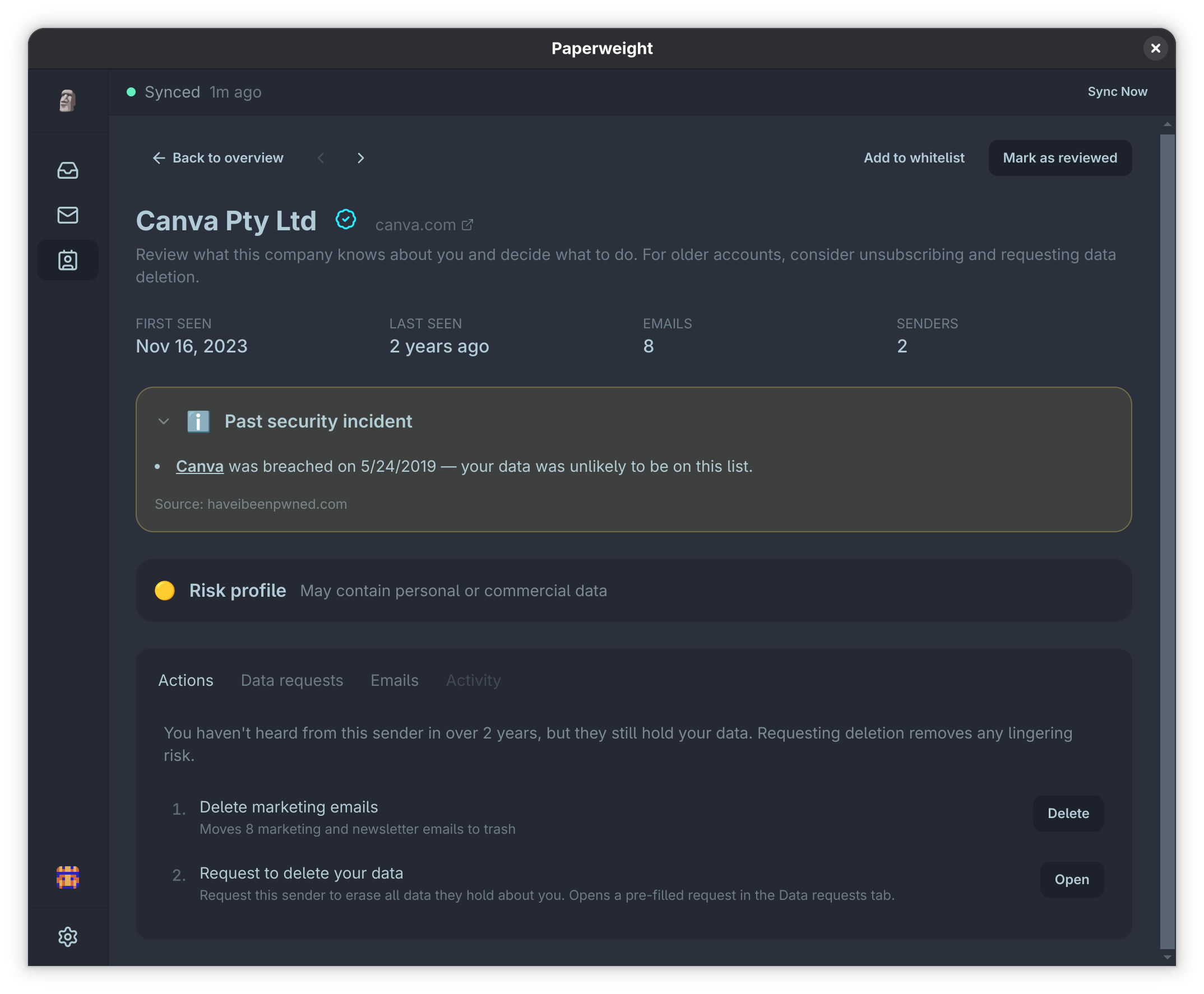
Leveraging data from the security repository "Have I Been Pwned," Paperweight cross-references a user’s account history against known public breaches. If a service linked to the user’s email has been compromised, the software flags the account as high-risk. Furthermore, the application provides pre-written templates designed to assist users in invoking their GDPR rights. By simplifying the drafting of "right to be forgotten" requests, Paperweight lowers the barrier to entry for users seeking to have their data purged from the databases of third-party organizations.
Data Privacy and Security Implications
The architectural decision to avoid cloud-based processing is the cornerstone of Paperweight’s security model. Network traffic analysis confirms that the application primarily communicates with the user’s designated email provider (e.g., Gmail, Outlook, or iCloud) and the specific web services the user is interacting with during a removal request. There is no intermediary server capturing the user’s metadata or email content.
However, the efficacy of the tool is partially tethered to the cooperation of external organizations. While Paperweight can automate the sending of unsubscription or deletion requests, it cannot force a third-party service to comply instantly. Users must remain aware that the final step—the actual erasure of data from a company’s internal database—remains subject to the internal policies and responsiveness of that entity.
Market Positioning: The Freemium Model
Paperweight operates on a freemium model. The free version restricts users to a single email account and a 90-day history window. For users requiring comprehensive coverage, a lifetime license is available for a one-time fee of $69. This pricing strategy reflects the challenges of maintaining open-source software, as the developers seek to monetize the convenience of the tool while maintaining the integrity of the core, inspectable code.
The project is cross-platform, offering support for Linux (via AppImage and .deb packages), macOS, and Windows. This multi-platform availability acknowledges the diverse hardware ecosystems of modern users, particularly those within the privacy-conscious Linux community.
Broader Impact and Future Outlook
The rise of tools like Paperweight signals a growing demand for user-centric privacy utilities that act as a bridge between complex legal rights (like GDPR) and the average person’s daily workflow. While the software is not a panacea for all digital privacy issues, it represents a significant step toward transparency.
As the digital landscape becomes increasingly saturated with subscription models and data-harvesting services, the ability to audit one’s digital footprint will likely become a standard component of personal digital hygiene. The success of such tools will depend on their ability to balance ease of use with the realities of an internet infrastructure that is not always designed to make leaving easy. For now, Paperweight offers a practical, transparent, and manageable path for users looking to reduce their exposure and regain control over their digital identities. Whether it is used as a monthly maintenance tool or a one-time audit, the application provides the visibility necessary to make informed decisions about one’s digital life.