Optimizing Enterprise RAG: The Strategic Shift from Batch to Sequential Processing for Enhanced Efficiency and Cost Savings


The evolving landscape of Retrieval-Augmented Generation (RAG) within enterprise AI is undergoing a critical re-evaluation of its fundamental architectures. A core tenet of building robust and cost-effective RAG systems, particularly within the ambitious "Enterprise Document Intelligence" framework, lies in how retrieved information is fed into the generation component of a Large Language Model (LLM). While the prevailing default has been to process all top-K retrieved candidates in a single batch, a new strategic approach advocating for selective, sequential feeding is gaining traction, promising significant reductions in operational costs and improvements in query response times for a vast majority of enterprise use cases. This shift, a critical development positioned between advanced generation techniques and the continuous upgrade of RAG systems, hinges on intelligent question parsing and a refined understanding of informational sufficiency.
The Rise of RAG and its Enterprise Imperative
Retrieval-Augmented Generation (RAG) has rapidly become a cornerstone technology for enterprises aiming to leverage the power of LLMs while maintaining factual accuracy, reducing hallucinations, and incorporating proprietary, up-to-date information. Unlike standalone LLMs that rely solely on their pre-trained knowledge, RAG systems first retrieve relevant documents or data snippets from an external knowledge base and then use this information to ground the LLM’s response. This hybrid approach is particularly vital in sectors like finance, legal, healthcare, and compliance, where precision, auditability, and access to specific, often sensitive, documentation are paramount. The "Amplify the Expert" philosophy, which underpins the "Enterprise Document Intelligence" series, emphasizes building RAG systems that augment human expertise rather than replace it, demanding robust, efficient, and auditable architectures.
However, the rapid adoption of RAG has also brought to light inherent inefficiencies, primarily concerning the computational resources consumed by LLMs. Each token processed by an LLM incurs a cost, and in high-volume enterprise environments, these costs can quickly escalate into substantial operational expenditures. This article specifically addresses one of the most significant yet often overlooked areas of optimization: the method by which retrieved context is presented to the generation brick of the RAG pipeline.

Unpacking the Inefficiency of Naive Batch Processing
The default architecture for many RAG implementations, often referred to as "naive RAG," operates on a simple principle: retrieval identifies the top-K most relevant document chunks (e.g., K=5), and then all K chunks are passed simultaneously to the LLM for generating an answer. This "batch-by-default" approach, while straightforward to implement, introduces silent costs that accumulate rapidly, especially for routine, factual inquiries that constitute the bulk of enterprise traffic.
Consider a common scenario: a user asks, "What is the effective date of this policy?" A retrieval system might return five candidate line-windows. The first candidate might perfectly contain the answer: "effective from January 1, 2026." However, the subsequent chunks could be irrelevant, such as policy signatures, footnotes, or historical notes on previous policy versions. In a batch processing model, the LLM is compelled to ingest and process all five chunks, even though the definitive answer was present in the very first one. This results in the LLM expending computational resources (and thus incurring token costs) on redundant or irrelevant information. On a corpus of thousands of documents and millions of queries annually, these seemingly small inefficiencies translate into significant financial waste.
A hypothetical example clarifies this: imagine a large financial institution processing 10,000 policy-related queries daily. If 80% of these queries are simple factual lookups where the answer resides in the top-1 retrieved chunk, and the batch method processes 5 chunks instead of 1, the institution is effectively paying for 4 extra chunks per query for 8,000 queries daily. Assuming an average chunk size of 200 tokens and a hypothetical token cost of $0.0005 per 1,000 tokens, this translates to paying for an additional 6.4 million tokens daily for no added value on these specific queries. Over a month, this easily accumulates to hundreds or thousands of dollars in unnecessary expenditure, illustrating why this "silent cost" is a critical concern for enterprise AI architects.
Introducing Sequential Generation: A Paradigm Shift for Factual Queries

To counteract the inefficiencies of batch processing, the sequential generation regime proposes a more intelligent, adaptive approach. Instead of feeding all K candidates simultaneously, it treats them as an ordered list and presents them to the generation brick one by one. The crucial innovation here is the integration of a "sufficiency predicate"—a mechanism for the LLM to self-report whether the current candidate has provided enough information to answer the question.
The process unfolds as follows:
- The retrieval system identifies the top-K candidates, ranked by relevance.
- The LLM receives the first candidate.
- It attempts to answer the question based only on that candidate.
- Crucially, it also provides a "sufficiency signal" (e.g.,
answer_foundandcomplete_answer_foundbooleans). - If the signal indicates the answer is complete, the process stops, and the answer is returned.
- If the answer is found but incomplete, or not found at all, the loop continues with the next candidate, escalating until a complete answer is found or all K candidates have been processed (a bounded iteration).
Revisiting the "effective date" example: with sequential processing, the LLM receives the first chunk, extracts "January 1, 2026," and signals answer_found = True and complete_answer_found = True. The process immediately terminates. The tokens spent are dramatically reduced, often by 80% or more for such questions, representing a significant cost saving compared to the batch approach. This method optimizes for latency as well, as simple queries can be resolved with a single, quick LLM call.
The Strategic Dispatch: Tailoring Generation to Query Type
While sequential processing offers compelling advantages for simple, factual queries, it’s not a universal panacea. Certain complex question types, such as comparisons, listings, or synthesis across multiple documents, inherently require the LLM to view and arbitrate over multiple pieces of information simultaneously. For these scenarios, the batch approach remains the optimal choice.

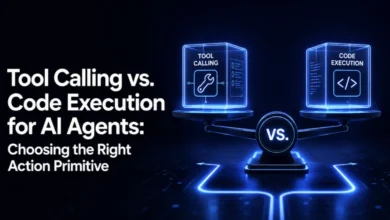
The true innovation, therefore, lies not in choosing one regime over the other globally, but in implementing a dynamic dispatch mechanism that selects the appropriate processing mode per question. This dispatch decision is driven by an intelligent question parser, a component introduced earlier in the RAG framework that analyzes the intent, shape, and decomposition pattern of a user’s query.
A dispatcher leverages parsed question_df attributes like answer_shape (e.g., single value, list, comparison) and decomposition (e.g., simple lookup, multi-step reasoning) to route the query. This ensures that:
- Sequential mode is activated for questions seeking single, atomic facts (e.g., "What is the policy’s premium?", "When was this document last updated?"). These typically yield a single typed value (Amount, Date, Boolean).
- Batch mode is activated for questions requiring aggregation, comparison, or synthesis (e.g., "List all eligible expenses," "Compare the benefits of Policy A vs. Policy B," "Summarize the key clauses related to liability"). These often necessitate processing multiple chunks to form a comprehensive answer.
This intelligent routing table holds across diverse sectors—be it insurance, legal, medical, financial, or compliance. For instance:
- Insurance: "What is the deductible?" (Sequential) vs. "What are the exclusions for this policy?" (Batch).
- Legal: "What is the ruling date?" (Sequential) vs. "Summarize the arguments for both parties" (Batch).
- Medical: "What is the dosage of Drug X?" (Sequential) vs. "List the side effects of Drug Y" (Batch).
- Financial: "What is the current stock price of Company Z?" (Sequential) vs. "Analyze the Q3 earnings report" (Batch).
The parser, not the LLM itself, makes this critical architectural decision. This deterministic approach is crucial for enterprise-grade RAG, guaranteeing auditability and consistent behavior. The same question, posed on different days, will always be routed and processed in the same manner, which is vital for regulatory compliance, debugging, and maintaining user trust.
The Crucial Role of the Sufficiency Signal

The efficacy of the sequential mode hinges entirely on the generation brick’s ability to accurately self-report whether a given candidate is sufficient. This "sufficiency signal" is not a subjective confidence score, which can drift with model updates or require arbitrary thresholds. Instead, it relies on two distinct boolean flags embedded within a structured output schema, such as AnswerWithEvidence:
answer_found: Indicates whether any relevant information pertaining to the question was present in the current candidate.complete_answer_found: Indicates whether the entire answer to the question was present and fully derivable from the current candidate.
This clean separation provides three distinct exit conditions for the sequential loop:
- Found + Complete: The ideal scenario. The loop stops, and the complete answer is returned. This is the primary driver of cost savings.
- Found + Incomplete: The candidate contains some relevant information, but not the full answer. The loop continues to the next candidate, seeking more context.
- Not Found: No relevant information was found in the current candidate. The loop continues, or if the maximum K candidates have been processed, it might trigger a "no answer found" response or a fallback mechanism.
This bounded iteration is critical. A naive sequential implementation without a predefined limit (K) could potentially burn tokens indefinitely on highly ambiguous or unanswerable queries. By setting an upfront budget (the original K, e.g., 5 candidates), the dispatcher ensures that even in worst-case scenarios, the token cost remains capped, albeit higher than a best-case sequential run.
Quantifying the Impact: Cost and Performance Benefits
The economic implications of this architectural shift are substantial. Let’s revisit the enterprise insurance Q&A workload:

- Workload Profile: 100 questions, 80% simple factual lookups, 20% complex queries (listings/comparisons).
- Context: Each query retrieves K=5 chunks.
- Batch Cost: Every question incurs
generation_cost(question + 5 chunks). - Sequential Cost (Optimized):
- For 80 simple questions:
generation_cost(question + 1 chunk)(assuming top-1 sufficiency). - For 20 complex questions:
generation_cost(question + 5 chunks)(routed to batch). - Worst-case sequential for simple questions (if routed incorrectly or if answer is in chunk 5):
generation_cost(question + 1 chunk) * 5. However, with accurate parsing, this is rare for "simple" questions.
- For 80 simple questions:
The analysis shows a 65% saving on input tokens for generation across this mixed workload. This percentage can fluctuate based on the specific distribution of easy vs. hard questions and the average chunk size. However, the underlying principle holds: for the majority of enterprise traffic, sequential processing, intelligently dispatched, becomes the cheap default, reserving the more expensive batch processing for queries that genuinely require it. Beyond direct token cost, faster resolution of simple queries also translates to improved user experience and potentially lower operational costs for human agents who might otherwise handle these basic questions.
Beyond Efficiency: Auditability and Enterprise-Grade RAG
A critical distinction for enterprise deployments is the choice between a deterministic dispatcher and an agentic LLM-driven dispatch. While an LLM could theoretically be tasked with deciding between batch and sequential on the fly, this article strongly advocates for the former. The reason is paramount for enterprise environments: auditability.
In regulated industries, the ability to consistently reproduce results and understand the exact reasoning path of an AI system is non-negotiable. A deterministic parser, which routes questions based on predefined rules derived from their parsed shape and intent, provides this guarantee. The same question, fed into the system at any point, will always follow the same processing path (sequential or batch). This consistency simplifies debugging, facilitates compliance audits, and builds trust in the system’s reliability.
Agentic approaches, where an LLM dynamically re-plans the dispatch strategy for each call, while potentially more flexible, introduce an element of non-determinism. The LLM’s decision might vary slightly based on subtle prompt variations, temperature settings, or even minor model updates, making it challenging to audit or guarantee consistent behavior. For use cases demanding strict adherence to protocols and an immutable audit trail, the deterministic dispatcher is the superior choice. This approach deliberately stops short of more complex "adaptive RAG loops" that involve LLMs selecting candidates or dynamically adjusting scope, prioritizing robustness and auditability over maximal agentic flexibility.

Conclusion
The journey towards truly efficient and enterprise-grade RAG systems necessitates moving beyond the "batch-by-default" paradigm. By integrating a sophisticated question parser with a dynamic dispatch mechanism and leveraging a clear, boolean-based sufficiency signal from the generation brick, organizations can strategically alternate between sequential and batch processing. This architectural refinement not only promises substantial cost reductions through optimized token usage and improved latency for common queries but also reinforces the critical principles of auditability and deterministic behavior essential for trusted AI deployments in sensitive enterprise environments. The decision to employ sequential or batch processing, therefore, belongs to the intelligent parser, ensuring that RAG systems are not only powerful but also economically viable and structurally sound. This strategic shift marks a significant step forward in the ongoing evolution of enterprise document intelligence, delivering tangible benefits in performance, cost, and trustworthiness.