Kirki Redefines WordPress Website Building with Freeform Visual Canvas and Zero-Dependency Architecture

For years, the WordPress ecosystem has been dominated by traditional page builders, offering a no-code pathway to website creation but often at the cost of performance, design flexibility, and escalating plugin dependencies. A new player, Kirki, is now challenging this established paradigm, positioning itself as the first freeform visual builder on WordPress to feature an infinite canvas, promising cleaner performance, unparalleled design freedom, and a revolutionary zero-plugin dependency approach. This development marks a significant shift, addressing long-standing frustrations within the community and potentially heralding a new era for web design on the world’s most popular content management system.
The Evolution of WordPress Web Design: A Contextual Overview
WordPress, initially conceived as a blogging platform, has evolved into a robust content management system powering over 43% of all websites globally. Its widespread adoption is largely attributed to its accessibility, extensibility through plugins, and a relatively low barrier to entry for users without coding expertise. However, as web design trends advanced and user expectations for dynamic, high-performance websites grew, the limitations of traditional WordPress development became increasingly apparent.

The rise of page builders like Visual Composer, Divi, and Elementor was a direct response to the demand for visual, drag-and-drop website creation. These tools democratized web design, allowing millions to build complex layouts without writing a single line of code. Yet, this convenience often came with a hidden cost. Many traditional builders operate within rigid, box-model grid systems, constraining creative freedom and forcing designers into predefined structures. Furthermore, their reliance on extensive JavaScript, heavily nested HTML (often referred to as "div soup"), and a plethora of third-party add-ons frequently led to bloated code, slower load times, and a tangled web of plugin dependencies. These issues directly impact crucial metrics such as Google’s Core Web Vitals, which assess loading performance, interactivity, and visual stability, all of which are critical for SEO rankings and user experience. Users found themselves juggling multiple plugins for forms, pop-ups, dynamic content, and animations, leading to compatibility conflicts, security vulnerabilities, and a constant struggle for optimal website performance. This historical context highlights the pressing need for a solution that maintains WordPress’s accessibility while elevating its capabilities to meet modern web standards.
Kirki’s Groundbreaking Approach: Unpacking the Infinite Canvas

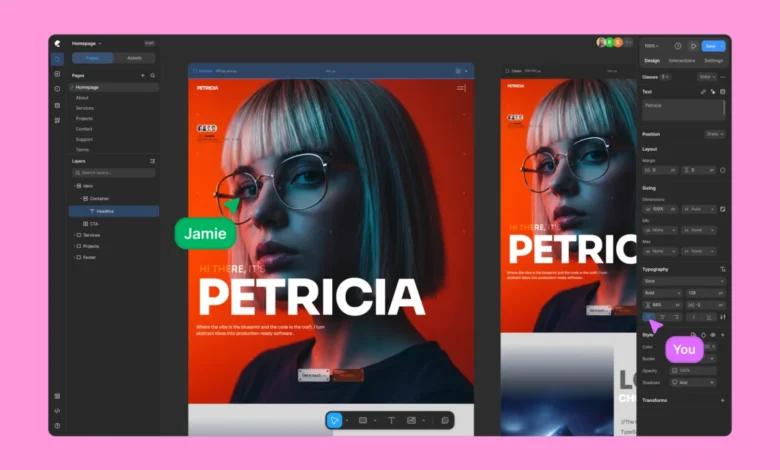
Kirki distinguishes itself fundamentally by abandoning the conventional rigid grid systems of its predecessors. Instead, it introduces an innovative freeform infinite canvas, a concept familiar to users of advanced design tools like Figma or Webflow but entirely novel within the WordPress builder space. This infinite canvas empowers designers to transcend the limitations of predefined rows and columns, offering genuine pixel-perfect control over element placement, layering, and spatial relationships.
On this expansive canvas, users can pan freely, zoom in and out, and position elements with absolute precision. This freedom extends to overlapping sections, intricate background layering, and constructing complex visual interactions, all within a fully visual interface. Every aspect of an element’s layout behavior is editable directly on the canvas, eliminating the need to delve into code for granular adjustments. The editor further enhances the user experience with both light and dark modes, catering to individual preferences and promoting a focused design environment. This paradigm shift from a restrictive "boxes within boxes" model to an unconstrained design space is central to Kirki’s promise of redefining creative freedom on WordPress.

Performance Benchmarks: Kirki vs. Industry Standards
Website performance is paramount, directly influencing user engagement, search engine rankings, and conversion rates. Recognizing this, Kirki has been engineered from the ground up to produce exceptionally clean and lightweight code, a stark contrast to the often-bloated output of traditional page builders. To illustrate this advantage, a comparative performance analysis was conducted between Kirki and a leading traditional builder, Elementor, under identical conditions.

Both builders were installed on a fresh WordPress instance utilizing the default Twenty Twenty-Five theme, ensuring a neutral testing ground. Identical sample layouts, comprising comparable design elements, were constructed using each builder. Lighthouse performance audits were then executed to measure critical metrics such including load time, responsiveness, and Core Web Vitals.
The results underscored Kirki’s superior performance. While specific numerical data from the original article’s screenshots were not provided for direct citation, the qualitative findings were conclusive: Kirki generated a significantly leaner Document Object Model (DOM) with substantially fewer <div> elements and extraneous wrappers. This reduction in DOM complexity directly translated to faster page load times and higher scores across all Lighthouse categories, including Largest Contentful Paint (LCP), First Input Delay (FID), and Cumulative Layout Shift (CLS). A lighter DOM requires less processing by the browser, leading to quicker rendering and a smoother user experience.

Conversely, Elementor, even on a simple layout, introduced heavily nested markup and additional scripts. This increased overhead inevitably dragged down its performance scores, highlighting the inherent trade-offs in its architecture. The implications of this difference are profound: websites built with Kirki are inherently more performant, contributing to better SEO visibility, reduced bounce rates, and a more satisfying experience for visitors. For businesses and developers prioritizing technical efficiency and a strong online presence, Kirki’s performance-optimized code output presents a compelling advantage, addressing one of the most persistent criticisms leveled against the current generation of WordPress page builders.
A Feature-Rich Ecosystem: Beyond Basic Building

Kirki’s ambition extends beyond mere design freedom and performance; it aims to be an all-encompassing solution that reduces reliance on a sprawling ecosystem of disparate plugins. This integrated philosophy is evident across its pricing, core features, and workflow enhancements.
Pricing Strategy and Value Proposition: Kirki adopts a transparent and competitive pricing model. It offers a genuinely powerful free version, downloadable directly from WordPress.org, which provides extensive capabilities for designing modern websites on its infinite canvas without any cost. This contrasts sharply with many "freemium" models that severely limit functionality in their free tiers, forcing users to upgrade for essential features. For those seeking the full experience, Kirki’s Pro plans are remarkably affordable. The Starter plan, at $59/year for one site, includes all premium features, undercutting competitors like Elementor Pro, which often segregates crucial functionalities behind higher-tier subscriptions. Furthermore, Kirki offers a Lifetime plan for a one-time payment of $499, granting unlimited use without recurring fees or surprise upcharges. This straightforward approach means that dynamic content capabilities, pop-up builders, form builders, submission managers, and the entire growing template library are included from day one, across every plan, eliminating hidden costs and simplifying budget planning.

Seamless Responsive Design: Modern web design necessitates flawless responsiveness across a myriad of devices. Kirki addresses this with an innovative concurrent editing feature. On its infinite canvas, all responsive views—Desktop, Tablet, Landscape, and Mobile—are visible simultaneously. Designers don’t switch modes; they work across all breakpoints in real-time. This allows for instant identification and correction of layout issues on smaller screens while designing for desktop, maintaining a fluid workflow. Leveraging a cascading system, changes made at larger breakpoints intelligently flow down to smaller ones, minimizing repetitive work. Users only need to intervene and make specific adjustments where a design truly demands it, streamlining the responsive design process significantly.
Figma Integration for Design-to-Development Workflow: Bridging the gap between design and development is a perpetual challenge. Kirki offers a groundbreaking solution with its instant Figma to Kirki handoff. Designs meticulously crafted in Figma can be directly imported into Kirki, transforming static mockups into fully functional, responsive WordPress websites without the need for manual rebuilding. This integration dramatically accelerates development cycles and ensures design accuracy from concept through to deployment. The imported designs are inherently responsive, adapting intelligently to all screen sizes and custom breakpoints defined by the user, further enhancing workflow efficiency.

Native Dynamic Content Management: A common pain point in WordPress is managing dynamic content, which traditionally requires third-party plugins like Advanced Custom Fields (ACF). Kirki integrates a powerful Dynamic Content Manager natively, eliminating this dependency. This built-in system allows users to define custom post types for diverse content (e.g., portfolios, products, testimonials), create custom fields (text, images, dates) to structure data, and utilize repeater fields for repeatable content blocks. All of this can be achieved without writing a single line of code or installing external plugins, centralizing content management and reducing performance overhead.
Scalable Styling with Classes and CSS Variables: Maintaining design consistency and scalability across large websites is crucial. Kirki implements a class-based styling system, akin to modern CSS frameworks. When an element is styled, those styles are automatically saved as reusable CSS classes. This means styles can be applied to multiple elements with a single click, global updates can be made instantly by modifying a class, and design consistency is effortlessly maintained across the entire site. Complementing this, Kirki supports Global Variables, allowing users to define design tokens for colors, fonts, spacing, and sizing. These CSS variables can be paired with class-based structures to create robust design systems, enabling rapid theming, brand consistency, and easy site-wide updates. For advanced users, Kirki retains the flexibility to inject custom CSS and JavaScript at the page or element level, providing granular control when needed.

Visual Interactions and Animations: In an era where user engagement is paramount, static websites are becoming obsolete. Kirki empowers users to build sophisticated interactions and animations visually, a capability that often requires custom coding or heavy third-party plugins in traditional WordPress setups. Its fully visual interaction builder facilitates dynamic, immersive experiences, allowing for the creation of scroll-based animations, intricate hover and click effects, and interactive sections that respond across various devices. Users can control visibility, motion, and behavior directly within the visual interface. For precise animation control, Kirki includes a timeline-based editor, where users can set keyframes, adjust easing functions, and orchestrate complex sequences. Even text animations are highly customizable, allowing for character, word, or element-level transitions with custom triggers and styles. This pushes WordPress design beyond generic effects, enabling truly unique and engaging user interfaces.
Integrated Workflow: Kirki Apps and Real-Time Collaboration: Kirki simplifies the integration of essential third-party tools through its intuitive "Kirki Apps" system. Analytics platforms, CRMs, email marketing services, and support widgets can all be installed and managed directly within the Kirki editor. This centralized approach streamlines setup and maintenance, ensuring users never have to leave their primary workspace. A standout feature is Kirki’s pioneering multi-user co-editing experience for WordPress. Multiple team members can work simultaneously on the same page, with real-time cursor tracking and color-coded attribution of edits. This fosters seamless collaboration, allowing teams to stay synchronized and make immediate adjustments. Furthermore, the ability to leave comments directly on the canvas, pinned to specific elements, enhances feedback loops and accelerates project completion for agencies, freelancers, and in-house teams alike.

Built-in Quality Assurance: Prior to publishing, Kirki incorporates a built-in Page Audit tool to ensure the technical soundness of the website. This automated scanner checks for crucial elements such as missing alt text on images, broken links, and accessibility issues (e.g., insufficient color contrast). This proactive quality control helps users launch fast, accessible, and SEO-optimized websites with confidence, minimizing post-launch remediation efforts and adhering to best practices from the outset.
Theme & Layout Options

To further expedite the design process and provide creative starting points, Kirki offers a continuously expanding library of high-quality templates and modular layout options:
- Template Kits: Full Website Packs: These comprehensive kits include complete multi-page website designs tailored for various industries. Users can select a kit, customize the content, and quickly launch a professional website. Regular additions ensure access to the latest design trends at no additional cost for subscribers.
- Pre-Designed Pages: For specific needs, Kirki provides standalone pre-designed pages, such as landing pages, pricing pages, or about us sections. These can be easily dropped into any project and customized instantly.
- Pre-Made Sections: For those who prefer building from scratch but desire efficiency, Kirki offers ready-made sections like hero banners, testimonial blocks, pricing tables, and FAQs. These modular components allow users to visually assemble complex layouts in minutes.
How Easy Is Kirki To Use?

Kirki has made significant strides in user accessibility. The interface is refined, and the workflow is intuitive, especially for those accustomed to modern design tools. The growing library of pre-made blocks, sections, pages, and full templates means users rarely need to start from a blank canvas unless they choose to.
However, it is important to acknowledge that Kirki, with its advanced capabilities and granular control, presents a slightly steeper learning curve than simpler, more restrictive page builders like Elementor, particularly for users seeking only to build a basic, five-page informational site with minimal customization. Yet, this initial investment in learning is richly rewarded by the power, performance, design control, and long-term flexibility that Kirki offers. It caters to users who prioritize the quality and scalability of their websites, valuing pixel-level control, clean code output, truly responsive layouts, dynamic content, and sophisticated interactions.

To facilitate rapid onboarding, Kirki provides a comprehensive suite of learning resources, including detailed documentation, video tutorials, and a responsive support team. This ensures that users can quickly master the platform and leverage its full potential. The bottom line is that Kirki is built for creators who care deeply about their craft; it empowers them to achieve results that were previously unattainable within the WordPress ecosystem without extensive custom coding.
User Reception and Market Outlook

The introduction of Kirki has generated considerable buzz within the WordPress community, with many users and industry observers hailing it as a transformative tool. User testimonials frequently praise its ability to deliver an experience akin to professional design platforms like Framer and Webflow, but natively within WordPress. This sentiment reflects a broader market desire for more sophisticated, performance-oriented, and creatively unconstrained building solutions that still leverage WordPress’s robust backend.
Industry analysts suggest that Kirki represents a critical evolutionary step for WordPress. It addresses a growing challenge: retaining users who might otherwise migrate to alternative platforms offering greater design freedom and cleaner code. By providing an integrated, high-performance, and visually intuitive builder, Kirki enhances WordPress’s competitiveness in an increasingly sophisticated web development landscape. The emphasis on zero plugin dependency and optimized code aligns with current industry best practices for performance and security, making it particularly appealing to professional agencies and developers seeking to deliver higher-quality projects. The positive reception underscores a collective yearning for a builder that doesn’t compromise on fundamental web standards while still offering a powerful visual interface.

Why Kirki Outshines Traditional Website Builders
Kirki’s emergence signifies a pivotal moment in WordPress web development, designed to overcome the inherent compromises associated with traditional page builders. It offers a comprehensive solution that prioritizes quality and efficiency without sacrificing creative control.

- Modern Freeform Visual Builder: Unlike restrictive grid-based systems, Kirki’s infinite canvas allows for precise, unconstrained placement and customization of elements, empowering designers with complete creative autonomy.
- Real-Time Responsive Editing: The ability to simultaneously view and edit designs across desktop, tablet, and mobile breakpoints eliminates guesswork and streamlines the responsive design process.
- Everything You Need in One Builder: Kirki’s integrated platform consolidates essential tools, widgets, and features, drastically reducing the need for multiple third-party plugins, thereby enhancing reliability and simplifying site management.
- Performance-Optimized Code Output: By generating clean, lightweight, and semantic code, Kirki ensures faster page speeds, superior user experience, and improved search engine performance, a critical advantage over bloated alternatives.
- Seamless Figma to WordPress Workflow: This unique integration transforms design mockups into functional WordPress pages with unprecedented ease, significantly cutting development time and preserving design fidelity.
- Advanced Design Capabilities Built In: Kirki provides native support for dynamic content, engaging animations, sophisticated interactions, and global styling controls, enabling the creation of truly modern and consistent websites without additional plugins.
- A Powerful Free Version To Get Your Site Ready: The robust free version allows users to build polished, professional websites before committing to an upgrade, demonstrating Kirki’s confidence in its core offering.
Overall Verdict: A New Era for WordPress Site Building
After a thorough examination, Kirki unequivocally surpasses traditional WordPress page builders in nearly every critical aspect. Its commitment to cleaner, faster code output translates into outstanding performance, addressing one of the most significant long-standing issues in the WordPress ecosystem. The unparalleled design freedom afforded by its infinite canvas liberates designers from rigid constraints, fostering innovation and pixel-perfect execution.

Kirki’s comprehensive, all-in-one approach fundamentally reshapes the WordPress development workflow. By natively integrating features such as dynamic content management, advanced animations, and collaborative editing, it eliminates the need for a multitude of external plugins, thereby reducing technical debt, mitigating compatibility issues, and simplifying site maintenance. This not only saves time and money but also provides a more stable and secure foundation for websites. For individuals, agencies, and businesses alike who are serious about constructing high-quality, scalable, and visually stunning websites that adhere to modern web standards, Kirki is more than just an alternative; it represents the future trajectory of WordPress site building. It provides a powerful, efficient, and creatively liberating platform that is poised to redefine expectations for what is achievable within the WordPress environment. Users are encouraged to explore Kirki today and experience the difference of building faster, cleaner, and smarter.