Kirki Redefines WordPress Website Building with Freeform Visual Canvas and Unprecedented Performance

For years, the landscape of WordPress website development has been dominated by page builders that, while democratizing web design for millions, often presented a series of inherent compromises. These traditional tools, widely adopted for their no-code accessibility, typically confined users to rigid, box-model layouts, fostered a reliance on numerous third-party plugins, and frequently led to bloated codebases that hampered site performance. Kirki, however, emerges as a significant disruptor, introducing the first freeform visual builder on WordPress, complete with an infinite canvas, an integrated Content Management System (CMS), and a comprehensive suite of built-in features designed to deliver cleaner performance, unparalleled design freedom, and zero external plugin dependency. This innovative approach promises a streamlined workflow for designers, developers, and business owners alike, aiming to dismantle the limitations long associated with conventional WordPress page builders.

The journey of WordPress page builders began over a decade ago, responding to a growing demand for visual site creation without requiring extensive coding knowledge. Early solutions like Visual Composer (now WPBakery) paved the way, followed by popular entrants such as Elementor and Divi, which captivated millions with their drag-and-drop interfaces. These builders revolutionized how individuals and small businesses could establish an online presence, moving away from complex theme customizations or bespoke coding. However, their rapid evolution also brought forth a set of challenges. Websites built with these tools often suffered from an excessive Document Object Model (DOM) size, leading to slower load times and suboptimal search engine performance. The necessity for add-ons to extend functionality further exacerbated these issues, creating complex dependency chains and security vulnerabilities. Industry reports consistently highlight website speed as a critical factor for user experience and SEO, with studies by Google indicating that even a one-second delay in mobile load times can impact conversion rates by up to 20%. It is against this backdrop of evolving user expectations and persistent technical hurdles that Kirki steps forward, presenting itself not merely as another builder, but as a re-envisioning of the entire WordPress design paradigm.

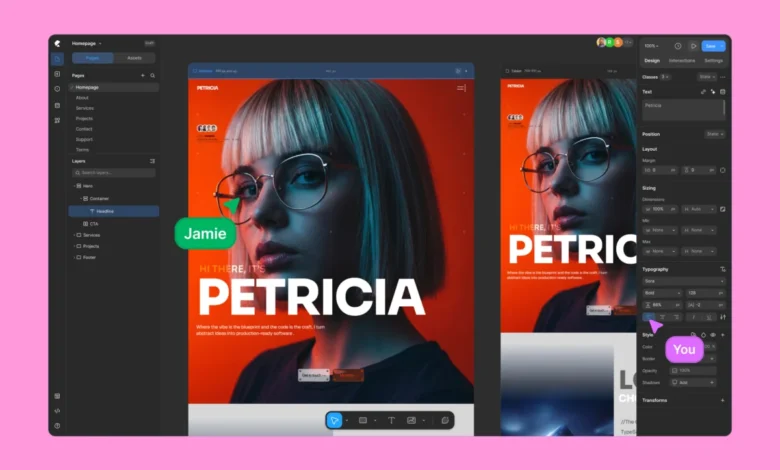
At its core, Kirki distinguishes itself through a fundamental shift in its design philosophy, moving beyond the conventional grid-based, section-by-section construction. The platform introduces a freeform infinite canvas, a concept familiar to users of advanced design software like Figma or Webflow, but revolutionary within the WordPress ecosystem. This expansive digital workspace allows for truly unbounded creative expression, enabling users to pan, zoom, and precisely position elements without being constrained by predefined rows or columns. Designers can achieve pixel-perfect control, overlap sections, layer backgrounds, and craft intricate visual hierarchies, all through an intuitive visual interface. This capability directly addresses the creative frustrations often voiced by designers who find traditional builders restrictive, forcing compromises in their vision to fit within structural "boxes." The editor further enhances usability with support for both light and dark modes, catering to diverse user preferences and ensuring a comfortable, focused design environment.

To underscore its claims of superior performance, Kirki underwent rigorous benchmarking against one of the industry’s leading traditional page builders, Elementor. The comparison was conducted under strictly controlled conditions: both builders were installed on a clean WordPress setup, utilizing the default Twenty Twenty-Five theme to eliminate external variables. Identical sample layouts, featuring comparable design elements, were constructed using both platforms. Subsequent Lighthouse performance audits, a critical tool for measuring web page quality, revealed a stark contrast. Kirki consistently generated a significantly cleaner DOM, characterized by fewer <div> elements and an absence of unnecessary wrappers. This lean code output translated directly into faster load times and higher scores across all Core Web Vitals metrics, including Largest Contentful Paint (LCP), First Input Delay (FID), and Cumulative Layout Shift (CLS). Elementor, conversely, exhibited its characteristic heavily nested markup and injected additional scripts, even for a simple layout, which inevitably contributed to diminished performance scores. For any website owner, developer, or agency where clean code, rapid loading speeds, and technical efficiency are paramount, Kirki demonstrates a clear advantage, directly impacting SEO rankings, user engagement, and ultimately, conversion rates.

Beyond its foundational canvas and performance benefits, Kirki’s value proposition extends to its pricing and feature inclusivity. The platform offers a genuinely powerful free version, downloadable directly from WordPress.org, which allows users to design modern websites on the infinite canvas without any financial commitment. This is a significant departure from many competitors who often provide "watered-down" free tiers designed primarily as teasers for premium upgrades. For those seeking the full Kirki experience, the Pro plans are remarkably affordable and transparent. The Starter plan, priced at $59 per year for a single site, grants access to all premium features. This stands in stark contrast to Elementor Pro’s Essential plan, which, at a similar price point of $60 per year, still gates several crucial functionalities behind higher-tier subscriptions. Kirki’s commitment to an "all-inclusive" model means that features such as dynamic content capabilities, a pop-up builder, a comprehensive form builder, a submission manager, and the entire expanding template library are accessible from day one, across all plans. Furthermore, Kirki offers a compelling Lifetime plan for a one-time payment of $499, providing unlimited usage without any future renewals, upcharges, or hidden costs, a rare offering in an industry increasingly moving towards subscription-only models. This transparent and value-driven pricing strategy further solidifies Kirki’s position as a compelling alternative for budget-conscious users seeking enterprise-grade features.

Kirki’s feature set is designed for modern web development workflows, emphasizing efficiency and creative control. One of its standout innovations is Concurrent Editing Across All Responsive Views. Unlike traditional builders that require users to switch between separate desktop, tablet, and mobile views, Kirki displays all responsive breakpoints—Desktop, Tablet, Landscape, and Mobile—side by side on the same infinite canvas. This real-time, simultaneous editing capability allows designers to identify and rectify layout issues across different devices instantly, maintaining a seamless creative flow. The intelligent cascading system ensures that changes made at larger breakpoints automatically propagate to smaller ones, minimizing redundant work and allowing designers to focus on breakpoint-specific adjustments only where absolutely necessary. This method dramatically accelerates the responsive design process and ensures design consistency.

Another significant feature is the Instant Figma to Kirki Handoff. Recognizing the prevalence of Figma in professional web design, Kirki offers a direct import mechanism, allowing users to transform their Figma designs into fully functional, responsive WordPress websites without rebuilding from scratch. This integration is a game-changer for design agencies and freelancers, drastically reducing development time and ensuring pixel-perfect fidelity from design mock-up to live site. The imported designs are inherently responsive and support an unlimited number of custom breakpoints, providing granular control over layout behavior across any screen size.

Addressing a long-standing pain point in WordPress, Kirki integrates a Native Dynamic Content Management system, eliminating the need for third-party plugins like Advanced Custom Fields (ACF). This powerful built-in manager enables users to create Custom Post Types (CPTs), Custom Taxonomies, and Custom Fields, apply conditional logic for dynamic content display, and effortlessly connect content to any element on the canvas. This native integration significantly reduces plugin bloat, enhances site performance, and simplifies content management workflows, consolidating essential functionalities within a single platform.

For scalable and maintainable design, Kirki introduces Reusable Styling with Class-Based Editing and CSS Variables for Global Styling. When an element is styled, Kirki automatically saves those styles as reusable CSS classes. This allows designers to apply consistent styling across multiple elements with a single click, update global styles from a central location, and maintain a structured design system without manual CSS coding. Complementing this, Global Variables enable the definition of design tokens—such as colors, fonts, spacing, and sizing—that can be universally applied and updated. This combination ensures design consistency, accelerates development, and simplifies rebranding or major design overhauls. For advanced users, Kirki also provides the flexibility to write custom CSS for any class or element and inject JavaScript at the page or element level, blending visual ease with powerful customization options.

The platform excels in creating engaging user experiences through its robust Visual Interaction and Animation Builder. Moving far beyond the limited animation options of traditional builders, Kirki offers a fully visual interface for crafting dynamic and immersive interactions. Users can build complex scroll-based animations, intricate hover and click effects, and interactive sections that respond across various devices. The advanced timeline-based editor provides granular control over animation sequences, allowing for precise timing, delays, and custom easing curves. Even text animations are highly customizable, with options to animate by character, word, or element, triggered by various events. This empowers users to create truly unique and captivating websites without writing a single line of animation code.

Kirki also streamlines the integration of third-party services through its Kirki Apps system. This centralized management dashboard allows users to install and configure essential integrations—such as analytics platforms, Customer Relationship Management (CRM) systems, email marketing tools, and support widgets—directly within the Kirki editor. This eliminates the need to navigate away from the design environment, simplifying setup and reducing context switching, even for non-technical users.

Perhaps one of the most revolutionary features for collaborative environments is Kirki’s Real-Time Multi-User Co-editing. This innovation brings a Google Docs-like collaboration experience to WordPress, allowing multiple team members to work on the same page simultaneously. Users can see their teammates’ cursors moving in real time, observe edits as they happen, and benefit from color-coded changes that attribute contributions instantly. The ability to leave comments directly on the canvas, pinned to specific elements, further enhances communication and feedback loops. For agencies, freelancers collaborating with clients, and in-house teams managing complex projects, this feature significantly boosts productivity, reduces miscommunication, and streamlines the review process, representing a major leap forward for WordPress team workflows.

Finally, Kirki integrates Built-in Quality Control with its Page Audit tool, ensuring that websites are technically sound before publication. This feature automatically scans layouts for critical issues, including SEO best practices (e.g., proper heading structure), accessibility compliance (e.g., alt text for images), broken links, and image optimization. This proactive approach helps users launch fast, accessible, and SEO-ready websites with confidence, mitigating common post-launch issues and contributing to overall site quality and search engine visibility.

Kirki offers a comprehensive library of design assets, including Template Kits, Pre-Designed Pages, and Pre-Made Sections. Template Kits provide complete multi-page website designs tailored for various industries, allowing users to launch a professional site by simply updating content. New kits are regularly added, ensuring access to current design trends without additional costs. For specific needs, standalone pre-designed pages (e.g., landing pages, pricing pages) can be dropped into any project. Additionally, pre-made sections like hero banners, testimonials, and FAQs enable rapid visual assembly of custom layouts, catering to users who prefer building from scratch but appreciate a head start.

While Kirki is undeniably powerful and feature-rich, its accessibility has been a key focus of recent developments. The interface is refined, and the workflow is intuitive, supported by an expanding library of pre-made assets. However, for those requiring a "dead simple" solution for a basic five-page website, lighter options like Elementor might appear more straightforward initially. Yet, this simplicity often comes at the cost of power, performance, granular design control, and long-term flexibility. Kirki is designed for creators who prioritize quality, scalability, and modern web standards. The platform offers extensive support resources, including detailed documentation, video tutorials, a responsive support team, and an active community, ensuring users can quickly master its capabilities. The time invested in learning Kirki is amply rewarded with the ability to build sophisticated, high-performing websites that stand out in a crowded digital landscape.

User feedback consistently praises Kirki as a transformative tool, with many describing it as "the future of WordPress" and a legitimate alternative to advanced platforms like Framer and Webflow. This sentiment underscores a growing recognition within the web development community that Kirki addresses critical gaps in the WordPress ecosystem, pushing the platform towards a more modern, competitive design paradigm.

In conclusion, after a thorough examination, Kirki unequivocally surpasses traditional WordPress page builders in nearly every critical area. Its cleaner, faster code output and exceptional performance are significant advantages, directly contributing to superior user experience and SEO. The unparalleled design freedom offered by its freeform canvas, coupled with powerful built-in features such as native dynamic content, advanced interactions, and real-time collaboration, resolves many long-standing pain points for users. The all-in-one approach eliminates the notorious "plugin dependency" issue, simplifying maintenance, enhancing security, and reducing overall technical overhead. For professionals committed to building high-quality, scalable, and visually stunning WordPress websites that meet contemporary web standards, Kirki is not merely an alternative; it represents a significant leap forward in the evolution of website creation. It enables designers and developers to move beyond the limitations of "building inside boxes" and embrace a future of truly limitless digital expression within WordPress.