JetBrains Addresses Security Vulnerabilities Following the eMudhra Certificate Authority Incident

JetBrains has officially initiated a comprehensive remediation effort across its entire product portfolio in response to the industry-wide security incident involving the eMudhra Certificate Authority (CA). The incident, which came to light on October 17, 2026, concerns the discovery of cryptographic weaknesses in the generation of private keys associated with eight eMudhra intermediate certificate authorities. This flaw potentially allows malicious actors to forge certificates that would be perceived as legitimate by any system or software environment that continues to trust the compromised certificate chains.
The scope of this vulnerability is extensive, affecting numerous software products and development environments globally. Because JetBrains products—including its renowned integrated development environments (IDEs), the Toolbox App, TeamCity, and various server-side tools—rely heavily on Java runtimes, they were inherently exposed to this security risk. While the company has confirmed there is currently no evidence that these vulnerabilities have been exploited against its customer base, the potential for unauthorized interception or impersonation has prompted a rapid, multi-tiered response from JetBrains’ security and product engineering teams.
Chronology of the Discovery and Disclosure
The vulnerability was first identified and reported by independent security researchers on October 17, 2026. The researchers found that due to improper entropy or systemic weaknesses in the key generation process for specific eMudhra intermediate CAs, the associated private keys could be reconstructed or recovered.
In the immediate aftermath of the disclosure, browser vendors and major operating system developers began deploying updates to their respective root certificate stores, effectively blacklisting or distrusting the compromised certificates. However, the complexity of the modern software ecosystem means that many applications, particularly those running on the Java Virtual Machine (JVM) or utilizing bundled security libraries, do not automatically inherit these OS-level updates. This creates a critical "trust gap" where a system’s browser might reject a fraudulent certificate, while a developer’s IDE or build server might continue to accept it. JetBrains’ intervention is designed to close this gap across its entire ecosystem.
Technical Implications and the Java Connection
At the heart of the issue for JetBrains is the JetBrains Runtime (JBR), a specialized distribution of the OpenJDK used to power its IDEs and server products. Like Oracle JDK, Amazon Corretto, and standard OpenJDK builds, the JBR maintains its own internal trust store—a repository of certificates that the software uses to verify the identity of servers it communicates with.
When a developer connects to a remote repository, a cloud service, or an internal build server, the IDE verifies the server’s certificate against this trust store. Because the compromised eMudhra intermediate certificates were included in the default trust stores of these runtimes, any JetBrains product relying on an outdated runtime remained vulnerable to "man-in-the-middle" (MITM) attacks. In such a scenario, an attacker could present a forged certificate for a service the developer trusts, potentially leading to the leakage of credentials, source code, or internal configuration data.
Remediation Strategy: A Tiered Approach
JetBrains has adopted a prioritized, tiered remediation strategy. The company has categorized its portfolio based on risk and ease of deployment, with desktop IDEs and critical server infrastructure receiving the most immediate attention.
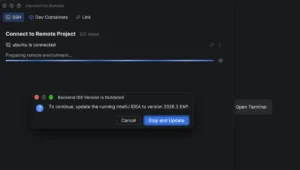
For the majority of its desktop software, including the IntelliJ-based IDE family, Rider, and ReSharper, JetBrains has already released patches. These updates force the software to ignore the compromised certificate chains, regardless of the underlying Java runtime configuration. For users, the primary instruction is to perform an immediate software update.
For server-side products like TeamCity and YouTrack, the situation is more complex. These products are often deployed in highly customized environments. In the case of TeamCity, JetBrains has emphasized that updating the software itself is only part of the solution; administrators must also ensure that the Java runtime environment (JRE) on build agents—which often run independently of the main server—is also updated or patched. This is particularly crucial for organizations that manage self-hosted build agents, as these nodes are frequent targets for attackers looking to inject malicious code into CI/CD pipelines.

Current Status of Product Updates
The following table summarizes the status of major JetBrains components as of late October 2026:
| Product Family | Status | Primary Action Required |
|---|---|---|
| IntelliJ IDEs / Gateway | Fixed | Update to the latest bugfix release. |
| Toolbox App | Fixed | Update to version 3.9 or higher. |
| TeamCity | In Progress | Update server and all build agent runtimes. |
| YouTrack / Hub | Fixed | Update to latest server build or Docker image. |
| Kotlin (CLI/Gradle) | In Progress | Update runtimes and pin Node.js versions. |
| MPS | In Progress | Update to upcoming releases; manual patches available. |
For cloud-native services like JetBrains Air, Datalore, and Qodana Cloud, the company has managed the remediation centrally, requiring no action from the end-user. This highlights the growing importance of SaaS-based security management, where the vendor takes full responsibility for the security posture of the infrastructure.
Guidance for Developers and System Administrators
JetBrains has issued clear directives to its user base to mitigate the risks associated with the eMudhra incident. The company strongly discourages the use of "quick-fix" workarounds that involve disabling certificate validation, as this creates a significant long-term security hole.
Instead, the company recommends:
- Prioritizing Official Patches: Regularly check for and apply updates for all JetBrains products.
- Runtime Hygiene: Ensure that the Java runtimes (JBR, OpenJDK, etc.) utilized by local development environments and CI/CD agents are updated to the latest builds. These builds have been updated by their respective maintainers to exclude the compromised eMudhra roots.
- OS Certificate Store Updates: Many developer tools also reference the operating system’s trust store. Ensuring that Windows, macOS, and Linux systems are fully patched is a prerequisite for a secure development environment.
- Manual Trust Store Cleaning: For legacy systems where a full update is not immediately feasible, administrators are advised to manually remove the
emSign ECC Root CA – G3andAAA Certificate Servicescertificates from the Java trust store (typically located inlib/security/cacerts).
Broader Industry Implications
The eMudhra incident serves as a stark reminder of the fragility of the public key infrastructure (PKI) that underpins the modern internet. When a trusted Certificate Authority is compromised—whether through internal negligence or technical failure—the "ripple effect" touches millions of devices and software applications simultaneously.
Security analysts note that this event underscores the risks inherent in "bundled dependencies." Because JetBrains products bundle their own Java runtimes, they provide a better out-of-the-box experience, but they also create a "long tail" of software that must be individually patched when a common dependency (like the Java trust store) is found to be insecure.
Furthermore, this incident highlights the increasing sophistication of attacks against the software supply chain. By targeting a CA, attackers do not need to find a vulnerability in a specific product; they only need to undermine the trust mechanism that all products rely on. As the industry moves forward, it is likely that software vendors will look for more agile ways to update trust stores dynamically, perhaps moving away from static files bundled within application binaries toward more centralized, cloud-managed trust verification services.
Conclusion and Future Outlook
JetBrains has committed to providing continuous updates as the situation evolves. The company is currently working on additional patches for its CLI tools and the Kotlin ecosystem, which remain in the "fix in progress" category.
While the immediate threat is being addressed through aggressive patching and clear communication, the eMudhra incident will likely prompt a long-term review of how development tools handle certificate validation. For now, the onus remains on developers and systems administrators to remain vigilant, keep their environments updated, and adhere to the security advisories provided by both JetBrains and their operating system vendors. The speed of the industry’s response to this incident demonstrates the maturity of the software ecosystem in handling critical vulnerabilities, but it also serves as a cautionary tale about the depth of trust placed in third-party certificate providers.