Empowering the Intelligent Future: A Deep Dive into Android’s New Agentic API Ecosystem and Developer Integration Frameworks

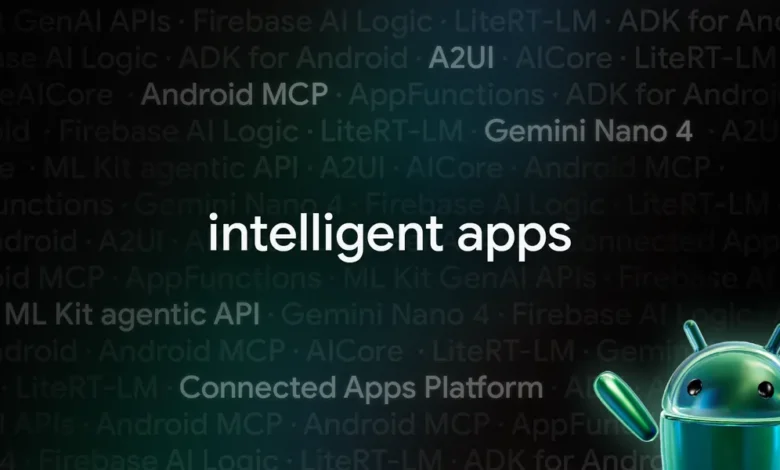
The modern mobile landscape is undergoing a paradigm shift, transitioning from a user-interface model defined by manual navigation to an era of "intelligence-first" computing. In this new intelligence era, users no longer simply tap through static applications; they express high-level goals and anticipate that AI agents, such as Gemini, will autonomously execute multi-step workflows across various apps on their devices. To facilitate this evolution, Google has unveiled a comprehensive suite of APIs and developer tools aimed at transforming Android applications into active, agentic participants within the device ecosystem. These updates, prominently featured at the recent Android Developer Summit, provide developers with the structural components necessary to build sophisticated, proactive, and context-aware intelligent experiences.
The Evolution of the Android Intelligence System
At the heart of this transition is the Android intelligence system, a foundational architecture designed to mediate the interaction between powerful AI agents and localized application data. This system is engineered to provide both reactive, prompt-based assistance and proactive, predictive support across the entire spectrum of Android-enabled devices, including smartphones, wearables, XR glasses, smart televisions, and automotive infotainment systems.
The core objective of the Android intelligence system is to balance the utility of AI with the stringent privacy requirements of modern mobile users. By acting as a secure intermediary, the system allows AI agents to interface with apps while maintaining strict control over data access. To standardize these interactions, Google has adopted the Model Context Protocol (MCP), an industry-standard framework that simplifies how AI models connect with external tools and data sources.
Through the introduction of Android MCP, powered by the AppFunctions Jetpack library, developers now have a unified, native tool-calling framework. This allows applications to expose their core functionalities to AI agents securely. For developers managing highly sensitive local data or applications requiring end-to-end encryption, Android MCP serves as the recommended integration path. Unlike remote MCP servers, which provide cross-platform reach, Android MCP is specifically optimized for local execution, low-latency performance, and hardware-level sensor integration.
Building Agentic Workflows with ML Kit GenAI
A significant portion of the recent developer push centers on the maturation of on-device AI capabilities. With the release of Gemini Nano 4, Google has introduced advanced function-calling capabilities that allow developers to build complex, agentic workflows that remain entirely on the device. This is crucial for applications that must function offline or that prioritize user privacy by keeping sensitive data off the cloud.
Google is expanding its ML Kit GenAI APIs to include a dedicated Agentic API. This API is designed to handle the heavy lifting of agentic development, including the orchestration of function loops, the management of conversation history, and the implementation of automatic guardrails to ensure model outputs remain within safe and predictable parameters. By leveraging these building blocks, developers can move beyond simple text-based responses and create apps that actively perform tasks—such as scheduling appointments, modifying app settings, or retrieving specific data—without manual user intervention.
For developers seeking to bridge the gap between on-device privacy and cloud-based power, Firebase AI Logic offers a hybrid solution. This architecture allows apps to utilize Gemini Nano for local, high-speed inference while offloading more computationally intensive tasks to Gemini 4 in the cloud. To ensure production stability, Google has integrated Firebase App Check, server-side prompt templates, and customizable spend caps, giving developers the tools to scale their intelligent features without incurring unmanaged infrastructure costs.
The Emergence of A2UI: Giving Agents a Visual Voice
Perhaps the most innovative development in the current Android roadmap is the introduction of the A2UI (Agent-to-UI) Compose renderer. Historically, AI agents were limited to text-based or simple structured data interactions. The A2UI Compose renderer, currently available in alpha, allows AI agents to "speak UI."
By utilizing a specialized JSON protocol, an AI agent can stream rich, interactive, native Jetpack Compose user interfaces directly into an application. This means an agent could, for example, generate a dynamic booking form, a custom dashboard, or a complex visualization in real-time based on the user’s current request. This capability effectively turns the UI into a fluid, transient element that adapts to the user’s immediate intent, significantly reducing the cognitive load required to navigate traditional, static app menus.
The Connected Apps Platform and Future Implications
The Connected Apps Platform represents the final piece of this strategic puzzle, designed to harmonize the user experience across Gemini and Google Search. By combining the local capabilities of Android MCP with the reach of remote MCP servers, the platform allows developers to reach high-intent users exactly where they are—whether they are searching for a service on the web or interacting with a conversational agent.
Google has launched "Gemini Apps Developer Mode" to allow for local testing and prototyping, with a wider rollout planned through a preview waitlist. While current capacity is limited to select production-ready applications, the framework is designed to eventually support a broad ecosystem of third-party integrations.
Analysis of the Strategic Landscape
The implications of these updates are profound for the mobile app economy. We are witnessing the end of the "walled garden" era of application development, where each app functions as an isolated island of data and capability. By standardizing communication through the Android intelligence system, Google is essentially creating a "nervous system" for the Android OS.
From a technical standpoint, the shift toward on-device agents reduces latency and reliance on stable internet connections, which is a major advantage for developers in emerging markets or environments with intermittent connectivity. Furthermore, by providing the Jetpack Compose A2UI renderer, Google is lowering the barrier to entry for building truly dynamic interfaces, which could lead to a wave of "agent-first" applications where the traditional menu structure is de-emphasized in favor of conversational and task-oriented interaction.
However, these advancements also introduce new challenges. The "agentic" paradigm requires developers to design for non-deterministic user paths. When an AI agent is responsible for executing workflows, the traditional UI testing paradigms—which rely on predictable button presses—may become insufficient. Developers will need to invest heavily in robust testing frameworks that account for the variability of LLM-driven interactions and the potential for unexpected agent behavior.
Conclusion and Path Forward
As the Android ecosystem moves deeper into the era of intelligent agents, the tools provided by Google—ranging from ML Kit’s Agentic API to the A2UI Compose renderer—are setting the standard for how mobile software will be built in the coming decade. The integration of these technologies into the Android intelligence system signals a commitment to a future where applications are not just tools to be used, but collaborators that anticipate and act upon user goals.
For the development community, the immediate path forward involves transitioning from standard API-driven architectures to these new agentic models. By exploring the Jetpacker code samples, participating in the AIcore Developer Preview, and integrating with the Connected Apps Platform, developers can position themselves at the forefront of this transformation. As these APIs move from alpha and beta stages into full, stable releases, the ability to build seamless, intelligent, and highly personalized user experiences will likely become the primary differentiator in the competitive Android marketplace. The infrastructure is now in place; the next stage of mobile innovation will depend entirely on how developers choose to deploy these potent new capabilities.