Amazon Aurora PostgreSQL Gains Direct Querying Capabilities for Data Lakes Using Embedded DuckDB Technology

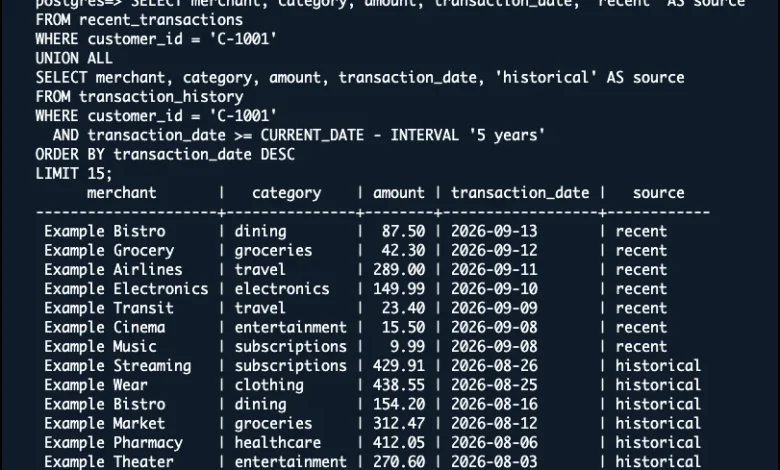
In a major development for cloud database architecture, Amazon Web Services (AWS) has announced the immediate availability of a powerful new capability for Amazon Aurora PostgreSQL. This update allows database administrators and developers to directly query operational data alongside large-scale analytical data stored in Apache Iceberg and Apache Parquet formats within data lakes, all without relying on traditional Extract, Transform, and Load (ETL) pipelines. By embedding high-performance analytical query engine technology derived from DuckLabs—the team behind the open-source DuckDB project that recently joined Amazon—Aurora PostgreSQL bridges the historic divide between transactional databases and analytical data repositories.
The feature, which is available at no additional software charge across all commercial and AWS GovCloud regions, addresses a longstanding friction point in enterprise data management. Previously, organizations seeking to blend live operational records with historical archives maintained in Amazon Simple Storage Service (Amazon S3) were forced to construct complex reverse-ETL mechanisms, duplicate massive volumes of data, and manage fragile synchronization workflows. With this release, companies can execute unified queries via a single, standard PostgreSQL interface, significantly lowering infrastructure overhead while simultaneously opening new avenues for real-time dashboards, historical transaction enrichment, and context-aware artificial intelligence agents.
Evolution of the Hybrid Data Architecture
For decades, enterprise data architectures have maintained a strict boundary between Online Transaction Processing (OLTP) systems and Online Analytical Processing (OLAP) data lakes. OLTP systems, such as Amazon Aurora PostgreSQL, are meticulously optimized for high-throughput, low-latency transactional operations like processing orders or recording user sessions. Conversely, data lakes built on open file formats like Apache Parquet and table formats like Apache Iceberg are designed to store petabytes of historical data economically, serving heavy analytical queries and machine learning training pipelines.

Bridging these two worlds traditionally required the deployment of data pipelines that regularly moved data from operational databases into data lakes, or conversely, fed summarized data back into operational stores. These architectures frequently introduced latency, synchronization challenges, and ballooning storage costs due to data duplication. Furthermore, the rapid rise of generative artificial intelligence and autonomous AI agents has exacerbated these architectural pain points. Modern AI agents require real-time reasoning capabilities that seamlessly blend live operational states with years of historical context. Because developers cannot accurately predict every dataset an autonomous agent might require on the fly, pre-replicating and indexing every potential data source has become practically and financially infeasible.
The integration of DuckDB technology directly into the Aurora PostgreSQL engine resolves this structural challenge. By performing analytical scans locally within the database infrastructure without demanding extra network hops or data replication, AWS has streamlined how relational databases interact with modern cloud storage formats.
Technical Implementation and Workflow
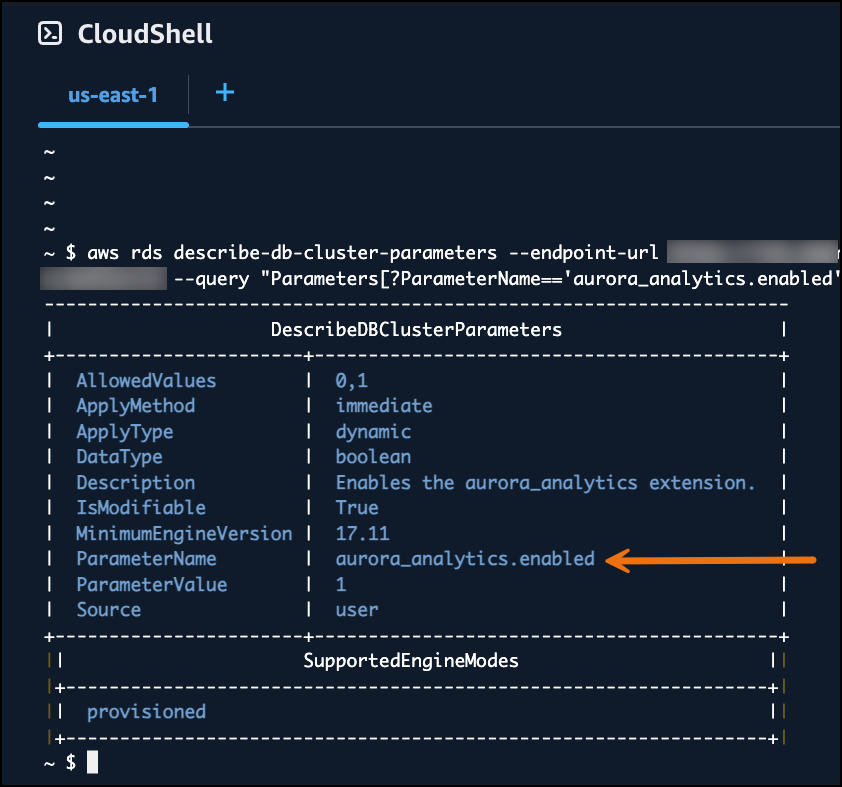
The newly introduced capability is supported natively on Amazon Aurora PostgreSQL major versions 17 (starting with release 17.11) and 18 (starting with release 18.6). Activating the feature requires a straightforward configuration process managed through the Amazon RDS console or standard PostgreSQL client interfaces.
Administrators begin by creating an Aurora PostgreSQL cluster and attaching a dedicated AWS Identity and Access Management (IAM) role equipped with the AuroraAnalytics feature permission. This role grants the database secure, authorized access to target data objects residing in Amazon S3 and the AWS Glue Data Catalog. Once configured, administrators enable the extension within the database session using a standard command:

CREATE EXTENSION aurora_analytics;Following the extension activation, users can define foreign tables that point directly to Apache Iceberg or Apache Parquet datasets stored in Amazon S3 or S3 Tables. One of the notable engineering efficiencies of this capability is schema auto-discovery. When creating a foreign table, administrators can utilize empty parentheses; Aurora automatically inspects and reads the schema metadata directly from the underlying Parquet or Iceberg files, eliminating the tedious manual definition of columns. For larger environments containing numerous tables, engineers can invoke a single IMPORT FOREIGN SCHEMA command to bulk-create foreign tables for an entire AWS Glue Data Catalog database.
Beyond native AWS Glue catalogs, the system supports Iceberg REST Catalog (IRC)-compatible external catalogs through Glue Data Catalog federation. By registering an external catalog once within Glue, enterprises can query Iceberg tables spanning multiple disparate data repositories in a single query, providing a unified view without disrupting established enterprise data governance investments.
Performance Optimization and Execution Mechanics
To maintain high performance as underlying datasets scale into the terabytes and petabytes, Aurora PostgreSQL applies sophisticated query optimization techniques, including predicate pushdown and column pruning. Predicate pushdown ensures that filtering conditions—such as date ranges or specific customer IDs—are evaluated as close to the storage layer as possible, minimizing unnecessary data transfer. Column pruning restricts data retrieval exclusively to the columns explicitly referenced in the query, reducing memory and I/O consumption.
Furthermore, query performance benefits from intelligent caching. Frequently accessed data lake segments are cached locally within the Aurora instance, accelerating subsequent queries against identical or overlapping datasets. Database administrators can audit and monitor these performance metrics on a per-query basis using the aurora_analytics_stat_statements() utility, which reports granular operational statistics including rows scanned, total bytes read from Amazon S3, and cache hit ratios.
For analytical workloads requiring single-digit-millisecond response times, engineers retain the flexibility to materialize data from the data lake directly into native Aurora PostgreSQL tables using standard data manipulation commands such as CREATE TABLE AS SELECT, INSERT INTO ... SELECT, or MERGE INTO. Once materialized, the data resides permanently within the operational database, offering ultra-low latency reads that can be distributed across any read replica in the cluster to offload primary writer instances.
Industry Implications and Strategic Outlook
Market analysts view the integration of embedded analytical engines into mainstream relational databases as a decisive shift toward hyper-converged data platforms. As organizations face mounting pressure to derive immediate value from historical data archives while simultaneously deploying intelligent automation and AI applications, the demand for friction-free data access continues to surge.
By absorbing DuckDB’s renowned analytical processing efficiency into its flagship relational database service, AWS is signaling a broader industry trend: the boundaries separating transactional databases, data lakes, and analytical engines are rapidly dissolving. For software engineers and database architects, this evolution translates to reduced code complexity, minimized infrastructure footprint, and streamlined development cycles.
The capability is available immediately across all commercial AWS regions and AWS GovCloud (US) regions. Users incur no additional software licensing fees for the feature, paying only for the incremental Aurora compute resources consumed by the queries and standard Amazon S3 request and data retrieval charges. As open-source engines like DuckDB continue to evolve, AWS has confirmed that future enhancements to the underlying analytical engine will automatically flow into Aurora and other associated cloud services, ensuring that enterprises benefit from continuous performance and functional improvements without requiring architectural rewrites.
Related posts: