The evolution of Microsoft’s strategy in this space, articulated by Douglas Phillips, who leads global engineering for specialized and sovereign clouds, reflects a response to growing concerns regarding data sovereignty, legislative compliance, and security in an era of heightened geopolitical instability.
The Evolution of the Sovereign Cloud Framework
The concept of "digital sovereignty" has transitioned from a niche regulatory requirement to a core business strategy. Over the past decade, the rapid adoption of public cloud platforms has yielded unprecedented innovation, but it has also created concerns regarding vendor lock-in, data accessibility, and foreign jurisdictional reach.
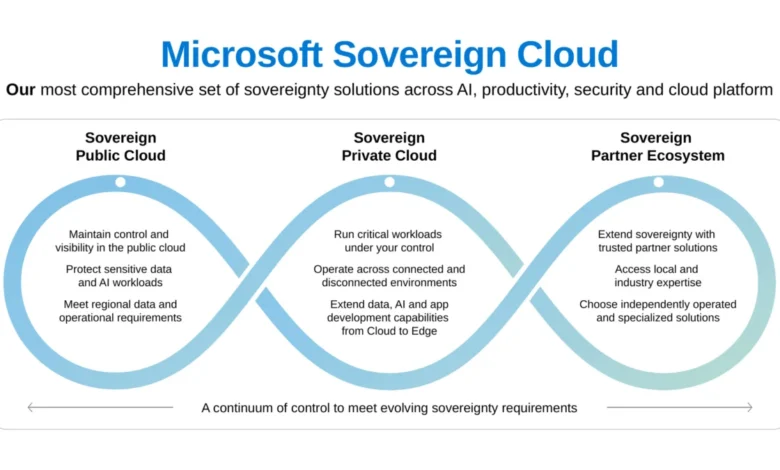
In 2025, Microsoft initiated its formal "Sovereign Cloud" program, marking a strategic pivot toward providing customers with modular control over their digital infrastructure. This was a response to the "sovereignty gap," where organizations were forced to choose between the scale of public cloud services and the security of isolated, on-premises systems. The latest iteration, announced at the lead-up to Microsoft Ignite, introduces a more granular "continuum of control," allowing organizations to tailor their security posture at the workload level rather than forcing a "one-size-fits-all" deployment.
A Three-Tiered Approach to Sovereign Infrastructure
Microsoft’s refined strategy categorizes sovereign operations into three distinct pillars: the Sovereign Public Cloud, the Sovereign Private Cloud, and the Sovereign Partner Ecosystem.
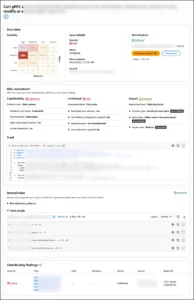
The Sovereign Public Cloud remains the flagship for organizations seeking high-performance AI and data analytics. Through the introduction of the "Sovereign Control Panel," administrators gain a unified dashboard to monitor their sovereignty posture. This interface allows for real-time risk assessment, identification of configuration drift, and compliance management. Enhanced by "Just-in-Time" access and the "Customer Lockbox," this model ensures that any administrative access to production systems is not only limited in duration but also fully audited.
For the European market, this is bolstered by the "Production Touch Ledger" and "Data Guardian" services. These tools are designed to meet stringent EU requirements by ensuring that any remote access by Microsoft engineers to production data is monitored and overseen by trusted local entities, creating a tamper-evident record of all interventions.

The Sovereign Private Cloud pillar, built on the Azure Local platform, addresses the needs of sectors—such as defense, healthcare, and utilities—that cannot rely on consistent wide-area network connectivity. By enabling disconnected operations, organizations can run critical workloads in isolated environments. The expansion to include GitHub Enterprise Local and SQL Server on Azure Local ensures that the development lifecycle remains within the organization’s firewall, mitigating the risks associated with cloud-based code repositories.
Supporting Data and Technical Resilience
The technical underpinning of these solutions relies heavily on the maturation of "Confidential Computing." By utilizing hardware-based trusted execution environments (TEEs), Microsoft enables the processing of encrypted data in memory, ensuring that even the cloud provider cannot access the plaintext information.
Data from the recent industry reports suggests that over 65% of government agencies globally are currently evaluating or implementing some form of hybrid-sovereign architecture to satisfy emerging regulatory frameworks, such as the EU’s Data Governance Act. Microsoft’s introduction of "Azure Confidential Clean Rooms" addresses the growing demand for secure multi-party collaboration, allowing different government agencies or research institutions to share sensitive datasets for AI training without exposing the underlying intellectual property or sensitive records.
The Role of the Sovereign Partner Ecosystem
Recognizing that technology alone cannot solve sovereignty challenges, Microsoft has cultivated a broad partner ecosystem. This includes national clouds—such as the French Bleu Cloud and the German Delos Cloud—which are operated by local companies under strict regulatory oversight. This "sovereignty-by-proxy" model allows organizations to adhere to domestic legal requirements while utilizing Microsoft’s underlying software stack.
Industry analysts note that this ecosystem approach is a critical differentiator. By integrating local hardware partners like Dell Technologies, HPE, and Intel, Microsoft is effectively decentralizing its cloud footprint. This creates a supply chain of sovereignty where the hardware is sourced locally, the platform is managed by a trusted partner, and the intelligence is provided by the Azure stack.
Operational Independence and AI Integration
The integration of AI into sovereign environments poses unique challenges, particularly regarding model training and inference. With the launch of "Foundry Local," Microsoft is enabling the deployment of large language models (LLMs) on-premises. This allows for agentic retrieval—a process where AI agents interact with local databases to answer queries—without the data ever leaving the customer’s secure environment.
This capability is particularly vital for the defense and intelligence sectors. The ability to run inference locally, grounded in classified or highly sensitive internal data, transforms the utility of AI. It shifts the paradigm from sending data to a central model to bringing the model to the data.

Chronology of Strategic Developments
- 2024: Introduction of the Microsoft Sovereign Cloud concept to address regional data residency requirements.
- Early 2025: Initial rollout of the Azure Local infrastructure, enabling hybrid connectivity for regulated industries.
- Late 2025: Integration of confidential computing across the Azure platform, enhancing data-in-use protection.
- 2026: Announcement of the unified Sovereign Control Panel and the expansion of the partner ecosystem to include national cloud operators in the EU and EFTA.
- Present: General availability of key Sovereign Private Cloud features, including local GitHub hosting and expanded AI model catalogs.
Implications and Future Outlook
The broader implication of this strategy is the commoditization of trust. By providing the tools to verify and control cloud environments, Microsoft is attempting to normalize the use of hyperscale cloud services for the most sensitive government operations.
However, observers caution that the complexity of managing a sovereign cloud is significant. "The burden of implementation rests with the organization," notes a representative from a leading cybersecurity consultancy. "While Microsoft provides the tools for granular control, the responsibility for defining what constitutes ‘sovereign data’ and managing the cross-environment policy mapping remains with the end-user."
As organizations move forward, the success of these sovereign initiatives will likely be measured by their ability to maintain parity with public cloud innovations. If the sovereign stack lags too far behind in features—such as GPU availability or new model releases—organizations may find themselves trading security for technological stagnation.
Microsoft’s commitment to "platform co-innovation" aims to solve this by ensuring that the latest AI tools are made available for the sovereign stack simultaneously with the public cloud. As the regulatory landscape continues to evolve, the ability to pivot between sovereign private environments and the public cloud will become a primary requirement for any organization operating in the global digital economy.
The next chapter of this strategy will likely focus on the automation of sovereignty. As the volume of data grows, manual oversight of compliance and access controls will become untenable. The integration of automated policy-as-code and autonomous security agents will be the logical next step in ensuring that digital sovereignty remains a scalable and sustainable practice for governments and enterprise leaders worldwide.
Related posts: