Beyond the Firewall: How Sophos Australia is Redefining Corporate Responsibility Through Community Action

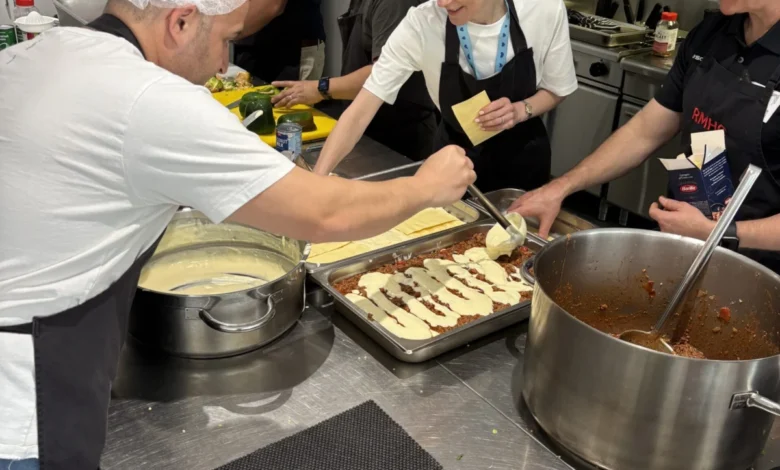
In the modern corporate landscape, the definition of security has evolved far beyond the digital perimeter. While organizations like Sophos are globally recognized for their sophisticated cybersecurity solutions, a growing emphasis on social impact has shifted the focus toward a more human-centric approach to protection. Recently, employees from the Australian division of Sophos participated in the Cook + Connect initiative at the Ronald McDonald House, an exercise in community engagement that highlights the increasing trend of corporate social responsibility (CSR) programs designed to alleviate the daily burdens of families navigating medical crises.
The Intersection of Corporate Values and Community Support
The initiative saw a team of Sophos employees transition from their standard technical roles to a culinary environment, preparing a variety of home-style meals for families residing at the Ronald McDonald House. This facility provides critical accommodation for families who must travel long distances to seek life-saving treatment for their children. The core mission of such houses is to reduce the logistical and financial strain on parents, allowing them to remain close to the medical facilities where their children are receiving care.
For the Sophos volunteers, the task was deliberate: to provide a tangible service that addresses the "invisible" needs of these families. By preparing nutritionally dense meals—ranging from traditional lasagna and chili con carne to chicken curry and fresh salads—the team aimed to provide not just sustenance, but a sense of normalcy for families experiencing high-stress medical environments.
Contextualizing the Ronald McDonald House Mission
The Ronald McDonald House Charities (RMHC) network serves as a cornerstone of family-centered care. According to recent organizational impact reports, RMHC provides millions of overnight stays globally each year. The psychological and physical toll on parents of seriously ill children is well-documented in medical literature; studies consistently show that access to consistent nutrition and proximity to hospital wards significantly reduces the secondary stressors that can impede a parent’s ability to advocate for their child’s care.
The Cook + Connect program is a specific outreach initiative designed to leverage corporate partnerships to fulfill the dietary needs of these houses. By outsourcing meal preparation to volunteers, the organization can reallocate its limited staff resources toward emotional support and facility management. For Sophos, this collaboration represents a strategic alignment with its broader corporate culture, which emphasizes employee wellness and community integration.
A Chronology of Engagement
The volunteering effort took place over several hours in a high-intensity kitchen environment. The chronology of the event began with a briefing on food safety and dietary requirements, followed by the systematic delegation of labor.
- Initial Phase: Volunteers assessed the kitchen inventory and finalized the menu based on nutritional guidelines provided by the facility.
- Preparation Phase: The team engaged in a collaborative process, dividing duties into preparation, cooking, and assembly. This phase lasted several hours, requiring high levels of coordination and team synchronization.
- Finalization Phase: The meals were packaged and stored, ensuring that families arriving late from the hospital would have immediate access to prepared, healthy food.
This structured approach mirrored the project management methodologies often utilized in technical fields, demonstrating how professional skills in planning and execution are transferable to community service.
Supporting Data and Corporate Policy
The participation of Sophos employees is facilitated by a robust corporate volunteering policy. Sophos offers up to 40 hours of paid volunteering leave per calendar year. This is a significant commitment, exceeding the industry standard for mid-to-large-sized technology firms, which typically offer between 8 to 24 hours of annual leave for CSR activities.
The rationale behind such policies is backed by data in human resources management. Research indicates that employees who engage in community volunteering demonstrate higher rates of job satisfaction, increased team cohesion, and a stronger alignment with corporate mission statements. By institutionalizing the opportunity to volunteer, Sophos is attempting to mitigate the high rates of burnout common in the cybersecurity industry. In a sector where professionals are tasked with managing constant digital threats, the opportunity to engage in tangible, "low-tech" service provides a necessary psychological counterbalance.
Official Perspectives and Stakeholder Responses
While official statements from corporate leadership often emphasize the importance of giving back, the perspective of the employees involved highlights the interpersonal benefits of the experience. Team members reported that the kitchen environment acted as a "leveler," where hierarchical roles were set aside in favor of a singular, non-technical objective.
From the perspective of the Ronald McDonald House staff, the reliance on corporate volunteers is not merely a convenience but a necessity. The ability to rely on consistent groups, such as the Sophos team, ensures that the kitchen remains fully stocked with high-quality, home-cooked meals—a luxury for families who would otherwise rely on hospital vending machines or expensive takeout. This partnership creates a symbiotic relationship: the charity receives essential support, and the corporate entity receives a venue for team building that fosters genuine morale and purpose.
Broader Implications for the Technology Sector
The trend of cybersecurity firms engaging in non-technical community service is becoming more prevalent as companies seek to humanize their brand identity. In an era where trust is the primary currency of the digital economy, demonstrating a commitment to the physical well-being of the broader community is an essential aspect of reputation management.
The implications for the technology sector are twofold. First, there is the immediate benefit of improved employee retention. By offering meaningful avenues for social impact, companies are better able to attract top-tier talent that is increasingly motivated by ethical considerations. Second, there is the long-term impact of community resilience. When private-sector firms invest time and resources into local social infrastructure, they create a more stable environment for their own workforce.
The Future of Corporate Volunteering
As the lines between digital security and physical well-being continue to blur, initiatives like Cook + Connect serve as a template for future corporate responsibility models. The focus is shifting away from purely financial donations toward the contribution of "human capital." Providing 40 hours of volunteer time is a significant investment in terms of lost billable hours, yet the return on investment (ROI) is reflected in the strengthened social fabric of the community and the increased emotional intelligence of the workforce.
The Sophos initiative in Australia illustrates that the most effective corporate programs are those that address fundamental human needs. While the firm remains dedicated to protecting data and systems, the act of preparing a meal recognizes that the people behind the technology are the ones who ultimately drive the success of any organization. As the company continues to integrate these volunteering efforts into its operational strategy, it sets a standard for how global tech giants can meaningfully engage with the local communities they serve.
In conclusion, the effort expended by the Sophos team is a microcosm of a larger movement. It demonstrates that when a company pivots from the abstract world of cybersecurity to the concrete reality of community service, it not only supports those in need but also reinforces the values that define its internal culture. By providing both the time and the platform for employees to connect with causes that matter, Sophos is demonstrating that protection is a holistic endeavor—one that starts with securing digital networks but is sustained by a commitment to the well-being of the people who rely on them.
Related posts: