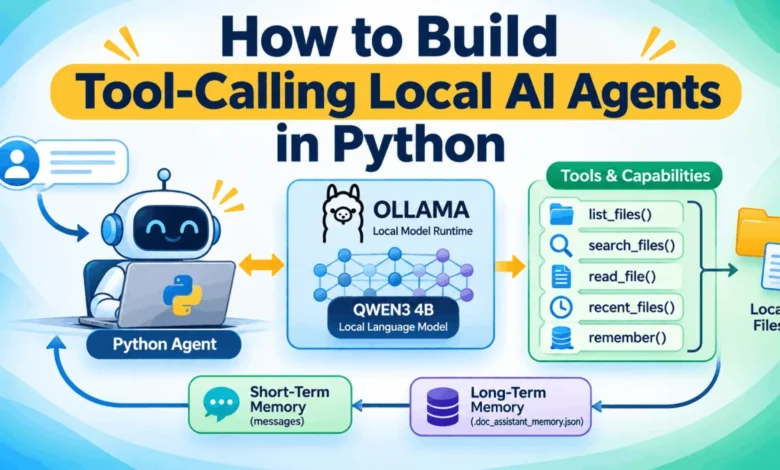
The landscape of artificial intelligence is shifting rapidly from static, cloud-dependent chatbots toward autonomous, locally-hosted agents capable of navigating complex file systems. As privacy concerns and the demand for offline functionality grow, developers are increasingly turning to open-source models like Qwen3, paired with the orchestration capabilities of Ollama, to build sophisticated project assistants. These agents do not merely generate text; they interact with a computer’s operating system to retrieve, analyze, and synthesize information from local directories, effectively acting as a bridge between high-level language processing and concrete file management tasks.
The Evolution of Local AI Autonomy
Historically, large language models (LLMs) were restricted by their training data and the "black box" nature of API-based services. The emergence of tool-calling—a technical framework that allows a model to trigger external functions—has changed this dynamic. By defining specific, narrow-scope tools, developers can provide an LLM with the agency to perform read/write operations within defined constraints. This shift represents a move toward the "agentic" era, where software assistants can perform multi-step workflows, such as locating a specific code function, reading its implementation, and summarizing it based on context provided by user-defined documentation.
Architectural Foundations for Local Deployment
Building a local AI agent requires a robust foundation that ensures data sovereignty. By using the Ollama framework, developers can deploy models directly onto local hardware, eliminating the need for expensive API subscriptions or the transmission of sensitive project data to third-party servers.
The process begins with the installation of a capable, lightweight model. The Qwen3 4B parameter model has emerged as a preferred choice for this task due to its efficiency and native support for tool-calling architectures. When combined with Python’s pathlib and the official ollama library, the agent functions as a bridge between the user’s natural language requests and the underlying filesystem.
To maintain system integrity, developers must implement strict "sandboxing" techniques. For instance, creating a safe_path function that resolves file operations against a root directory prevents the model from inadvertently—or maliciously—accessing sensitive system files outside the designated project folder. This is a critical security layer when granting an AI agent permission to interact with local storage.
The Tool-Calling Loop: A Chronology of Interaction
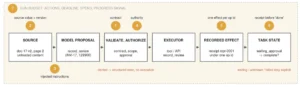
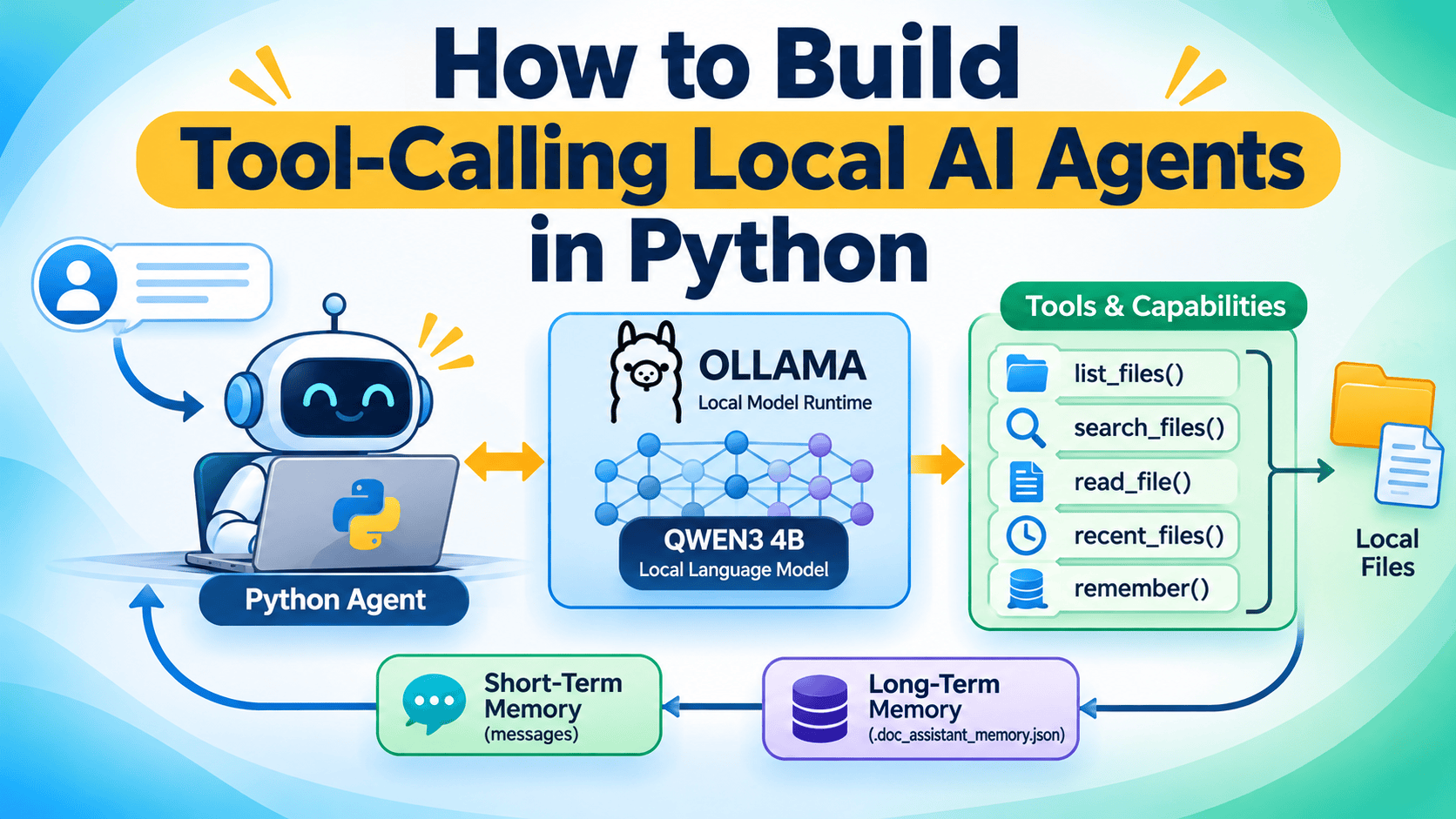
The lifecycle of an agent’s response is a highly structured loop that functions as follows:
- Instruction: The user submits a query (e.g., "Find the latest changes in the codebase").
- Analysis: The model evaluates the request and identifies the appropriate tool (e.g.,
recent_files). - Execution: The Python script receives the model’s function call, validates the parameters, and executes the code.
- Integration: The output of the tool is fed back to the model as a "tool" role message, providing it with the necessary context to generate a final, informed answer.
- Synthesis: The model provides a natural language summary to the user.
This loop can repeat multiple times within a single turn, allowing the agent to perform complex research—such as searching for a keyword, reading a file, and then referencing the content—before finally reporting back to the user.
Technical Implementation and Memory Management
Memory is the primary hurdle in building effective local agents. Because LLMs are inherently stateless, they require a strategy for both short-term and long-term retention.
Short-term memory is maintained through the messages list. As the conversation progresses, the length of this list grows, eventually consuming the available "context window" (the total amount of text the model can process at once). To solve this, developers employ a trimming mechanism that preserves the system prompt and the most recent interactions, ensuring that the model retains the necessary context without crashing due to memory overflow.
Long-term memory is achieved by externalizing "facts" into a persistent JSON file. When the agent is instructed to "remember" a detail, it writes that information to a secure file. During the initialization of each new session, the agent reads this file and integrates the facts into the system prompt. This allows the AI to maintain a consistent understanding of user preferences, such as coding styles or specific project naming conventions, across different days and sessions.
Performance Data and Optimization
For optimal performance, hardware allocation is paramount. Running a 4B parameter model requires adequate VRAM to ensure low latency. Configuring the Ollama server with an increased context length—such as 32,000 tokens—allows the agent to process larger volumes of project documentation simultaneously. However, there is a direct correlation between context size and response time. Benchmarks suggest that keeping individual tool results under 3,000 characters significantly improves the model’s ability to "reason" through the data, as it reduces the computational load on the attention mechanism.
Industry Implications and Security Considerations
The shift toward local agentic workflows has profound implications for software development and data privacy. Organizations are increasingly wary of "data leakage," where proprietary codebases are uploaded to public cloud models. Local agents offer a compelling alternative, providing the benefits of AI-assisted productivity without compromising intellectual property.
However, the power of these tools comes with responsibility. The ability of an agent to execute functions means that developers must implement "human-in-the-loop" safeguards for any tool capable of modifying or deleting data. By setting temperature parameters to zero, developers can ensure that tool selection remains deterministic and predictable, reducing the risk of the model choosing an unintended function during a sensitive operation.
Future Trajectory
The potential for these local agents extends far beyond simple project assistance. Future iterations are expected to include:
- Advanced Code Refactoring: Agents that not only read code but suggest and apply patches through version control systems like Git.
- Autonomous Testing: The ability to trigger unit tests, read error logs, and perform iterative bug fixing without human intervention.
- Cross-Language Integration: Expanding the agent’s reach to include documentation across multiple programming languages and legacy systems.
As these models continue to scale in efficiency, the barrier to entry for building specialized, local AI assistants will continue to drop. By leveraging open-source tools like Qwen3 and the robust Python ecosystem, developers are effectively building the next generation of personal productivity software—one that is offline, private, and deeply integrated into the local development environment. This transition signals a broader maturation of AI technology, where the focus moves from simply answering questions to actively solving problems within the user’s own digital workspace.