Enhancing Security and Flexibility with Custom Execution Roles for AWS CloudFormation StackSets

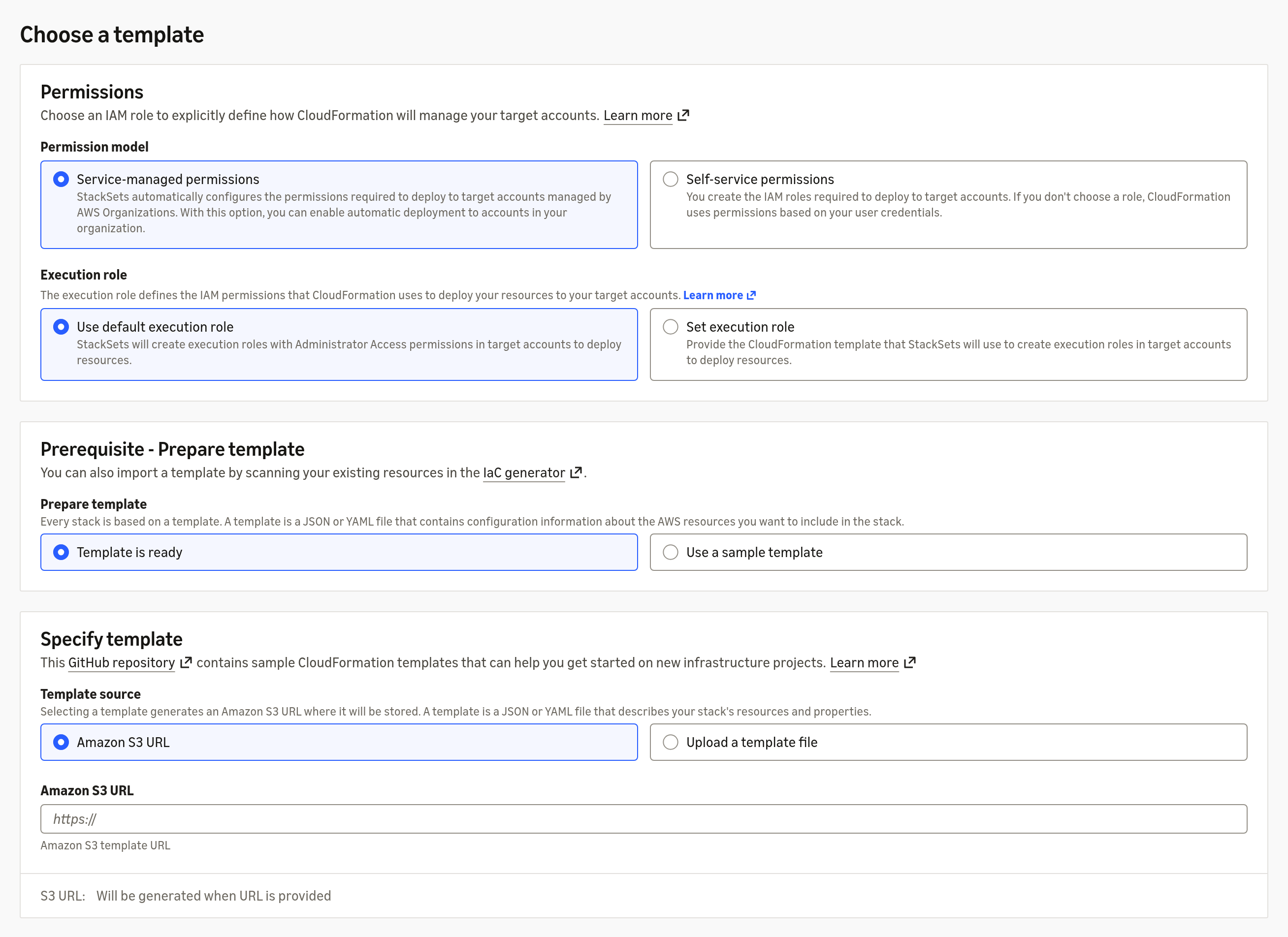
AWS CloudFormation StackSets has long served as the backbone for large-scale infrastructure management, enabling organizations to deploy, update, and delete stacks across a vast array of accounts and regions from a centralized control point. Historically, the service relied on a default execution role—pre-configured with AdministratorAccess—to perform these operations within member accounts. While this model provided immediate ease of use, it often conflicted with the modern security mandate of least-privilege access. To address this, Amazon Web Services has introduced the ability to implement custom execution role templates, a significant evolution in how enterprises manage cross-account permissions.
The Shift Toward Granular Control
The introduction of custom execution roles represents a fundamental shift in the operational architecture of CloudFormation StackSets. By allowing users to define their own IAM roles in target member accounts, AWS is moving away from the "one-size-fits-all" administrative approach. This change provides two distinct, high-value capabilities. First, it enables security teams to scope execution role permissions precisely to the requirements of the specific workload. If a stack set only requires access to Amazon S3 buckets or Amazon DynamoDB tables, administrators can now restrict the execution role to those specific services, drastically reducing the blast radius of a potential compromise.
Second, this update unlocks functionality that was previously restricted in service-managed stack sets. Organizations can now deploy templates that leverage nested stacks, CloudFormation macros, and advanced transforms—such as the AWS Serverless Application Model (SAM). Previously, these sophisticated architectural patterns were incompatible with the service-managed model, forcing teams to choose between the simplicity of managed stack sets and the flexibility of custom templates.
Understanding the Mechanics of Custom Execution
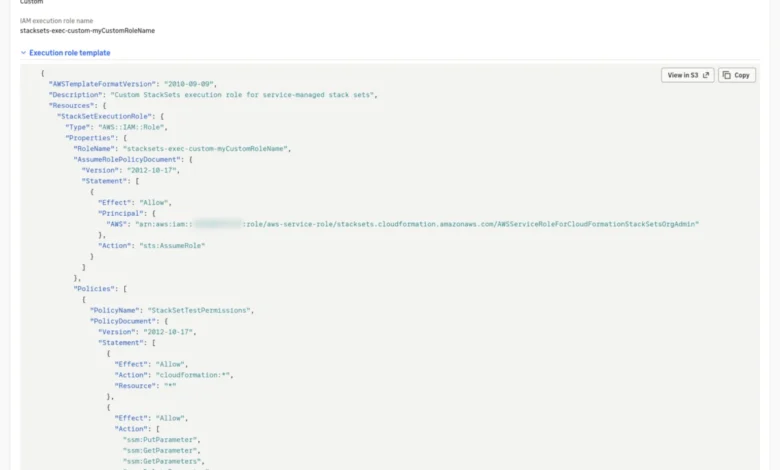
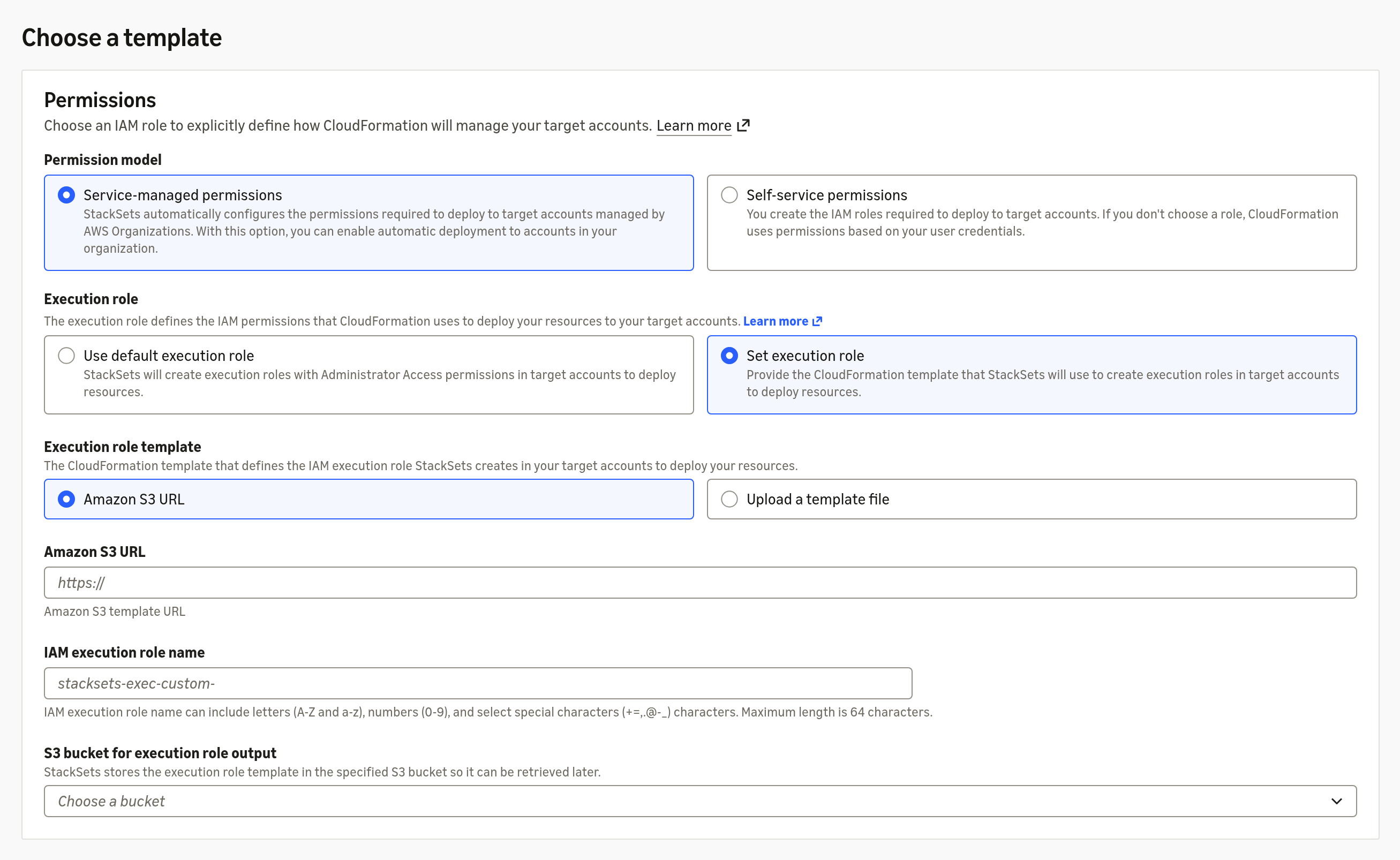
When a user opts for a custom execution role, the deployment process changes from a simple assignment to a bootstrapping operation. Upon the creation or update of a stack set, the provided template is validated and cached by the CloudFormation service. For every target member account, the service deploys a "bootstrapping stack"—a lightweight infrastructure deployment that creates the specified IAM role.
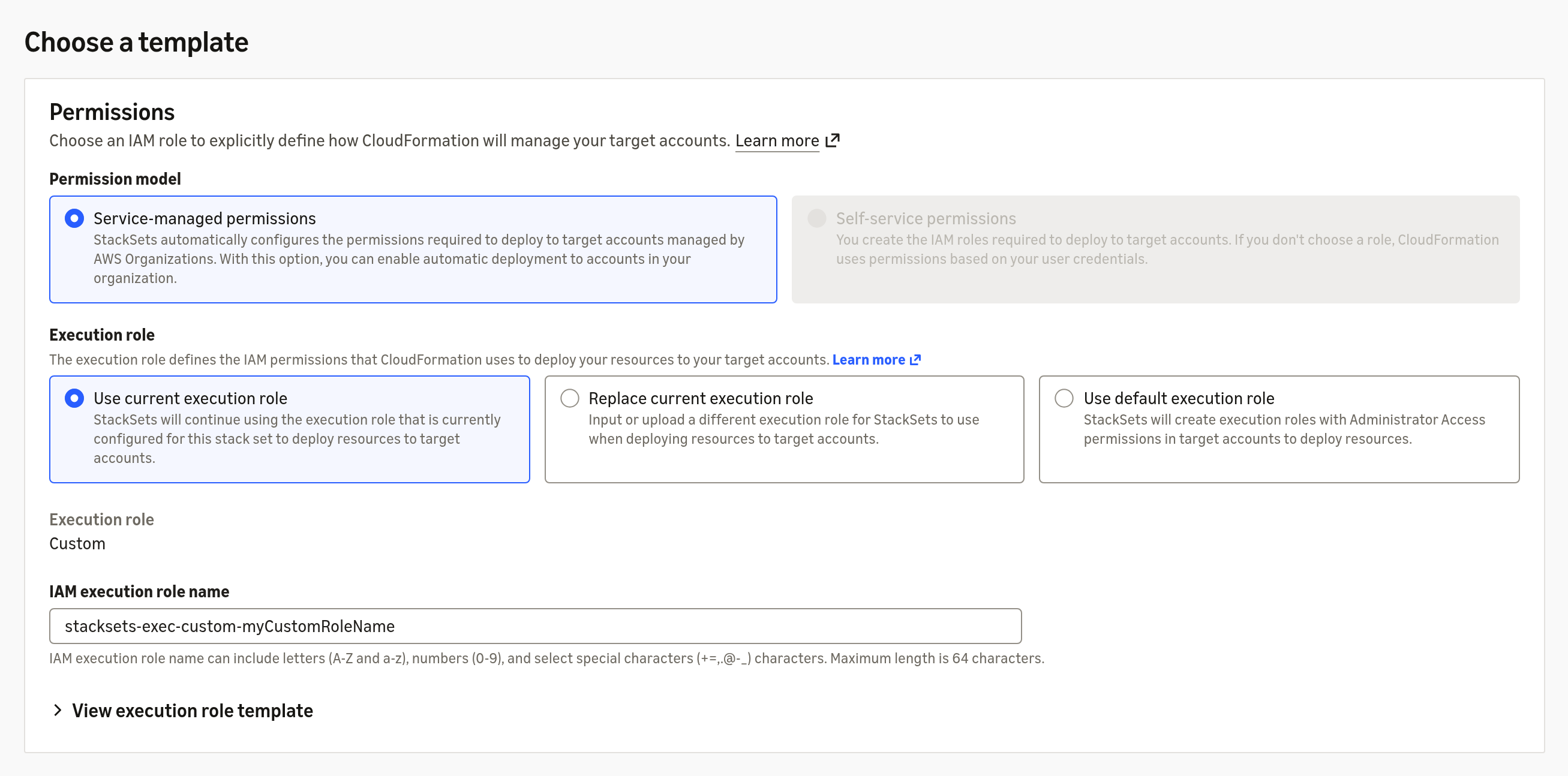
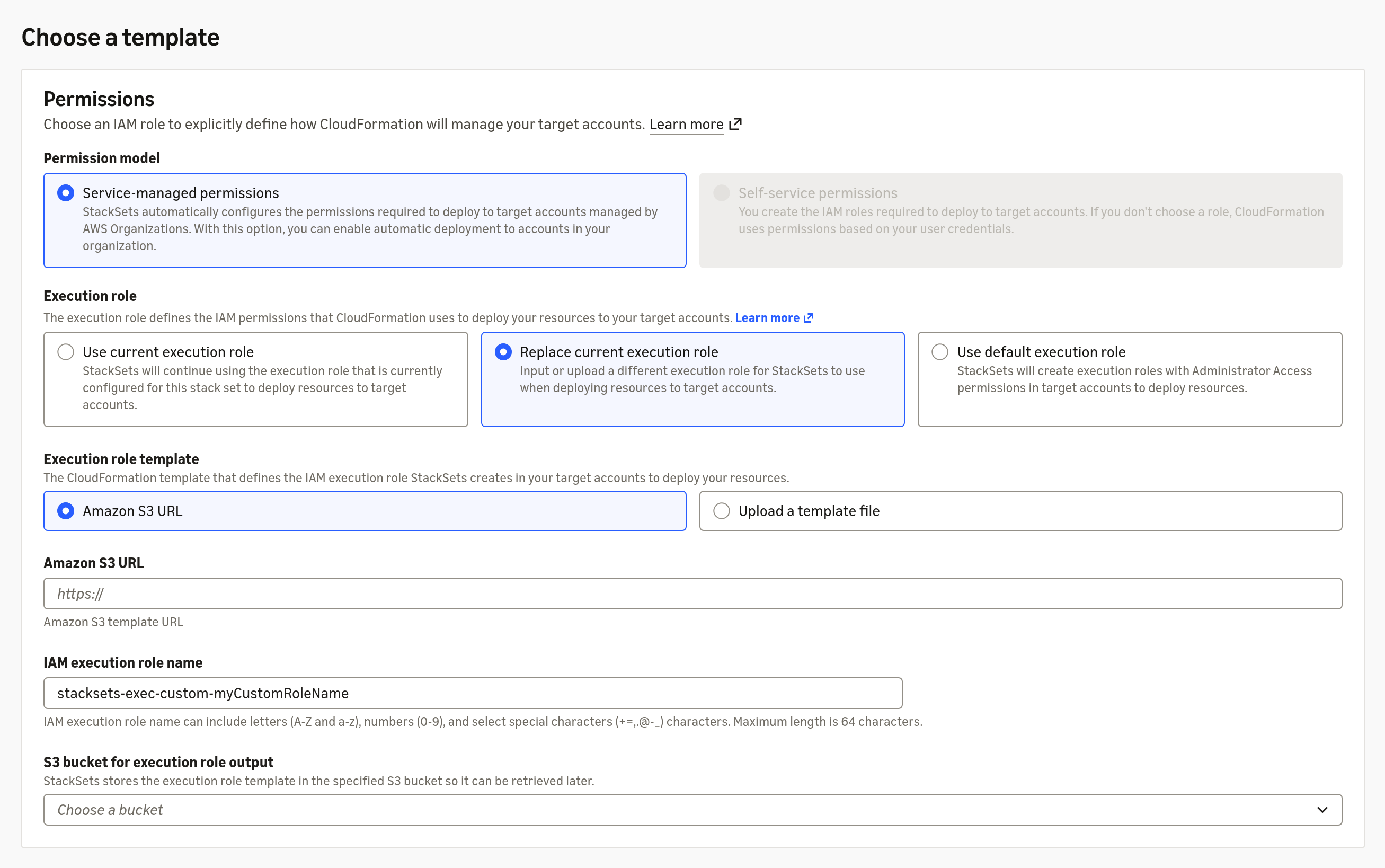
This role becomes the permanent mechanism through which StackSets interacts with that account. The naming convention for these roles is strictly enforced; they must begin with the prefix "stacksets-exec-custom-." This serves as a vital security feature, allowing the service to distinguish between default administrative roles and custom-defined roles. Once the bootstrapping stack is created in the home region of the partition (e.g., us-east-1 for commercial accounts), every subsequent operation—whether it be creating new resources, updating existing ones, or deleting infrastructure—is performed using this custom-scoped role.
Architectural Requirements and Validation
The transition to custom execution roles is not without rigorous prerequisites. To maintain the integrity of the StackSets environment, AWS has imposed strict validation rules. Any template provided as an execution role template must contain exactly one resource: an IAM role of the type AWS::IAM::Role. The inclusion of additional resources, or multiple roles within a single template, will trigger an immediate validation error from the CloudFormation API.
A critical component of this setup is the trust policy, or the AssumeRolePolicyDocument. The role must explicitly grant the StackSets service-linked role in the organization’s management account the permission to perform the sts:AssumeRole action. Furthermore, this policy must be precise; it must reference the specific ARN of the AWSServiceRoleForCloudFormationStackSetsOrgAdmin. For organizations concerned with advanced security postures, AWS permits the addition of a conditional check on the aws:SourceOrgID, ensuring that only requests originating from within the authorized organization can trigger the role.
Finally, the template must include an output parameter named StackSetExecutionRoleName. This serves as a verification key; StackSets uses this value to confirm that the role provisioned in the member account matches the execution role name specified during the initial stack set creation. Failure to include this output or a mismatch in the provided name will result in a deployment failure, preventing the risk of orphaned or misconfigured permissions.
Strategic Implications for Security Operations
For Chief Information Security Officers (CISOs) and cloud platform engineers, this update is a pivotal development. The ability to apply least-privilege principles to automated infrastructure deployments addresses a long-standing "governance gap." In large-scale enterprise environments, the default AdministratorAccess role was often viewed as a security liability, as it granted broad, unrestricted access to the member accounts.
By forcing the use of explicit, scoped roles, organizations can now pass compliance audits more effectively. When a security auditor asks for proof of restricted access for automated deployment tools, the use of custom StackSet execution roles provides a concrete, template-based answer. It ensures that the CI/CD pipelines and infrastructure-as-code (IaC) runners follow the same rigorous identity and access management (IAM) standards as human users.
Implementation Best Practices
The transition from the default role to a custom role is a deliberate, multi-step process. AWS advises that after confirming the functionality of a new custom role, organizations should manually delete the original, default AdministratorAccess execution role in every member account. This step is necessary because the migration to a custom role does not automatically purge the previous, more permissive role.
Furthermore, the complexity of managing these roles across thousands of accounts requires careful planning. Organizations should treat their execution role templates as critical infrastructure assets. They should be stored in version-controlled repositories, subjected to peer review, and tested in sandbox environments before being deployed to production OU (Organizational Unit) structures.
When utilizing features like CAPABILITY_NAMED_IAM and CAPABILITY_AUTO_EXPAND, users must be aware that these permissions propagate throughout the entire stack set hierarchy. When a template is submitted with a custom role, the CAPABILITY_NAMED_IAM flag is required because the execution role itself is a named IAM resource. If the workload template also contains serverless transforms, CAPABILITY_AUTO_EXPAND is required. These flags signify that the user understands the implications of the templates they are deploying, acting as an explicit authorization for CloudFormation to process and create the associated resources.
Looking Ahead
The ability to customize execution roles is expected to catalyze a broader adoption of service-managed stack sets in highly regulated industries, including finance, healthcare, and government. By aligning automated infrastructure delivery with the principles of zero-trust architecture, AWS is lowering the barrier for companies to scale their cloud footprint securely.
As cloud environments grow increasingly complex, the importance of granular, transparent, and auditable infrastructure management cannot be overstated. With the new custom execution role capabilities, AWS has provided the tools necessary for teams to maintain high-velocity deployment cycles without sacrificing the stringent security posture required to protect sensitive data and critical system operations. The future of CloudFormation StackSets is clearly leaning toward greater user-defined control, ensuring that the service remains a robust, enterprise-grade solution for the evolving needs of global cloud operations.
Related posts: