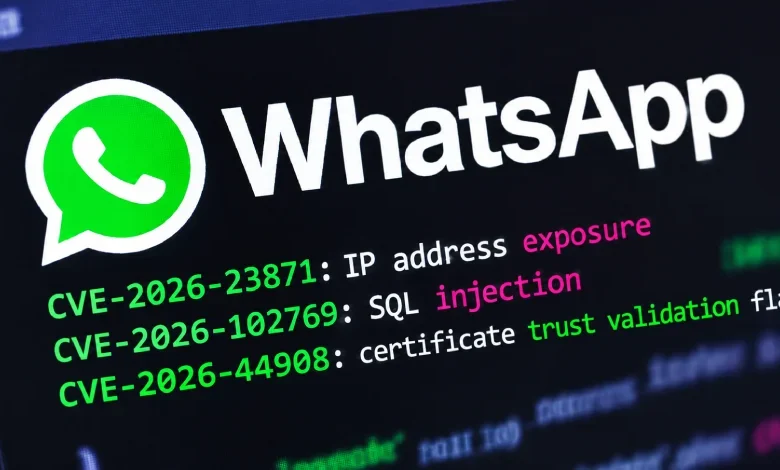
Meta-owned messaging giant WhatsApp has officially disclosed a series of security vulnerabilities, one of which appears to have been actively weaponized by malicious actors to bolster the credibility of fraudulent scam campaigns targeting Android users. The disclosure comes as part of the company’s commitment to transparency in its periodic security advisories, highlighting the constant arms race between platform developers and cyber-criminals who seek to exploit the massive user base of the world’s most popular messaging application.
The most concerning of these flaws, tracked as CVE-2026-23871, involves an incomplete validation mechanism regarding external ad-reply URLs within the Android and WhatsApp Business for Android applications. The vulnerability affects all versions of the application released prior to 2.26.17.4. According to internal technical analysis, the flaw allowed an attacker to force a target’s device to disclose its IP address. This occurred when a user interacted with a crafted "Click to WhatsApp" ad-reply message, which, when rendered in the message thread, triggered a request to an attacker-controlled URL.
Chronology of the Discovery and Disclosure
The identification of CVE-2026-23871 was the result of proactive internal security research conducted by the WhatsApp Security Team. While monitoring for abuse patterns within the platform’s ecosystem, researchers identified a surge in suspicious activity that did not align with standard user behavior.
Upon investigation, the team discovered that scammers were leveraging this specific technical oversight to make their phishing or scam messages appear more legitimate. By successfully forcing the application to perform unauthorized external requests, the attackers could tailor the content displayed to the victim, creating an illusion of authenticity that likely increased the conversion rates of their fraudulent schemes.
A WhatsApp spokesperson confirmed that the vulnerability was isolated while the company was actively disrupting a wider scam campaign. The spokesperson noted that the company does not believe the flaw was used for widespread surveillance, but rather as a tactical tool to deceive unsuspecting users. While the scale of the exploitation remains undisclosed, the patch rollout was expedited to mitigate further risk to the global user base.

Technical Breakdown of the Flaws
In addition to the primary vulnerability affecting IP privacy, WhatsApp’s latest security update addresses two other significant technical challenges, categorized by their potential to leak sensitive metadata or compromise backend infrastructure.
CVE-2026-102769: The Timing Side-Channel
Perhaps the most subtle of the reported issues is CVE-2026-102769, a vulnerability involving a timing-based side channel. This flaw could theoretically allow an attacker to exfiltrate a single bit of information regarding the user’s chat database. This occurs if the targeted user is online at the exact moment they receive a malicious, specially crafted message.
The mechanism relies on an induced-crash delivery receipt, where the time difference in the receipt processing provides the attacker with a binary answer—"yes" or "no"—to a specific query about the contents of the database. While this sounds limited in scope, side-channel attacks are notoriously difficult to detect and, if automated, can be used to slowly extract structured data over a prolonged period. Fortunately, WhatsApp reports there is currently no evidence of this vulnerability being exploited in the wild, suggesting that its complexity may have deterred threat actors.
CVE-2026-44908: Infrastructure Integrity
The third vulnerability, CVE-2026-44908, represents a high-level concern regarding Meta’s internal infrastructure. This flaw could have potentially allowed an actor with internal positioning to bypass the hardware root of trust using a compromised or improperly signed Versioned Chip Endorsement Key (VCEK) certificate.
The integrity of the hardware root of trust is essential for verifying that the software running on a server or device is legitimate and untampered with. A VCEK certificate is typically issued by a hardware manufacturer—in this case, often related to AMD’s security features—to attest to the security state of a processor. By attempting to use a certificate not signed by the manufacturer, an attacker could attempt to undermine the system’s security foundation. WhatsApp’s security engineers, however, confirmed that the platform’s Private Processing ledger serves as a secondary safeguard. Because every published VCEK certificate is required to chain back to the hardware root of trust within the third-party binary transparency ledger, the system was able to confirm that no unauthorized certificates were successfully deployed.
Broader Context and Industry Implications
The revelation of these vulnerabilities underscores the inherent risks associated with the integration of advertising and commerce into private messaging platforms. "Click to WhatsApp" advertisements have become a cornerstone of Meta’s revenue model, allowing businesses to bridge the gap between social media discovery and customer service. However, the complexity required to render these interactive elements inside a mobile app provides a larger attack surface for threat actors.

The cybersecurity community has long warned that as messaging apps evolve into "super-apps"—encompassing payments, business interactions, and third-party integrations—the potential for cross-site scripting and request forgery increases significantly. This latest batch of vulnerabilities serves as a case study for why regular software updates are not merely for performance improvements or feature additions, but are essential for basic digital hygiene.
Furthermore, the involvement of the bug bounty community and internal security teams in identifying these issues reflects a broader shift toward "secure-by-design" methodologies. By maintaining a public ledger of hardware certificates and actively hunting for indicators of compromise (IoC), companies like Meta are shifting from reactive patching to proactive threat hunting.
Protecting the User Base
WhatsApp’s official recommendation is clear: all users must update their applications to the latest version via the Google Play Store or the official WhatsApp website. For Android users, specifically those using the Business application, the update is critical due to the potential for IP leakage, which can be used by malicious actors to pinpoint a user’s geographic location or facilitate further targeted cyberattacks.
While the company has not provided a definitive count of the victims affected by the scam campaign, the fact that a vulnerability was actively exploited highlights the need for user vigilance. Security experts often remind the public that even if an application appears "official" or "trusted," interacting with unsolicited messages—especially those containing links or media from unknown sources—carries inherent risks.
Summary of Actions Taken
- Patching: WhatsApp has released updated versions of its Android and Business applications to remediate CVE-2026-23871.
- Monitoring: Internal security teams are maintaining enhanced monitoring of the platform to identify any secondary effects of the reported flaws.
- Infrastructure Hardening: The company has reaffirmed the integrity of its binary transparency ledgers, ensuring that hardware trust mechanisms remain robust against unauthorized certificate usage.
- Collaboration: Continued participation in bug bounty programs remains a priority for the company, encouraging external researchers to identify potential weaknesses before they can be exploited by malicious actors.
As the landscape of mobile security continues to shift, the responsibility remains a shared one. While Meta is responsible for the integrity of the application code and the server-side infrastructure, the end user remains the final line of defense. Keeping devices updated, utilizing modern security features provided by operating systems, and maintaining a healthy level of skepticism toward unsolicited messages are the most effective ways to mitigate the risks posed by these types of sophisticated, platform-specific vulnerabilities. The events of late 2026 serve as a stark reminder that as platforms become more interconnected, the importance of foundational cybersecurity remains higher than ever.