The allure of the modern web development workflow often centers on the promise of simplification. Developers are frequently encouraged to replace verbose JavaScript logic—such as ResizeObservers or complex state management—with streamlined, declarative CSS features like Container Queries, the :has() selector, or native nesting. On the surface, a pull request that deletes fifty lines of JavaScript in favor of five lines of CSS appears to be a clear win for performance and maintainability. However, recent architectural analysis suggests that this "local simplicity" often masks a surge in "system complexity," leading to unpredictable side effects in production environments.
The Illusion of Simplicity: A Historical Context
The evolution of CSS over the past several years has been rapid, characterized by the introduction of powerful features that once required heavy JavaScript intervention. In 2022 and 2023, the widespread adoption of Container Queries marked a turning point in responsive design, allowing elements to adapt based on their parent container’s size rather than the global viewport. While this innovation was lauded as a major leap forward, it also fundamentally altered the browser’s rendering engine behavior.
By 2026, the discussion around frontend complexity reached a critical juncture. Engineers began questioning whether the move toward "CSS-only" logic was truly reducing the cognitive load on development teams. In April 2026, industry analyst Igor Roztropiński published a seminal essay, "Modern Frontend Complexity: Essential or Accidental?", which sparked a vigorous debate across professional forums. The discourse revealed a clear divide: one faction argued that native browser features naturally reduce technical debt, while the other warned that "doing less" in code often results in "doing less" for the user, while creating opaque, difficult-to-debug behaviors in the system.
The Anatomy of System Complexity
When a developer introduces a new CSS feature into an existing codebase, the interaction between that feature and the legacy environment is akin to a new tenant entering a shared space. The component must now coexist with JavaScript event listeners, the existing CSS Cascade, and the browser’s layout engine.
The primary risk arises when the "old" logic is not fully retired. For instance, in a common migration scenario, a developer might implement a Container Query to manage a component’s layout but fail to remove the corresponding JavaScript-based class toggling logic. The result is a "two-owner" conflict: the browser applies the CSS query while the legacy JavaScript continues to inject or remove classes based on outdated breakpoints. When a designer later adjusts the UI, they may only update the CSS, leaving the JavaScript-driven behavior as a latent "ghost" in the system. This creates a scenario where the UI behaves in ways that are neither intended nor easily reproducible.

Layout and Rendering Side Effects
Beyond logical conflicts, modern CSS features can trigger profound changes in how a browser renders a page. A key example is the use of container-type: inline-size. While intended to enable container queries, this declaration also establishes a new block formatting context (BFC).
The BFC is a powerful layout mechanism that affects how elements interact with their surroundings. When applied, this single property can cause unintended consequences, such as:
- Margin Collapse Suppression: Margins that previously collapsed through parent containers may suddenly become trapped, causing unexpected gaps and layout shifts.
- Float Interaction: Elements that previously ignored floats might suddenly be forced into a new positioning flow, potentially causing content to vanish or collapse.
- Content-Sized Collapse: Elements that rely on their children for width determination can suddenly collapse to zero width if the browser cannot calculate an explicit size, leading to "disappearing" UI components.
The Cascade and the Specificity War
The introduction of the :has() selector and native CSS nesting has further complicated the Cascade. While these tools allow for cleaner code, they also carry hidden weight. A :has() selector, if not properly scoped with child combinators, can affect entire sub-trees of a DOM, reaching far beyond the intended target.
Furthermore, the specificity of nested rules is calculated using the highest specificity in the selector list, similar to the :is() pseudo-class. This often leads to "specificity wars" where developers find themselves adding increasingly complex overrides to combat the unintended influence of a newly added, highly specific rule. In many cases, the use of :where()—which carries a specificity of zero—is the necessary, yet frequently overlooked, solution to maintain architectural sanity.
Performance Implications and Browser Constraints
The belief that "CSS is always faster than JavaScript" is a common but dangerous misconception. While CSS is highly optimized, the browser’s rendering engine must process complex selectors and layout calculations. Research into the performance of the :has() selector has revealed that when improperly anchored—such as attaching a selector to the body tag—the browser may be forced to perform excessive style recalculations on every DOM change.
Controlled tests have demonstrated that in large lists, overlapping CSS rules can lead to thousands of unnecessary element restyles. For example, a single class toggle on a list of 5,000 items can result in a frame-time penalty that significantly degrades user experience, particularly on lower-end hardware. The cost of these operations is rarely visible in standard development environments, only surfacing in production where the DOM tree is significantly larger and more dynamic.

Establishing a Migration Checklist
To mitigate these risks, engineering teams are increasingly adopting rigorous migration protocols. Before replacing JavaScript with modern CSS, developers should address the following requirements:
- Ownership Validation: Identify all legacy dependencies that currently manage the behavior. Ensure that the JavaScript logic is entirely deprecated and removed before the CSS implementation is finalized.
- Contextual Impact Assessment: Analyze whether the new CSS property (e.g.,
container-type) alters the element’s Block Formatting Context and evaluate how that change affects surrounding margins, floats, and parent containers. - Specificity Auditing: Use
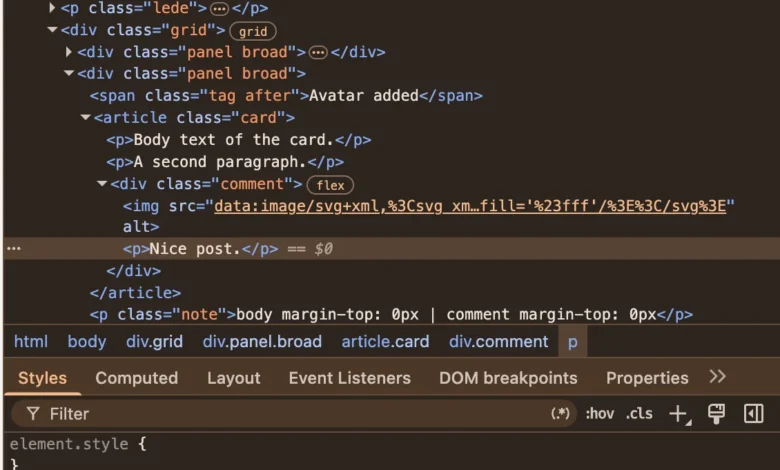
:where()to wrap new selectors to prevent accidental specificity escalation, ensuring that the new rules do not inadvertently override established design patterns. - Performance Profiling: Conduct performance traces using browser DevTools to measure the cost of new CSS selectors, specifically looking for high numbers of "elements restyled" during state changes.
- Cascade Layer Planning: Explicitly define Cascade Layers to ensure that the new CSS rules exist in a predictable order, preventing unlayered legacy code from unintentionally winning precedence.
- Regression Testing: Since modern CSS behaviors can vary based on the host environment, automated visual regression tests are essential to catch layout shifts that occur after a migration.
Broader Impact and Industry Consensus
The shift toward modern CSS represents a significant evolution in web standards, yet it underscores a fundamental tension in frontend engineering: the conflict between greenfield development and the realities of legacy systems. As noted by developers on platforms like Reddit and in professional discourse, the "initial tooling simplicity" of a modern CSS feature often gives way to complex, hard-to-debug runtime issues when applied to mature codebases.
The consensus emerging from the developer community is that CSS features should not be viewed as "shortcuts" for simplicity, but as powerful tools that require the same level of architectural rigor as JavaScript. The goal is not to return to a JavaScript-heavy era, but to move toward a more disciplined approach where CSS and JavaScript exist in a mutually understood, non-conflicting relationship.
Ultimately, a migration is only successful when the new code is not only cleaner but also more robust than the system it replaces. When a pull request reduces the lines of code, the focus must shift from the reduction itself to the systemic impact of that change. By applying a more cautious, data-driven approach to migration, teams can leverage the full potential of modern CSS while maintaining the stability and predictability of the wider application.