The landscape of digital identity verification in Africa is defined by immense technical diversity, ranging from high-end flagship smartphones to entry-level handsets and ruggedized Point of Sale (POS) terminals. For SmileID, a prominent provider of identity verification SDKs, the challenge of maintaining consistent, high-resolution facial recognition across this fragmented hardware ecosystem once posed a significant bottleneck to growth. By transitioning its core mobile infrastructure to Google’s CameraX library, the company has successfully scaled its operations to support over 18,000 unique Android device models, processing more than 160 million identity verifications with vastly improved accuracy and reliability.
The Technical Hurdle of Fragmentation
In the realm of digital banking and mobile SIM registration, security is paramount. Service providers require crystal-clear, high-resolution imagery to perform effective liveness checks—the process of confirming that a user is a real person rather than a spoofing attempt or a deepfake. Before adopting CameraX, SmileID relied on legacy Android camera APIs, specifically Camera1 and low-level Camera2 implementations. This architectural approach was plagued by recurring engineering friction.
Developers frequently encountered hardware-specific bugs, such as stretched or improperly rotated image feeds, which rendered facial analysis algorithms ineffective. More critically, managing memory consumption on lower-tier hardware often led to out-of-memory (OOM) crashes. These technical failures were not merely inconvenient; they directly impacted the bottom line. Because the system could not reliably capture high-fidelity data in real-time, many users were forced to revert to uploading static photographs via high-latency REST APIs. This fallback process introduced significant friction, delayed onboarding times, and diminished the efficacy of anti-spoofing security measures.
A Chronology of Technical Evolution
The journey toward a more robust camera pipeline began as SmileID identified that its year-over-year growth was stalling, limited to a 2-3x increase. The decision to re-engineer the SDK from the ground up marked a pivotal shift in the company’s product strategy.

By migrating to CameraX, the engineering team gained access to a lifecycle-aware developer interface that abstracts away the underlying hardware complexities. The integration process allowed the team to leverage two primary CameraX use cases: Preview and ImageAnalysis. Through these tools, SmileID established a dual-purpose pipeline that simultaneously renders a user-facing preview and streams high-resolution frames for background liveness detection.
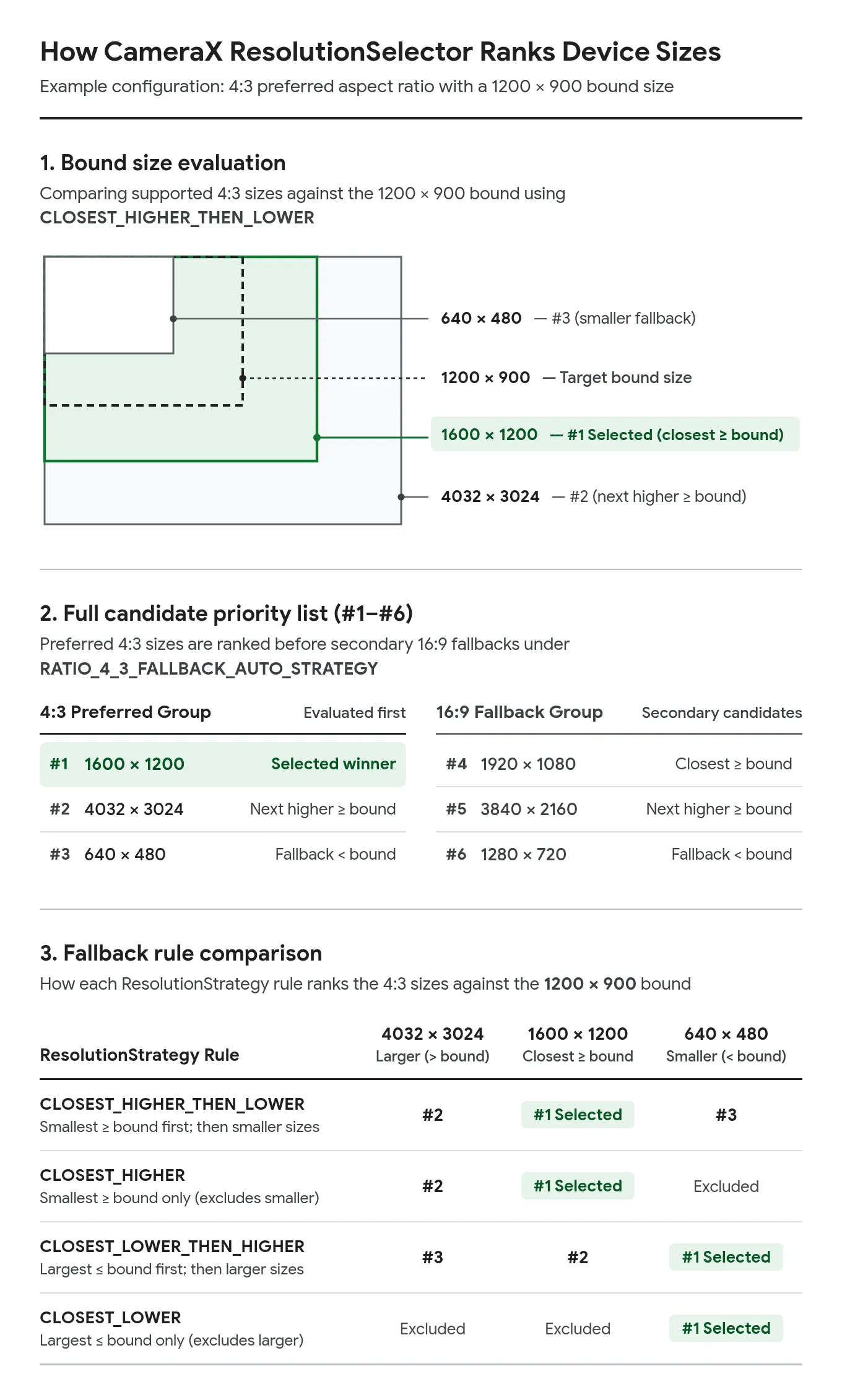
The integration of the ResolutionSelector API served as a turning point. This feature allows developers to specify a target resolution—such as 1200×900 pixels—while defining precise fallback rules for devices that cannot support that exact size. By prioritizing sharpness for deepfake detection while simultaneously employing a backpressure strategy (specifically STRATEGY_KEEP_ONLY_LATEST), the company ensured that the application remained responsive even on processors with limited computational overhead. This transition allowed for a 4x increase in selfie resolution without imposing additional network burdens on the end-user, as the SDK performs sophisticated image compression on the device before transmission.
Quantifying the Success
The impact of the migration to CameraX is reflected in the company’s performance metrics. By year two of the implementation, SmileID reported a 20x growth in SDK adoption—a substantial leap from the 2-3x growth observed prior to the change.
| Metric | Impact of CameraX Migration |
|---|---|
| SDK Adoption Growth | 20x by Year 2 |
| Verification Pass Rates | 20% Increase |
| Capture Resolution | 4x Increase in Selfie/Liveness Pixels |
| Device Compatibility | 18,000+ Android Device Types |
| Total Verifications | 160 Million+ Processed |
These statistics highlight a direct correlation between technical optimization and business scalability. A 20% increase in verification pass rates is particularly significant for financial services, where every failed onboarding attempt represents a potential loss of a customer. In markets where digital finance is the primary gateway to economic participation, these improvements translate into hundreds of thousands of legitimate users successfully accessing banking, credit, and mobile money services.
Ensuring Compatibility Through Industry Collaboration
A key component of the success of CameraX lies in the infrastructure provided by Google to minimize device-specific quirks. The Android ecosystem’s inherent diversity is addressed through the Camera and Media Test Lab. This facility utilizes an automated, continuous testing suite that executes across a rotating matrix of over 190 physical Android device models. This rigorous testing environment allows developers to identify library regressions before they impact the production environment.

Furthermore, CameraX mitigates the need for "spaghetti code"—the practice of writing endless conditional statements to account for manufacturer-specific hardware bugs. The library maintains internal repositories, such as DeviceQuirks and CameraQuirks, which automatically inject necessary workarounds for specific devices. For SmileID, this meant that their SDK could operate seamlessly on thousands of obscure or regional handsets without the engineering team needing to issue custom patches for every unique model in their market.
Broader Implications for the Fintech Sector
The implications of this transition extend beyond a single company’s success. As digital identity becomes the foundation of the global digital economy, the ability to perform secure, remote verification is critical. The move toward standardized, highly-optimized camera pipelines represents a maturing of the mobile software development lifecycle.
Analysts note that for companies operating in emerging markets, the reliance on high-end hardware is a luxury they cannot afford. By democratizing access to high-fidelity imaging through software optimization, firms like SmileID are effectively lowering the barrier to entry for digital services. The success of the CameraX migration demonstrates that software-led solutions can overcome significant hardware limitations, ensuring that security and accessibility are not mutually exclusive.
Future-Proofing with AI Coding Agents
Looking ahead, the landscape of mobile development is shifting toward greater integration with Artificial Intelligence. To facilitate the adoption of these optimized camera patterns across the broader developer community, Google has introduced the CameraX Skill for AI coding agents. This tool allows developers to utilize AI assistants—such as Gemini—to generate production-ready code that follows the exact best practices SmileID used to achieve their current scale.
These AI agents are capable of assisting with complex tasks such as lifecycle binding, managing concurrent camera feeds, and implementing Machine Learning Kit (ML Kit) analyzers. By automating the implementation of these high-level architectural patterns, the industry is poised to see a reduction in the development time required to build secure, camera-reliant applications.
Conclusion: A Blueprint for Stability
The case of SmileID serves as a blueprint for organizations struggling to balance high-security requirements with the realities of device fragmentation. By moving away from legacy APIs and embracing modern, abstraction-heavy libraries, the company not only solved its immediate engineering crises but also created a scalable foundation that has allowed it to process over 160 million verifications.
The 20% increase in pass rates and the exponential surge in adoption serve as empirical evidence that when technical barriers are removed, adoption follows. As the digital economy continues to expand, the ability to build robust, hardware-agnostic applications will remain a defining trait of successful technology firms. Through the combination of powerful libraries like CameraX and the integration of AI-assisted development, the industry is entering an era where high-quality digital experiences are becoming standard, regardless of the device in the user’s hand. The success of this transition confirms that the most effective way to serve a diverse global user base is to build systems that are inherently designed for diversity, resilience, and scale.