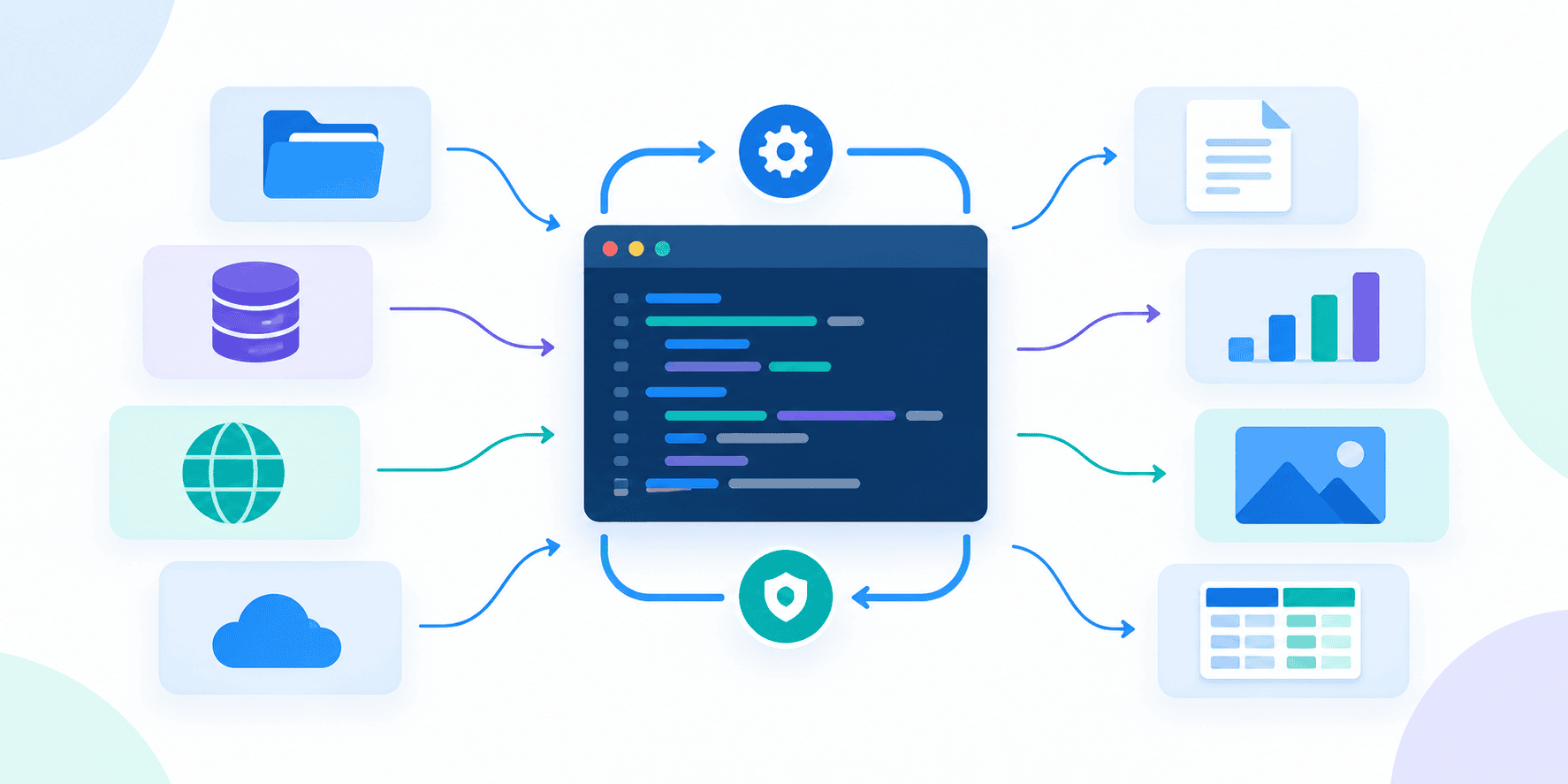
In the architectural landscape of modern software development, the Python context manager stands as one of the most underutilized tools for ensuring system reliability and resource integrity. While the vast majority of developers encounter this paradigm through the familiar "with open(path) as f" syntax, this merely scratches the surface of a sophisticated mechanism designed to handle the entire lifecycle of system resources. By transitioning from simple file handling to complex state management, developers can create self-cleaning codebases that remain resilient even when unexpected runtime errors occur.
The Problem of Brittle Housekeeping
Traditional procedural scripts often rely on linear cleanup routines placed at the end of a file. In an evaluation script for a machine learning model, for instance, a developer might perform several preparatory steps: creating a scratch directory, setting an environment variable to point to a high-speed disk cache, lowering log verbosity to prevent console flooding, and initiating a performance timer. The standard approach involves executing these actions at the top of the file and reversing them at the bottom.
However, this pattern is inherently fragile. If an execution error—such as a malformed record or a memory overflow—triggers an exception midway through the evaluation, the subsequent cleanup lines are never reached. The consequences of this failure are significant: the system is left with a stale cache path, a silenced logger that masks future issues, and gigabytes of orphaned data occupying valuable disk space. Over time, these small oversights lead to "zombie" resources that degrade performance and complicate debugging for the next engineer who inherits the environment.
Understanding the Context Protocol
The Python "with" statement acts as a formal boundary for a block of code, ensuring that setup and teardown are intrinsically linked to the execution block. The underlying protocol relies on two primary dunder methods: __enter__() and __exit__(). When the interpreter encounters a with statement, it invokes __enter__() to prepare the environment. Once the code block concludes—whether through successful completion, a return statement, or a raised exception—the __exit__() method is automatically triggered.
This design ensures that cleanup is not merely an optional final step but a structural requirement of the block itself. The data model for these methods is highly precise. The __exit__() method receives details regarding any exception that occurred. A common pitfall is the improper use of return values within __exit__(). If this method returns a truthy value, it suppresses the exception, effectively silencing errors that should be surfaced to the developer. Best practices dictate that unless specific error suppression is intended, __exit__() should return False or None, allowing the exception to propagate naturally after the cleanup process is complete.
Building Resilient Instrumentation
One of the most practical applications for custom context managers is the development of robust timers. By encapsulating performance monitoring within a class, developers can eliminate the risk of forgetting to stop a timer. A well-constructed Timer class uses __enter__() to capture the start time using time.perfcounter() and uses __exit_() to calculate the duration and log the status, even if the process failed.
This approach transforms simple instrumentation into a diagnostic tool. When an evaluation pipeline crashes, the timer can still record the exact duration of the failed run, providing critical data for diagnosing whether the system crashed due to a resource timeout or a logic error. Because the elapsed time is stored as an attribute of the instance, it remains accessible even after the context block has finished, providing a seamless bridge between runtime execution and post-mortem analysis.
Simplifying Flows with @contextmanager
For scenarios that do not require complex state tracking, the @contextmanager decorator from the contextlib module offers a streamlined alternative to creating custom classes. This approach uses a generator function to define the setup and teardown logic. The code preceding the yield statement executes on entry, while the code following the yield executes during the cleanup phase.
This structure is particularly effective for managing state changes, such as temporary adjustments to logging levels. By wrapping the change in a try-finally block within the generator, developers ensure that even if an exception occurs during the evaluation, the original logging configuration is restored. This "set-yield-restore" pattern is a foundational technique for maintaining global state integrity across large-scale machine learning experiments.
Automating Resource Lifecycle with TemporaryDirectory
The standard library provides powerful tools that render manual directory management obsolete. The tempfile.TemporaryDirectory() class creates a unique, isolated environment for processing files. When the context block terminates, the entire directory and its contents are automatically purged.
The implementation of this manager offers significant advantages over manual path handling. It eliminates collision risks between concurrent runs, ensures that temporary files do not persist in the project repository, and provides a clean, predictable workspace. For long-running production systems, the introduction of the delete=False parameter in Python 3.12 offers a controlled way to retain artifacts for post-mortem analysis without compromising the overall cleanup logic.
Scaling Resource Management with ExitStack
In scenarios involving dynamic resources—such as processing a variable number of data shards—nested with statements become unmanageable. The ExitStack class provides a programmatic solution for managing an arbitrary number of context managers. Through the use of enter_context() and callback() methods, ExitStack allows developers to register cleanup tasks dynamically at runtime.
This utility is essential for complex pipelines where resources are acquired in a loop. ExitStack ensures that every resource is closed in the correct, reverse order, maintaining the same rigorous cleanup guarantees as hard-coded nested blocks. While ExitStack is powerful, developers are cautioned to treat it as a management tool for existing resources rather than a replacement for architectural design. If a system requires constant use of ExitStack to hold dozens of handles together, it may indicate that the underlying system should be refactored into a higher-level abstraction.
Addressing Global State Concerns
State management often involves modifying environment variables or the current working directory. The unittest.mock.patch.dict() function is a highly effective tool for these tasks. While historically associated with testing, its ability to swap dictionary values and restore them to their original state is equally valuable in production scripts.
However, global state modifications carry significant risks in concurrent environments. Because these changes impact the entire process, they are not inherently thread-safe or suitable for asynchronous tasks. When operating in multi-threaded or async contexts, it is preferable to pass configurations as explicit arguments rather than relying on global state context managers.
Implications for Production Engineering
The adoption of robust context management is a hallmark of mature software engineering. By moving cleanup logic out of the "happy path" and into the structural definition of the resource itself, teams can dramatically reduce the incidence of environment-related bugs. This shift in perspective—viewing the "with" statement as a boundary for resource lifetimes rather than just a file-handling utility—enables the development of systems that are easier to monitor, safer to execute, and more resilient to the inevitable failures of production environments.
Ultimately, the goal is to make the cleanup contract visible and mandatory. When a developer can look at a module and immediately discern what is being acquired and how it will be released, the risk of "silent" failures is mitigated. As machine learning models and data pipelines continue to grow in complexity, the discipline of rigorous resource management will remain a critical factor in ensuring that technical infrastructure remains reliable and predictable.