The Dark Alliance Between Ransomware Negotiators and the ShinyHunters Hacking Group Exposed

Federal investigators are currently dismantling a sprawling criminal enterprise involving the notorious hacking collective ShinyHunters, uncovering a disturbing trend: the active collusion of high-level cybersecurity executives with the very threat actors they are hired to neutralize. Evidence recently surfaced by investigators reveals that key figures at reputable ransomware negotiation firms maintained clandestine, highly profitable relationships with the group, even assisting in the operation of digital portals designed to pressure victims into paying extortion demands. This development marks a significant escalation in the war against cyber-extortion, shifting the focus from lone-wolf hackers to the professionalized "middlemen" who facilitate the multi-million dollar flow of illicit payments.
The Rise of the ShinyHunters Syndicate
Since its emergence in 2019, ShinyHunters has evolved from a decentralized group of cybercriminals, primarily operating out of France, into a highly organized and disciplined syndication of extortionists. Following the attrition of the original core members through law enforcement actions, the group underwent a significant structural shift. Control of the brand was assumed by a figure known as "Rey," a young operative identified as a teenage hacker based in Amman, Jordan.
Under this new leadership, the group’s operations became increasingly aggressive. According to FBI assessments, ShinyHunters has extorted more than $70 million from victims in the current calendar year alone. The group’s notoriety reached a peak in September 2026, when it breached the FBI recruitment portal, fbijobs.gov. By threatening to expose highly sensitive data—including medical records, home addresses, and internal unit specializations of bureau employees—the group effectively challenged the agency’s security infrastructure, prompting an immediate and severe crackdown from federal authorities.

A Chronology of the Investigation
The current investigation reached a critical turning point on September 15, 2026, when Dutch authorities, in coordination with international law enforcement, conducted a high-stakes raid on Pepijn van der Stap, a convicted hacker and core member of the ShinyHunters organization. Police reportedly utilized flash-bang grenades to neutralize Van der Stap while he was actively logged into his digital accounts.
The seizure of Van der Stap’s encrypted communication devices, particularly his Signal messaging history, provided investigators with a roadmap of the syndicate’s inner circle. These logs not only identified his frequent interactions with ransomware negotiators in Canada and the United States but also pointed toward a suspected murder-for-hire plot. While there is no evidence that the alleged orders for violence were executed, the revelation underscored the lethal potential of the criminal network.
Following this breakthrough, the FBI moved with unprecedented speed. On October 3, 2026, reports confirmed that "Rey" had been detained by Jordanian authorities and was actively cooperating with federal investigators. Shortly thereafter, on October 9, the FBI arrested Edward Dubrovsky, a 54-year-old Canadian cybersecurity executive. Dubrovsky, who had recently published a book advocating for engagement with cyber-extortionists, was charged with interfering with interstate commerce through extortion. Prosecutors have requested that he remain in custody, citing the sensitivity of the evidence and the ongoing nature of the investigation.
The Infrastructure of Extortion: The Shinywire Portal
One of the most alarming aspects of the investigation involves the discovery of "shinywire.com," a website specifically engineered to manage victim relations. Federal investigators believe that at least one executive at a major, prestigious U.S.-based consulting firm—a company with over 1,000 employees—played an active role in maintaining this platform.

Active from May 3, 2026, until mid-October, Shinywire functioned as a centralized hub for nearly 100 documented hacks. The site served as a pressure cooker for victims, providing samples of stolen data and explicit deadlines for payment. If a victim failed to engage within seven days, their sensitive files were slated for public release on the dark web. The existence of this site demonstrates that the relationship between these cybersecurity firms and the hackers was not merely advisory, but operational, bridging the gap between the corporate boardroom and the dark web.
The Ghostbyte Connection and Industry Conflicts
The investigation into the nexus between cybersecurity firms and ransomware actors has brought renewed scrutiny to the activities of Daniel Tobok, the former CEO of the Toronto-based cybersecurity firm Cypfer. Interviews with former colleagues indicate that as far back as 2018, Tobok was associated with the moniker "Ghostbyte." During a 2018 incident involving the Dharma ransomware group, victims were explicitly directed by the attackers to contact "[email protected]" to secure guarantees that their data would be deleted upon payment.
While Tobok has not responded to requests for comment, the overlap in communication channels and the use of the "Ghostbyte" handle across multiple platforms suggest a long-standing history of proximity to ransomware operations. Cypfer, in its official statement, has distanced itself from these allegations, noting that it had no knowledge of Dubrovsky’s arrest and that it does not facilitate ransomware payments. The company further noted that it is currently under the umbrella of the Apros Group, led by former FBI special agent Jason Hogg.
Systemic Risks and Ethical Dilemmas
The involvement of professional negotiators in extortion schemes highlights a deep-seated structural problem in the cybersecurity insurance industry. Mark Camillo, CEO of CyberAcuView, an industry group founded by major insurance carriers, has highlighted the inherent conflict of interest in the current payment model. Many firms that act as both negotiator and consultant charge a percentage of the final ransom payment. This creates a financial incentive for the negotiator to ensure a payment is made and, potentially, to discourage the victim from pushing for a lower ransom amount.

"There needs to be more transparency in the process," Camillo stated. "No one in the ecosystem should be profiting purely on the size of the ransomware transaction."
This conflict of interest is not merely theoretical. In October 2026, the Department of Justice charged Zohar Pinhasi, CEO of MonsterCloud, with wire fraud and conspiracy for allegedly secretly paying hackers after charging customers for "remediation" services that did not involve payments. Similarly, Angelo Martino was sentenced to 70 months in prison earlier this year for conspiring with the Blackcat/ALPHV group to maximize the ransoms extracted from his own clients.
Broader Implications for Cybersecurity Policy
The ShinyHunters case represents a watershed moment for the cybersecurity industry. The fact that high-level professionals, trusted with protecting corporate and government secrets, were allegedly participating in the management of an extortion portal like Shinywire, indicates a complete breakdown of professional ethics in the sector.
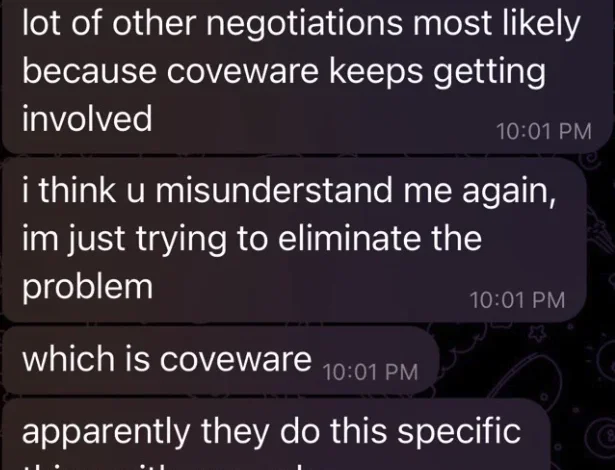
The FBI’s firm stance—explicitly advising victims against paying ShinyHunters—has created a direct conflict between law enforcement objectives and the business models of certain "remediation" firms. As documented in intercepted Telegram chats, ShinyHunters leaders were acutely aware of this, expressing frustration that firms like Coveware and Unit 221B were "harming the business" by discouraging victim payments.

For corporations, the lesson is stark: the line between a service provider and a criminal accomplice has become perilously thin. As the Department of Justice continues to prosecute these facilitators, the industry is likely to see a shift toward more stringent regulatory oversight, mandatory transparency in ransom negotiations, and a potential move toward banning ransom payments altogether. For now, the dismantling of the ShinyHunters network serves as a warning that the "security" industry is being infiltrated by the very threats it was designed to combat, necessitating a complete re-evaluation of how organizations respond to the rising tide of global cyber-extortion.
Related posts: