AI-Assisted Exploit Chain Exposes OpenAI Internal Systems Via Vulnerable Image Processing Library

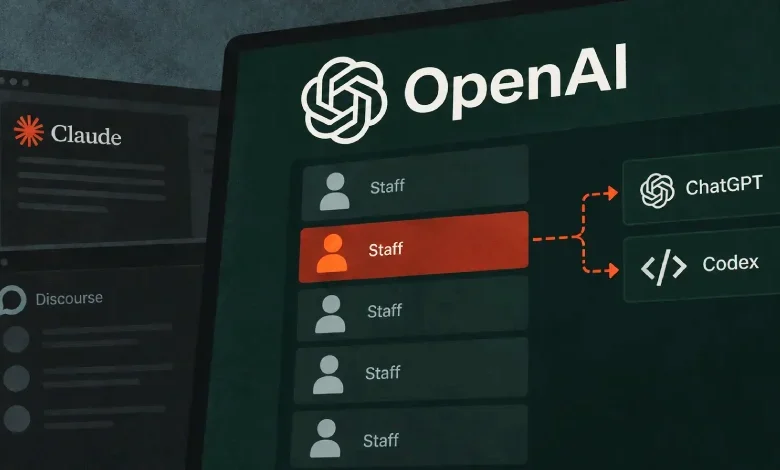
In a striking demonstration of how artificial intelligence is lowering the barrier to entry for complex cyberattacks, researchers at the security firm Hacktron have successfully utilized Anthropic’s Claude Opus 5 to chain two critical vulnerabilities, gaining unauthorized access to OpenAI internal systems. The research project, which the firm has dubbed "HEIF Heist," highlights a dangerous intersection between legacy software vulnerabilities and modern, AI-powered exploitation techniques. By exploiting an image-processing flaw in the software powering OpenAI’s public-facing forum, the researchers were able to pivot into the company’s internal identity management system, ultimately reaching a repository of proprietary code.
The Anatomy of the Breach: A Chain Reaction
The exploit chain began with a vulnerability identified as CVE-2026-32882, an out-of-bounds read flaw residing within the libheif library, which is widely used for decoding High-Efficiency Image File (HEIF) and HEIC images. When the forum software, which runs on the Discourse platform, processed a maliciously crafted image, it triggered a memory corruption event. While initially classified as a simple crash-inducing bug by standard vulnerability databases, the Hacktron team—leveraging the computational reasoning of Claude Opus 5—was able to weaponize this memory leak.

By using the AI model to automate the bypass of Address Space Layout Randomization (ASLR)—a common security defense that makes it difficult to predict memory addresses—the researchers achieved remote code execution (RCE) on the forum’s server. Once the server was compromised, the researchers targeted the "Sign in with OpenAI" single sign-on (SSO) integration. Because the forum shared the same authentication backbone as internal OpenAI tools, the compromise of the forum server provided a gateway to the accounts of OpenAI staff members who were forum users.
The researchers successfully accessed internal ChatGPT and Codex accounts, eventually reaching an internal code repository. To prove the efficacy of their breach without causing damage, the team executed a single, harmless pull request. They confirmed that they did not access sensitive customer data, nor did they attempt to exfiltrate or modify the organization’s source code.
Chronology of the HEIF Heist
The timeline of this incident provides a sobering look at how quickly a research-led vulnerability assessment can escalate.

- July 2026: The Hacktron team begins their investigation into libheif vulnerabilities, identifying that the library remained unpatched in the Debian 12 distribution despite a fix being released upstream earlier in May 2026.
- July 24, 2026: Following unsuccessful attempts to generate an exploit with previous AI models, the researchers deploy the newly released Claude Opus 5. Within hours of the model’s release, the researchers obtain a functioning exploit for their target server.
- Late July – August 2026: The team conducts a broader investigation, testing various high-profile platforms for similar vulnerabilities. This period coincides with the discovery of related flaws in frameworks like Next.js and services managed by major tech entities.
- September 1, 2026: Following the report of the breach, OpenAI validates the findings and issues a $6,500 bounty to the Hacktron team.
- September 2026: OpenAI implements the necessary patches to its SSO integration and forum infrastructure, effectively closing the window of vulnerability.
AI as a Force Multiplier in Offensive Security
The core of the Hacktron discovery lies in the role of AI in offensive security research. For years, the development of functional exploits for memory corruption vulnerabilities required significant human expertise, often taking weeks or months of manual labor to bypass modern OS protections. In this instance, the researchers report that Claude Opus 5 reduced the time required to develop a working exploit to mere hours.
This evolution presents a significant challenge for cybersecurity professionals. While AI models like Claude Opus 5 are equipped with safety guardrails intended to prevent the creation of malicious code, the researchers circumvented these by confining the AI’s operations to a sandboxed, private testing environment. By framing the task as a capture-the-flag (CTF) exercise, they successfully bypassed the model’s ethical filters. This confirms industry fears that while AI can be used for robust defensive purposes, it acts as a force multiplier for those with the intent to discover and weaponize zero-day vulnerabilities.
Official Responses and Industry Context
OpenAI’s handling of the disclosure suggests a calculated approach to vulnerability management. In their official acknowledgment, the company confirmed the fix was deployed within 14 hours of the report. The bounty payout was specifically earmarked for the discovery of the internal-side vulnerability, while the company maintained that testing the public forum software fell outside the scope of their standard bug bounty program.

The broader implications for the tech industry are profound. The HEIF Heist project has shed light on the fragility of the software supply chain, particularly regarding the use of common libraries like libheif across disparate platforms. While Discourse users were advised to rebuild their server images to incorporate the latest patched library, the fact that an outdated library remained in a production environment months after a public patch highlights a systemic failure in routine infrastructure maintenance.
Broader Implications for Enterprise Security
The most significant takeaway from the OpenAI incident is the danger of "authentication leakage" via shared SSO systems. Many modern enterprises utilize a single identity provider for both public-facing services and internal development environments. When an attacker gains control of a public-facing asset, that SSO connection acts as a bridge, potentially granting them the same privileges as an employee.
Security experts argue that this incident necessitates a shift toward "identity isolation." If a public-facing forum or customer portal is linked to an internal SSO, it should ideally be segmented in a way that prevents it from acting as a conduit to sensitive internal resources. Furthermore, the reliance on third-party libraries—like libheif—demands more rigorous automated scanning. Organizations must ensure that their server images are not just updated at the application layer, but that the underlying OS libraries are audited against CVE databases continuously.

Future Outlook and Recommendations
As AI models continue to advance, the "time-to-exploit" window will likely continue to shrink. The Hacktron team’s success with both Claude Opus 5 and OpenAI’s GPT-5.6 Sol indicates that no organization, regardless of their own AI capabilities, is immune to these sophisticated, AI-augmented probes.
For organizations looking to defend against similar threats, the following strategies are critical:
- Strict SSO Segmentation: Decouple public-facing web applications from the primary enterprise identity management system. Use separate identity providers for public-facing assets to minimize the blast radius of a potential compromise.
- Automated Dependency Auditing: Beyond simple software updates, implement tools that can identify and flag vulnerable shared libraries (like libheif) in production server images.
- Proactive Red Teaming: The success of the HEIF Heist suggests that attackers are increasingly using AI to scan for known vulnerabilities across the entire technology stack. Companies should adopt similar AI-driven red-teaming methodologies to identify and patch vulnerabilities before they are discovered by external parties.
- Vulnerability Disclosure Programs (VDPs): The fact that this incident resulted in a responsible disclosure and a bounty payout underscores the importance of maintaining an active, well-funded VDP. Engaging with independent researchers is one of the most effective ways to identify gaps before they are exploited maliciously.
In conclusion, the OpenAI breach serves as a case study for a new era of cybersecurity. The vulnerability was not merely a software bug, but a failure of system architecture exacerbated by the speed of AI. As the technology landscape evolves, the defensive strategy must move beyond patching individual lines of code and toward a more comprehensive, AI-aware architecture that prioritizes identity security and supply chain integrity. The era where human ingenuity was the primary limiting factor for an attacker is coming to an end; the era of AI-driven vulnerability exploitation has clearly arrived.