Critical Security Flaw in Issabel Framework Under Active Exploitation as Global PBX Systems Face Remote Code Execution Risks

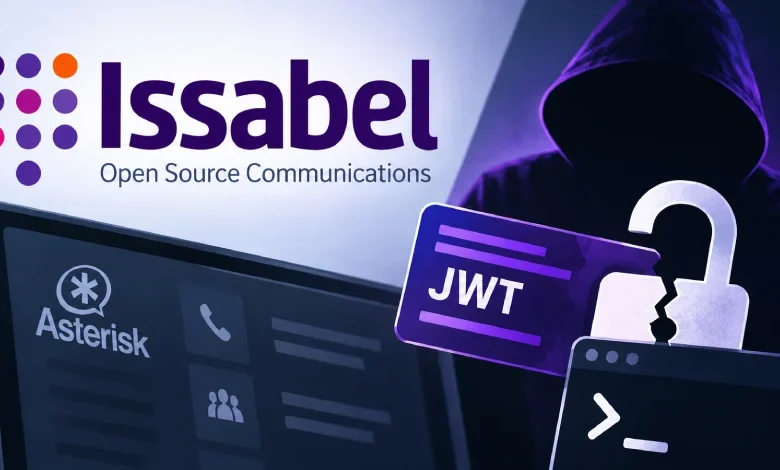
The cybersecurity landscape has been rattled by the disclosure of a critical vulnerability within the Issabel Framework, an open-source unified communications platform that serves as a cornerstone for many organizations’ telephony infrastructure. Identified as CVE-2026-89026, the flaw has been confirmed to be under active exploitation by malicious actors, prompting urgent warnings from security researchers and industry observers. With a staggering CVSS v3.1 score of 9.8 and a CVSS v4.0 rating of 9.3, the vulnerability represents a near-maximum severity threat, granting unauthenticated remote attackers the capability to execute arbitrary operating system commands with elevated privileges.
Anatomy of the Vulnerability: The Hard-Coded Secret
The root cause of this security failure lies in a fundamental cryptographic oversight: the inclusion of a hard-coded JSON Web Token (JWT) signing key within the framework’s pbxapi index.php file. In modern software development, JWTs are intended to provide a secure, standardized method for transmitting information between parties as a JSON object. For these tokens to remain secure, the "secret" key used to sign them must be unique to each installation and kept strictly confidential.
In the case of Issabel, the developers utilized a static, identical key—"da893kasdfam43k29akdkfaFFlsdfhj23rasdf"—across every single deployment of the software. Because this key is publicly accessible within the source code, any attacker with knowledge of the framework can generate their own valid bearer tokens. These forged tokens effectively bypass authentication mechanisms, granting the attacker the identity of a legitimate user. Once the attacker has established this fraudulent session, they can interact with the /pbxapi/manager/originate endpoint. This specific function is designed to initiate calls within the Asterisk engine; however, by manipulating the "System" application parameter, an attacker can force the underlying server to execute arbitrary OS commands as the "Asterisk" user, leading to full system compromise.
Chronology of Discovery and Exploitation
The discovery of CVE-2026-89026 was the result of diligent vulnerability research, leading to the public disclosure of the flaw and the subsequent release of a patch. The timeline of events highlights a precarious window of opportunity for threat actors:
- August 1, 2026: The Issabel Foundation released an official patch to remediate the vulnerability. The update successfully moves the JWT signing key away from the static, hard-coded file and into the
/etc/issabel.confdirectory, ensuring that keys can be unique and properly managed per installation. - September 9, 2026: The Shadowserver Foundation, a non-profit organization dedicated to monitoring and analyzing global internet threats, observed the first instances of active exploitation. This indicated that malicious actors had successfully reverse-engineered the vulnerability and were actively scanning for vulnerable PBX systems.
- September 16, 2026: Security firm VulnCheck issued a formal advisory, confirming that the flaw was being actively weaponized in the wild and urging administrators to prioritize immediate remediation.
The Broader Context of PBX Security
Unified Communications (UC) and Private Branch Exchange (PBX) systems are high-value targets for cybercriminals. These systems often act as the central nervous system for corporate communications, handling voice traffic, internal messaging, and administrative data. When a PBX is compromised, the implications extend far beyond simple service disruption. Attackers can eavesdrop on private calls, reroute communications for financial fraud, or use the compromised server as a pivot point to move laterally through an organization’s network.
Historically, PBX systems have been frequent targets due to their often-outdated software stacks and the tendency for administrators to prioritize functionality over security hardening. The prevalence of open-source frameworks like Issabel—which are widely deployed in small-to-medium enterprises and specialized industrial sectors—means that a single vulnerability can have a massive, systemic impact. The reliance on hard-coded credentials remains one of the most common "low-hanging fruit" vulnerabilities that threat actors actively hunt for using automated scanning tools.

Implications for Infrastructure Security
The active exploitation of CVE-2026-89026 underscores a persistent problem in the software supply chain: the inclusion of sensitive secrets in code repositories. Even when software is open-source, the assumption that "security through obscurity" will protect a static key is a dangerous fallacy. Automated scanners utilized by both white-hat researchers and black-hat hackers constantly monitor public repositories for such mistakes.
The potential for impact here is significant. Since the exploit allows for arbitrary code execution, an attacker could install persistent backdoors, deploy ransomware, or exfiltrate sensitive configuration files that contain further credentials for SIP providers or internal databases. The ability to execute commands as the "Asterisk" user provides sufficient control to manipulate telephony logs, effectively allowing attackers to cover their tracks after performing malicious actions.
Official Responses and Mitigation Strategy
The Issabel Foundation has provided a clear path to remediation, and security analysts are unanimous in their advice: administrators must apply the August 1 update immediately. For systems that may have been exposed to the internet prior to patching, simple updates may not be sufficient. Organizations are advised to conduct a thorough forensic audit of their Asterisk logs to check for unauthorized access or anomalous activity directed at the /pbxapi/manager/ endpoint.
Key steps for system administrators include:
- Immediate Patching: Ensure the framework is updated to the latest version, which removes the hard-coded key and implements secure key management.
- Credential Rotation: If the system was reachable via the internet during the period of vulnerability, assume that any credentials or internal configurations associated with the PBX have been compromised. Rotate all administrative passwords and API keys.
- Network Segmentation: Restrict access to the PBX management interfaces. These should ideally be accessible only via a Virtual Private Network (VPN) or restricted to specific IP addresses, rather than exposed to the public internet.
- Traffic Analysis: Monitor for unusual outbound traffic or unexpected "originate" commands, which could indicate a post-exploitation attempt to utilize the PBX for toll fraud or command-and-control (C2) communication.
Analyzing the Threat Landscape
While the identity of the threat actors behind the current campaign remains unconfirmed, the shift from a publicized patch to active exploitation in just over a month is typical of modern cyber-attack cycles. Once a patch is released, exploit developers often perform "diffing"—comparing the vulnerable code with the patched code—to identify the exact location and nature of the fix. This process allows them to craft weaponized exploits within days or weeks.
The incident serves as a stark reminder of the "time-to-patch" metric that defines modern organizational security. For critical infrastructure components like PBX systems, the gap between vulnerability disclosure and patching is the most dangerous time for an enterprise. The fact that Shadowserver observed exploitation on September 9 suggests that organizations running unpatched versions of Issabel were compromised within weeks of the patch being available, highlighting a critical failure in patch management processes across the sector.
Conclusion
CVE-2026-89026 is a critical, high-impact vulnerability that demonstrates the severe risks associated with poor cryptographic practices in software development. As the investigation continues, it is expected that further evidence of the scale of the campaign will emerge. For now, the imperative remains clear: the open-source community and the organizations relying on the Issabel Framework must treat this vulnerability as a high-priority threat. Failure to act risks not only the integrity of corporate communications but the security of the entire network architecture that supports these systems. As the digital and physical realms of communication continue to merge, the security of the platforms facilitating that connection must remain a non-negotiable priority for IT and security departments worldwide.