Radaris domain seizure signals new legal era for consumer data brokers under Daniel’s Law


The persistent refusal of the consumer data broker Radaris.com to honor requests for the removal of sensitive personal information has culminated in a landmark legal defeat. Following a series of tactical delays and jurisdictional obfuscations, a New Jersey court has ordered the transfer of Radaris.com and more than a dozen associated domains to Atlas Data Privacy Corp. This development marks a significant escalation in the enforcement of Daniel’s Law, a New Jersey statute designed to protect the privacy of law enforcement officers, judicial officials, and their families by mandating the removal of their personal data from commercial databases.
The legal battle represents a critical inflection point for the multi-billion-dollar data brokerage industry. For years, Radaris operated with relative impunity, utilizing a complex network of shell companies and offshore entities to evade accountability. However, the aggressive litigation strategy employed by Atlas, combined with the stringent provisions of Daniel’s Law—which imposes fines of $1,000 per violation—has effectively stripped the company of its primary digital real estate.
A Chronology of Evasion and Litigation
The conflict began in February 2024, when Atlas Data Privacy Corp initiated a lawsuit against Radaris for persistent non-compliance with statutory removal requests. As the case progressed, researchers and investigative journalists uncovered that Radaris was the brainchild of Igor and Dmitry Lubarsky, Russian-born brothers based in Massachusetts. Despite the company’s claims that it was operated by foreign entities in Ukraine or elsewhere, documentation indicated a centralized, Boston-area management structure.
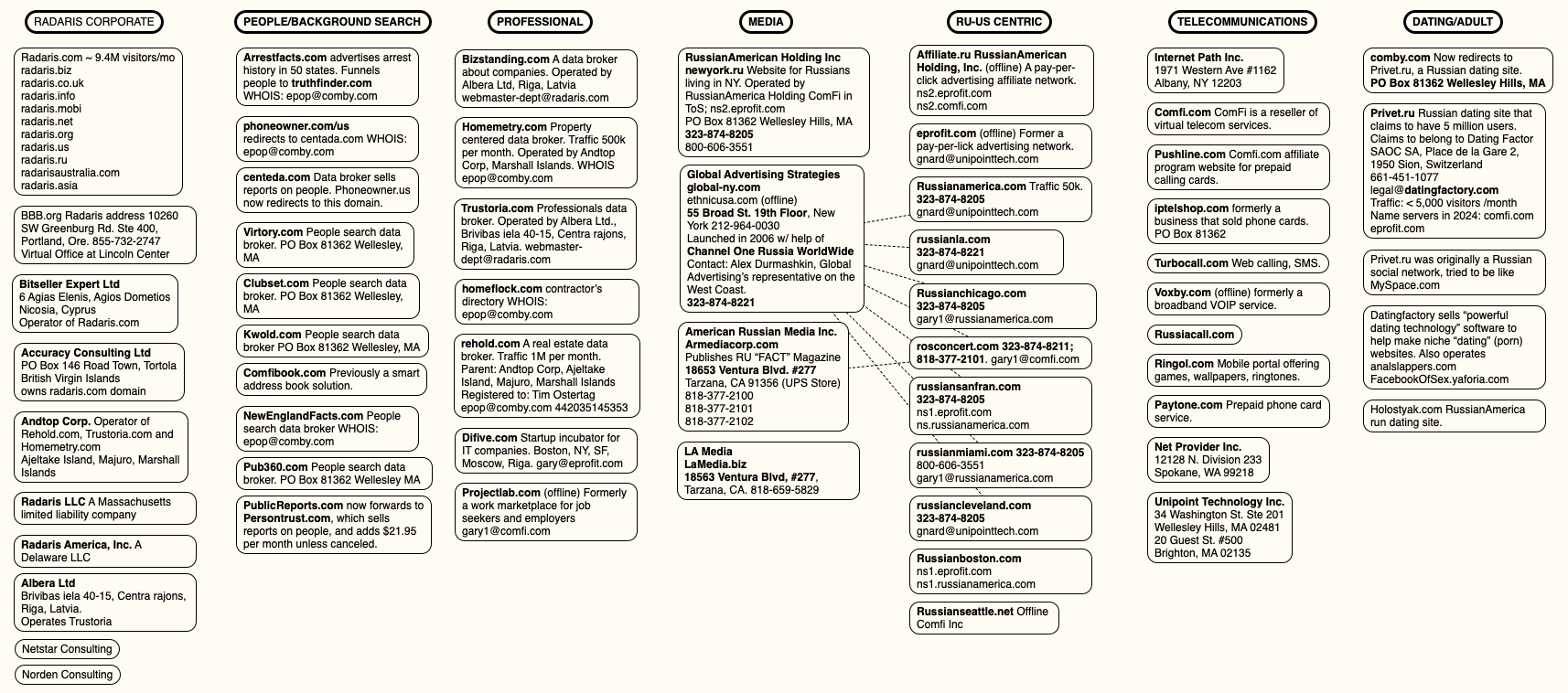
Throughout 2024 and 2025, the litigation was defined by a cat-and-mouse game. Whenever a legal threat emerged, the Radaris family of websites would undergo a structural metamorphosis. Terms of service were updated to point to new entities incorporated in jurisdictions such as the Marshall Islands, the British Virgin Islands, and the Seychelles. This "island-hopping" strategy was designed to exhaust the resources of plaintiffs and complicate service of process.
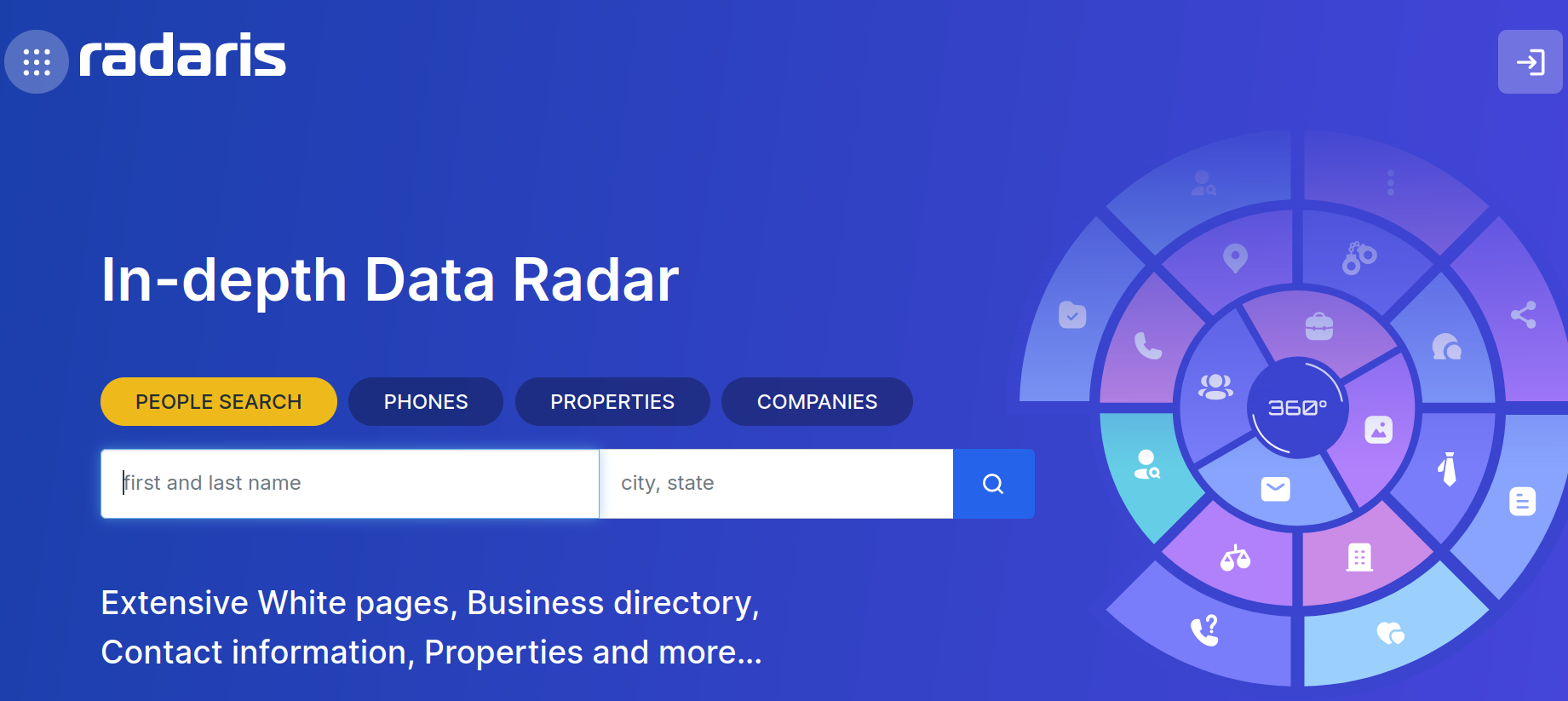
In June 2025, Atlas re-filed its complaint, significantly broadening the scope of the suit to include a wide array of interconnected data broker domains. Matt Adkisson, CEO of Atlas, described this period as a "shell game" where defense counsel would shift liability between entities, discarding old companies and establishing new ones as judgments neared. By late August 2026, the court had seen enough, ruling that the defendants had been afforded ample opportunity to mount a defense and had failed to do so. The resulting default judgment forced the transfer of the domains to the plaintiffs, effectively shuttering the public-facing operations of the Radaris network.
The Anatomy of a Data Broker Empire
The scale of the Radaris operation, as revealed through thousands of documents and emails obtained during discovery, highlights the interconnected nature of the modern people-search industry. The evidence indicates that Radaris was not an isolated actor but one of at least twenty-five interconnected websites managed by a single core group. These sites, including Veripages and various affiliate programs, share common administrative, financial, and technical infrastructure.
Financial records suggest that this network generated substantial monthly revenue, with Radaris and Veripages alone estimated to bring in approximately $87,000 per month combined. These revenues were bolstered by strategic partnerships with large-scale marketing and advertising firms, as well as revenue-sharing agreements with "privacy" services that purportedly help users remove their data, only to have that same data circulate through other channels.
The use of fictitious executives, such as the invented "Gary Norden," further underscores the deceptive practices employed by the firm to project corporate legitimacy to investors and the public. By creating a synthetic persona, the operators were able to issue press releases and maintain a veneer of professional accountability while remaining hidden behind a veil of shell corporations.
Legal and Constitutional Challenges
The enforcement of Daniel’s Law is currently facing a vigorous constitutional challenge. Approximately 150 data brokerage firms, including those targeted by Atlas, have sought to move their respective cases to federal court. Their argument rests on the assertion that Daniel’s Law is overly broad and infringes upon First Amendment protections regarding the dissemination of public information.

The legal landscape is further complicated by the divergence in state-level rulings. While New Jersey continues to uphold the spirit of the law, a federal district court in West Virginia recently ruled that a similar version of the statute was facially unconstitutional. The ongoing uncertainty has set the stage for an inevitable appeal to the U.S. Supreme Court, which will likely be forced to determine the balance between individual privacy rights and the commercial interests of the data brokerage industry.
The Broader Implications for Privacy Legislation
Privacy expert Justin Sherman notes that the Radaris case is a symptom of a larger, systemic failure in U.S. privacy policy. "The lack of a comprehensive federal privacy law is not for a lack of knowledge," Sherman stated. "We have seen millions of data exposures, yet the industry continues to lobby effectively against restrictions."
The current legislative framework is riddled with exemptions. Most state privacy laws, including those in New Jersey, do not apply to information categorized as "public" or "government" records. This includes everything from property filings and marriage certificates to criminal records and professional licenses. Because these documents are considered part of the public record, brokers argue they have a legal right to aggregate and sell them, creating a perpetual loop where personal data is harvested from government databases and packaged for commercial profit.
The implications of this industry’s reach were recently highlighted by the breach at IDScan.net, which exposed the driver’s license information of over 153 million Americans. Despite such massive failures, there is no federal mandate governing how these companies must store, share, or secure the data they ingest from government sources.
The Path Forward: What the Radaris Seizure Means
For the average citizen, the seizure of the Radaris domains serves as a rare, albeit small, victory in an asymmetric battle against corporate data harvesting. However, the precedent is limited by the current legal instability surrounding Daniel’s Law. Until Congress enacts a robust, 21st-century privacy framework that addresses the underlying issue of data aggregation from public records, individual lawsuits and state-level statutes will continue to act as temporary stopgaps rather than comprehensive solutions.
The transition of Radaris.com into an informational portal maintained by Atlas signals that the age of unchecked anonymity for data brokers is under pressure. As more states adopt laws similar to New Jersey’s, the cost of doing business for these brokers may rise to a point where their current models are no longer viable. Nevertheless, the industry’s reliance on complex corporate structures and aggressive legal maneuvering suggests that they will continue to adapt to new regulations, likely shifting their methods to ensure their data-mining operations remain profitable in the face of increasing public and judicial scrutiny.
In the final analysis, the Radaris case serves as a definitive case study in how modern privacy threats operate and the extreme measures required to mitigate them. Whether this victory can be replicated on a national scale depends on the outcome of the impending constitutional battles and the willingness of federal lawmakers to prioritize consumer privacy over the interests of the surveillance economy.
Related posts: