Evaluating Graph-RAG vs. Standard RAG: A Hallucination Benchmark on Fact-Dense Queries

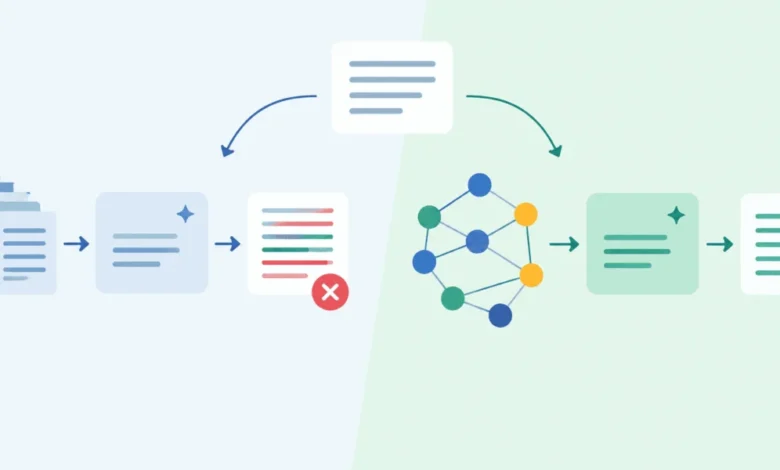
The evolution of Retrieval-Augmented Generation (RAG) systems has reached a critical juncture as enterprises transition from simple semantic search implementations to more complex, structured data retrieval architectures. While standard vector-based RAG pipelines have become the industry standard for unstructured text processing, they frequently struggle with "lossiness"—a phenomenon where the nuances of atomic facts, numeric statistics, and entity relationships are obscured within high-dimensional vector spaces. To address this, researchers are increasingly turning to 3-Tiered Graph-RAG architectures, which attempt to marry the flexibility of vector databases with the precision of structured knowledge graphs. A recent benchmarking study comparing these two methodologies reveals surprising insights into the interplay between architectural complexity, prompt engineering, and the inherent capacity of the underlying Large Language Model (LLM).
The Challenge of Fact-Dense Retrieval
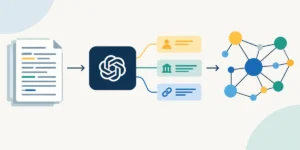
In standard vector RAG pipelines, data is decomposed into chunks, embedded, and stored in a vector database. During retrieval, a query performs a similarity search to identify the most relevant document chunks. This approach is highly effective for semantic search tasks—such as finding a general topic or summarizing a document—but it often fails when queries require high-precision numeric extraction.
When a dataset contains multiple, similar entities with overlapping numeric values, vector search can easily retrieve the wrong "neighboring" document. This leads to common hallucinations, where an LLM inadvertently mixes up the career average of one athlete with the seasonal performance of another because both records exist in the same latent semantic space. The 3-Tiered Graph-RAG architecture proposes a solution by creating a tiered hierarchy: Tier 1 serves as an authoritative Knowledge Graph for atomic facts (e.g., entity-predicate-object triples); Tier 2 manages categorical relationships; and Tier 3 utilizes the traditional vector database as a "fallback" or context provider for unstructured narrative text.
Chronology of the Evaluation Benchmark
To rigorously test these two approaches, an experimental evaluation was conducted using a synthetic dataset of 50 distinct basketball players. The setup was designed to simulate the "noise" common in production environments.
- Phase 1: Data Ingestion (T+0): A custom
SimpleQuadStorewas implemented to house the "absolute truth" for each player, specifically their season Points Per Game (PPG) statistic. Simultaneously, aChromaDBcollection was populated with unstructured, "noisy" text paragraphs. These paragraphs deliberately contained contradictory data, such as a "bad first half" score and a "career average" statistic, designed to distract the model. - Phase 2: Retrieval Logic (T+1): Two retrieval functions were established. The standard RAG function performed a simple top-k search, retrieving three chunks of text and instructing the model to synthesize an answer. The 3-Tiered Graph-RAG function followed a stricter protocol: it queried the Knowledge Graph for the exact fact first, then retrieved the vector context, and was instructed via a systemic prompt to prioritize the graph’s truth over the narrative context.
- Phase 3: Execution and Verification (T+2): 50 queries were executed, each targeting the specific season PPG of a player. An evaluation script was then used to compare the model’s output against the ground truth value stored in the
QuadStore.
Comparative Performance Data
The benchmark utilized the google/flan-t5-base model, a 250-million parameter model often lauded for its efficiency in constrained environments. The results were as follows:
- Standard Vector-RAG: Achieved 96.0% accuracy.
- 3-Tiered Graph-RAG: Achieved 92.0% accuracy.
At first glance, the outcome appears counterintuitive. Given that the Graph-RAG architecture is designed to reduce hallucinations by providing an "absolute truth" context, one might expect it to outperform a standard vector retrieval approach. However, the data reveals a significant bottleneck: model capacity.
Analysis of Model Capacity and Prompt Complexity
The discrepancy between the expected performance and the actual results underscores a vital lesson in LLM engineering: the "complexity cost" of prompt instructions.
The Graph-RAG prompt was significantly more complex than the standard RAG prompt. It required the model to perform "conflict resolution"—weighing two distinct sources of information and adhering to a specific hierarchy of trust. While the flan-t5-base model is capable of basic summarization and retrieval, it lacks the advanced reasoning capabilities of larger models like Llama 3 (8B+) or GPT-4. By forcing a smaller model to navigate a complex, multi-tiered instruction set, the overhead of the prompt itself likely interfered with the model’s primary generative capabilities.
This suggests that for lightweight, local LLMs, the "simplest" pipeline often yields the highest performance. When the model is not sophisticated enough to process complex, multi-source conflict resolution, the additional instructions of a Graph-RAG architecture may become a source of confusion rather than a guide to accuracy.
Industry Implications and Future Directions
The implications for developers and data engineers are twofold. First, architectural design should be proportional to model size. If an organization is restricted to using smaller, local models due to latency or privacy requirements, it may be more effective to invest in high-quality data cleaning and query optimization rather than complex, multi-tiered retrieval architectures.
Second, the benchmark highlights that "Graph-RAG" is not a silver bullet. While structured knowledge graphs are superior for data integrity, they require a sufficiently capable reasoning engine to extract the maximum benefit from that structure. In larger systems using models with higher reasoning capacity, the 3-Tiered Graph-RAG approach would likely surpass the vector-only baseline, as these models are better equipped to handle the logic-heavy prompts required to resolve data conflicts.
Furthermore, this study highlights a growing trend in the industry: the transition from "model-centric" AI development to "system-centric" development. It is no longer enough to choose a high-performing model; engineers must match the architecture of the RAG pipeline to the specific cognitive strengths and weaknesses of the chosen LLM.
As the field matures, we can expect to see more specialized benchmarking tools that evaluate not just retrieval accuracy, but the "instruction-following efficiency" of models in complex RAG environments. For the time being, developers should treat Graph-RAG as a powerful tool for scaling precision, provided that the reasoning layer—the LLM itself—is robust enough to handle the sophisticated instructions that such a system demands. Organizations looking to adopt these systems should prioritize a iterative testing phase, ensuring that the increase in architectural complexity is met with a corresponding increase in the model’s ability to reason through the resulting prompts.