How Meta and Google Architected an AI-Native Future for Instagram Direct with Jetpack Compose

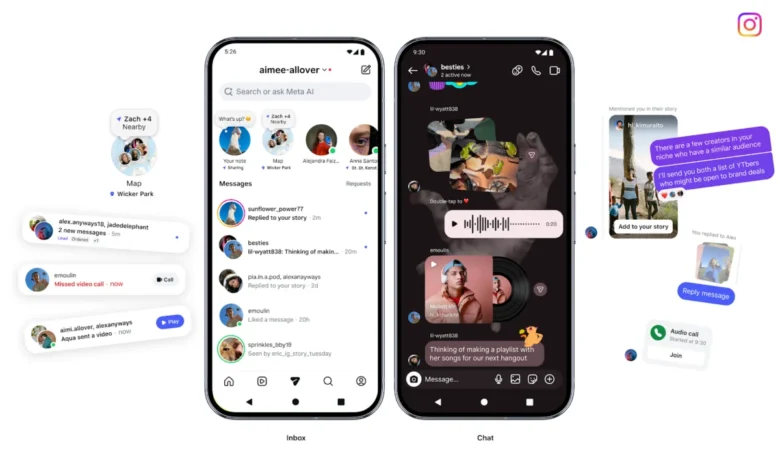
Instagram Direct, a cornerstone of the Meta ecosystem, manages billions of daily messages across a global user base. Maintaining this surface required the Instagram engineering team to move beyond traditional legacy Android View systems, which had become increasingly cumbersome to scale. In a significant technological shift, Meta partnered with Google to transition Instagram Direct to Jetpack Compose. This migration was not merely a UI facelift; it represented a fundamental re-architecture aimed at creating an AI-native codebase. The results of this transition—a 50% reduction in UI code size and marked improvements in AI agent efficiency—provide a blueprint for how large-scale applications can evolve to accommodate the rapid integration of artificial intelligence in software development.
The Evolution of the Instagram Direct Architecture
For years, the Instagram Direct team relied on the traditional Android View system. While heavily optimized, the legacy framework created significant technical debt. As the complexity of the messaging surface grew—handling over 200 distinct message types and 160 state permutations per component—the overhead required to maintain these views became a bottleneck.
.jpg)
The decision to adopt Jetpack Compose was driven by the need for a declarative UI framework that could better support modern development workflows. Declarative code, by its nature, is more predictable and structurally coherent, making it significantly easier for AI models to analyze and generate. The migration process, which took place over several months, involved a rigorous, phased approach. Rather than performing a "big bang" rewrite, the team focused on incremental, high-fidelity migrations that allowed for constant A/B testing, ensuring that the user experience remained seamless throughout the transition.
Chronology of the Migration and Technical Strategy
The migration strategy was structured into distinct, logical stages to minimize disruption. Initially, engineers maintained legacy View-based components alongside new Compose UI components. This parallel maintenance allowed the team to validate the performance of Compose in production environments without impacting the overall stability of the Instagram application.
- Phase 1: Component Abstraction. The team focused on decoupling UI logic from the legacy RecyclerView-based architecture. By creating specialized abstractions, they ensured that Compose components could coexist within existing View hierarchies.
- Phase 2: AI-Native Refactoring. As the codebase moved toward Compose, the team enforced strict rules to prevent "paradigm leakage." They moved away from mutable class members, favoring pure, constructor-based arguments for Compose items. This transformation allowed AI coding assistants to generate code that was inherently safer and less prone to state-related bugs.
- Phase 3: Core Infrastructure Replacement. The final stage involved moving from the legacy RecyclerView to a Compose-native LazyColumn. This transition required significant performance fine-tuning to match the high standards of the previous implementation, particularly concerning scroll smoothness and frame rendering.
Empirical Data and Performance Gains
The data emerging from the migration indicates that the shift to an AI-native architecture has yielded substantial dividends. Meta’s internal analysis compared the performance of AI agents working on legacy View-based code versus those working on the new Compose-based codebase. The findings were statistically significant:

- Codebase Efficiency: The migration resulted in a 50% reduction in total UI code. Less boilerplate code means that AI models generate fewer tokens, which directly correlates to higher-quality outputs and lower computational costs.
- AI Productivity: AI agent execution time was reduced by 35%. Furthermore, the number of "engineer-agent exchanges"—the back-and-forth required to refine AI-generated code—dropped by 32%.
- Resource Optimization: Total token cost for AI sessions was reduced by 33%.
These metrics suggest that the "AI-native" approach—designing an architecture specifically for the strengths of AI models—drastically increases the ROI of using AI in large-scale software engineering projects. Perhaps most tellingly, when a file’s "risk score" (a measure of code complexity and susceptibility to bugs) doubled, the resource efficiency of AI agents working on legacy View code dropped by 30%, whereas the efficiency for those working on Jetpack Compose dropped by only 9%.
Partnership and Ecosystem Contributions
The collaboration between Google and Meta served as a catalyst for broader Android ecosystem improvements. As the Instagram team pushed the limits of Jetpack Compose to meet the performance requirements of a massive, real-time messaging application, they worked closely with Google engineers to identify and bridge critical gaps in the framework.
Two major features were introduced to Jetpack Compose as a direct result of this partnership:

- Pausable Composition with LazyLayoutCacheWindows: By enabling incremental composition, the team successfully reduced large frame drops per minute (LFDs/m) by approximately 13%. This capability ensures that expensive UI elements are rendered across frames rather than clogging the main thread.
- Impression Logging with onVisibilityChanged: This API provides a native, consistent method for tracking when UI elements enter the viewport. It replaces the fragmented, hand-rolled solutions that were previously standard in the industry, offering developers a more reliable way to track product quality and user engagement metrics.
Implications for the Broader Software Industry
The success of the Instagram Direct migration provides three key lessons for enterprise software development:
First, architecture is the prerequisite for AI productivity. Simply bolting AI coding tools onto a legacy codebase is insufficient. By creating an "AI-native" structure—one that emphasizes immutability, clear component boundaries, and minimal side effects—companies can exponentially increase the utility of their AI investments.
Second, performance is a product feature. The Instagram team’s decision to maintain parity with legacy benchmarks—while simultaneously improving the developer experience—demonstrates that modern, declarative frameworks can indeed meet the performance demands of high-traffic applications. The use of Baseline Profiles further ensured that the "warmup cost" typically associated with the Compose runtime was mitigated, allowing for instantaneous startup speeds.

Third, the value of technical partnerships. The collaboration between Google and Meta highlights how large-scale deployments can drive innovation in open-source frameworks. By treating the migration as a research-and-development opportunity, the involved parties were able to deliver features that now benefit the millions of developers who rely on Android for mobile app development.
Future Outlook
As Instagram continues to migrate other surfaces to Jetpack Compose, the lessons learned from the Direct team are being institutionalized across Meta’s Android engineering departments. The focus has shifted from mere UI migration to creating a scalable, maintainable foundation that anticipates the future of AI-assisted programming.
The transition of Instagram Direct signifies a maturation of the mobile development landscape. It marks a move away from the imperative, high-maintenance practices of the past toward a declarative, AI-friendly future. For the broader Android community, this project serves as a compelling case study: by embracing modern frameworks like Jetpack Compose with an architectural eye toward AI-native design, engineering teams can significantly reduce their technical debt while simultaneously empowering their developers to ship features with greater speed and reliability.

As software complexity continues to grow, the ability to harmonize human engineering with AI-driven workflows will likely become the defining characteristic of successful, high-performance product teams. The Instagram Direct team’s journey is not just an update to a messaging app; it is a preview of how the next generation of global-scale software will be built, tested, and maintained.