Truecaller expands beyond caller ID with the launch of a web-based scam detection service for global users

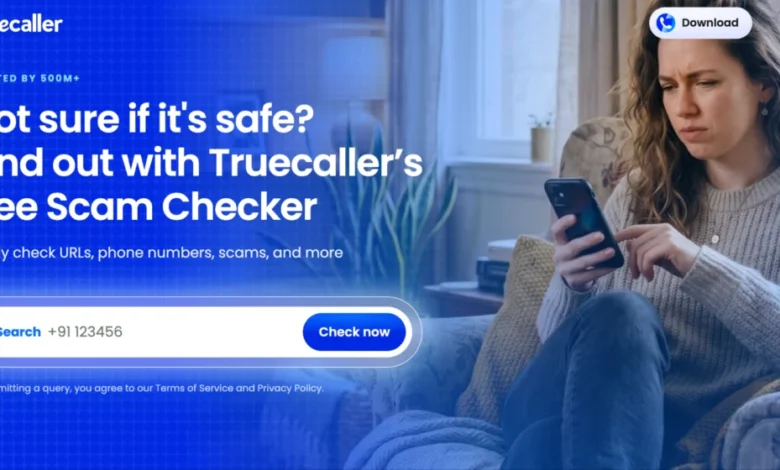
After more than a decade of establishing itself as a household name in caller identification, Truecaller is fundamentally shifting its strategic trajectory. With over 500 million monthly active users relying on its app to screen incoming voice calls, the Swedish technology firm is now pivoting to address the broader, multi-channel landscape of digital fraud. On Sunday, the company launched Scam Checker, a free, web-based tool that allows users to verify the legitimacy of suspicious phone numbers, web links, and text messages without the need for an app installation or a user account.
The introduction of this service marks a significant departure for the company, which has traditionally tethered its utility to a mobile application ecosystem. By moving its proprietary fraud-intelligence database to the open web, Truecaller is attempting to meet users where they are—whether that is on a desktop browser, an Android device, or within messaging platforms where scams are increasingly proliferating.
The Evolving Landscape of Digital Fraud
The shift toward a web-based detection tool is a direct response to the changing tactics of cybercriminals. While voice calls remain a primary vector for scams, the threat surface has expanded rapidly to include SMS phishing (smishing), messaging apps, and deceptive hyperlinks. According to a 2025 GSMA survey of Indian adults, the transition toward non-voice channels is stark: 46% of respondents who encountered scams cited messaging apps as the primary medium, while 37% reported incidents via SMS and 32% through traditional voice calls.
Truecaller’s own internal analysis supports this trend, revealing that users are already performing approximately 14 million web searches every month to manually verify phone numbers and links. This high volume of "defensive searching" indicates a clear market demand for a dedicated, centralized verification service that operates outside of a gated app environment.
How the Scam Checker Functions
The Scam Checker tool is designed for immediate, frictionless use. Users can paste a suspicious link, a message, or a phone number directly into the web interface. The backend technology then executes a multi-layered verification process:
- URL Analysis: For links, the service expands shortened URLs and follows redirects to identify the final destination, comparing the target against Truecaller’s proprietary risk database.
- Crowdsourced Intelligence: The tool integrates data from ScamFeed, the company’s community-driven reporting platform. In India alone, ScamFeed hosts approximately 20,000 live scam reports, with an influx of roughly 1,300 new entries every week.
- Pattern Recognition: For text messages, the system isolates phone numbers and links embedded within the text to cross-reference them against known fraud signals.
While the service is currently free and accessible without a sign-in, it does not provide the exhaustive details—such as specific caller identity—offered within the premium or authenticated versions of the Truecaller app. The service is launching initially in India, with an aggressive rollout strategy targeting Latin America, the Middle East, Africa, and Southeast Asia in the coming months.
A Response to Market Saturation and Regulation
Truecaller’s move to diversify its product suite comes at a time of mounting pressure on its core caller ID business, particularly in India, which accounts for more than 350 million of its users. The company is facing three distinct competitive and regulatory headwinds:

- Native Integration: Major smartphone ecosystems, including Google (via the Phone by Google app) and Apple, have increasingly integrated native spam detection and caller identification features, eroding the unique value proposition of third-party apps.
- Government-Led Initiatives: The Indian government is actively rolling out the Calling Name Presentation (CNAP) service, a telecom-level solution that aims to provide identity verification directly at the network layer, bypassing the need for third-party apps.
- Regulatory Compliance: Last week, the Telecom Regulatory Authority of India (TRAI) issued a directive requiring caller ID apps to share their crowdsourced spam reports with telecom operators. Truecaller leadership has publicly criticized this mandate, labeling it a "one-way exchange" that places the burden of intelligence-sharing on private firms without clear reciprocity.
In light of these pressures, Truecaller is moving to position itself as a holistic cybersecurity brand rather than a mere utility app. "Caller ID was the first problem we solved, and it is still how most people find us," said Truecaller CEO Rishit Jhunjhunwala. "But scams have moved to a more multi-channel approach with links and messages, and increasingly to voice and video. Our protection has to follow the scammer."
Supporting the Ecosystem: The Role of Community Data
The efficacy of Scam Checker relies heavily on the "community effect." By crowdsourcing data, Truecaller maintains a real-time, global view of emerging fraud tactics. Between September 14 and 20, the company’s systems evaluated 12.9 billion messages globally, successfully flagging 20.3 million of them as fraudulent.
This massive data ingestion also serves a secondary purpose: strengthening Truecaller for Business, the enterprise-facing segment of the company. By identifying new scam patterns, the company can refine the risk products it sells to corporations, protecting their brand identity and customer communication channels. While Scam Checker is explicitly a consumer-focused tool, the intelligence gathered by the platform contributes to a virtuous cycle of improved risk mitigation for all stakeholders.
Future Roadmap and Strategic Outlook
Truecaller has signaled that the current iteration of Scam Checker is only the beginning. The company plans to expand the service’s detection capabilities to encompass a wider variety of fraud types. A high-priority feature slated for future release is the ability for users to upload screenshots of suspected scams, allowing for image-based analysis and text extraction. This is a critical development, as scammers frequently distribute screenshots of fake invoices, fraudulent gift cards, or deceptive promotional offers that are difficult to detect through text-parsing alone.
The broader implication of this pivot is the repositioning of Truecaller as an essential layer of digital hygiene. By decoupling its verification engine from the application, the company is effectively lowering the barrier to entry for its safety tools. This strategy is likely to improve its market relevance as the internet becomes increasingly populated by sophisticated, AI-generated phishing attempts.
Conclusion: A Pivot Toward Utility
The launch of Scam Checker signifies a mature phase for the company. As the caller ID market becomes commoditized by native OS features and telecom regulations, Truecaller is banking on the strength of its community data and the ubiquity of its brand to maintain its relevance. By addressing the "search behavior" of consumers who encounter suspicious messages in apps like WhatsApp or via SMS, the company is successfully adapting to a more fragmented and dangerous digital environment.
Whether this move will be sufficient to offset the competitive challenges in the Indian market remains to be seen. However, by providing a free, accessible, and high-utility tool to the general public, Truecaller is making a strategic play to solidify its reputation as a global leader in anti-fraud technology. As scammers refine their methods, the company’s ability to "follow the scammer" across multiple platforms will be the definitive test of its long-term viability in the cybersecurity space. The transition from a phone-app company to a cross-platform trust and safety service is a necessary evolution, one that reflects the current reality of the digital threat landscape.