HHS Restarts COVID-19 Vaccine Ordering Amid Persistent Legal and Policy Conflicts Over Federal Guidance

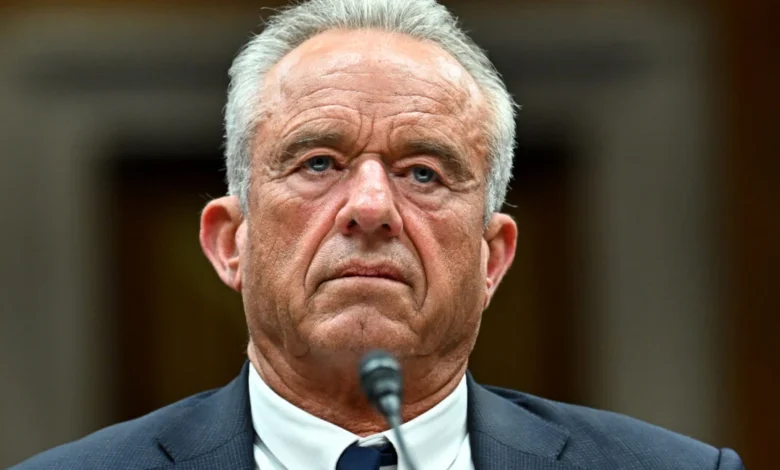
The U.S. Department of Health and Human Services (HHS) confirmed on Thursday that the ordering process for COVID-19 vaccines has officially resumed, ending a period of operational stagnation that had left public health officials and medical providers in limbo. Despite the restoration of the supply chain, the agency declined to provide specific details regarding the root cause of the delay or the technical and administrative measures taken to resolve the disruption. The resumption of vaccine distribution comes at a critical juncture for federal public health policy, as the agency navigates a turbulent landscape defined by ongoing litigation, shifting regulatory priorities, and deep-seated ideological friction regarding immunization strategies.
A Chronology of Policy Shifts and Regulatory Friction
The current state of federal vaccine guidance is the result of a protracted series of administrative maneuvers that began shortly after Robert F. Kennedy Jr. assumed the role of Health Secretary. Kennedy, a long-time critic of universal vaccination mandates, has consistently challenged the scientific consensus surrounding COVID-19 immunizations. His tenure has been marked by a concerted effort to dismantle existing frameworks that prioritize widespread uptake of the shots.
In early 2024, the administration took decisive action by unilaterally revoking the Centers for Disease Control and Prevention’s (CDC) longstanding universal recommendations for COVID-19 vaccination. This move represented a fundamental break from the agency’s previous pandemic-era posture, which emphasized broad protection across all age demographics. The revocation effectively removed the federal "stamp of approval" that historically drove state-level policy and insurance coverage mandates.
The landscape shifted further in March, when a federal judge intervened, issuing an injunction that halted several other administrative changes Kennedy and his allies had attempted to implement regarding CDC vaccine recommendations. The court’s intervention created a complex regulatory environment, effectively freezing the CDC’s guidelines at their July 2025 status. Under these constraints, the agency’s official guidance currently recommends the vaccine primarily for children aged 6 months to 17 years who are moderately to severely immunocompromised. For healthy children within that age range, the guidance relies on "shared clinical decision-making," a policy that shifts the responsibility of assessment to individual clinicians and parents rather than providing a blanket recommendation.
The July 2025 Standard and Legal Uncertainty
The ambiguity surrounding the current guidance was formalized in an update to the CDC’s clinical documentation released earlier this week. The new guidance explicitly states: "Because of legal uncertainties and inquiries, the CDC states the recommendations for COVID-19 vaccination from the July 2025 immunization schedule remain in effect for the 2026-2027 respiratory illness season."
This reliance on a legacy framework has left healthcare providers and state health departments grappling with a bifurcated system. While the federal government is attempting to standardize operations around the July 2025 protocols, the reality on the ground is far more fragmented. The disparity between federal guidance and the recommendations issued by major medical associations, such as the American Medical Association (AMA), has created a significant challenge for pediatricians and public health advocates.
Leading medical organizations maintain that the federal guidelines are insufficient to address the ongoing risks posed by respiratory viruses. According to current AMA guidelines for the 2026-2027 fall season, the medical consensus remains that all infants between 6 and 23 months of age should receive the COVID-19 vaccine. Furthermore, these organizations recommend that children aged 2 to 18 should be vaccinated if they fall into higher-risk categories or if their families desire immunization based on individual risk assessment.
Analyzing the Data: Immunization and Risk
The disconnect between the CDC’s current, legally-constrained stance and the recommendations of the broader medical community stems from divergent interpretations of longitudinal data. Public health experts have pointed to consistent data sets indicating that while the risk of severe disease is statistically lower in healthy children than in the elderly or immunocompromised, the aggregate impact of respiratory viruses on pediatric populations remains significant.
According to data tracked by the CDC prior to the recent policy shifts, hospitalizations for pediatric COVID-19 peaked during the winter months, placing substantial pressure on pediatric intensive care units. Critics of the current administration’s restrictive approach argue that by narrowing the focus solely to immunocompromised individuals, the agency is inadvertently discouraging immunization for children who may still benefit from reduced morbidity and the prevention of long-term health complications, such as post-viral syndromes.
The administrative delay in vaccine ordering—the reason for which remains undisclosed—has exacerbated these concerns. Medical associations have expressed frustration over the logistics, noting that the inability to order vaccines through standard federal channels disrupts clinical workflows, particularly as primary care providers attempt to coordinate COVID-19 shots with routine pediatric immunization schedules.
Official Responses and the Administrative Void
The lack of transparency regarding the recent ordering delay has fueled speculation within the public health community. HHS officials have maintained a policy of silence regarding the internal mechanisms of the delay, providing only a brief confirmation that the ordering system is back online. This absence of communication is consistent with the current administration’s broader approach to public health messaging, which has increasingly moved away from the centralized, broadcast-style communications typical of the pre-2025 era.
In the absence of a direct explanation, industry observers are left to look at the intersection of legal mandates and administrative capacity. Some legal scholars suggest that the federal judge’s March ruling placed the agency in a "compliance trap," where any update to the vaccine guidance or distribution infrastructure could be interpreted as a violation of the injunction. Consequently, the administration appears to be opting for a status quo approach, prioritizing the maintenance of legacy systems over the introduction of new protocols that could trigger further litigation.
Broader Implications for Public Health Infrastructure
The current state of affairs carries significant implications for the future of the nation’s public health infrastructure. When the federal government’s guidance diverges sharply from the recommendations of professional medical societies, it erodes the public’s ability to discern standard medical practice. This creates a reliance on individual provider discretion, which can lead to disparities in care based on geographic location or the specific clinical philosophy of a patient’s primary care provider.
Furthermore, the persistent legal challenges to the CDC’s authority suggest that the agency’s role as the final arbiter of health policy may be fundamentally altered. If the current trend continues, the future of vaccine distribution may become increasingly localized, with state health departments and private hospital networks forced to fill the gap left by federal inaction or policy ambiguity.
The financial impact is equally concerning. Many vaccine programs are supported by federal purchasing agreements that allow for volume discounts and streamlined distribution. If the administrative processes for ordering these supplies continue to be subject to unexplained delays or political interference, the resulting uncertainty could drive up costs for providers and ultimately lead to a decrease in vaccine availability for vulnerable populations.
Conclusion: A Fragile Equilibrium
As the 2026-2027 respiratory season continues to unfold, the nation remains in a state of fragile equilibrium. The resumption of vaccine ordering is a necessary operational step, but it does little to address the deeper structural issues that have plagued the administration of public health policy over the last two years.
The conflict between the executive branch’s ideological shift toward a narrower scope of vaccine recommendation and the medical community’s commitment to broad-based protection has created a "new normal" characterized by policy paralysis. For parents, physicians, and public health officials, the path forward remains dependent on navigating a landscape where federal guidance is treated as a minimum baseline rather than a comprehensive recommendation.
Whether the administration will eventually provide clarity on the causes of the recent supply chain disruptions or seek to bridge the divide with the medical establishment remains to be seen. In the meantime, the health of the nation’s vaccination strategy continues to rest on the shoulders of local practitioners, who are left to interpret shifting federal mandates while attempting to provide the best possible care for their patients in an increasingly fractured regulatory environment. The resilience of the healthcare system will be tested as it attempts to maintain continuity in the face of ongoing legal, administrative, and scientific disagreements that show no signs of immediate resolution.