Android Bench 2.0 Launches to Revolutionize How Developers Evaluate AI Performance for Complex Engineering Tasks

The landscape of software development is undergoing a seismic shift as artificial intelligence evolves from a tool for simple code completion to a sophisticated partner capable of managing complex, multi-day engineering workflows. Today marks a significant milestone in this transition with the official release of Android Bench 2.0. This updated framework represents a departure from the superficial metrics of early AI coding benchmarks, moving toward a rigorous evaluation standard that reflects the reality of modern, large-scale Android application development.
By introducing long-horizon tasks (LHTs), refined scoring methodologies, and agent-specific performance metrics, Android Bench 2.0 aims to provide developers and AI researchers with a clear, empirical view of how different models perform when tasked with the heavy lifting of professional-grade software projects.
The Evolution of AI Benchmarking: From Snippets to Systems
When the original Android Bench was first introduced, the industry was focused on "micro-tasks"—incremental bug fixes, syntax suggestions, and small feature additions. These tasks were well-suited for the early generation of LLMs, which excelled at generating isolated blocks of code but often struggled with the structural complexities of large-scale repositories.
The trajectory of this technology has been swift. Over the past 18 months, the demand for AI assistance has shifted toward "macro-tasks," such as full-scale refactors, dependency migrations, and the creation of entire applications from the ground up. Recognizing that the previous binary "pass/fail" grading system failed to capture the nuances of these complex, multi-step processes, the development team behind Android Bench 2.0 has overhauled its evaluation criteria.
The new framework aligns with the Harbor framework, ensuring that the benchmarks remain consistent with broader industry standards for LLM measurement. This is not merely a change in methodology; it is a recalibration of what the industry considers a "successful" AI contribution.
Long-Horizon Tasks: A New Standard for Complexity
The centerpiece of the 2.0 update is the introduction of long-horizon tasks. Unlike the incremental benchmarks of the past, LHTs are designed to mirror the actual work performed by senior engineers over the course of a week. These tasks include:

- Architectural Migrations: Moving entire codebases from legacy patterns to modern standards, such as refactoring 40+ screens to Jetpack Compose.
- Dependency Management: Upgrading outdated library stacks and ensuring compatibility across thousands of lines of code.
- App Synthesis: Building functional Android applications from scratch based on high-level architectural requirements.
- Platform Conversion: Porting complex cross-platform applications into native Android environments, a task that has historically proven difficult for automated systems.
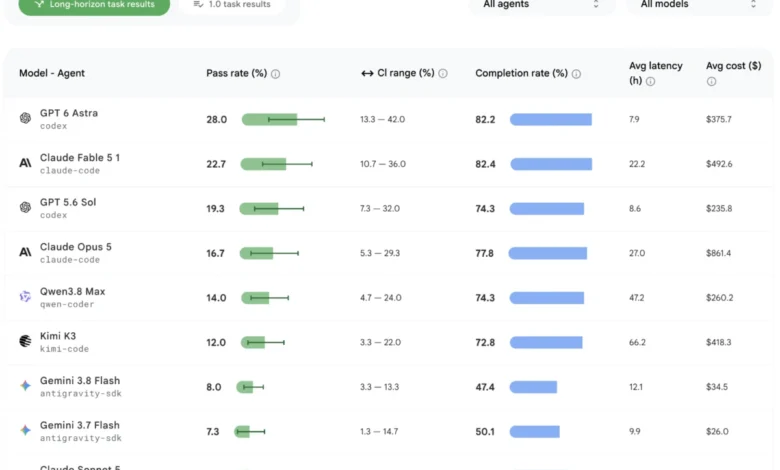
The data reveals a stark reality: while AI models frequently achieve pass rates exceeding 90% on simple, incremental tasks, their performance drops significantly when confronted with LHTs. The current highest pass rate for these complex, multi-day assignments sits at approximately 28%. This performance gap is a critical indicator of where current frontier models struggle, particularly in managing dependencies, runtime validation, and architectural integrity.
Moving Beyond Binary Grading: Continuous Scoring
One of the most significant shortcomings of early AI benchmarks was the reliance on binary pass/fail grading. In a real-world environment, a developer rarely considers an 80% complete project a "failure." Conversely, a model that produces 99% perfect code but fails a single critical security assertion cannot be considered a success.
Android Bench 2.0 introduces continuous scoring to address this. By evaluating functionality, visual fidelity, and the presence or absence of regressions, the system provides a nuanced "completion rate." This allows developers to assess not just whether a model "got it right," but how close it came to the desired outcome. This granularity is essential for model developers, as it highlights specific architectural failures that would otherwise be lost in a binary grade.
The Rise of Agentic Evaluation
The shift from simple Large Language Models to "AI Agents"—systems that can use tools, manage files, and interact with the developer environment—is the next frontier of productivity. Android Bench 2.0 is the first major benchmark to incorporate agent-level evaluations.
By testing models alongside the agents provided by their respective developers (such as GPT-6 with the Sol agent or Gemini 3.8 Flash with the Antigravity agent), the benchmark provides insight into the efficiency of the entire stack. This includes measurements of token consumption, cost per task, and the effectiveness of prompt caching and tool windowing. The findings suggest that the integration of a well-designed harness can significantly reduce the overhead required to complete a complex task, offering a practical, cost-effective guide for development teams looking to integrate AI into their CI/CD pipelines.
Current Market Performance and Model Rankings
The release of Android Bench 2.0 coincides with the addition of several high-performance models to the leaderboard. The current standings highlight the rapid pace of innovation, with OpenAI’s GPT-6 Astra currently leading the field with a 28% pass rate on LHTs.
Other notable entries include:
.png)
- Gemini 3.8 Flash and 3.7 Flash: Showcasing strong capabilities in deterministic transformations like Java-to-Kotlin conversion.
- Anthropic’s Fable 5.1: Demonstrating high architectural consistency.
- Kimi K3 and Qwen 3.8 Max: Representing the growing diversity of global AI contributions to the coding ecosystem.
While these models show immense promise in repetitive or well-defined structural changes, the benchmark underscores a universal struggle with "knowledge gaps"—specifically, handling unreleased libraries or breaking changes within the Android framework. No model has yet achieved a 100% pass rate for porting cross-platform apps, underscoring that human oversight remains an essential component of the development lifecycle.
Implications for the Developer Ecosystem
The introduction of these metrics carries profound implications for the software industry. For CTOs and engineering leads, the Android Bench 2.0 leaderboard acts as a purchasing guide, helping teams select the right AI partner based on their specific needs—whether that be refactoring legacy code or rapid feature prototyping.
For researchers, the detailed "model card" views, which allow users to drill down into pass rates and costs, provide the transparency needed to refine training data. The data clearly indicates that AI is currently more adept at "writing" (creating new code) than "refactoring" (modifying existing code). This insight alone will likely influence how companies structure their AI deployment strategies, prioritizing AI for greenfield projects while maintaining a human-centric approach to complex architectural overhauls.
Looking Ahead: Transparency and Community Feedback
The developers of Android Bench 2.0 have emphasized that this is a living project. By opening the methodology to public scrutiny and encouraging contributions via GitHub, the team aims to build a community-driven standard that resists the biases often found in proprietary benchmarks.
The timeline for future updates is expected to be aggressive. As the industry moves toward more autonomous coding agents, the benchmark will likely evolve to include more complex, multi-agent interactions and security-focused evaluations.
For the individual developer, the message is clear: AI is no longer a peripheral tool for simple tasks. It is becoming a central component of the engineering workflow. By utilizing tools like Android Bench 2.0, the industry can ensure that the adoption of these technologies is grounded in empirical evidence, objective performance metrics, and a commitment to professional-grade code quality. As the gap between simple assistance and autonomous development continues to shrink, the transparency provided by these benchmarks will remain the most reliable compass for navigating the future of software engineering.