Radaris domain seizure signals new legal era for consumer data brokers and privacy advocates


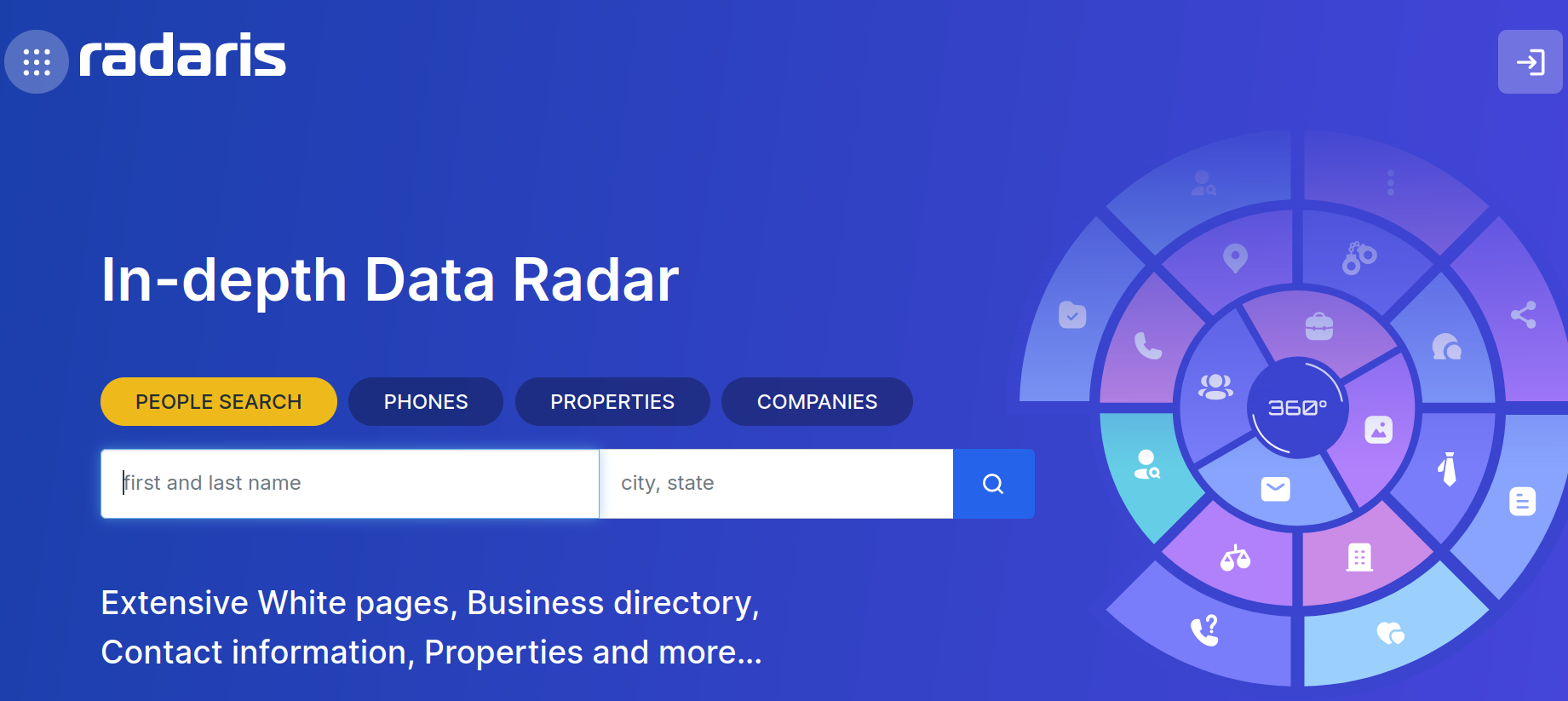
The landscape of the multibillion-dollar personal data brokerage industry faces a tectonic shift following a landmark judicial decision that saw the domain Radaris.com forcibly transferred to the plaintiffs in a privacy-focused lawsuit. For years, the people-search giant Radaris.com maintained a reputation for ignoring deletion requests, effectively operating as a repository for sensitive information on millions of Americans. That operational model, characterized by aggressive data harvesting and administrative opacity, has finally encountered a decisive legal wall in the form of New Jersey’s Daniel’s Law.
The litigation, spearheaded by Atlas Data Privacy Corp, targets the systematic failure of data brokers to comply with state statutes designed to protect law enforcement officers, judges, and their families from digital exposure. The transfer of the Radaris domain—along with more than a dozen associated properties—marks a rare instance where the digital infrastructure of a data broker has been seized to satisfy a court judgment, setting a precedent that could ripple across the entire industry.
The Anatomy of the Litigation
The conflict began in earnest in February 2024, when Atlas Data Privacy Corp initiated legal action against Radaris, alleging systematic violations of Daniel’s Law. Named after Daniel Anderl, the son of a U.S. District Court judge who was murdered in 2020 by a disgruntled litigant who had tracked the judge’s home address online, the statute is designed to prevent such tragedies by empowering public officials to demand the total removal of their personal data from commercial databases. Under the law, companies that fail to comply face penalties of $1,000 per violation.
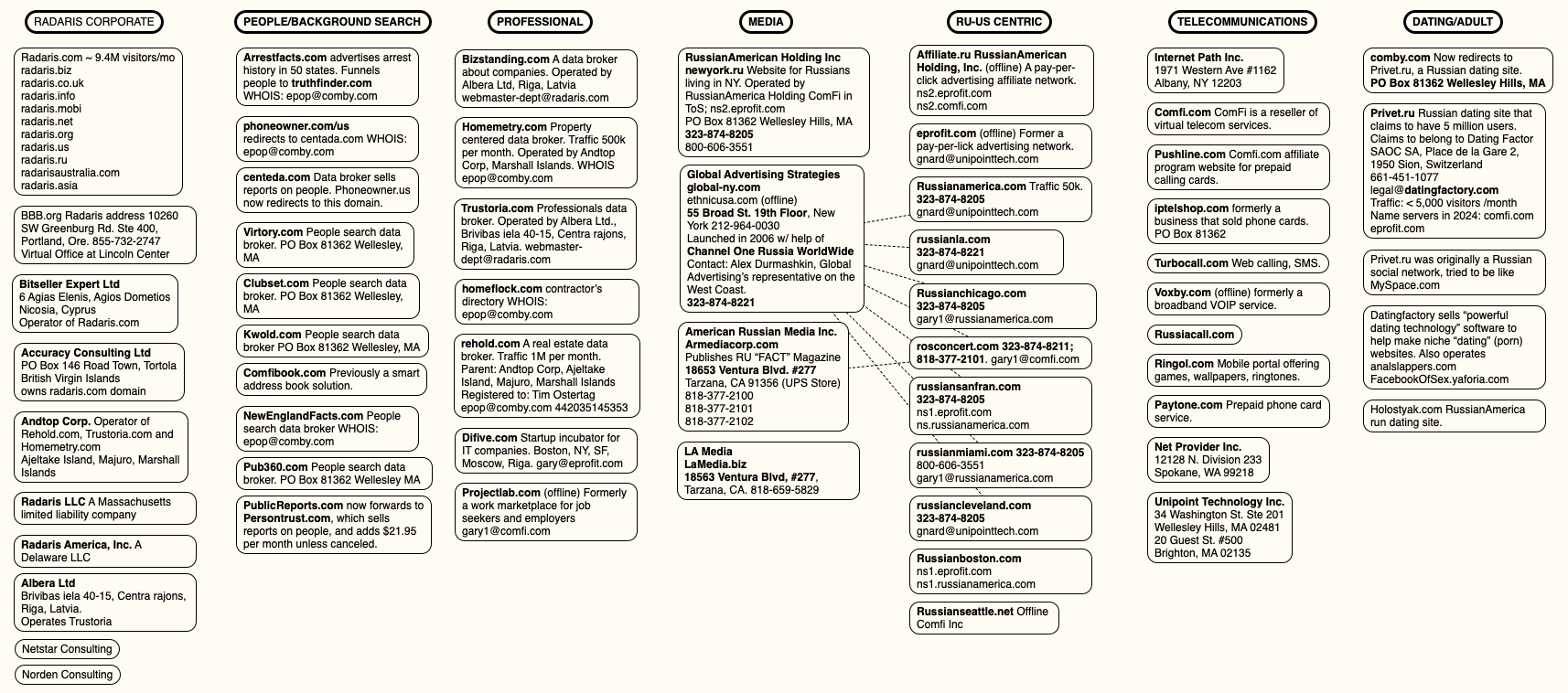
As the legal proceedings advanced, investigators uncovered a complex web of corporate maneuvers intended to shield the true owners of the Radaris empire. Behind the curtain of various shell companies—often registered in tax havens like the Marshall Islands, the Seychelles, and the British Virgin Islands—lay the operations of Russian-born brothers Igor and Dmitry Lubarsky. Based in Massachusetts, the Lubarskys reportedly managed a sprawling network of people-search sites, dating platforms, and affiliate marketing programs.
Legal filings and independent investigative reporting revealed that the company frequently deployed a fictitious CEO, “Gary Norden,” to front their public and investor-facing communications. When challenged on these corporate structures, defense counsel for Radaris initially attempted to dismiss the proceedings by claiming that the plaintiffs had failed to serve the correct entities. This “shell game” strategy, as described by Atlas CEO Matt Adkisson, involved the constant shifting of corporate liability. Whenever an entity faced legal heat, it was quietly dissolved, and a new, offshore-managed entity was introduced as the “true” operator of the site, a process Adkisson dubbed the “island-hopping phase.”
Chronology of a Data Broker Empire’s Decline
The path to the recent seizure was paved with years of procedural obfuscation. The following timeline illustrates the evolution of the dispute:
- 2017: Radaris faced a class-action lawsuit resulting in a $7.5 million default judgment. When plaintiffs moved to collect, the court ordered the transfer of Radaris.com. Radaris, represented by counsel, successfully appealed the decision by arguing that the domain was owned by a Cyprus-based entity, Bitseller Expert Limited, which had not been properly served. The transfer was halted.
- 2020: Following the 2017 legal victory, ownership of the platform was moved to Andtop Company, an entity incorporated in the Marshall Islands.
- February 2024: Atlas Data Privacy Corp filed its initial lawsuit under Daniel’s Law, alleging continued failure to honor removal requests from protected state officials.
- March 2024: Following media inquiries into the Lubarsky brothers’ involvement, Radaris’s legal team threatened defamation suits, while simultaneously admitting to the invention of the “Gary Norden” persona.
- June 2025: Atlas re-filed the lawsuit with an expanded list of defendants, having gathered thousands of documents proving the interconnected nature of the various data broker sites.
- August 2026: A New Jersey judge ruled in favor of the plaintiffs, citing the persistent failure of the defendants to appear and defend their actions. The domain Radaris.com was ordered transferred to Atlas, and the site now serves as a portal for the court-ordered notification.
Evidence of a Unified Operation
During the discovery phase of the most recent litigation, Atlas obtained more than 10,000 emails and internal documents. These files provided a rare, granular look into the financial and technical architecture of the data broker industry. The documents confirmed that seemingly disparate websites, such as Veripages.com, were, in fact, part of a centralized operation managed by a small team in the Boston area.

These entities—including Radaris America, Inc., Digital Orbit Corp, and Core Solutions Group—shared banking infrastructure, payment processors, and administrative mailboxes. The data indicated that Radaris.com generated approximately $42,000 in monthly revenue, with sister sites like Veripages earning upwards of $45,000. Furthermore, the documents shed light on the circular nature of the industry, revealing that the Radaris family of sites had partnerships with “privacy” companies like Onerep, which charge consumers fees to scrub their data from the very sites that sell it. This effectively creates a self-sustaining loop: the data brokers profit from selling the information, and their partner companies profit from the demand for its removal.
Industry Implications and the Constitutional Fight
The seizure of Radaris.com is not the final word in this legal drama. The data broker industry has mobilized, with more than 150 companies currently facing lawsuits from Atlas. A significant portion of these firms has moved their cases to federal court, arguing that state laws like Daniel’s Law violate the First Amendment by restricting the dissemination of public information.
The outcome of these challenges, likely headed for the U.S. Supreme Court, will define the limits of state-level privacy regulation. While 14 other states have adopted versions of Daniel’s Law, the landscape remains precarious. In August 2025, a federal district court ruled that West Virginia’s version of the law was facially unconstitutional, citing overreach.
Privacy expert Justin Sherman notes that the core issue is the industry’s reliance on the definition of “public records.” Most state privacy laws are riddled with exemptions for data found in property filings, voting registries, and court documents. Consequently, while a law may force a broker to remove a home address, the underlying data remains easily accessible through other public databases, rendering many privacy protections superficial.
The Future of Digital Privacy
The case against Radaris serves as a cautionary tale for both the data broker industry and the policymakers tasked with regulating it. The ability of the defendants to hide behind offshore entities and fictitious leadership for nearly a decade underscores the difficulty of enforcing accountability in a digital economy that operates across international borders.
As the U.S. grapples with the absence of a comprehensive federal privacy law, the reliance on state-level initiatives remains the primary mechanism for consumer protection. However, as the legal battle over Daniel’s Law continues to escalate, it is becoming clear that judicial intervention—while effective in specific instances like the Radaris domain seizure—is an insufficient substitute for systemic legislative reform.
The public reaction to the Radaris seizure has been largely supportive, yet the broader reality remains: for every domain seized, numerous other aggregators continue to scrape, store, and sell the digital footprints of millions of citizens. Until federal lawmakers bridge the gap between 20th-century definitions of public records and 21st-century surveillance capabilities, the “shell game” played by data brokers is likely to continue, leaving the privacy of the average individual at the mercy of shifting court dockets and international jurisdictions. The Radaris case represents a significant tactical victory for privacy advocates, but it also highlights the profound vulnerability of personal information in an era where data is the most valuable currency on the market.