Microsoft Unleashes Record-Breaking Patch Tuesday with Over 570 Vulnerabilities Addressed, Citing AI as a Catalyst for Accelerated Discovery

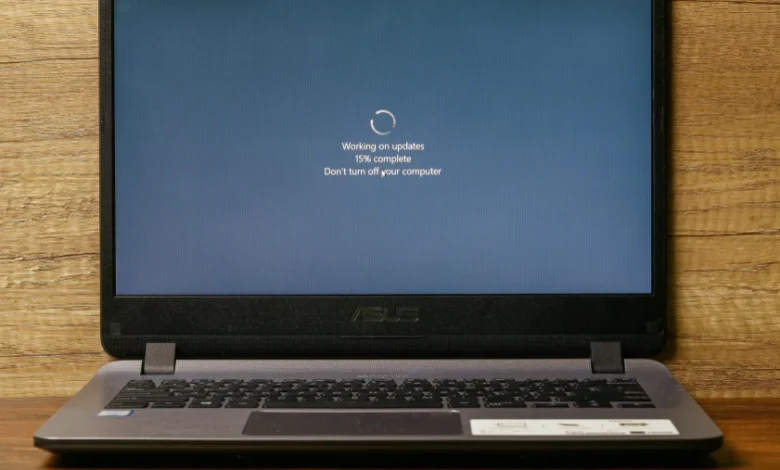
Microsoft Corp. today released a monumental software update, addressing an unprecedented 570 security vulnerabilities across its Windows operating systems and a suite of other software. This colossal release, dubbed Patch Tuesday for July, shatters previous records, nearly tripling the number of fixes deployed in the preceding month. The company attributes this dramatic surge in patch counts to the increasing capabilities of artificial intelligence (AI) in identifying security weaknesses, signaling a profound shift in the landscape of cybersecurity vulnerability discovery and remediation.
The sheer volume of patches deployed by Microsoft this month underscores a rapidly evolving threat environment and the technological advancements enabling both defenders and attackers to operate at an accelerated pace. Nearly 60 of the vulnerabilities patched today were classified as "critical," a designation that signifies a high risk of exploitation. These critical flaws could potentially allow malicious actors or malware to gain remote control over vulnerable Windows devices with minimal or no user interaction. This presents a significant challenge for organizations and individuals alike, as the window for exploitation shrinks considerably when such severe weaknesses are uncovered and addressed.
Further compounding the urgency of this release, Microsoft also addressed three zero-day vulnerabilities, meaning these flaws were known to be actively exploited by attackers in the wild before the company could deploy a patch. The exploitation of zero-day vulnerabilities is particularly concerning because it indicates that attackers have found and are leveraging weaknesses that the software vendor is unaware of or has not yet had time to fix. The rapid identification and remediation of these zero-days are crucial to mitigating ongoing attacks and preventing widespread compromise.
Critical Flaws and Zero-Day Exploits Emerge
Among the most concerning vulnerabilities patched are several that allow for privilege escalation on Windows systems. Two of the zero-day flaws, along with approximately 250 other elevation of privilege vulnerabilities, empower attackers to gain higher levels of access on a compromised system. This can transform a minor intrusion into a full system takeover, granting attackers the ability to install malicious software, steal sensitive data, or disrupt operations.
Two specific elevation of privilege vulnerabilities highlighted in this release include CVE-2026-56155, an issue within Active Directory Federation Services (AD FS), and CVE-2026-56164, a vulnerability in Microsoft SharePoint. AD FS is a critical component for enabling single sign-on and secure access to applications, making any compromise in this area highly impactful for enterprise environments. SharePoint, widely used for collaboration and document management, also represents a significant target for attackers seeking access to organizational data.
Another noteworthy vulnerability is CVE-2026-50661, a security feature bypass affecting Windows BitLocker. While Microsoft states this bug has been publicly disclosed, they are not aware of active exploitation. However, if exploited, this flaw could allow attackers with physical access to a device to bypass BitLocker’s encryption and gain access to sensitive data. This highlights the persistent threat posed by both remote and physical attacks, emphasizing the need for a multi-layered security approach.
The AI Revolution in Vulnerability Discovery
The unprecedented scale of this Patch Tuesday is directly linked to the increasing influence of artificial intelligence in cybersecurity. Pavan Davuluri, Executive Vice President at Microsoft, articulated this shift in a blog post on July 9th, stating that Windows users should anticipate a "higher volume of security updates included in each security release." He explained that AI’s advanced capabilities are accelerating the discovery of vulnerabilities by enabling faster analysis of larger codebases and the identification of more complex issues.
"The pace of vulnerability discovery is changing with advances in AI making it possible to find more issues, faster, across more code, with new mechanisms that can accelerate both discovery and analysis," Davuluri wrote. This statement signals a new era where AI is not just a tool for analysis but a proactive force in identifying weaknesses before they can be exploited by malicious actors.
The implications of AI in vulnerability discovery are far-reaching. AI algorithms can sift through vast amounts of code, identifying patterns and anomalies that human researchers might miss. This includes analyzing code for potential logic flaws, buffer overflows, and other common vulnerability types with remarkable speed and accuracy. Furthermore, AI can assist in fuzzing techniques, where software is bombarded with unexpected inputs to uncover crashes or unexpected behaviors that might indicate a security flaw.
Emerging Threats and Evolving Defense Strategies
While AI empowers defenders, it also presents a double-edged sword. The same technologies that help Microsoft identify vulnerabilities can be leveraged by attackers to discover and weaponize them more rapidly. This creates an escalating arms race in the cybersecurity domain.
Jack Bicer, director of vulnerability research at Action1, drew attention to CVE-2026-48561, a critical remote code execution flaw in Microsoft Copilot with a CVSS threat score of 9.6. This vulnerability allows an unauthorized attacker to execute code remotely over a network. The exploit, as described by Microsoft, involves hosting a malicious website that, when visited by a user running Microsoft Edge for Android, automatically sends crafted prompts to Copilot, leading to the execution of arbitrary code. This highlights the potential for AI-powered features themselves to become vectors for attack if not rigorously secured.
Microsoft has historically utilized an "exploitability index" to gauge the likelihood of a vulnerability being exploited in the wild. However, the increasing speed of AI-driven exploit development is challenging the efficacy of this traditional approach. Satnam Narang, senior staff research engineer at Tenable, argues that Microsoft’s exploitability index needs to adapt more rapidly to the machine-speed discovery of vulnerabilities. He points to the SharePoint zero-day vulnerability (CVE-2026-56164) as an example, which was initially rated as "less likely" to be exploited by Microsoft but was subsequently added to CISA’s Known Exploited Vulnerabilities catalog on July 1st.
Narang elaborated on this concern, referencing findings from Anthropic’s Red Team. Their research demonstrated that AI models, such as the Mythos Preview model, could generate proof-of-concept exploits for a significant majority of vulnerabilities initially rated as "Exploitation Less Likely" or "Exploitation Unlikely." This underscores a critical paradigm shift: "What this means is that our way of looking at Patch Tuesday has changed, because the exploitability index is centered around humans, not AI tools, and as these tools continue to improve, defense needs to improve alongside it," Narang stated. This necessitates a re-evaluation of how security risks are prioritized and addressed in an era where exploit development can be dramatically accelerated by AI.
A Broader Trend: Increased Patch Cadence Across the Industry
Microsoft’s record-breaking release is not an isolated event but rather indicative of a broader trend in the software industry. Chris Goettl at Ivanti observed that many major software vendors are increasing their patch release frequency. Adobe, for instance, announced a shift to twice-monthly security bulletins, published on the second and fourth Tuesdays of each month, also citing AI as a factor in accelerating their patch cycles. Companies like Cisco, Mozilla, and Oracle are also shipping updates more frequently. Notably, Google’s patch batches in June 2026 reportedly totaled over 900 security fixes, further illustrating the growing volume of vulnerabilities being discovered and addressed across the software ecosystem.
This intensified patching cadence reflects the heightened awareness of cybersecurity threats and the increasing sophistication of attackers. It also signifies a growing recognition within the industry that proactive and frequent patching is no longer a best practice but a necessity for maintaining robust security postures.
Recommendations for Users and Organizations
Given the sheer volume and critical nature of the vulnerabilities addressed in this July Patch Tuesday, IT professionals and end-users are advised to exercise caution. Microsoft’s recommendation for applying updates promptly remains paramount. However, the record-breaking number of patches increases the potential for unintended consequences, such as system instability or conflicts between updates.
Therefore, it is prudent for end-users to consider waiting a few days after the release to allow for initial feedback and the identification of any unforeseen issues. For organizations, a phased rollout of these updates, beginning with a pilot group of non-critical systems, is a recommended strategy. This allows for thorough testing and validation before deploying the patches across the entire enterprise environment.
Furthermore, regular system backups remain an essential safeguard. In the event that a patch introduces critical stability issues, having a recent backup will enable a swift restoration of system functionality. The dynamic nature of the cybersecurity landscape, amplified by AI, demands continuous vigilance and a proactive approach to security management. As AI continues to evolve, so too must the strategies and tools employed to defend against cyber threats. The colossal Patch Tuesday release from Microsoft serves as a stark reminder of this ongoing evolution and the critical importance of staying ahead of emerging vulnerabilities.