Dolt 2.0 Ushers in a New Era for Version-Controlled SQL Databases with Groundbreaking Storage Optimization, Performance, and Vector Data Capabilities

DoltHub has announced the release of Dolt 2.0, a landmark update to its open-source version-controlled SQL database. This major iteration introduces a suite of sophisticated features designed to revolutionize data management, including automatic storage optimization, significantly enhanced performance that now surpasses MySQL in many benchmarks, and advanced support for large and vector data types. The release marks a pivotal moment in the evolution of databases, bridging the gap between traditional SQL functionality and the collaborative, auditable nature of Git-style version control, addressing critical challenges faced by data professionals in an increasingly data-driven world.
The Evolution of Version-Controlled Databases: Dolt’s Journey to 2.0
The concept of applying Git-like version control to databases was once considered a niche idea, but DoltHub’s pioneering work with Dolt has steadily transformed it into a mainstream necessity. Launched as the world’s first version-controlled SQL database, Dolt’s initial release three years ago introduced a paradigm where data could be branched, merged, cloned, and diffed just like source code. This innovation aimed to solve inherent problems in traditional database management, such as the lack of native history tracking, difficulties in collaboration, and the absence of a robust rollback mechanism for data changes.
However, the initial versions of Dolt, while groundbreaking in their conceptual approach, faced challenges common to new, complex data systems. Early performance metrics showed Dolt to be significantly slower than established databases like MySQL, and its copy-on-write architecture, while essential for versioning, led to substantial disk usage and "garbage" accumulation over time. These were critical hurdles for broader enterprise adoption, prompting DoltHub’s engineering team to embark on an intensive development cycle focused on optimization and efficiency.
The path to Dolt 2.0 has been a journey of iterative refinement and strategic enhancements. Key milestones leading up to this major release included focused efforts on improving vector performance (as detailed in a blog post from September 3, 2025) and introducing version-controlled vector indexes (highlighted in a June 23, 2025, announcement). These developments foreshadowed the comprehensive improvements delivered in the May 11, 2026, release of Dolt 2.0, demonstrating a clear commitment to addressing performance bottlenecks and expanding data type support for emerging AI/ML workloads. The culmination of these efforts is a database that not only retains its unique versioning capabilities but now also competes fiercely on performance and resource efficiency.
Under the Hood: Major Enhancements in Dolt 2.0
Dolt 2.0 is not merely an incremental update; it represents a foundational shift in how the database manages data and resources, making it a more robust and scalable solution for modern applications.
-
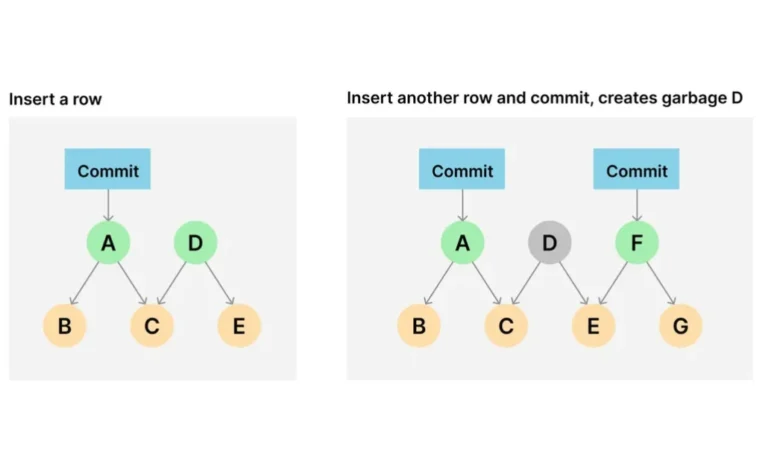
Automated Storage Optimization: One of the most significant advancements in Dolt 2.0 is the introduction of automatic storage optimization, including intelligent garbage collection and archive compression. As Tim Sehn, founder and CEO of DoltHub, elucidated, "Dolt makes a lot of disk garbage, especially during import. Dolt is copy-on-write so all intermediate committed transaction state is preserved to disk. Any intermediate state that is not in a Dolt commit is garbage and can be collected… Adding extra garbage can eat through your disk very quickly." This intrinsic characteristic of copy-on-write systems, while enabling powerful version control, historically led to rapid disk consumption. Dolt 2.0 directly addresses this by implementing automated garbage collection, ensuring that unreferenced data segments are efficiently reclaimed, preventing unnecessary storage bloat.
Complementing garbage collection is a new on-disk format termed "archives." This innovative format leverages dictionary compression techniques to deduplicate storage, promising a substantial reduction in the storage footprint by an estimated 30-50%. This adaptive storage mechanism intelligently manages data, ensuring that historical versions are stored efficiently without sacrificing accessibility or performance. For organizations dealing with vast and rapidly changing datasets, these optimizations translate directly into reduced infrastructure costs and simplified storage management.
-
Performance Breakthroughs: Perhaps the most compelling enhancement in Dolt 2.0 is its dramatic performance improvement. Sehn proudly shared the team’s relentless pursuit of speed: "We started at about 10X slower on reads and 20X slower on writes than MySQL. We’ve worked tirelessly to improve Dolt’s performance and we are now 13% faster than MySQL on writes and 5% faster on reads." This remarkable turnaround, achieved through meticulous engineering and optimization, positions Dolt 2.0 as a high-performance alternative to traditional SQL databases, even before considering its unique versioning capabilities. The benchmarks, conducted using sysbench – a widely recognized and robust database benchmarking tool – lend credibility to these claims. Achieving parity, and in some cases superiority, over MySQL on critical read and write operations removes a significant barrier to adoption for performance-sensitive applications, making Dolt 2.0 a viable choice for a broader range of production workloads.
-
Advanced Data Type Support: Version-Controlled Vector Indexes in Beta: Recognizing the accelerating convergence of data management with artificial intelligence and machine learning, Dolt 2.0 introduces beta support for version-controlled vector indexes. Utilizing MariaDB’s Vector type, this feature allows for the storage and efficient querying of high-dimensional vector embeddings, which are fundamental to applications like semantic search, recommendation engines, and anomaly detection. DoltHub asserts that Dolt is currently the only database offering version control for vectors. This capability is crucial for ML workflows, enabling data scientists to branch experiments with different vector embeddings, merge changes, and maintain a complete, auditable history of their model data. The beta status is expected to transition to a full release once remaining read-path gaps are resolved, signaling a strong commitment to supporting next-generation data workloads.
Dolt’s Foundational Architecture: Git-Style Semantics for SQL
At its core, Dolt differentiates itself by embedding Git-style version control directly into a MySQL-compatible SQL database. This architectural choice is not merely an add-on but fundamental to its operation. Dolt stores data in content-addressed Prolly Trees, a data structure that enables several powerful features:
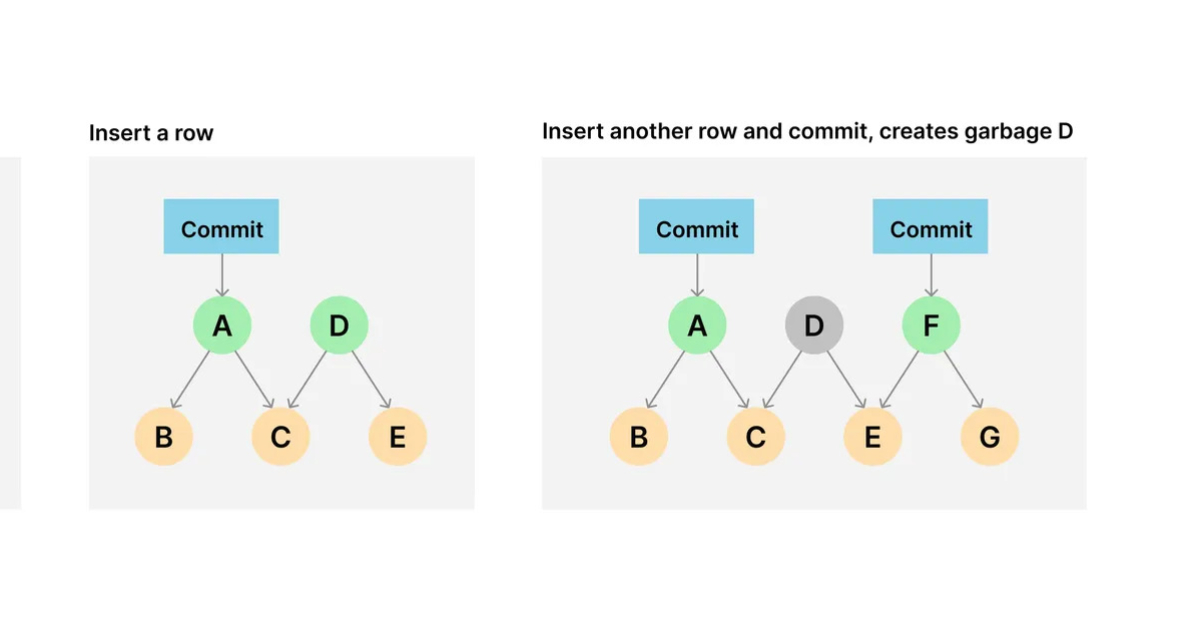
- Row-Level Versioning: Every change, down to an individual row, is tracked, providing granular history and the ability to revert specific modifications.
- Efficient Structural Sharing: Prolly Trees allow different versions of the database to share common data blocks, minimizing storage duplication and maximizing efficiency, especially for branches with minor differences.
- Fast Diffs and Merges: The content-addressed nature of Prolly Trees enables rapid computation of differences between versions and efficient merging of divergent branches, mirroring the speed and utility of Git for code.
These capabilities empower data professionals with unprecedented control over their data lifecycle. Data engineers can create isolated branches for schema migrations or data transformations without impacting production. Data scientists can experiment with new features or models on branched datasets, knowing they can easily revert to a previous state or merge successful changes. This paradigm shift fundamentally alters how data teams collaborate, audit, and manage data integrity.
Industry Perspective: The Imperative of "Git for Data"
The increasing complexity and volume of data, coupled with stringent regulatory requirements, have elevated the need for robust data governance and versioning. The concept of "Git for data" is rapidly gaining traction as an essential component of modern data stacks. Tim Sehn’s emphasis on garbage collection and performance highlights the practical necessities for a version-controlled database to be viable in production environments. Without efficient storage and competitive speed, the benefits of versioning would be overshadowed by operational overheads.
Industry expert Simon Späti further articulates this growing imperative, stating, "Git-like workflows are becoming table stakes. Maybe not today or tomorrow, but with the right tools and changes in workflow we can achieve significantly better change management, testing on production data, fast rollbacks, isolated experiments, and most importantly, peace of mind when deploying changes." Späti’s insights underscore the profound implications of adopting such a paradigm. Improved change management reduces the risk of errors and simplifies debugging. The ability to test on production-like data, isolated from live systems, enhances data quality and reliability. Fast rollbacks provide a safety net, mitigating the impact of unforeseen issues. Isolated experiments foster innovation by allowing data teams to explore new ideas without fear of corrupting main datasets. Ultimately, this leads to greater confidence and "peace of mind" for data professionals responsible for critical data assets.
For organizations, the adoption of "Git for data" solutions like Dolt 2.0 translates into tangible business benefits:
- Enhanced Data Governance and Compliance: A complete, auditable history of every data change is invaluable for regulatory compliance (e.g., GDPR, CCPA) and internal auditing.
- Improved Collaboration: Data teams can work concurrently on different data versions, accelerating development cycles and reducing conflicts.
- Reproducibility: Critical for scientific research, machine learning, and financial reporting, ensuring that any data state can be precisely recreated.
- Reduced Risk: The ability to instantly revert to previous states minimizes the impact of data corruption, accidental deletions, or faulty deployments.
The Landscape of Data Versioning Solutions
While Dolt stands out for its unique implementation as a version-controlled SQL database, it exists within a broader ecosystem of tools addressing data versioning challenges. Popular alternatives include:
- LakeFS: A data version control solution specifically designed for data lakes. LakeFS applies Git-like semantics to object storage, enabling users to manage versions of entire data lakes, perform atomic commits, and create branches for experimentation. Its focus is on large, unstructured or semi-structured datasets typically stored in S3 or similar object stores.
- Nessie: A transactional catalog for data lakes that also provides Git-like semantics. Nessie integrates with data processing engines like Apache Spark and Trino, offering a way to manage data versions and provide transactional guarantees across multiple data files in a data lake.
The key distinction lies in their operational scope. LakeFS and Nessie primarily cater to data lakes, providing version control over large collections of files. Dolt, conversely, is an actual SQL database that itself is version-controlled. This means Dolt offers direct SQL query interfaces and operates on structured relational data within the database engine, rather than managing external data files. This makes Dolt particularly attractive for applications where the database itself is the primary source of truth and where developers are accustomed to SQL interactions.
The development of DoltgreSQL, a PostgreSQL-compatible version of Dolt, further underscores DoltHub’s ambition to expand its reach. Sharing the same underlying storage engine and version control interfaces, DoltgreSQL is currently in beta, promising to bring Dolt’s innovative capabilities to the vast PostgreSQL community, which is known for its robustness and extensibility.
Implications for Data Professionals and Organizations
Dolt 2.0’s release carries profound implications for various data professionals and the organizations they serve.
- For Data Engineers: The automatic storage optimization, particularly garbage collection and efficient compression, significantly eases the operational burden of managing versioned databases. The improved performance means Dolt can now be considered for a wider array of production use cases, simplifying the data pipeline by integrating version control directly into the database layer.
- For Data Scientists and ML Engineers: The beta support for version-controlled vector indexes is a game-changer. It allows for rigorous experimentation with AI/ML models, enabling easy branching for different feature sets or embedding strategies, full audit trails for model development, and seamless reproducibility of results—all critical for robust MLOps practices.
- For Database Administrators (DBAs): The ability to branch and merge schema changes, roll back to any previous state, and have an immutable history of all data modifications provides unprecedented control and significantly reduces the risk associated with database operations.
- For Businesses: Dolt 2.0 contributes to a more agile, resilient, and compliant data infrastructure. Faster development cycles, reduced data-related risks, enhanced auditability, and lower storage costs directly impact the bottom line and improve an organization’s ability to innovate and respond to market changes. The "peace of mind" that Simon Späti speaks of is a valuable asset in today’s fast-paced, data-driven environment.
Conclusion and Future Outlook
Dolt 2.0 represents a monumental leap forward for version-controlled SQL databases. By meticulously addressing critical challenges related to storage efficiency and performance, while simultaneously expanding support for emerging data types like vectors, DoltHub has solidified Dolt’s position as a leading innovator in data management. The journey from being significantly slower than MySQL to surpassing it in key benchmarks, coupled with intelligent storage solutions, transforms Dolt from a promising concept into a formidable production-ready database.
As data continues to grow in volume, velocity, and complexity, and as regulatory pressures intensify, the "Git for data" paradigm championed by Dolt is becoming indispensable. Dolt 2.0 empowers data teams with the tools necessary to manage, collaborate on, and audit their most valuable asset—data—with the same rigor and efficiency previously reserved for source code. With its open-source availability under an Apache 2.0 license on GitHub, Dolt 2.0 is poised to significantly influence the future landscape of database technology, offering a robust, performant, and version-aware foundation for the next generation of data-intensive applications.