Microsoft Named a Leader in the 2026 Gartner Magic Quadrant for Container Management

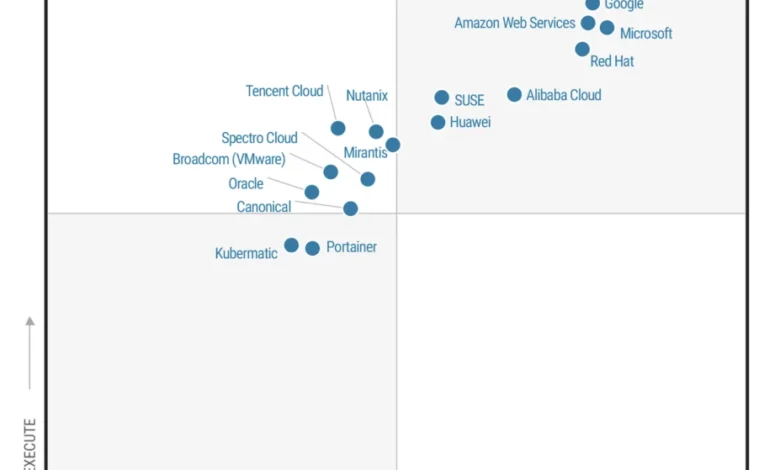
Microsoft has officially been recognized as a Leader in the 2026 Gartner Magic Quadrant for Container Management, achieving the furthest position to the right for "Completeness of Vision." This recognition marks a pivotal moment in the evolution of cloud-native infrastructure, reflecting the company’s strategic pivot toward integrating artificial intelligence (AI) workloads into the standard operational lifecycle of container orchestration. As organizations grapple with the dual pressures of scaling distributed systems and adhering to increasingly complex sovereign data regulations, Microsoft’s container portfolio—anchored by Azure Kubernetes Service (AKS), Azure Container Apps, Azure Arc, and Azure Kubernetes Fleet Manager—has emerged as a primary framework for enterprises navigating this transition.
The Evolution of Container Orchestration: A Historical Context
The trajectory of container management began over a decade ago with a singular, focused objective: the democratization of distributed systems. At its inception, the goal of Kubernetes was to simplify the development of reliable services by abstracting away the physical infrastructure. By defining workloads based on resource requirements rather than specific deployment targets, the early Kubernetes community provided developers with a flexible scheduling mechanism. This architectural neutrality—the system’s lack of strong opinions regarding the nature of the workloads—proved to be its greatest strength, allowing it to scale from small web applications to massive, global data processing engines.
However, the rapid integration of AI has fundamentally reshaped these requirements. Modern container platforms are no longer simply hosting stateless microservices; they are now tasked with managing high-density GPU workloads, inference engines, and persistent data models. The shift today is toward proximity—ensuring that applications and AI models run as close as possible to the data and the end-users, often within strict geographic or regulatory boundaries.
Bridging the AI Operational Divide
Microsoft’s approach to this shift is defined by two primary architectural models that have emerged across its customer base. The first is a centralized, platform-driven model. In this scenario, dedicated platform teams manage a persistent serving layer, oversee GPU scheduling, and enforce compliance boundaries. This approach is favored by organizations requiring high levels of predictability and governance. To support this, Microsoft has integrated open-source tooling, such as the AI toolchain operator, into AKS. By achieving CNCF AI Conformance certification, Microsoft has provided a standardized foundation, ensuring that the ecosystem remains interoperable as AI frameworks evolve.
The second model prioritizes elasticity and isolation. This is characterized by application-driven inference, where capacity is provisioned dynamically—triggering execution when an agent or application requires it and immediately releasing resources upon completion. Azure Container Apps was architected specifically for this "serverless" paradigm, offering hardware-isolated sandboxes that allow for agent hosting while preserving critical state information. The engineering challenge, which Microsoft is actively addressing, lies in making the transition between these two models seamless. Ideally, a single image, identity, and network policy should function identically regardless of whether the workload is running on a managed, persistent platform or an ephemeral, elastic one.
Scaling and the Challenge of Geographic Distribution
As AI adoption accelerates, the "center of gravity" for data is shifting away from centralized cloud data centers toward the network edge. This transition introduces significant risks regarding configuration drift, security policy inconsistencies, and fragmented upgrades. When clusters are deployed across diverse regions, datacenters, and sovereign environments, the primary failure mode often shifts from the cluster level to the coordination level.
To mitigate this, Microsoft has deployed a multi-layered strategy. "AKS Everywhere" extends the Azure-built Kubernetes platform to edge environments, while Azure Arc serves as the control plane for managing identity, policy, and observability across heterogeneous environments, including on-premises hardware and competing cloud platforms. For organizations managing massive "fleets" of clusters, Azure Kubernetes Fleet Manager provides the necessary automation to handle large-scale upgrades and workload placement, preventing the operational bottlenecks that typically accompany rapid infrastructure expansion.

A core tenet of this strategy is a steadfast commitment to upstream Kubernetes. Microsoft has intentionally avoided the development of a proprietary fork of the platform. Instead, it has focused its efforts on being the leading contributor to CNCF projects, maintaining a trajectory that has seen it become the second-largest contributor to the CNCF ecosystem globally and the largest among cloud providers for the past three years. This commitment ensures that the APIs utilized by developers remain stable and portable, regardless of the underlying cloud environment.
The Rise of Agentic Operations
Perhaps the most significant shift in the next three years of infrastructure management will be the transition toward "agentic operations." As the number of managed clusters continues to outpace the growth of operations teams, the manual monitoring of alerts and diagnosis of root causes is becoming unsustainable. Microsoft is addressing this through the development of the Azure SRE Agent and the AKS MCP (Model Context Protocol) Server. These tools are designed to facilitate autonomous diagnostic and remediation workflows, allowing operators to leverage existing permissions to resolve issues without the overhead of manual investigation.
The objective of these advancements is not to remove human oversight, but to reduce the "toil" that currently consumes the majority of an SRE’s (Site Reliability Engineering) time. By codifying operational expertise into the platform itself, Microsoft aims to keep the complexity of the underlying system hidden, even as the scale of the estate increases.
Industry Implications and Customer Momentum
The recognition by Gartner as a Leader in the 2026 Magic Quadrant serves as a validation of this "platform-first" philosophy. The market for container management is increasingly moving toward vendors that can provide a consistent operating model that spans the cloud-to-edge continuum. Organizations like CallRevu have reported that utilizing AKS allows them to manage GPU resources based on real-time call volume, effectively testing new AI models without impacting production environments. This reflects a broader trend: the need for cost-efficient, scalable, and compliant infrastructure that does not require developers to rewrite applications when moving from development to deployment.
From a market analysis perspective, Microsoft’s positioning is a direct result of its ability to integrate the developer experience with the requirements of the platform team. By providing a unified interface for policy, security, and lifecycle management, Microsoft has lowered the barrier to entry for enterprises attempting to modernize legacy applications while simultaneously deploying generative AI at scale.
Future Outlook and Conclusion
The work of building a platform that can absorb such diverse requirements is, as Microsoft acknowledges, far from complete. The next phase of container management will likely involve deeper integration of AI-driven observability and more sophisticated cross-cloud orchestration. As sovereign data regulations continue to evolve, the ability to maintain a consistent operating model across disparate jurisdictional boundaries will become a critical differentiator.
For IT leaders, the takeaway from the 2026 Gartner report is clear: the era of treating containers as isolated, standalone infrastructure components is over. The focus has moved to the "estate"—the collective management of clusters, policies, and AI models across a hybrid, multi-cloud, and edge-heavy landscape. Microsoft’s strategy appears designed to accommodate this shift, emphasizing that while the team running the workload must have the final say on where that workload lives, the underlying platform must be robust and flexible enough to support that decision without forcing a redesign of the underlying application.
As the industry continues to monitor the development of these tools, the emphasis will likely remain on the balance between standardization and flexibility. Microsoft’s continued investment in the CNCF ecosystem and its focus on agentic, automated operations suggest a long-term commitment to a vision where the platform is not just a host, but an active participant in the reliability and efficiency of the enterprise application lifecycle.