Automating Incident Response in Amazon Elastic Kubernetes Service with AWS DevOps Agent and Custom Operators

Managing complex containerized workloads on Amazon Elastic Kubernetes Service (Amazon EKS) has long been a significant challenge for DevOps and Site Reliability Engineering (SRE) teams. As organizations scale their infrastructure, they frequently encounter intermittent failures such as Out-of-Memory (OOM) kills, IP address exhaustion, and node instability. Historically, these incidents have forced engineers to engage in a time-consuming, manual triage process: manually aggregating pod logs, tracing cluster events, and inspecting node-level metrics. This manual overhead often leads to prolonged Mean Time to Resolution (MTTR), especially during off-hours or weekends, and creates the risk of losing critical diagnostic data when pods are terminated or nodes are taken offline.
To address these inefficiencies, the introduction of the AWS DevOps Agent represents a paradigm shift in how cloud-native environments handle incident response. By integrating code repositories, CI/CD pipelines, and advanced observability tools, the DevOps Agent provides an autonomous framework for root cause analysis. However, the agent itself required a bridge to the cluster level to become truly proactive. The emergence of the DevOps Agent Operator—a Kubernetes-native solution—now closes this gap, creating an end-to-end automated pipeline that captures evidence at the exact moment of failure.
The Problem: The "Data Collection Gap" in EKS
In a standard Kubernetes environment, the window for troubleshooting is surprisingly narrow. Kubernetes events typically expire within an hour, and when a container restarts or a pod is deleted, the local log files are purged. If an engineer is not alerted immediately—or if the cluster is under high load—the "smoking gun" often disappears before the investigation begins.
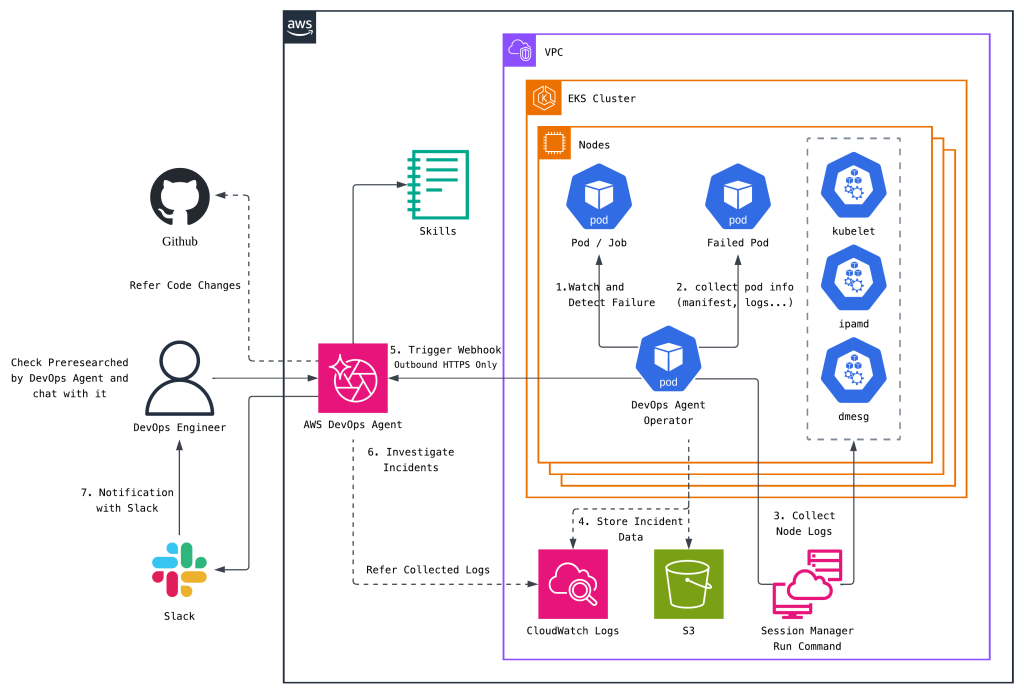
Current tooling, such as K8sGPT, excels at analyzing the current state of resources, while Amazon Bedrock Agents provide powerful reasoning capabilities but require significant manual integration. Neither solution, until now, offered a fully automated, event-driven mechanism that bridges the gap between a raw Kubernetes failure and a high-level, AI-driven root cause analysis. The DevOps Agent Operator serves as the missing link, automatically triggering an investigation the moment a failure occurs, ensuring that logs and node telemetry are preserved in Amazon S3 or CloudWatch Logs before they are lost.
Architecture and Workflow: From Failure to Insight
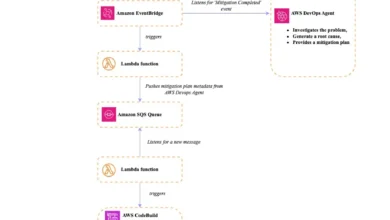
The operational architecture of this solution centers on a Kubernetes Operator that acts as a vigilant watchman. Once deployed, the Operator monitors the EKS cluster for specific failure signatures. When a pod enters a failing state, such as an OOMKilled event, the Operator executes a series of pre-defined actions:

- Failure Detection: The Operator’s informer identifies the transition from a running state to a failed state in real time.
- Data Aggregation: It automatically captures pod manifests, standard output logs, crash dumps, and node-level telemetry (including kubelet and containerd logs).
- Storage: The gathered data is pushed to Amazon S3 or CloudWatch Logs to ensure it remains available for long-term forensic analysis.
- Agent Trigger: The Operator invokes the AWS DevOps Agent via a secure, HMAC-SHA256 authenticated webhook.
This process ensures that by the time an on-call engineer receives an alert, the DevOps Agent has already synthesized the data, cross-referenced it with recent code changes from GitHub or GitLab, and mapped it against deployment history.
Chronology of an Automated Investigation
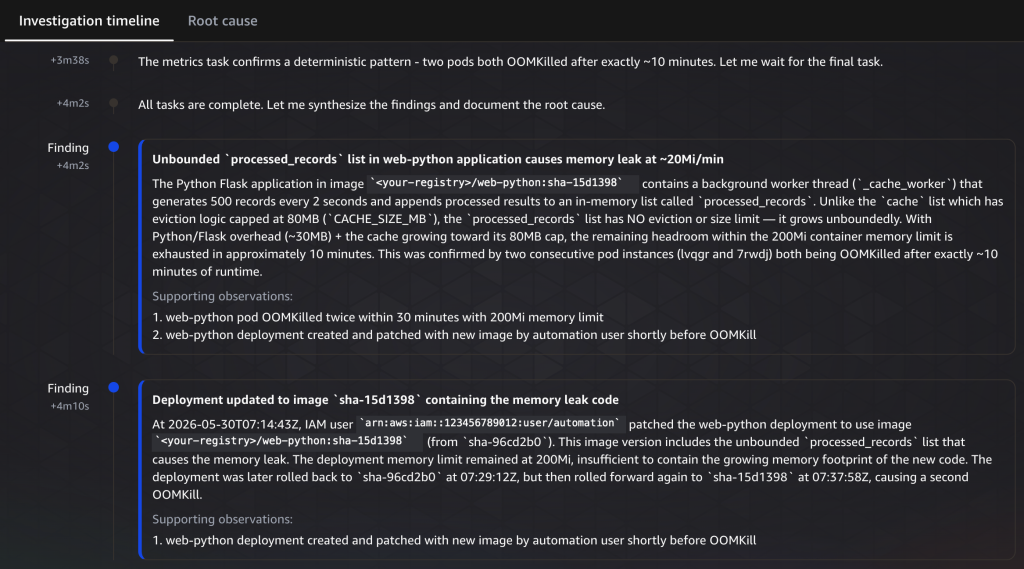
To understand the tangible impact, consider a scenario involving an application update. A developer pushes a new container image containing a memory-intensive feature. Upon deployment, the pods begin crashing with OOMKilled errors.
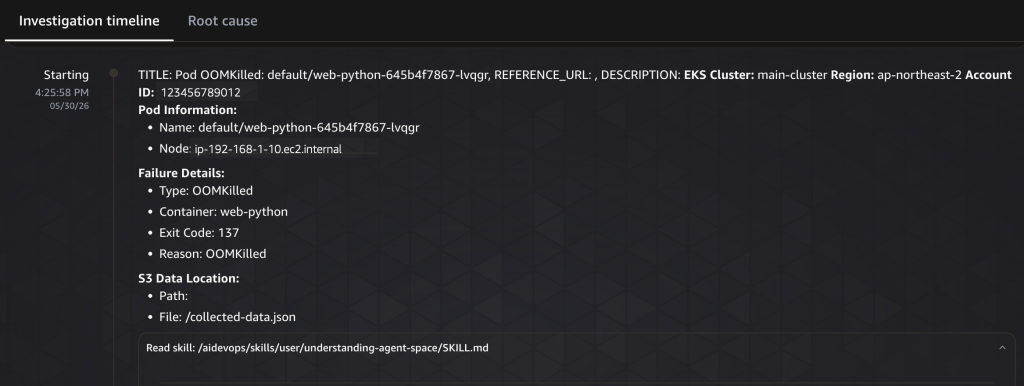
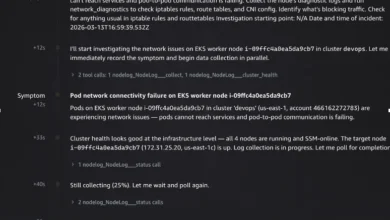
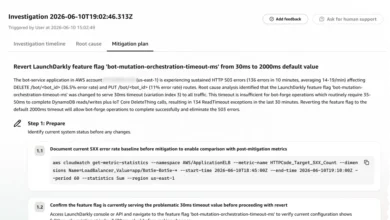
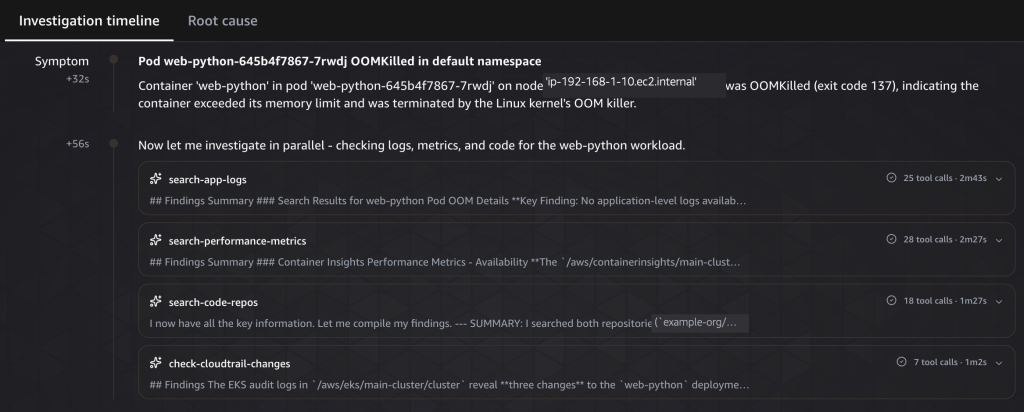
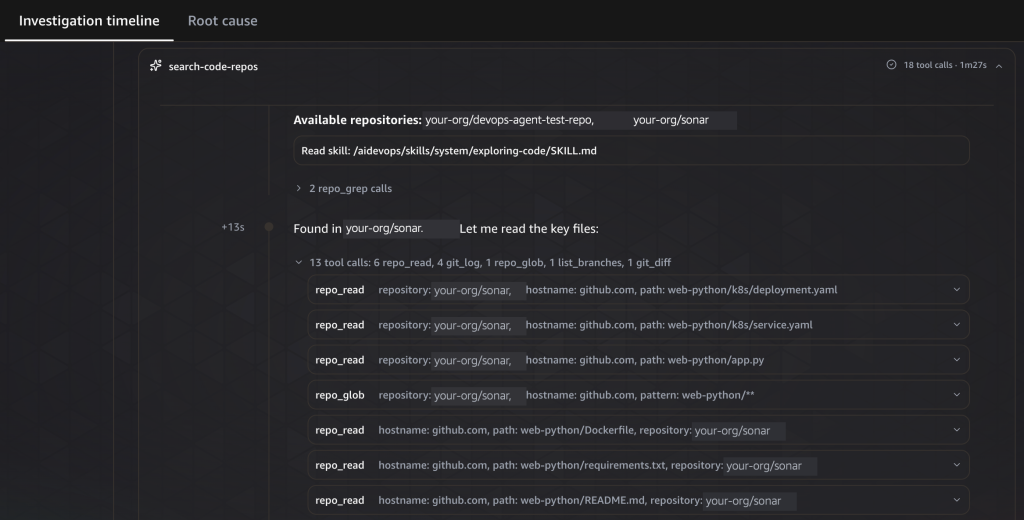
In a traditional setup, an engineer would receive a generic alert, log into the console, run kubectl describe, and potentially miss the underlying cause. In the automated flow, the DevOps Agent Operator detects the crash at T+0 seconds. By T+10 seconds, all logs and dmesg outputs are stored in S3. By T+30 seconds, the DevOps Agent has received the webhook, analyzed the recent GitHub commit history, identified the specific code change that introduced the memory leak, and posted a comprehensive summary to Slack. The engineer is then presented not with a problem, but with a confirmed diagnosis and a recommended mitigation plan, such as a rollback or a resource limit adjustment.
Technical Implementation and Security
The deployment of the DevOps Agent Operator requires careful attention to the principle of least privilege. By leveraging EKS Pod Identity, the Operator interacts with AWS services (SSM, S3, CloudWatch) using granular IAM roles. This is a significant security improvement over traditional long-lived access keys, as it limits the blast radius of the Operator’s permissions.
For organizations operating in multi-tenant environments, the Operator allows for namespace-level filtering. By configuring the WATCH_NAMESPACES and EXCLUDE_NAMESPACES parameters, teams can ensure that diagnostic data collection is restricted to their own workloads, preventing unauthorized access to sensitive logs from other teams. Furthermore, to control costs, administrators can implement lifecycle policies on the S3 buckets and CloudWatch log groups, ensuring that diagnostic data is automatically purged after a set period, such as 14 days.
Broader Implications for Cloud Operations
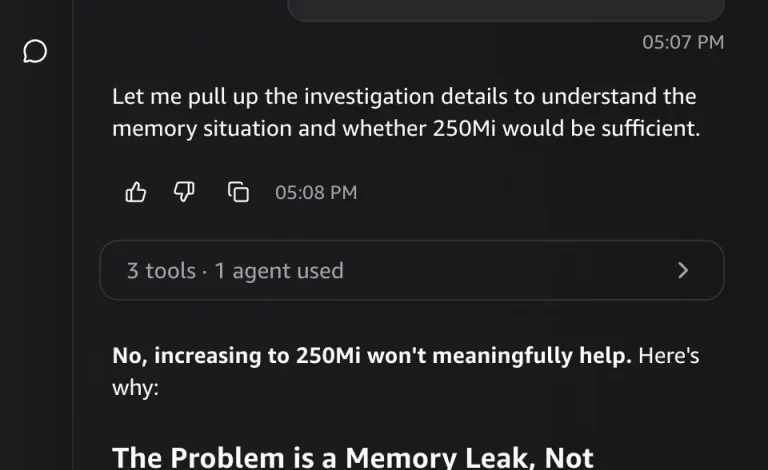
The shift toward agentic, autonomous incident response has profound implications for SRE practices. By automating the "data gathering" phase, engineering organizations can move from reactive firefighting to proactive optimization. The ability of the DevOps Agent to answer follow-up questions—such as "Would increasing memory limits resolve this?"—allows engineers to simulate solutions within the chat interface before committing to a change.
This methodology effectively flattens the learning curve for junior engineers, who can now rely on the AI’s synthesized knowledge of the system’s history and current state. It also eliminates the "noise" of manual triage, as the system filters out redundant alerts and focuses only on unique, actionable incidents.
Future Directions and Open Source Contributions
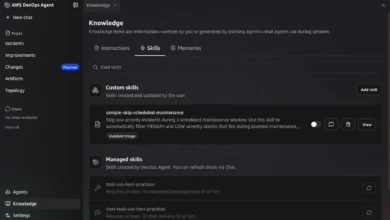
The DevOps Agent Operator is currently released as a reference implementation, encouraging teams to adapt the code to their specific operational requirements. As the project evolves, potential enhancements include support for a wider range of observability platforms, custom "skills" for specific application stacks (like Java or Go-based memory analysis), and enhanced integration with CI/CD platforms like Jenkins or ArgoCD.
By open-sourcing the implementation, the project provides a blueprint for how to bridge the gap between low-level Kubernetes events and high-level AI reasoning. For organizations struggling with high MTTR and complex EKS failure modes, this automated pipeline offers a robust path forward. As artificial intelligence continues to integrate into the DevOps lifecycle, the role of the engineer will increasingly shift from manual data collection to the design and oversight of these automated diagnostic systems, ultimately leading to more resilient, self-healing cloud architectures.
Related posts: