WordPress Critical Security Update Addresses Click2Shell Vulnerability Targeting Administrative Sessions

WordPress has officially released a critical security patch in version 7.1.1, designed to mitigate a sophisticated vulnerability chain dubbed "Click2Shell." This flaw, discovered by security researchers at the firm pwn.ai, could potentially allow an unauthorized actor to perform remote code execution on a WordPress site by leveraging a combination of a core software bug and a secondary vulnerability within an installed theme. While there is currently no evidence that this vulnerability has been exploited in the wild, the severity of the potential impact has prompted an immediate recommendation for all administrators to update their installations.
The Anatomy of the Click2Shell Vulnerability
The core issue lies in how the WordPress administrative dashboard interprets and processes specific, crafted web links. When an administrator—who is already authenticated—clicks a malicious link provided by an attacker, the WordPress core software can be tricked into initiating the installation of a theme from the official WordPress.org repository.
The mechanism behind this exploit is a breakdown in how the software reads data. The vulnerability occurs because two distinct parts of the WordPress ecosystem interpret the same link differently. The WordPress.org directory perceives the link’s value as a legitimate request for a theme, while the administrator’s browser, manipulated by the attacker’s URL, injects that same text into an internal command intended to trigger the "Install" button. Consequently, the administrator’s browser effectively "clicks" the install button for the attacker, utilizing the administrator’s own active session and security credentials to authorize the action.
Crucially, the installed theme remains in a deactivated state, meaning the visual appearance of the website remains unchanged, which allows the malicious installation to persist without immediate detection by the site owner.

From Forced Installation to Remote Code Execution
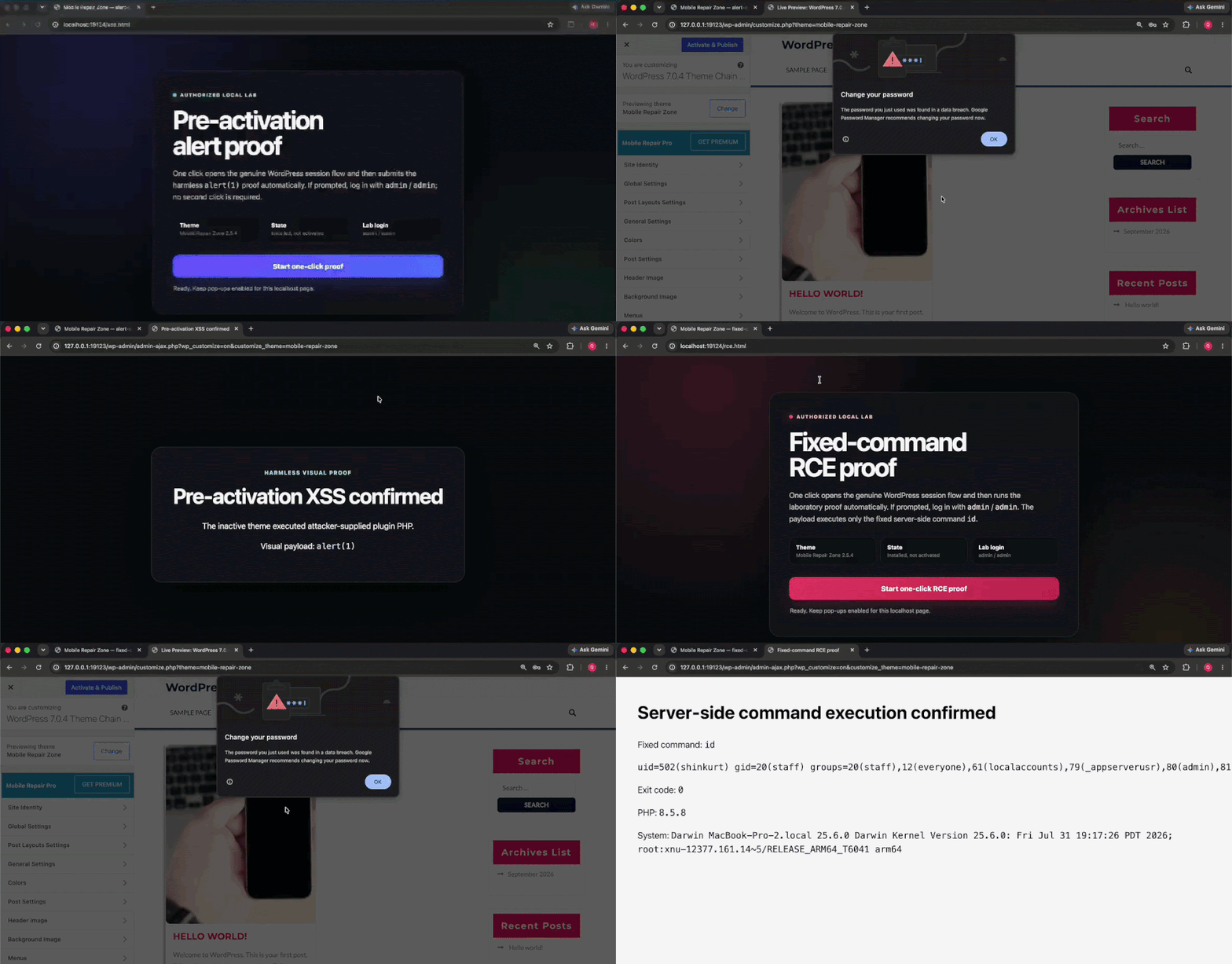
While the forced installation of a theme is a significant security breach in itself—carrying a CVSS score of 7.1—the researchers at pwn.ai demonstrated that this could be escalated to full remote code execution (RCE). The RCE potential arises when the forced installation is combined with a secondary, pre-existing flaw in the theme being installed.
The research team utilized a theme identified as "Mobile Repair Zone" to demonstrate this chain. In this specific scenario, the theme included a vulnerable background handler that fetched web addresses from external requests to download packages. Because this handler lacked proper permission checks or security token validation, it allowed for the execution of arbitrary code on the server. When the full chain is completed, the severity score reaches a critical 9.6 on the CVSS scale.
This "chaining" of vulnerabilities is a common tactic in modern cyber warfare. By combining a "low-level" core vulnerability that provides an entry point with a "high-level" exploit within an application, attackers can bypass traditional security defenses that might otherwise stop an isolated attack.
Timeline of the Disclosure and Patching Process
The identification and resolution of the Click2Shell vulnerability follow a standard coordinated disclosure process typical of major open-source projects.
- Mid-2026: Security researchers at pwn.ai conduct an audit of WordPress core functionality, identifying the discrepancy in how URL parameters are processed by the administrative dashboard.
- Late Summer 2026: The researchers successfully chain the core flaw with a secondary theme-based vulnerability, confirming the potential for remote code execution.
- September 17, 2026: WordPress developers release version 7.1.1, which includes the necessary sanitization logic to prevent the automated, unauthorized installation of themes.
- September 18, 2026: Public disclosure of the vulnerability is made by pwn.ai, accompanied by the WordPress official security release notes.
This timeline reflects a relatively rapid turnaround for such a complex issue, particularly given the reliance on third-party theme components. The update is comprehensive, covering supported WordPress branches as far back as version 4.7, ensuring that the vast majority of the WordPress ecosystem is protected against this specific attack vector.

Broader Implications for Web Security
The Click2Shell incident highlights a growing concern in the web security community regarding the "trust" architecture of Content Management Systems (CMS). WordPress powers over 40% of the internet, making it a high-value target for automated exploit campaigns. The reliance on themes and plugins, which are often developed by third parties with varying levels of security expertise, creates a large attack surface.
The "Click2Shell" vulnerability is not an isolated event. It follows a series of recent disclosures involving the WordPress core, including a similar login-based XSS attack in August 2026 and the notable "wp2shell" vulnerability discovered in July. Unlike Click2Shell, the wp2shell flaw did not require administrative authentication and was reportedly exploited in the wild, drawing the attention of the U.S. Cybersecurity and Infrastructure Security Agency (CISA).
These recurring issues underscore the necessity for a "Zero Trust" approach to administrative interfaces. Security experts argue that even when an administrator is logged in, the system should not automatically trust incoming requests for sensitive operations like installing software or executing scripts. The implementation of more robust validation, including secondary confirmations or mandatory security tokens for all administrative actions, is becoming an industry standard.
Official Guidance and Remediation
For site administrators, the instruction from the WordPress security team is clear: update to version 7.1.1 immediately. For sites that have the automatic background updates feature enabled, the patch will likely already be applied or will be applied shortly.
There is no "manual" workaround that can adequately secure an unpatched version of WordPress against this specific vulnerability. While the attack requires a logged-in administrator to interact with a malicious link, the potential for social engineering—such as a spear-phishing email containing the link—makes the risk substantial for any organization with multiple administrative users.

Furthermore, administrators are encouraged to:
- Audit Installed Themes: Regularly review the list of installed themes and remove any that are not currently in use. Unused themes often remain on the server and can provide a platform for further exploitation if they contain vulnerabilities.
- Limit Administrative Access: Ensure that only authorized personnel have administrative privileges and implement multi-factor authentication (MFA) to prevent unauthorized session hijacking.
- Monitor Logs: Keep a close eye on installation and update logs. If an unexpected theme appears on a site, it should be treated as an immediate indicator of compromise.
Conclusion
The discovery of Click2Shell serves as a potent reminder that even the most widely used and vetted software platforms remain susceptible to complex, chained exploits. By leveraging the inherent trust WordPress places in its administrative sessions, the researchers successfully highlighted a critical weakness in the software’s handling of external requests.
The proactive release of version 7.1.1 demonstrates the effectiveness of the WordPress security community in responding to such threats. However, the onus remains on the end-user to maintain their software and adhere to best practices in security hygiene. As the digital landscape continues to evolve, the cooperation between independent security researchers and core development teams will remain the primary defense against the increasing sophistication of cyber threats targeting the backbone of the web.