Pennsylvania Faces Public Health Crisis as Measles Outbreak Claims Four Lives Amid Rising Vaccination Concerns

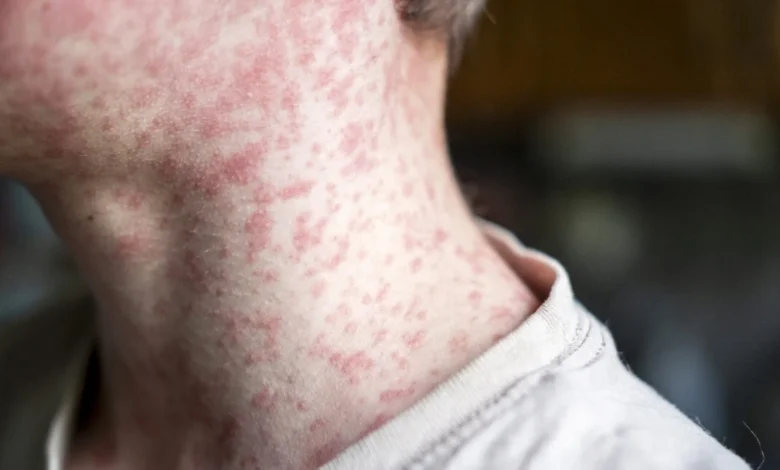
The Pennsylvania Department of Health confirmed on Tuesday that the state’s ongoing measles outbreak has claimed a fourth victim, marking a somber milestone in what public health officials are describing as the most significant resurgence of the virus in over three decades. The latest fatality involved an 18-year-old resident of Mifflin County who had not been vaccinated against the disease. This announcement follows the weekend confirmation of a death involving an unvaccinated 40-year-old woman in Jefferson County, further highlighting the severe risks posed to those without immunity in an environment of rapid viral transmission.
These recent losses add to a tragic toll that includes two infants from Lancaster County who died earlier in the outbreak. Both of those victims were too young to receive the measles, mumps, and rubella (MMR) vaccine, which is typically administered in two doses starting at 12 to 15 months of age. As the commonwealth grapples with 693 confirmed cases spanning 38 counties, the focus of health authorities has shifted toward curbing the spread of the virus and addressing the critical importance of vaccination coverage to protect vulnerable populations.
Clinical Complications and the Impact of ADEM
The death of the 18-year-old in Mifflin County has brought renewed attention to the severe neurological complications associated with the measles virus. According to Mifflin County Coroner Andrea L. Alcalde, the cause of death was identified as acute disseminated encephalomyelitis (ADEM). This condition is a rare but devastating autoimmune disorder that can occur following a viral infection, including measles.
In cases of ADEM, the immune system, triggered by the infection, begins to attack the myelin—the protective covering of nerve fibers—in the brain and spinal cord. This leads to widespread inflammation and neurological impairment. Before the widespread implementation of the MMR vaccine, ADEM was a documented, albeit uncommon, sequela of measles infection. While ADEM can be triggered by various viral pathogens, its association with the current measles outbreak underscores the unpredictability and severity of the disease, even in young adults who might otherwise be considered at low risk for complications. Coroner Alcalde noted that the determination was reached after a comprehensive review of medical records and diagnostic data, though no further details regarding the individual’s medical history have been released to maintain family privacy.
Chronology of a Growing Outbreak
The trajectory of this outbreak has been characterized by a rapid, state-wide acceleration that has overwhelmed local health infrastructure. Since the initial emergence of cases earlier this year, the Pennsylvania Department of Health has been tracking a sharp upward trend in transmission.
- Early Stages: The outbreak began with localized clusters, which were initially managed through standard contact tracing and quarantine protocols.
- Mid-Year Escalation: As the virus spread into more counties, the number of cases began to climb exponentially, moving from sporadic instances to sustained community transmission.
- The Infant Tragedies: The deaths of the two infants in Lancaster County marked a turning point in public perception, drawing national attention to the vulnerability of those unable to be vaccinated. These deaths sparked intense public debate and underscored the concept of herd immunity—the protection provided to the community when a high percentage of the population is vaccinated.
- Current Status: With 99 new cases reported in just the last seven days and 133 total hospitalizations, the state is now dealing with a significant burden on its healthcare system. The addition of the two most recent deaths to the state’s outbreak data dashboard, scheduled for Wednesday, will serve as a stark reminder of the outbreak’s persistence.
Data Trends and Epidemiological Analysis
The data released by the Pennsylvania Department of Health paints a picture of a virus that is exploiting gaps in population immunity. The current tally of 693 cases across 38 counties suggests that the virus has effectively bridged rural and urban divides, aided by its high degree of contagiousness. Measles remains one of the most infectious diseases known to science; a single infected individual can transmit the virus to approximately 90 percent of close contacts who lack immunity.
The hospitalization rate—133 individuals out of 693 cases—represents an approximate 19 percent hospitalization rate. This is significantly higher than historical averages, suggesting that many of the current cases are resulting in serious complications such as pneumonia, encephalitis, or severe dehydration. Epidemiologists note that when vaccination rates in specific communities dip below the 95 percent threshold required for herd immunity, the virus can circulate freely, putting everyone—including those who are immunocompromised or too young to be vaccinated—at grave risk.
Official Responses and Public Health Strategy
Pennsylvania Secretary of Health Debra Bogen issued a stern statement following the latest reports, emphasizing that the state is facing its most significant public health challenge regarding infectious disease in more than thirty years. "My thoughts are with the two families who lost loved ones to this highly contagious virus, as Pennsylvania faces the worst measles outbreak in more than three decades," Bogen said.
The Department of Health is currently prioritizing three key areas:
- Public Education: Dispelling myths regarding the MMR vaccine and providing accurate, scientific information about its safety and efficacy.
- Access: Removing barriers to vaccination by increasing the availability of the MMR shot in affected counties, particularly in regions with lower historical uptake.
- Surveillance: Strengthening contact tracing efforts to identify and isolate cases before they can spark new clusters of infection.
State health partners are also coordinating with school districts and community leaders to encourage vaccination updates for children and adults who may have missed doses. The emphasis is on restoring the high vaccination coverage levels that kept measles largely eliminated in the United States for several decades prior to the recent increase in vaccine hesitancy.
Broader Implications for Healthcare Policy
The Pennsylvania outbreak serves as a case study for the broader implications of declining vaccination rates. Public health experts argue that the resurgence of measles is not merely a medical failure but a systemic one, reflecting a breakdown in trust between public health institutions and segments of the general population.
The political environment surrounding vaccines has become increasingly polarized, with misinformation often traveling faster than public health messaging. The deaths of the two infants and the two unvaccinated adults have forced a difficult conversation about the social contract of vaccination. When an individual chooses to remain unvaccinated, the risk is not contained to that person alone; it extends to the most vulnerable members of society, such as infants, the elderly, and those undergoing cancer treatment whose immune systems cannot mount a response to vaccines.
Looking forward, the Pennsylvania Department of Health is expected to seek additional funding and resources to bolster its immunization programs. Legislators may also face pressure to review school vaccination requirements and exemptions as the state attempts to regain the progress lost over the past year.
As the outbreak continues to unfold, the focus remains on preventing further loss of life. With the virus currently active in over half of the state’s counties, health officials are urging residents to verify their vaccination status with their primary care providers. The message from the state remains clear: the MMR vaccine is the only proven tool to stop the spread of this highly contagious disease and prevent the tragic, preventable deaths that have defined this year’s outbreak. The coming weeks will be critical in determining whether these public health interventions are sufficient to break the chain of transmission or if the state will see further expansion of the current crisis.
Related posts: